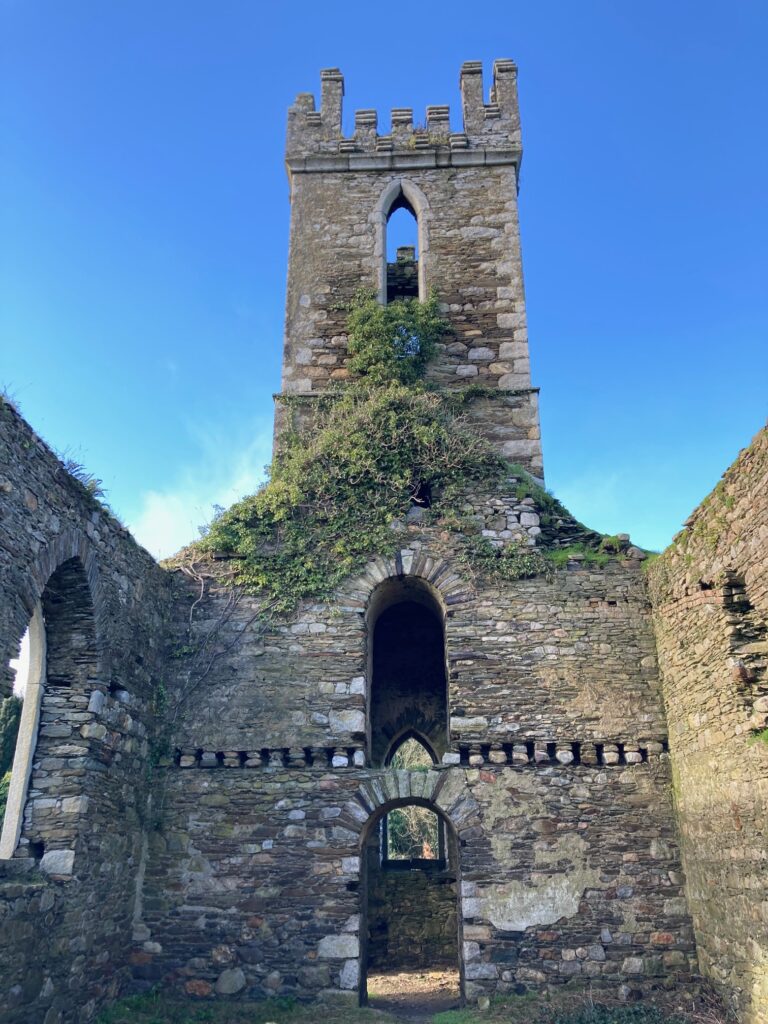
Yesterday I stood inside the ruins of Castle MacAdam Church near Avoca.
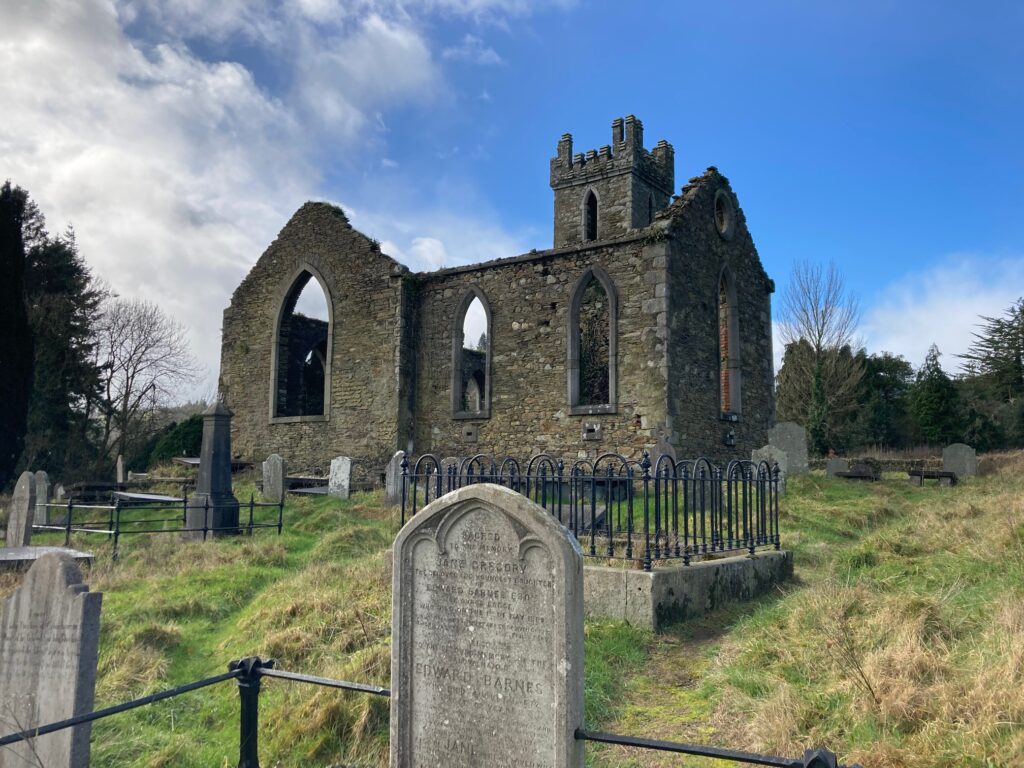
Georgian stone.
Tall, empty lancets.
Gravestones from the 1760s leaning into Wicklow grass.
It is not romantic. It is posthumous.
Once it held a Protestant parish certain of its continuity — baptisms, marriages, burials, sermons absorbed into timber and lime. The structure assumed endurance. The families who filled it assumed the same.
They are gone. The walls remain.
Standing there, the pattern felt older than Ireland.
Confidence.
Consolidation.
Moral certainty.
Demographic thinning.
Repurposing or abandonment.
No dramatic fall. Just erosion.
I thought of Consett. The church where my own family passed through its rites still stands, but the density has changed. Attendance narrows. Conviction competes with comfort. Ritual competes with distraction.
Across Europe, Christianity contracts.
An underused sacred space does not remain underused for long.
Capital enters first.
Active churches — not only deconsecrated chapels — now host candlelit concerts and pop retrospectives. ABBA lyrics about casual intimacy rising into vaults built for penitence. A Rolling Stones tribute singing Sympathy for the Devil would not feel implausible.
The acoustics remain.
The geometry remains.
The symbolism remains.
And something else remains — the accumulated imprint of prayer. If repetition imprints atmosphere, then centuries of petition are not erased by lighting rigs and ticket scanners. Stone stores more than sound.
When I saw the chequerboard floor at Notre-Dame Cathedral, especially in the wake of the fire and restoration, I became conscious of how symbols intensify in moments of weakness.
Black and white geometry is ancient. Medieval. It is also associated with later initiatory traditions, including Freemasonry. I make no declarative claim. But I notice timing. After fire. After fracture. During reconstruction. Perhaps Nostradamus was right?
Subconscious signs matter most when institutions falter.
Is that occult takeover? I do not assert it as fact. I consider the possibility that when conviction weakens, form becomes available for reinterpretation. Not through theatrical conquest, but through vacancy.
Belief drains.
Form persists.
Meaning shifts.
Other energies move in.
The Roman Empire followed its own arc. Its temples once carried incense and oath. When conviction thinned and power shifted, those temples were stripped, repurposed, abandoned. Their gods did not vanish in a day; they eroded across generations.
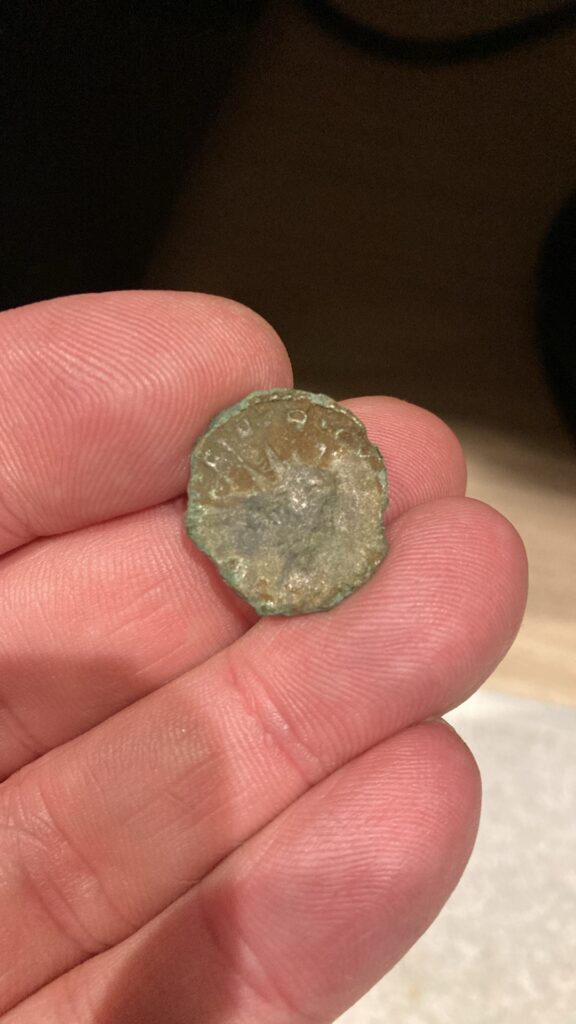
A Roman coin surfaced in my detector this week — thin, worn, carried across centuries before settling in Wicklow sand. Empire leaves residue. It does not preserve intention.
Christian churches in Mogadishu, in Tunis, in parts of Turkey once served confident congregations. Some are ruins now. Some are museums. Some are other things entirely.
Every civilisation believes its sacred architecture is immune to reversal.
History suggests otherwise.
The ruin at Avoca is simply further along the curve.
No concerts.
No reinterpretation.
No congregation.
Just stone admitting the demographic arithmetic.
What unsettled me was not anger. It was pattern recognition.
Institutions outlive belief for a time. When belief thins, monetisation begins. When monetisation cannot sustain coherence, abandonment follows. When abandonment completes, something else inherits the ground.
If Protestant Ireland travelled that road, Protestant England may be mid-journey.
Every structure eventually reveals whether it was built on conviction or habit.
Castle MacAdam stands as evidence that once conviction drains, the walls may remain — but the force that justified them does not automatically return.
The question is not whether churches survive.
The question is whether the civilisation that built them still believes what they were built to hold.
If not, the stone will endure.
And history will write over it, as it always does.