I had just come back from Consett, which still feels like home in some older sense, and went through security at Newcastle Airport.
It was busy. The gates were full. The trays moved forward in a slow line under the white lights. The staff were in no mood to wave anything through. They were checking everything properly, or at least thoroughly, which is not always the same thing.
Then my tray slid off for inspection.
That feeling came at once. The small drop in the stomach. There were five trays ahead of mine in the queue and no way round it.
The man in front had already been stopped. He opened his bag. They took out some bananas and swabbed them. He turned and shouted something in Polish to his friend about the delay and his banan, half angry, half laughing, while they tested the fruit as though it might bring down the airport.
When they gave the bananas back, he looked at me and smiled. Not much. Just enough to say that now it was my turn.
Then they opened my bag.
The suspicious item was a few corned beef pies I was bringing back with me.
The woman opened the clear plastic bag carefully. She was about to take them out. I said, “They’re pies. Can I get them out for you?”
That changed it.
You could see it happen. Something in her face shifted. The programme broke for a second. She looked slightly embarrassed, as though she had suddenly seen herself from outside and did not much like what she saw.
No, she said, and put them back in the bag.
That was all.
But it stayed with me.
A man has his bananas swabbed. Another man has his pies inspected. Everyone stands there under the lights, waiting, obedient, serious, playing his part. The staff play theirs too. That is how much of life is now. Not evil. Not dramatic. Just people inside systems, doing what the system says, until the thing itself becomes too foolish to ignore.
Then sometimes the spell breaks.
A pie is a pie again. A person becomes a person again. For a moment the machine weakens and common sense comes back into the room.
Then the trays moved on. The airport survived.
Who ate all the pies? Me, of course. The last one disappeared at breakfast today.
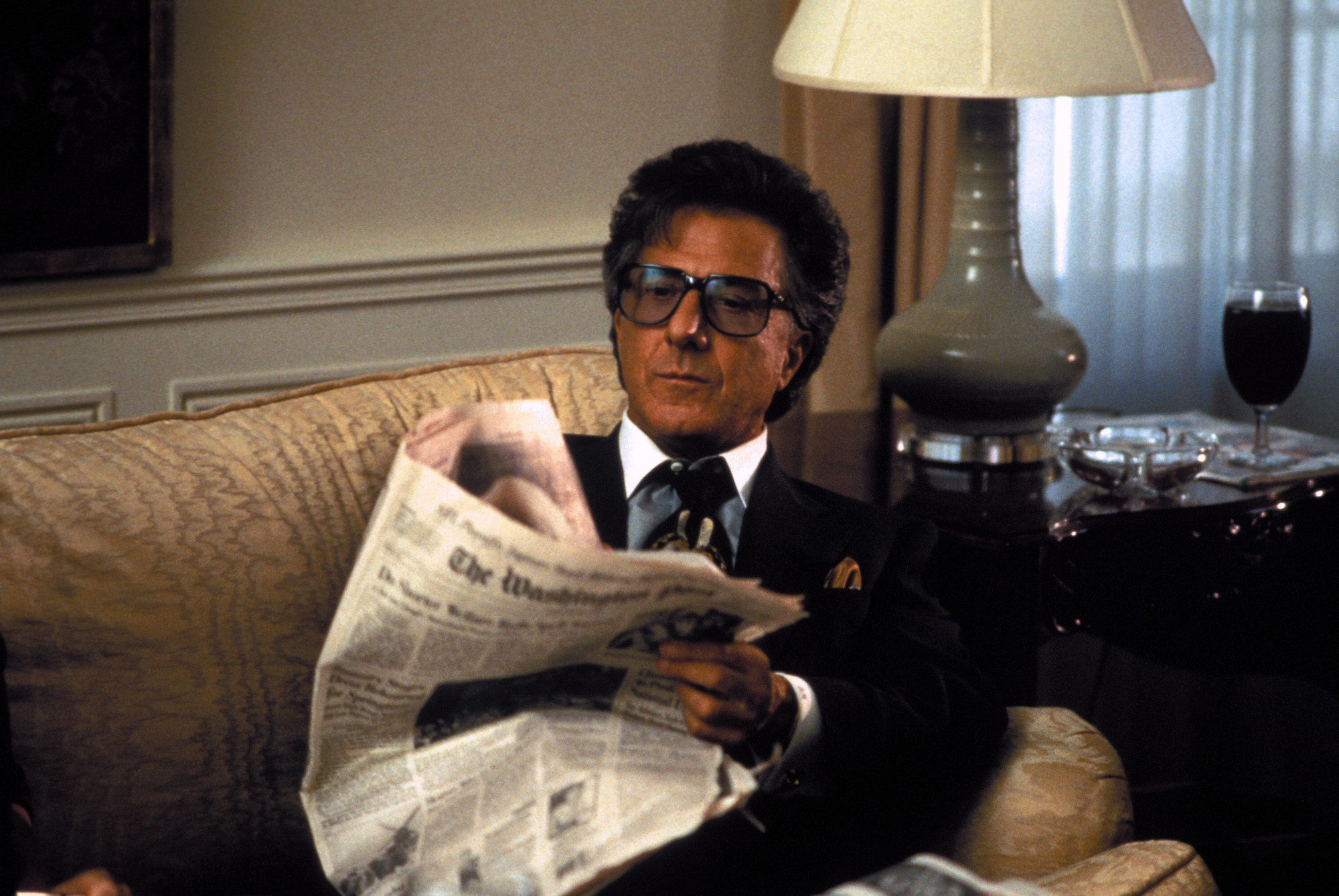
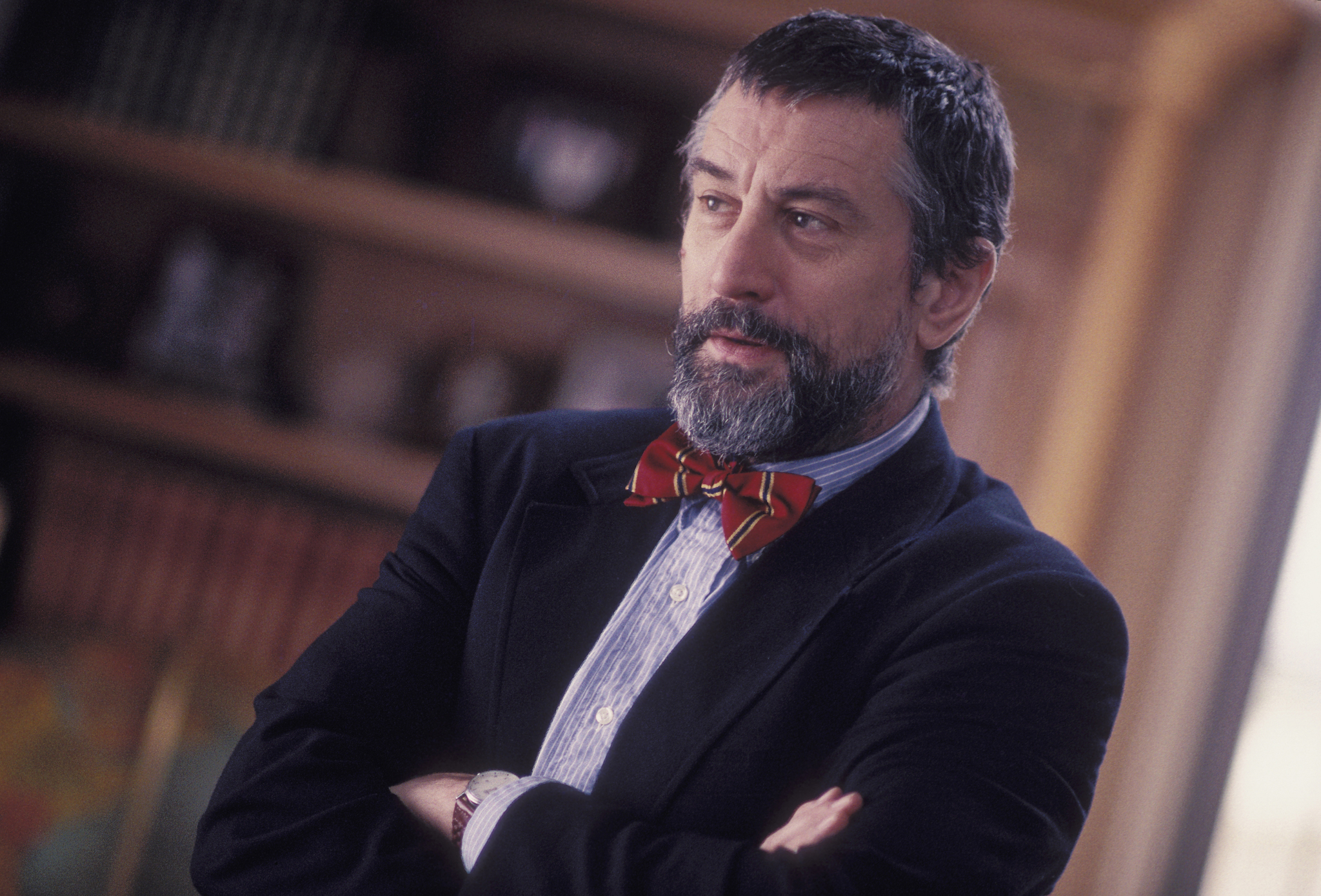
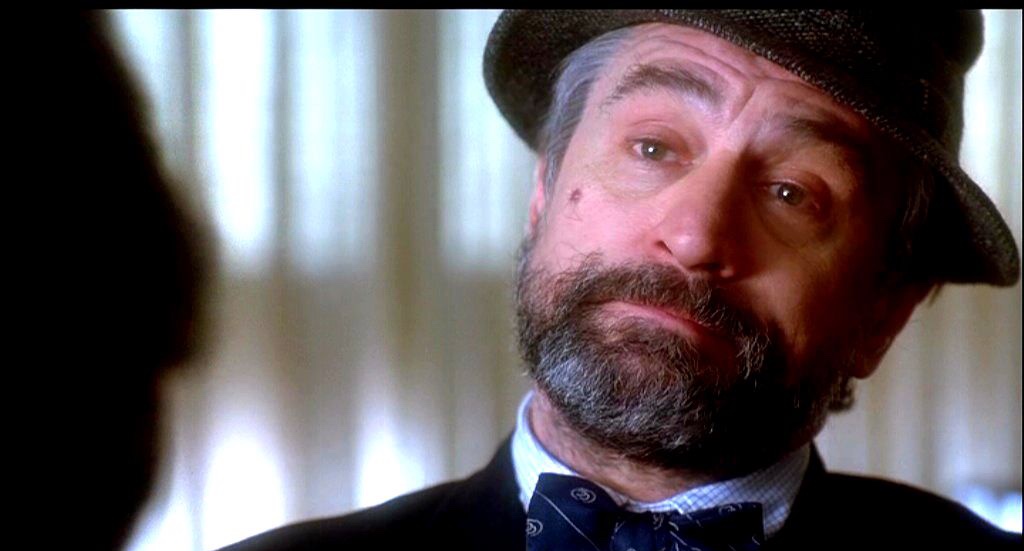
It was released in 1997, directed by Barry Levinson and starring Robert De Niro and Dustin Hoffman, but I encountered it a year later — and it stayed with me far longer than most films do.
At the time, I thought it was clever.
Later, I realised it was instructional.
What the Film Actually Shows
A president faces a scandal days before an election. The solution is not defence. It is distraction. A war is manufactured — complete with imagery, music, a hero, a narrative arc.
The public sees it on television. The media amplifies it. Politicians align behind it.
The war exists because it is broadcast.
What unsettled me wasn’t the satire. It was the mechanics.
The film shows that in modern systems, narrative is not commentary on reality.
It is architecture.
Watching It in the 1990s
When I saw it, the Balkans were not abstract.
The Kosovo War and the NATO bombing of Yugoslavia were unfolding. Iraq was already in a cycle of sanctions and intervention, culminating in Operation Desert Fox.
On screen: a fabricated Balkan conflict used for domestic political containment. In real life: televised Balkan conflict accompanied by political crisis.
I’m not interested in simplistic causation.
What struck me was structural similarity.
Crisis appears. Media synchronises. Emotional imagery floods the screen. Consensus hardens before analysis completes.
Deniers are denounced.
Once you see that sequence, it becomes difficult to consume headlines innocently again.
Manufactured Symbols
The film’s brilliance is that it doesn’t rely on grand conspiracy.
It shows small things:
A song engineered to stir patriotism.
A refugee image staged for emotional impact.
A slogan crafted for repetition.
A soldier turned into a moral totem.
Meaning is assembled deliberately.
The public doesn’t require truth. It requires coherence.
That realisation never quite leaves you.
The Ending That Lingers
At the end, Hoffman’s producer wants credit. He hints he may expose the entire operation.
He dies.
Not dramatically. Not theatrically. Just… removed.
The system continues.
The film never lectures about hidden hands. It simply demonstrates incentive structures: when exposure threatens continuity, continuity wins.
That ending always reminded me of how certain figures — political, financial, inconvenient — sometimes exit at remarkably convenient moments.
No outrage here. Just pattern recognition.
Why I Don’t Watch Breaking News
One of the lasting effects of that film is behavioural.
I no longer watch breaking news at all.
I learn about events after the fact, usually through conversation. Stripped of soundtrack, graphics, urgency, and emotive framing, the event feels different. Slower. Cleaner. Less hypnotic.
Breaking news is theatre with a live orchestra.
Remove the orchestra and you can inspect the stagecraft.
Timing and Markets
Another pattern I’ve noticed: how often major geopolitical flashpoints seem to emerge on weekends.
When markets are closed.
When equity exchanges cannot react in real time. When price discovery is delayed. When institutions already positioned can adjust quietly before Asia opens.
Does that prove orchestration? No.
But incentives matter.
If information moves markets, then timing information when markets are shut reduces chaotic repricing and limits uncontrolled losses. It also preserves opportunities for those already hedged.
Gold was already moving upward last week. Was that anticipation? Quiet positioning? Or simply macro fragility expressing itself? Markets often signal stress before headlines catch up.
Correlation is not confirmation.
But patterns are data.
Iran This Weekend
When events flare in places like Iran, the script is familiar:
Energy spikes. Gold bids. Volatility expands. Media harmonises tone within hours.
The first 24 hours are emotional. The first week is positioning. The first month reveals whether escalation was strategic or theatrical.
I’m not claiming events are fabricated.
I’m observing that events are leveraged.
Narrative velocity now precedes verification. And whoever controls narrative velocity controls perception, which in turn influences capital, policy, and public mood.
That machinery has only become more sophisticated since 1997.
“The real revolution, if it ever happens, will not be televised.”
That line has echoed in my mind for years.
If real structural change ever occurs, it won’t arrive with theme music and sponsored graphics. It won’t be pre-packaged with slogans and expert panels.
It will likely happen quietly, outside the broadcast frame.
Which is perhaps why I stepped outside the frame myself.
Not in protest. Not in paranoia.
Just in recognition that sovereignty begins with what you choose not to watch.
Not the flag. Not the buildings. Not the men behind desks.
The word itself.
A state is a condition. A way things are, for a time.
It is not a person. It does not remember you. It does not care.
It simply applies.
How It First Appears
Some people meet the state as a helper.
It arrives early. It pays for things. It smooths the road. It makes life feel lighter.
For them, the state feels generous. Almost friendly. Like a great hand that keeps refilling the cup.
Others meet it differently.
As forms. As rules. As delays. As a distant voice saying no.
Both experiences are real.
Both are temporary.
The Error
The mistake is believing the state has a nature.
That it is kind. That it is cruel.
It is neither.
The state is not a being. It is a condition applied to circumstances.
When the circumstances change, the condition changes.
That is all.
When Your Life Changes State
There comes a time when your own life shifts.
You earn more. You move. You age. Your family changes shape.
Nothing dramatic needs to happen.
And yet the tone changes.
What once flowed toward you slows. What once helped now measures. What once supported now calculates.
People say the state has turned against them.
It hasn’t.
They are simply no longer in the same state.
The Gates
The state works like a series of gates.
If this, then that. If not, then something else.
Denmark makes this easy to see.
There are supports that apply at certain phases of life — for children, for education, for housing — and there is taxation that applies at others. Under the right inputs, the flows can be substantial. Life can feel buoyant. Even generous.
Then one input changes.
Income. Residence. Age. Status.
The gate flips.
The same machinery produces a different outcome.
No anger. No memory. No apology.
Just logic.
From Supported to Supplying
This is the moment many find hardest.
When they are no longer carried, but counted.
Benefits stop. Obligations begin. The tone sharpens.
People look for a reason.
There is none.
The state did not decide anything.
It recalculated.
Why This Hurts
We are taught stories instead of mechanics.
That the state cares. That it protects. That it provides.
Sometimes it does.
But only while the conditions hold.
The state does not see people. It sees categories.
Fall inside them and life feels warm. Fall outside and it feels cold.
Both are impersonal.
Seeing It Clearly
Once you understand this, much anger falls away.
You stop arguing with the weather. You stop pleading with the tide.
You position yourself instead.
You learn when to sail. When to anchor. When to move on.
An Odyssean Ending
I do not see the state as an enemy. I do not see it as a saviour.
I see it as a sea.
Sometimes calm. Sometimes rough. Always indifferent.
A man who mistakes the sea for a home will drown. A man who learns its moods may cross it many times.
Odysseus did not curse the water. He read it.
He lost ships. He lost years. He lost companions.
But he kept his hand on the helm.
Home, when it came, was not given. It was reached.
And the mistake was never the journey.
The mistake was believing the waters would always be kind.
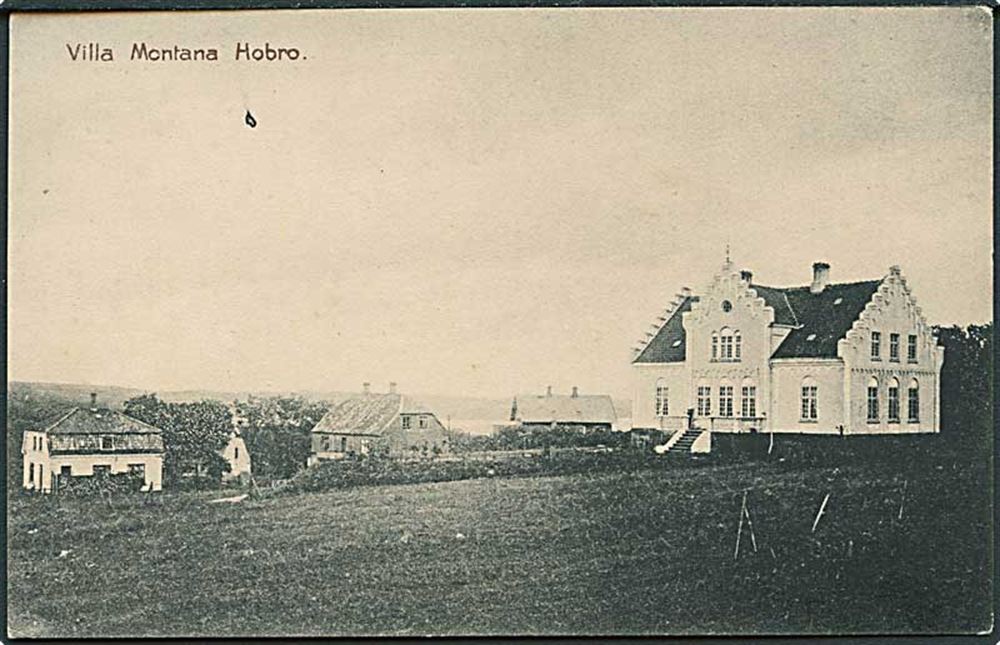
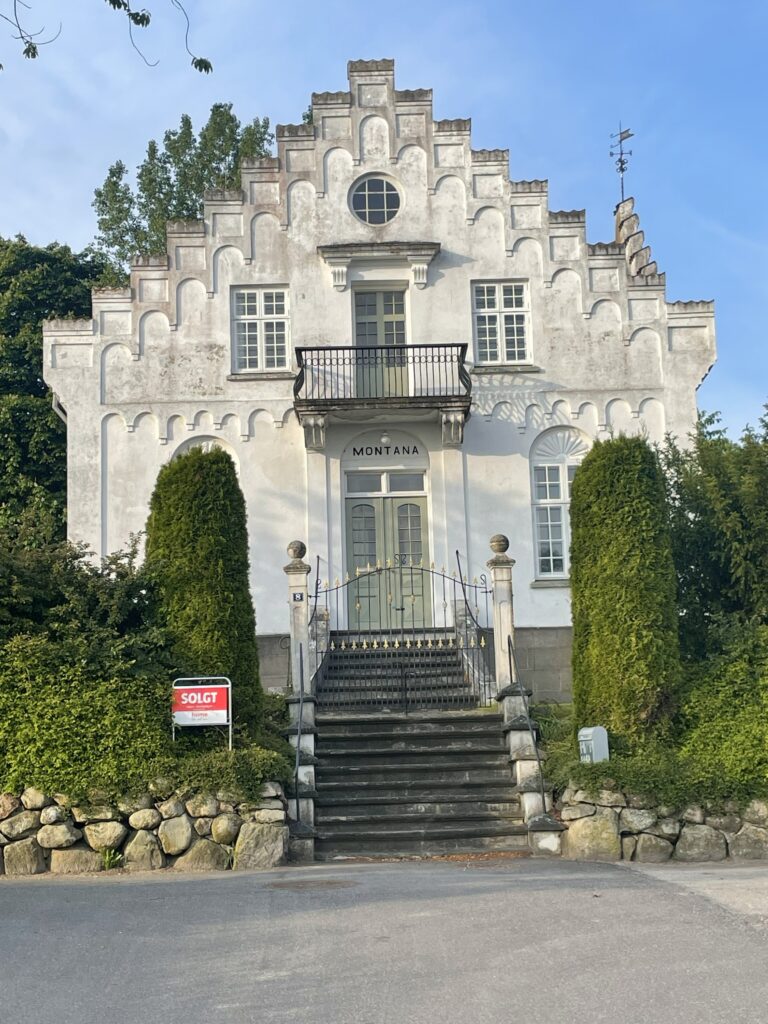
There are houses you live in, and there are houses that live in you. Montana was the second kind.
I didn’t choose it casually. I felt it the very first time I saw it — the weight of its old bones, the quiet pride in its Edwardian-era lines, the way it waited without demanding anything. It was a house built for seasons and storms, the kind that stands while everything around it changes. A man can come to love a place like that.
And I did.
I loved the wide rooms and the light that moved across the house as the day progressed. I loved the heavy doors that closed with certainty, the high ceilings that held silence like a cathedral. I loved the garden in early summer, quiet, private and still, the leaves emerging on the huge old copper beech. I loved how the house watched over everyone inside it, even when no one noticed.
But Montana was also the place where the old life gathered around me. A museum of years I outgrew. A stage where I carried weight meant for three men, not one. A place that held memories I had long outlasted.
For all its beauty, it became a harbour I could no longer stay anchored in.
Every house has its truth. Montana’s truth was simple: I was no longer the man to fit what I had built inside its walls.
There comes a point in a man’s life when he realises he cannot rebuild himself in the same place he was broken. Montana was filled with ghosts that never left — not tragic ghosts, just the kind created by routine, obligation, and the quiet dying of years you can’t get back.
I learned many things inside that house. How to endure. How to protect. How to keep going when the foundation cracks. How to hold a life together when everything else fell apart.
But I also learned the hardest lesson: A man cannot stay where he is slowly disappearing.
So I left. Not because I stopped loving it, but because I finally understood that Montana belonged to a chapter of my life that had to end before I could begin the next one.
The day I walked through its rooms for the last time, the house felt lighter — as if it, too, knew the story was finished. The echoes were softer. The air felt still. There was no anger, no grief, just a quiet acknowledgment between a man and the place that sheltered him:
“It’s time.”
Montana will go on without me. Houses do. They take new families, new laughs, new storms, new light. They outlive all of us.
But a part of me will always stand in the hallway, hand on the mahogany banister, knowing I was shaped there — hardened, humbled, and finally pushed out into the world to reclaim the man I should have been all along.
Some places you leave to save your future. Montana was one of them.
This is my goodbye — not in sorrow, but in gratitude for a house that carried me long after it should have.
And now the road ahead is open, the horizon wider, the past sealed gently behind a closing door.