A record of storms survived and horizons still calling

Category: Parental Alienation

The Leakages

A man can lose his life without any dramatic fall.

Not in one blow.
In drips.

An hour here.
A payment there.
A form.
A duty.
A house that always wants something.
A job that eats the day.
A woman who takes more than she gives.
A state that never stops asking.

From the outside, he looks fine. Functional. Reliable. But something is leaving him all the time.

Energy.
Time.
Money.
Attention.
Life.

That is the real story for many men.

Leakage.

The Small Leak

Most self-improvement begins at the smallest hole in the hull.

Porn.
Scrolling.
Drinking.
Screens.
Passive entertainment.
Junk habits.

Cut this. Improve that. Wake earlier. Drink less. Be sharper.

Fine. Some of that helps.

But it is also safe.

Because a man who fixes his habits while staying inside the same draining life is still being drained. He is simply becoming more efficient inside it.

That is why so much advice feels false.

It treats the symptom and leaves the structure untouched.

The Bigger Leaks

There are larger leakages, and they cost more.

Relational

Some relationships return force.
Some take it.

A man can lose years giving energy, money, steadiness, patience, and provision into bonds that return little but demand.

The same is true of family dynamics where duty became extraction.

Not all relationships are a drain. Some are among the best returns in life.

But some are wells with no bottom.

Structural

A house can drain a man.
A commute can drain a man.
A job can drain a man.
Routine can drain a man.

What looks stable from the outside may be feeding on him each week.

Many men are not weak.

They are overtaxed by the architecture of their lives.

Sovereignty

This is the deepest leak.

Governments.
Tax systems.
Bureaucracy.
Forms.
Compliance.
Reporting.
Background vigilance.

A man can spend immense life-force simply remaining legible to systems that have claim over him.

He calls it adulthood.

Often it is tribute.

What I Learned

Over the last year I began cutting major leakage from my own life.

I left corporate daytime extraction.
I left a beautiful old house that demanded tax, maintenance, and constant attention.
I moved away from systems that wanted energy in forms, filings, compliance, and background stress.
I became harder about where my life was going.

That changed more than mood.

It changed structure.

Not all pleasure is leakage.
Not all rest is sedation.
Not all relationships are extractive.

The question is simpler than that.

Does energy leave your life and come back as freedom, love, peace, wealth, memory, vitality, or meaning?

Or does it just go?

That is the test.

The Lie Men Are Sold

Systems prefer self-improvement that does not threaten the system.

A man who scrolls less and drinks less is easier to manage if he stays in the same job, same structure, same dead arrangement, same draining jurisdiction.

He becomes a better-behaved captive.

That is why so much modern advice stops at habits.

It helps men function better inside extraction.

It rarely tells them to leave.

The Real Order

Most men should not start with the smallest leak.

They should start with the biggest.

Often that means:

first sovereignty leakage,
then structural leakage,
then relational leakage,
then micro leakage.

But the rule is simple. Start where the real blood is leaving.

For some men it is the state.
For some it is the house.
For some it is the job.
For some it is the woman.

Find the biggest drain first.

Cut the Leak

In the old stories, the danger was not only the storm.

It was the place that made a man forget his direction.
The comfort that softened him.
The duty that was never truly his.
The delay that became years.

That is how many men lose themselves now.

Not in open ruin.

In slow diversion.

A man gets his life back when he sees clearly what drains him and cuts it without apology.

Not to become purer.
Not to behave better.
But to live.

Then the lost energy begins to gather again.

Thought sharpens.
Motion returns.
The horizon opens.

And what was being fed into maintenance, duty, paperwork, sedation, and dead structures can be turned toward something worthy at last:

women, roads, money, beauty, work of his own choosing, remembered days, and the forward path.

That is recovery.

Not better behaviour inside the cage.

Departure.
The State You’re In

I’ve been thinking about the word state.

Not the flag.
Not the buildings.
Not the men behind desks.

The word itself.

A state is a condition.
A way things are, for a time.

It is not a person.
It does not remember you.
It does not care.

It simply applies.


How It First Appears

Some people meet the state as a helper.

It arrives early.
It pays for things.
It smooths the road.
It makes life feel lighter.

For them, the state feels generous. Almost friendly. Like a great hand that keeps refilling the cup.

Others meet it differently.

As forms.
As rules.
As delays.
As a distant voice saying no.

Both experiences are real.

Both are temporary.


The Error

The mistake is believing the state has a nature.

That it is kind.
That it is cruel.

It is neither.

The state is not a being.
It is a condition applied to circumstances.

When the circumstances change, the condition changes.

That is all.


When Your Life Changes State

There comes a time when your own life shifts.

You earn more.
You move.
You age.
Your family changes shape.

Nothing dramatic needs to happen.

And yet the tone changes.

What once flowed toward you slows.
What once helped now measures.
What once supported now calculates.

People say the state has turned against them.

It hasn’t.

They are simply no longer in the same state.


The Gates

The state works like a series of gates.

If this, then that.
If not, then something else.

Denmark makes this easy to see.

There are supports that apply at certain phases of life — for children, for education, for housing — and there is taxation that applies at others. Under the right inputs, the flows can be substantial. Life can feel buoyant. Even generous.

Then one input changes.

Income.
Residence.
Age.
Status.

The gate flips.

The same machinery produces a different outcome.

No anger.
No memory.
No apology.

Just logic.


From Supported to Supplying

This is the moment many find hardest.

When they are no longer carried, but counted.

Benefits stop.
Obligations begin.
The tone sharpens.

People look for a reason.

There is none.

The state did not decide anything.

It recalculated.


Why This Hurts

We are taught stories instead of mechanics.

That the state cares.
That it protects.
That it provides.

Sometimes it does.

But only while the conditions hold.

The state does not see people.
It sees categories.

Fall inside them and life feels warm.
Fall outside and it feels cold.

Both are impersonal.


Seeing It Clearly

Once you understand this, much anger falls away.

You stop arguing with the weather.
You stop pleading with the tide.

You position yourself instead.

You learn when to sail.
When to anchor.
When to move on.


An Odyssean Ending

I do not see the state as an enemy.
I do not see it as a saviour.

I see it as a sea.

Sometimes calm.
Sometimes rough.
Always indifferent.

A man who mistakes the sea for a home will drown.
A man who learns its moods may cross it many times.

Odysseus did not curse the water.
He read it.

He lost ships.
He lost years.
He lost companions.

But he kept his hand on the helm.

Home, when it came, was not given.
It was reached.

And the mistake was never the journey.

The mistake was believing the waters would always be kind.

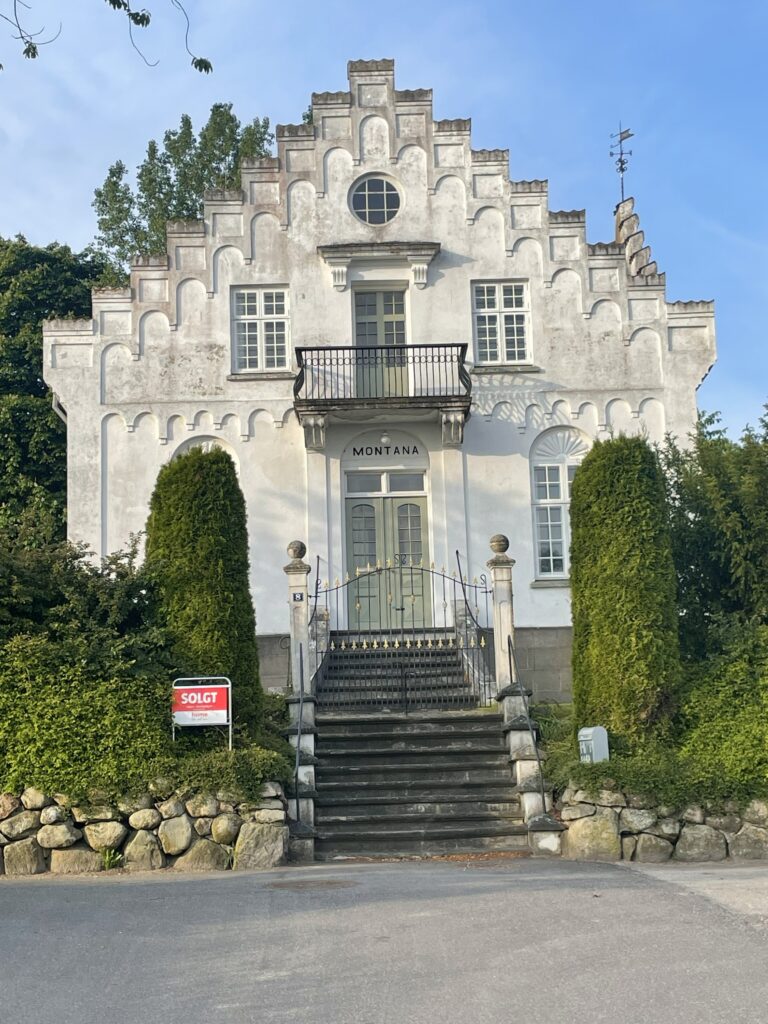
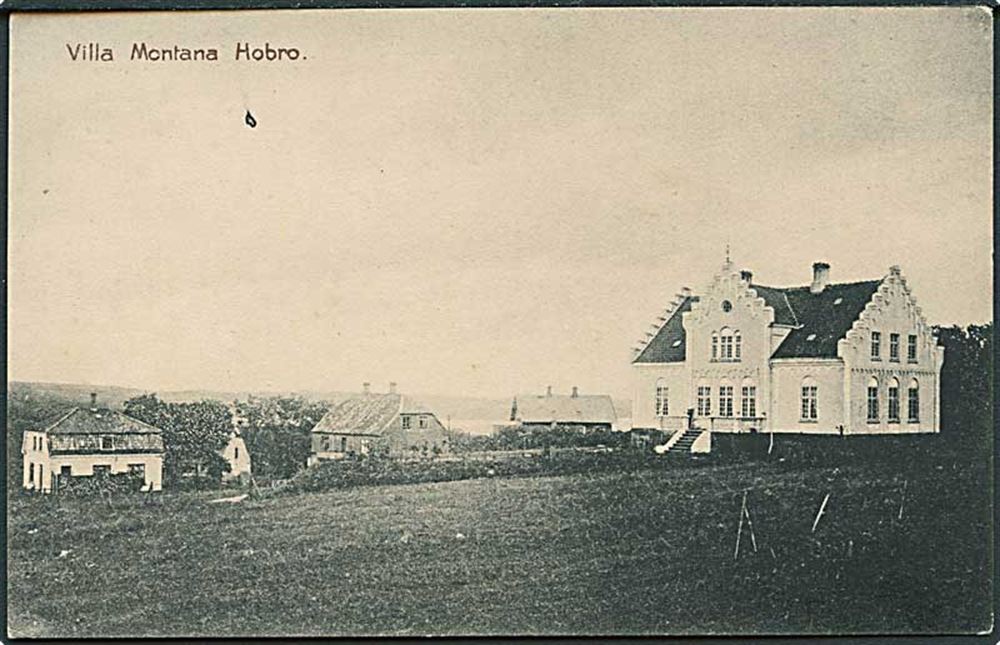
Goodbye, Montana

There are houses you live in, and there are houses that live in you.
Montana was the second kind.

I didn’t choose it casually.
I felt it the very first time I saw it — the weight of its old bones, the quiet pride in its Edwardian-era lines, the way it waited without demanding anything. It was a house built for seasons and storms, the kind that stands while everything around it changes. A man can come to love a place like that.

And I did.

I loved the wide rooms and the light that moved across the house as the day progressed.
I loved the heavy doors that closed with certainty, the high ceilings that held silence like a cathedral.
I loved the garden in early summer, quiet, private and still, the leaves emerging on the huge old copper beech.
I loved how the house watched over everyone inside it, even when no one noticed.

But Montana was also the place where the old life gathered around me.
A museum of years I outgrew.
A stage where I carried weight meant for three men, not one.
A place that held memories I had long outlasted.

For all its beauty, it became a harbour I could no longer stay anchored in.

Every house has its truth.
Montana’s truth was simple:
I was no longer the man to fit what I had built inside its walls.

There comes a point in a man’s life when he realises he cannot rebuild himself in the same place he was broken. Montana was filled with ghosts that never left — not tragic ghosts, just the kind created by routine, obligation, and the quiet dying of years you can’t get back.

I learned many things inside that house.
How to endure.
How to protect.
How to keep going when the foundation cracks.
How to hold a life together when everything else fell apart.

But I also learned the hardest lesson:
A man cannot stay where he is slowly disappearing.

So I left.
Not because I stopped loving it,
but because I finally understood that Montana belonged to a chapter of my life that had to end before I could begin the next one.

The day I walked through its rooms for the last time, the house felt lighter — as if it, too, knew the story was finished. The echoes were softer. The air felt still. There was no anger, no grief, just a quiet acknowledgment between a man and the place that sheltered him:

“It’s time.”

Montana will go on without me.
Houses do.
They take new families, new laughs, new storms, new light.
They outlive all of us.

But a part of me will always stand in the hallway, hand on the mahogany banister, knowing I was shaped there — hardened, humbled, and finally pushed out into the world to reclaim the man I should have been all along.

Some places you leave to save your future.
Montana was one of them.

This is my goodbye —
not in sorrow,
but in gratitude for a house that carried me long after it should have.

And now the road ahead is open,
the horizon wider,
the past sealed gently behind a closing door.

The last day

© 2026 The Dunwiddie Post

Theme by Anders NorénUp ↑