The word occult is usually misunderstood before the subject has even begun. It is taken to mean black magic, demons or superstition. Its older meaning is simpler and more useful. It means hidden.
That is the part that interests me: hidden knowledge, hidden history, hidden power, hidden language and the symbols through which meaning survives long after its source has been forgotten.
Hidden History
Human civilisation has always had an outer life and an inner one. Kings held public ceremonies and private councils. Priests gave one teaching to the congregation and preserved another for the initiated. Merchants guarded routes and methods. States classified documents. Orders protected rituals, archives and names. Hidden knowledge is not an aberration in human history. It is one of its permanent features.
My interest begins with the possibility that accepted history is incomplete.
We are taught to think of civilisation as a steady ascent, with ourselves standing at the highest point. I see no reason to accept that. Civilisations rise, specialise, collapse and vanish. Libraries burn. Languages die. Trade routes break. Techniques disappear when the men who practised them are gone. Knowledge that once seemed ordinary can become unrecoverable within a generation.
The ruins remain, but the explanation goes. How often do modern historians dismiss an out of place ruin with the phrase site of religious significance? Convenient, lazy and dismissive.
The pyramids belong to this territory, and not only those of Egypt. Pyramidal structures appear across continents and cultures separated by distance, language and time. Their uses differ, but the form returns. That matters.
The pyramid is architecture, but it is also a symbol of hierarchy, permanence and concentrated power. Many support the few, and the structure narrows as it rises. At the summit sits the point from which the whole can be surveyed. The same form continues to appear in monuments, seals, currencies, institutions and corporate imagery. Power has always liked the pyramid because the pyramid describes power.
Other symbols recur with the same persistence: the eye, the obelisk, the serpent, the sun, the black cube, the twin pillars and the checkerboard floor. Their meanings change across time and place, yet the forms survive. A civilisation may disappear while its symbols remain active in another age.
Symbols do not need to explain themselves. That is part of their strength. A flag, seal, uniform, crest or logo can communicate authority before a word is spoken. The modern world has not escaped ritual or symbolism. It has simply renamed them as branding, ceremony, protocol and design.
Numbers
Numbers work in much the same way. Thirty-three and 322 appear often enough around institutions, organisations, news stories and public events to attract attention. Thirty-three carries established religious, esoteric and Masonic significance. Three hundred and twenty-two appears openly on the emblem of Skull and Bones. Once a number has acquired symbolic weight, its recurrence cannot always be treated as empty.
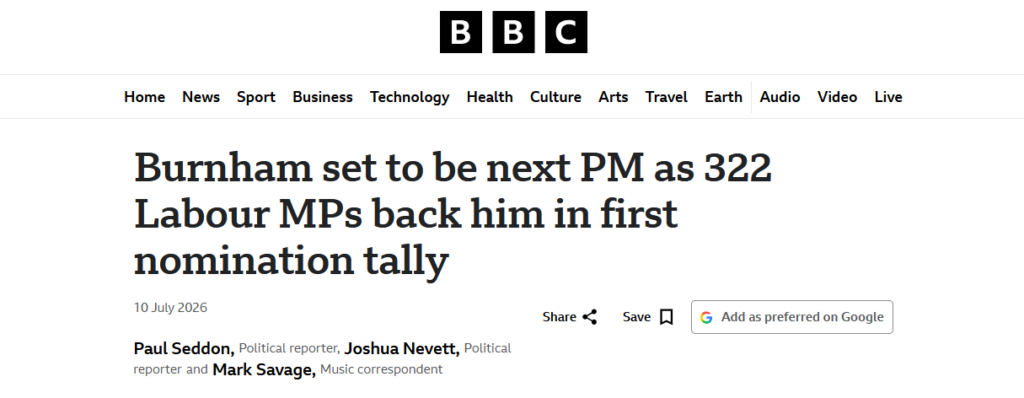
Patterns are how meaning is detected.
This is accepted in finance, warfare, intelligence, engineering and criminal investigation. Yet the moment a pattern concerns power, ritual or hidden organisation, noticing it becomes socially suspect. That tells me more about the boundaries of permitted inquiry than it does about the pattern itself.
Conspiracies
The word conspiracy has been damaged in the same way as occult. It is now used less as a definition than as a method of dismissal. Its meaning is straightforward: two or more people working together, usually in secret, to achieve an outcome.
By that definition, conspiracies are common.
Criminals conspire. Companies conspire to fix prices. Officials conspire to conceal misconduct. Political groups conspire to remove rivals. Intelligence agencies conspire as part of their function. Courts prosecute conspiracy because conspiracy is a real form of human organisation.
The serious questions are always specific. Who acted together? What did they intend? What was concealed? What evidence remains? Who benefited?
Some conspiracies last days. Others survive generations. Some fail. Some succeed and are later written into history as though the outcome arose naturally. Power rarely announces the full mechanism by which it acts.
Secret Societies
This is why long-lived organisations interest me.
Freemasonry has survived through ritual, hierarchy, initiation and symbolism. Its architecture is visible: the lodge, the pillars, the compass and square, the all-seeing eye, the degrees, the temple, death and rebirth. Its language is allegorical, but its structure is real. It has preserved continuity across centuries because it understands the power of initiation, memory and internal order.
The Jesuits built influence differently, through education, scholarship, diplomacy, discipline and proximity to authority. They understood that the man beside the throne may matter more than the man sitting on it. The adviser, confessor, tutor or intermediary can shape power while remaining outside the formal office.
That pattern appears throughout history.
Formal authority is visible. Real influence often is not.
An ordinary man thinks in years. A government thinks in electoral cycles. An order that survives for centuries can preserve archives, relationships, objectives and language across generations. Time itself becomes an instrument of power.
Words
Words belong to the same hidden structure.
Etymology matters because words carry buried history. Meanings change, and when the meaning changes, the range of possible thought changes with it. A word can soften an action, disguise it or reverse its moral force.
A tax becomes a contribution. Censorship becomes moderation. Surveillance becomes safety. War becomes intervention. Confiscation becomes compliance. The act remains, but the word changes the public response.
That is word magic in its practical form.
Language does not merely describe reality. It organises it. Law depends upon definitions. Contracts depend upon definitions. Ownership, liability, jurisdiction and guilt can all turn on the meaning assigned to a word. The person who controls the definition controls more than the sentence.
Law
This is why legal language and maritime law interest me. Maritime law developed around ships, cargo, trade, insurance, salvage and movement between jurisdictions. Its concepts and vocabulary run deep through commercial life: vessels, berths, bonds, delivery, ports, docking, legal persons and instruments of title.
Modern law presents itself as a single structure, but it is layered. Roman law, canon law, common law, admiralty law, merchant practice, statute, contract and administrative procedure all sit beneath the surface. Most people pass through these systems without knowing which layer is acting upon them or where the language came from.
Ignorance of the structure does not prevent the structure from operating.
Dark Powers
Every civilisation has described forces that act through corruption, temptation, fear, inversion, possession and deception. Demons, archons, spirits and invisible rulers appear under different names in different cultures. Modern language tends to reduce these ideas to psychology or metaphor, but the old accounts were often more direct. They described forces that entered men, bent judgement, reversed values and fed upon disorder.
Perhaps some of those forces are psychological. Perhaps some are spiritual. Perhaps those categories were never as separate as modern thought assumes.
The language of darkness also appears in science. Dark matter and dark energy are names for realities inferred through their effects but not yet fully understood. Most of the universe is described using terms that admit how much remains unseen.
Summary
We think we’re so clever, yet we do not fully understand consciousness, the origin of life or the greater part of the universe. We are advanced, but that does not prove we are the most advanced civilisation ever to have existed. It proves only that we are the civilisation currently writing the record.
Too much has vanished for certainty.
Knowledge disappears quickly when it belongs to specialists. Kill the builders and the method dies. Burn the archive and the record goes with it. Destroy the language and the instructions become symbols without meaning. A later civilisation inherits the stone but not the knowledge, so it gives the object a new name, a new god and a new history.
The stone survives.
The meaning does not.
That is why the occult matters to me. It is not a collection of curiosities. It is the study of what remains hidden beneath accepted explanations: symbols that survive empires, numbers that recur around power, orders that preserve memory, words that alter reality, laws whose origins are buried, and knowledge that may have crossed centuries in fragments.
Odysseus understood that the map was never the sea. The coastlines already known were only part of the voyage. Beyond them were islands, currents, reefs and powers that did not care whether a man believed in them.
He sailed because the world was larger than the explanation.
So do I.