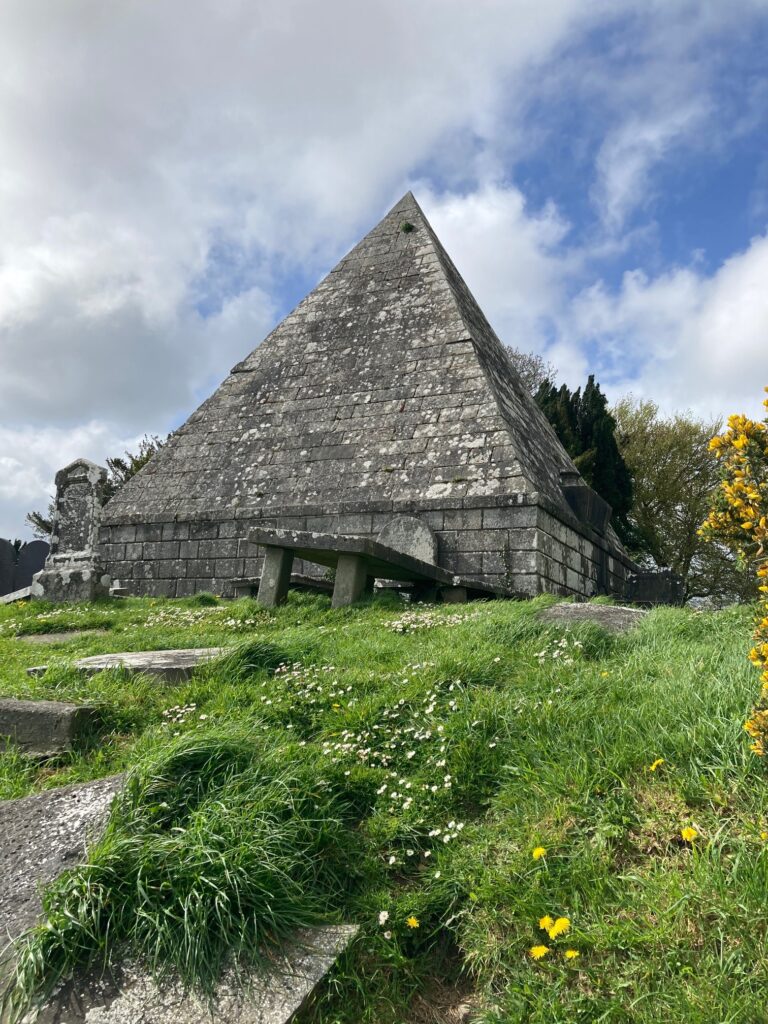
Only in Ireland do you discover that the country’s biggest pyramid is half an hour from home and had been sitting there all along.
So I went.
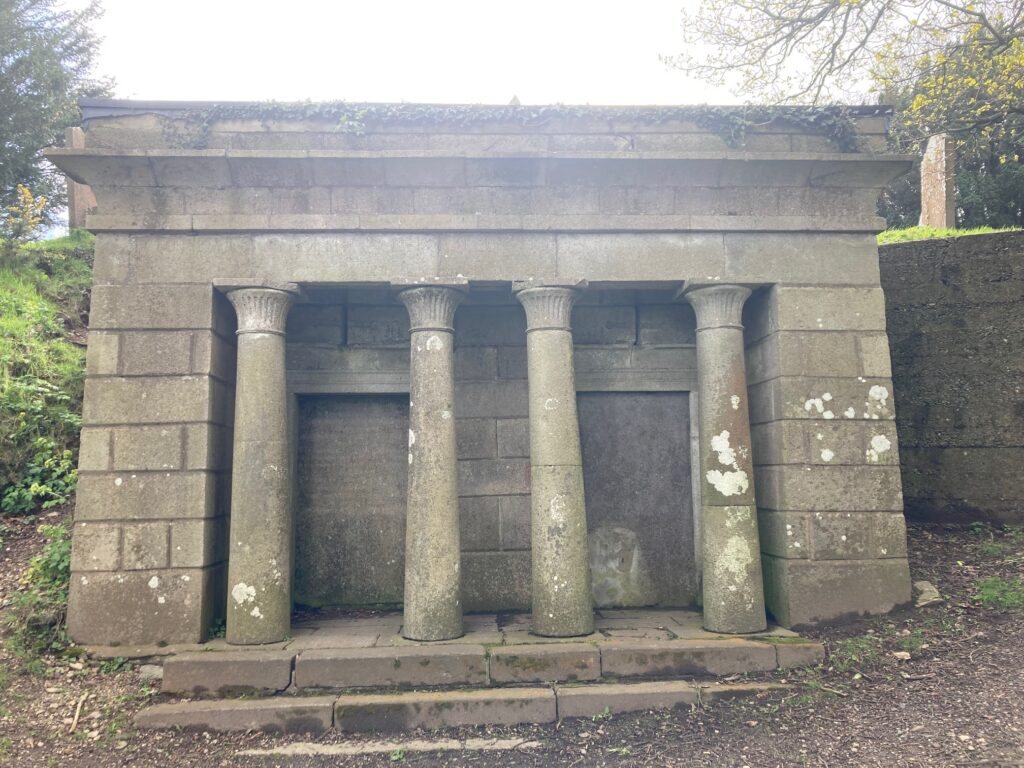
The Howard Mausoleum is worth the visit. Its location is strange from the outset — isolated, slightly uncanny, set down in the landscape with no need to explain itself. Beside it stands a Greek temple. And the pyramid itself has real presence: solid, heavy, unyielding, built not as ornament but as statement. Inside, there was space for 33 burials.
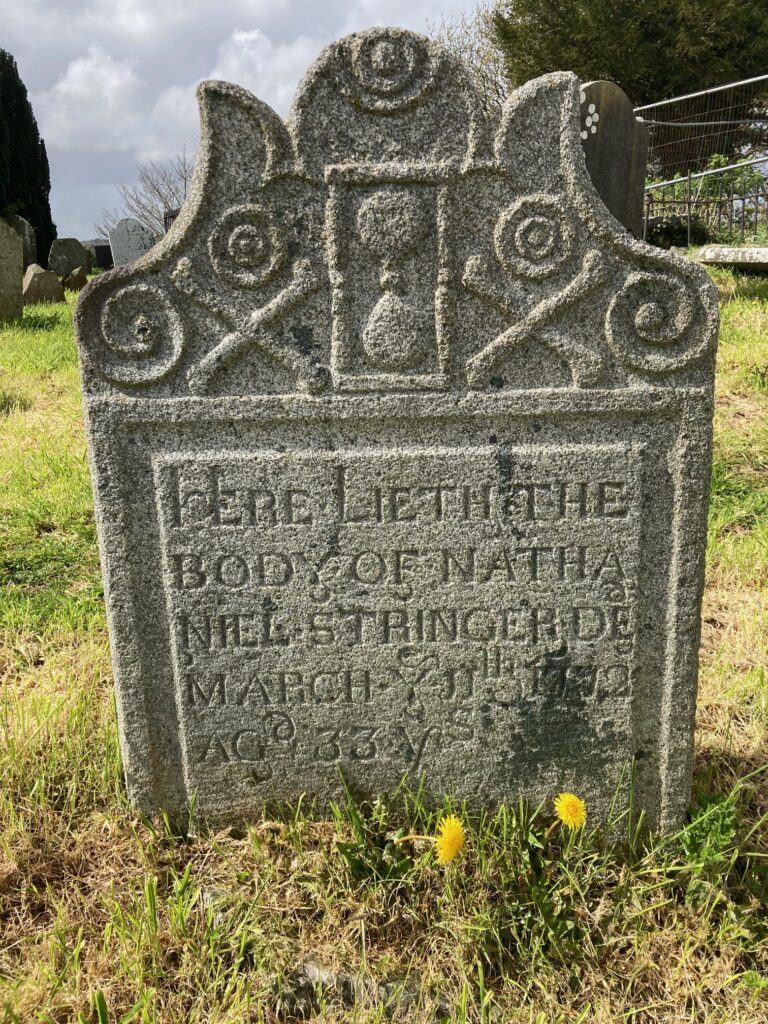
That number stayed with me when I noticed the gravestone of Nathaniel Stringer: dead at 33, on 11/3. One of those details that means nothing, perhaps. Yet still catches in the mind.
Then there was the woman.
As I walked the grounds, I saw her lying behind a gravestone. Not mourning in any obvious way. Not resting either. Just there. When she rose, she gave no eye contact, no hello, no how’re you doing — very un-Irish in that silence. She walked back without a word to the taxi waiting outside. I left at about the same time.
Places like that make you wonder what else lies underneath. Old sacred ground is rarely used only once. New faiths, new families, new monuments — they build over what came before. A tomb may be eighteenth century. The pull of the place may be far older.
Then I got home and heard the final layer: that the tomb was sealed after a baby was buried there in the 1800s, and that afterwards people said the screams of the tormented child could be heard from within.
That, too, felt Irish.
A pyramid. A temple. Thirty-three spaces for the dead. Silence in the graveyard. And the old certainty that stone remembers more than it says.
As second-date suggestions go, walking Trevor Deely’s route through Dublin was an unusual one.
However, it was a mutually agreed one.
It was daytime. Cold, dry, and bright.
Before we started, she told me she had a feeling that somewhere on the walk, something had happened. She said it simply and left it there.
Later, on Haddington Road, I stopped and said that I did not think he had walked beyond that point.
She looked at me and said that this was where she had felt it too.
That was the interesting thing.
Not because it proved anything. It did not. But because sometimes a place refuses the story made for it. You can hear an official version from a distance and it sounds tidy enough. Then you stand on the ground itself and it starts to thin in your hands. One only needs to visit Praia Del Luz, boots on the ground to begin asking questions around the official narrative regarding Madeline McCann. It was the same here.
The canal idea always struck me as obvious tripe. Too neat. Too convenient. Trevor’s last confirmed sighting was on Haddington Road, way past the canal, walking toward the Beggars Bush area, and Garda appeals have long focused on the unidentified man seen near his office and again shortly after him on CCTV.
It was interesting too to learn that it was the weekend Bill Clinton was in Dublin. Accounts of the case say roads and security arrangements were altered, bins and skips were emptied, and manhole covers were checked before any meaningful search for discarded evidence could happen. That does not prove anything in itself. But it adds another layer of strangeness to a case that already resists easy explanation.
And then there was the setting itself. Trevor worked in investment banking, only a few years before one of the greatest financial crashes in modern history. That too may mean nothing. But when an impressionable young man with banking access disappears into a city still flush with late-boom confidence, and the last ground on which he feels real is a short stretch of road in Dublin 4, the imagination does not need much encouragement.
What stayed with me was simpler than theory.
Two people walking through Dublin in the cold sun, and both feeling, at the same point, that the official map had gone thin.
I found Oasis’s Half the World Away in Hobro in 2024.
Some songs arrive as entertainment. Some arrive as truth. This one arrived as recognition.
By then, much of my old life was still standing in the outer world, but inwardly it had already begun to fall away. That is a dangerous phase in a man’s life. He is still present in the visible structure, but no longer belongs to it. He can still perform the role, but the role has gone dead in his hands.
That was Hobro.
The song is not about collapse. It is about misplacement. It is the sound of a man who knows he is not where he should be. There is no panic in it. No pleading. Just the quiet knowledge that the ground under him is not his ground.
That is what struck me.
There are times when life does not fail in one dramatic blow. It simply becomes false. The outer frame remains, but the spirit has already stepped away. A man feels it first as restlessness, then as distance, then as truth. He sees that what once held him no longer does. He understands that staying too long in the wrong place can do more damage than leaving.
Hobro was not home. It was a waystation where that fact became impossible to ignore.
Looking back, I can see the song named something before I did. My problem was not that I was lost. My problem was that I was living on the wrong ground. That is a harder thing to admit, because once a man sees it clearly, he cannot remain innocent. He must either move, or consent to his own diminishment.
Some men are built for settled fields and known roads. Others are made for crossings. They know, even when they resist it, that life comes alive again only when they leave dead terrain behind.
That was the gift of the song. It gave shape to a truth I was already living.
Not broken. Not beaten. Not finished.
Just half a world away from where I was meant to be.
“Road to Nowhere” is playing in the background. It fits, but not in the way it once might have.
Not because I am lost.
Because a life lived honestly is never a straight road. It is crossings, weather, wrong turns, departures, and long stretches where there is no map, only instinct. Only later does it look like a line.
A birthday is a good day to take stock.
Not the polished version. Not the public story.
A clean ledger.
What was gained. What was lost. What was escaped. What changed. What returned.
That brings me to the gap and the gain.
The past year was not cosmetic. It was structural.
I stepped away from old gravity — obligations, expectations, patterns that no longer fit. I made space. Not comfortable space, but real space.
In exchange came something harder, and more valuable:
Freedom. Optionality. Control over direction.
Not imagined freedom.
Built freedom.
That is gain.
I sharpened too.
I see faster now:
weak systems
false narratives
arrangements that don’t hold
I leave sooner. I trust the signal sooner. I waste less time trying to keep dead things alive.
That is gain.
Life has also become responsive again.
There has been movement. Energy. Intensity.
Moments where something real is felt immediately, without explanation. Moments that remind a man that life is not behind him, but still very much in front of him.
That is gain.
Confidence has returned with it.
Not performance.
Evidence.
Enough to stand differently in one’s own life.
That too is gain.
And yet the gap remains.
Not everything that matters continues.
Some moments are real, vivid, alive — and still do not become more.
Not failure.
Unfinished.
A note that stays in the air a little longer than expected.
That is the gap in its most human form.
The error is simple.
Allowing the unfinished to outweigh the achieved.
Letting what did not fully come to shore obscure what clearly did.
That is not a moral failure.
It is an error of accounting.
So the ledger at 55 is this:
The gain:
a life structurally changed
greater freedom and control
sharper judgement
renewed energy
forward momentum
proof that life still answers when engaged properly
The gap:
not everything resolved
not everything carried forward
not every moment became a chapter
gains not always fully realised or optimally banked
occasional hesitation at the point where action was required
The position now
No delusion.
No self-congratulation.
Just accuracy.
I do not need to be finished. I do not need to be settled.
At 55, the correct posture is simple:
under sail
Not drifting. Not docked.
Moving.
This is not the end of the journey.
But it is not open sea either.
It is one of those islands a man is glad to reach.
A place where life answers him again.
He does not stay forever.
But he does not deny that he arrived.
The gap remains.
It always will.
But so does the gain.
And at 55, I would rather live like a man who knows the difference.
Twenty-eight and a half years ago, I had an MRI scan that resulted in me being told I might never walk again. Some sentences do not fade. They divide a life. There is the man before them, and the man after.
I wanted to stand again where that fracture began. Not for closure. I have no use for that word. I wanted to look back at the man who heard it, and at the road he took afterwards, with all that followed from it, for better and for worse.
Ireland can do that. It can alter the course of a life without warning, and only decades later do you see the full shape of the turn.
I visited a few places in Limerick, but took no photographs. It seemed wrong somehow. Not every place should be converted into an image. Some are better left as encounter.
And yet Limerick, appropriately enough, also gave me a limerick:
There once was a man from Hobro Who knew it was time to go, And start a new life Without all that strife, And so he went off to Wicklow.
A joke, obviously. But not only a joke.
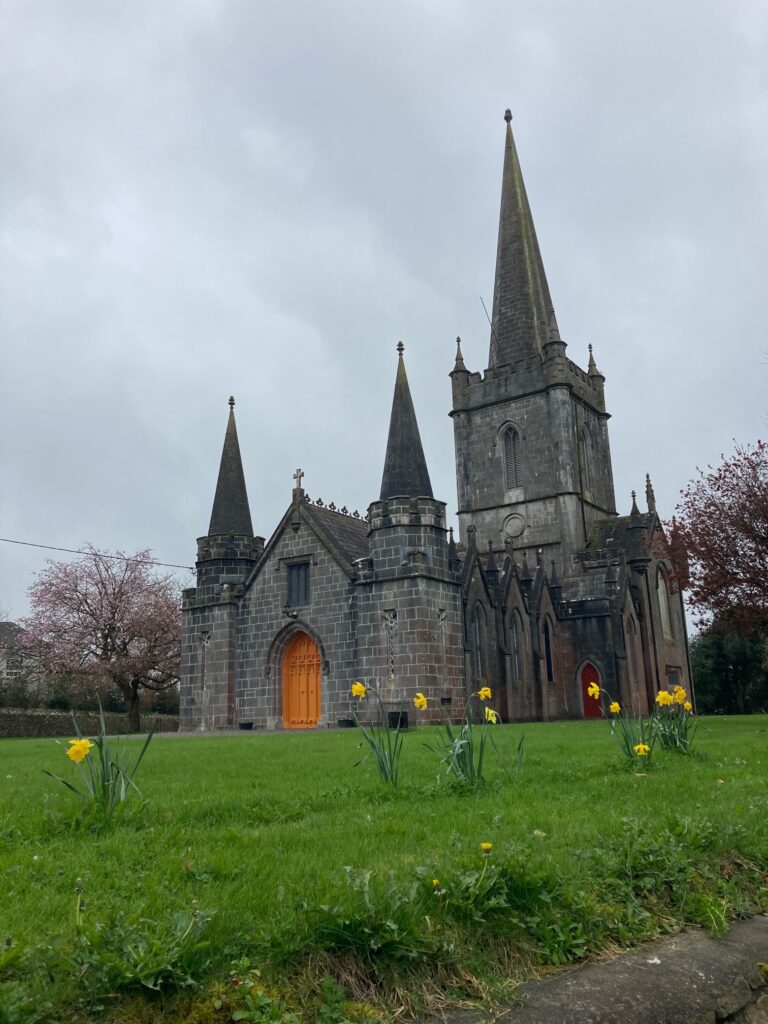
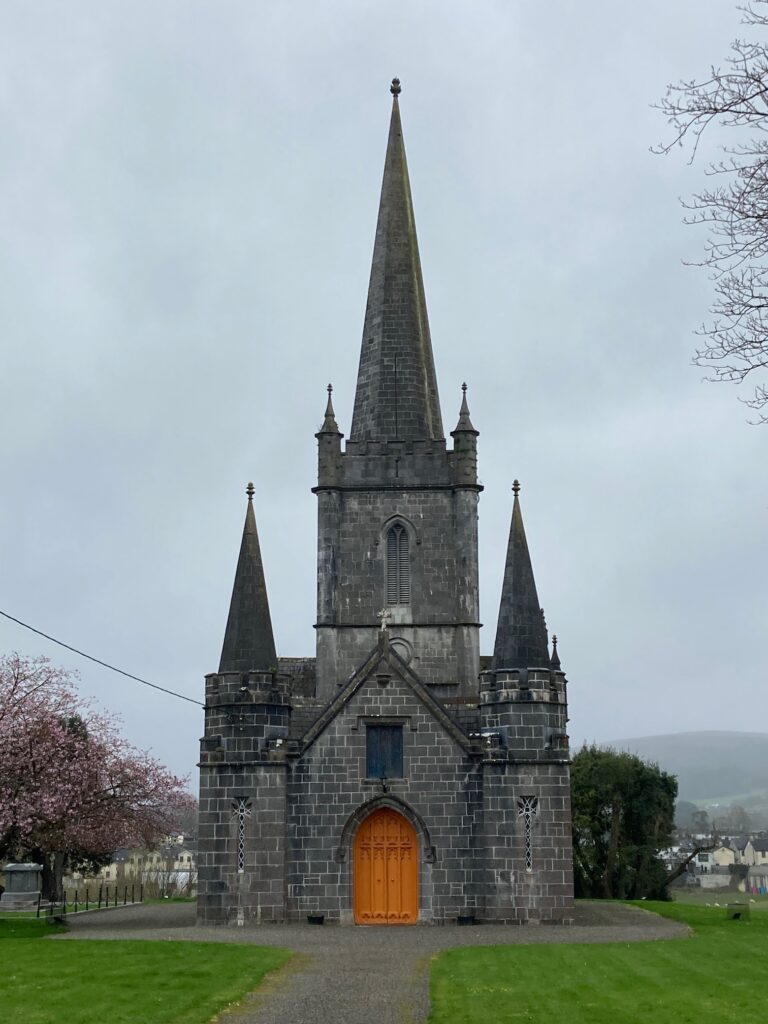
From there I drove on, meaning to see Cahir Castle, and instead found myself halted by something else: one of the most beautiful churches I have seen in Ireland.
You could see it from far off. Protestant Gothic. Intact, solid, self-possessed. Built in 1818 and designed by Nash, it immediately pulled me toward the age I so often meet in the earth and on the beaches: the late Georgian and Regency world, the world of old copper, worn silver, and the coins that still surface beneath the grass and sand. Then there was the door, painted a challenging orange. In Ireland, orange is never merely orange. History still speaks through colour.
Then Dungarvan.
A beautiful seaside town, but one marked by subtraction. You can feel the railway’s absence in the place. The town remains handsome, but the old line still haunts it. The Greenway now runs through that lost corridor, with so much railway architecture still standing that the old movement has not entirely gone. It has only changed form.
Then Waterford.
The energy shifted again. Medieval, certainly, but not trapped in its own past. Some towns feel burdened by memory. Waterford did not. It felt old, but still open. Less weighed down by what it had been. More alive to what it may yet become.
That, perhaps, was the shape of the journey.
Limerick was reckoning. Cahir was surprise. Dungarvan was beauty marked by loss. Waterford was old stone with forward motion still in it.
Tomorrow I will head home. But first there is Waterford city centre, and perhaps, if the weather opens, a new beach or two to detect. I have already identified them.
Then Passage East, literally. A rarity now: a car ferry between Irish places. After years in Denmark, I like the thought of that more than I should. Driving onto a boat, crossing a stretch of water, and letting it put me down elsewhere. Not exile. Not escape. Just passage.
And then home.
And perhaps that is enough for now: not answers, but movement.
I had just come back from Consett, which still feels like home in some older sense, and went through security at Newcastle Airport.
It was busy. The gates were full. The trays moved forward in a slow line under the white lights. The staff were in no mood to wave anything through. They were checking everything properly, or at least thoroughly, which is not always the same thing.
Then my tray slid off for inspection.
That feeling came at once. The small drop in the stomach. There were five trays ahead of mine in the queue and no way round it.
The man in front had already been stopped. He opened his bag. They took out some bananas and swabbed them. He turned and shouted something in Polish to his friend about the delay and his banan, half angry, half laughing, while they tested the fruit as though it might bring down the airport.
When they gave the bananas back, he looked at me and smiled. Not much. Just enough to say that now it was my turn.
Then they opened my bag.
The suspicious item was a few corned beef pies I was bringing back with me.
The woman opened the clear plastic bag carefully. She was about to take them out. I said, “They’re pies. Can I get them out for you?”
That changed it.
You could see it happen. Something in her face shifted. The programme broke for a second. She looked slightly embarrassed, as though she had suddenly seen herself from outside and did not much like what she saw.
No, she said, and put them back in the bag.
That was all.
But it stayed with me.
A man has his bananas swabbed. Another man has his pies inspected. Everyone stands there under the lights, waiting, obedient, serious, playing his part. The staff play theirs too. That is how much of life is now. Not evil. Not dramatic. Just people inside systems, doing what the system says, until the thing itself becomes too foolish to ignore.
Then sometimes the spell breaks.
A pie is a pie again. A person becomes a person again. For a moment the machine weakens and common sense comes back into the room.
Then the trays moved on. The airport survived.
Who ate all the pies? Me, of course. The last one disappeared at breakfast today.
I’ve come to realise that much of the history we are taught is little more than a convenient story. Yet the real clues sit quietly around us, waiting to be noticed. Often all it takes is looking up, or down, to see that the world is not quite what we are repeatedly told it is.
Baltinglass is a good place to begin.
You will not find it in many guidebooks. It is not promoted as a destination. Yet a chance video on YouTube suggested the valley may hold one of the largest Bronze Age landscapes in Europe, certainly one of the most significant in Ireland.
While tourists head for Newgrange, the officially presented megalithic site, I chose the opposite direction and drove south into the Wicklow Mountains.
The mountains feel older than the road that crosses them. Clear water cuts through the valleys. Strange stones appear where you would not expect them. Hills rise in shapes that seem deliberate rather than accidental. It is the kind of landscape that makes you slow down and pay attention.
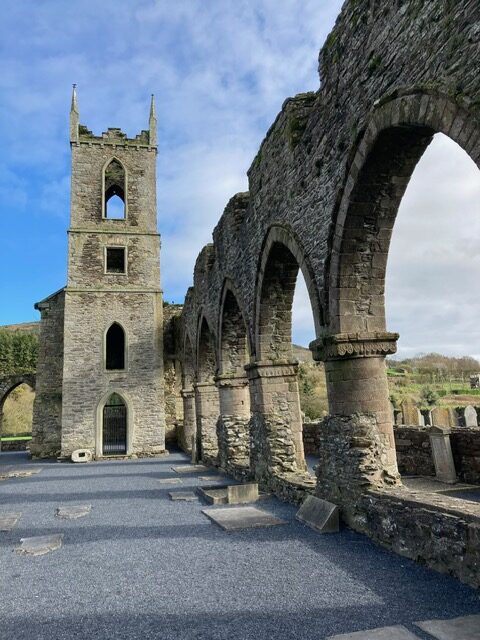
My first stop in Baltinglass was the abbey.
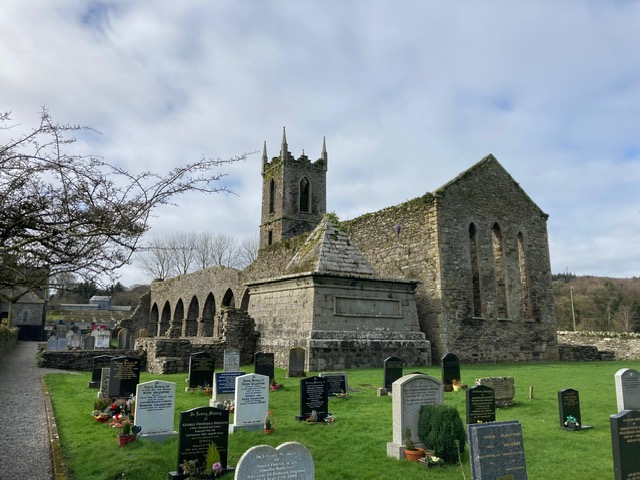
It stands ruined now, but inside the walls sits another building — a Protestant church constructed within the remains of the medieval structure, and now itself also abandoned. Layers of occupation. Different groups arriving centuries apart and choosing the same place to build.
That alone tells you something about the location.
Walking through the grounds I came upon a tomb structure topped with a pyramid. The tomb itself is now empty. There was no chequerboard pattern here, but the symbolism still brought to mind the same geometric language that appears elsewhere — pyramids, grids, and repeating forms that surface again and again across different cultures.
It makes you wonder what ideas sit behind those symbols, and how old they really are.
Looking out from the abbey, the surrounding hills have strange shapes.
They reminded me of Penshaw Hill near Sunderland and the old story of the Lambton Worm winding itself around the hill before it was slain. Today that hill is crowned with a Greek temple. Another structure placed on top of something older, as if each generation feels compelled to mark the same point in the landscape.
The pyramid above the abbey tomb seemed to belong to the same instinct.
I walked toward the largest of the hilltop forts overlooking the town. There are several scattered around the valley.
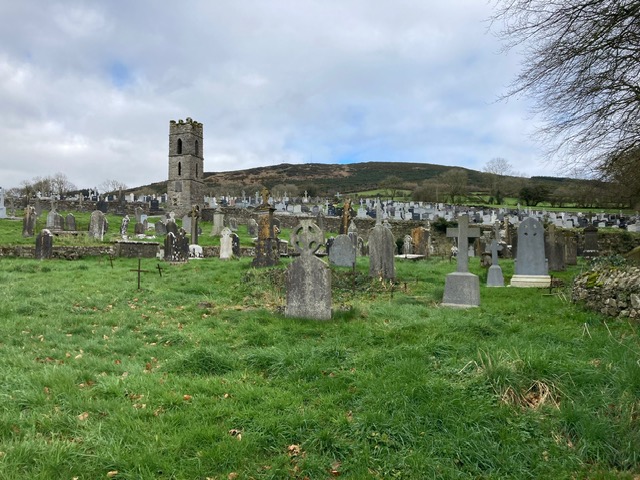
The slope of one hill has become a vast cemetery. At its centre stands a tower that feels older than the graves surrounding it. Beside it sits Ireland’s national brain injury hospital, another modern institution that has somehow found its place on this same ground.
Places with long histories seem to keep attracting new occupants.
Later I walked down into the town itself.
I stopped at the butcher and bought some local lamb. It felt right to eat something raised in the same valley I had been walking through. If places carry energy, perhaps the animals raised there do too.
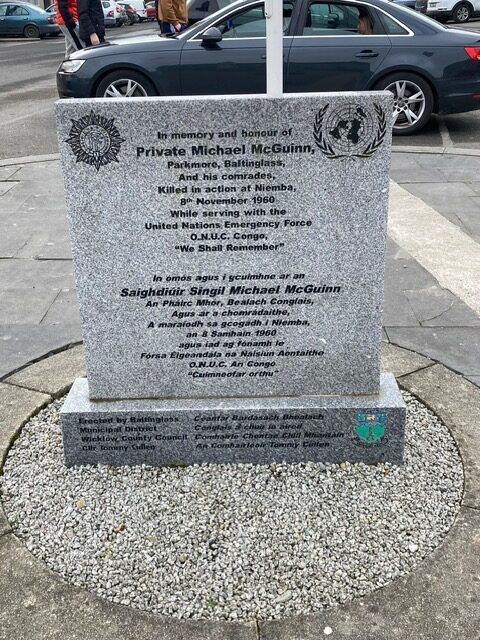
Nearby I came across something I had not expected at all — a United Nations memorial.
It commemorates Irish soldiers killed in the Congo during the UN operations of the early 1960s. I knew little about the incident before seeing the memorial, but one discovery always leads to another. Research tends to follow later.
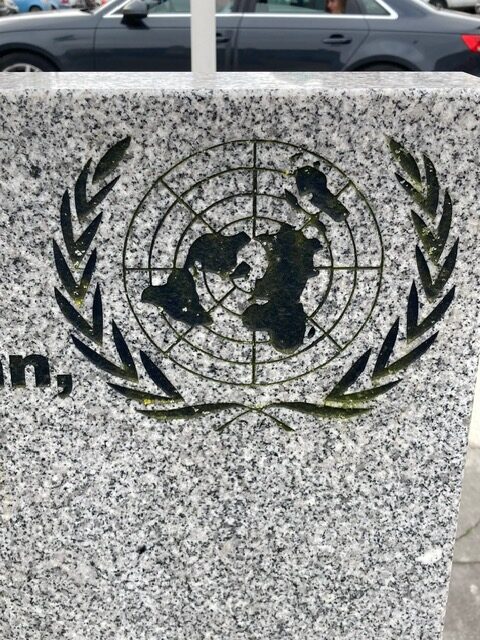
What caught my attention most was the map carved into the monument — the familiar UN world projection surrounded by a laurel wreath. A symbol most people see without ever looking closely.
It took me many years myself before I began noticing how many narratives are quietly constructed for us.
Eventually I returned to the car.
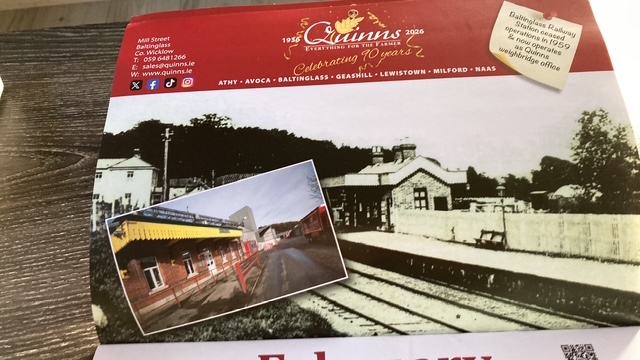
There was one last thing I wanted to see — the old railway station.
To my surprise the building still exists. It now sits inside an agricultural retail yard belonging to Quinns. I was about to leave after taking a quick look when someone knocked on the car window and asked if I needed help with anything.
When I explained I had only come to see the station, I was suddenly being given a private tour.
Inside the old office the station still has its safe, the kind of heavy metal vault you would expect in a historic house, Montana had one too. The place felt frozen in time. It was a quiet day, so perhaps that made the difference, but the generosity was appreciated, as was the company calendar I was given.
Encounters like that happen now and then to me.
Once in Georgetown a local gave me a full tour of a colonial cemetery. Another time in Newcastle someone walked me through the history of the village church and the old castle nearby. Some people still care about preserving these stories.
And that matters.
Now it really was time to head home.
There was just one final stop.
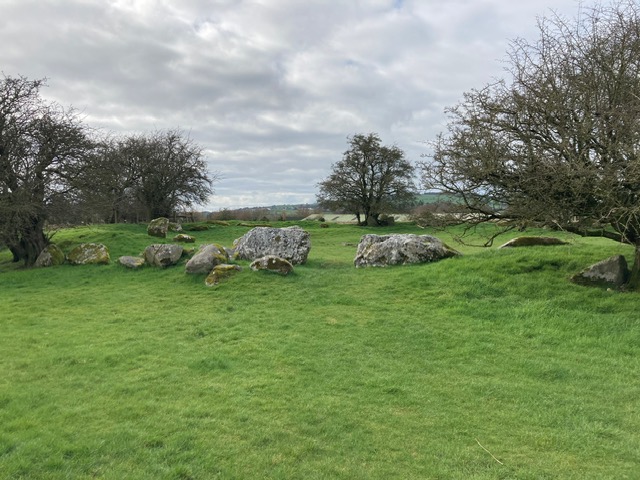
A stone circle standing quietly in a field outside the town.
Officially the circle is dated to around 2,500 years ago. Perhaps that was the last time it was used. Personally I suspect the site is far older.
When I stepped inside the circle my legs shivered slightly. Cold wind perhaps. Or something else.
What I did notice were threads and ribbons tied to nearby branches. Someone had been here before me, leaving small offerings or tokens. Even now people feel that places like this hold something.
Stones carry a presence modern culture tends to ignore.
Our ancestors may have understood that better than we do.
When I arrived home YouTube suggested another video for me.
The subject was Larry Murphy — Ireland’s notorious serial killer, often called the Beast of Baltinglass.
The valley clearly holds its share of darker stories too.
What was open weeks ago is now half-sealed. Large stretches are silent again. Only selected corridors of exposed sand remain workable — thin veins between stone.
You can feel the closing.
I moved further up the coast than usual. A stretch I hadn’t worked properly before. The signals were immediate. Dense. Layered. The kind of day that makes you realise how rare the conditions have been.
Storms strip. Tides expose. Then the sea takes it back.
What is available now may not be available again for years. And if it opens again, will I even still be here to walk it?
That isn’t sentiment. It’s timing.
So I am recording this day properly.
The depth of finds. The spread. The density. My assessment of the ground while it is still readable.
I have yet to see a metal detecting video with this level of single-day intensity.
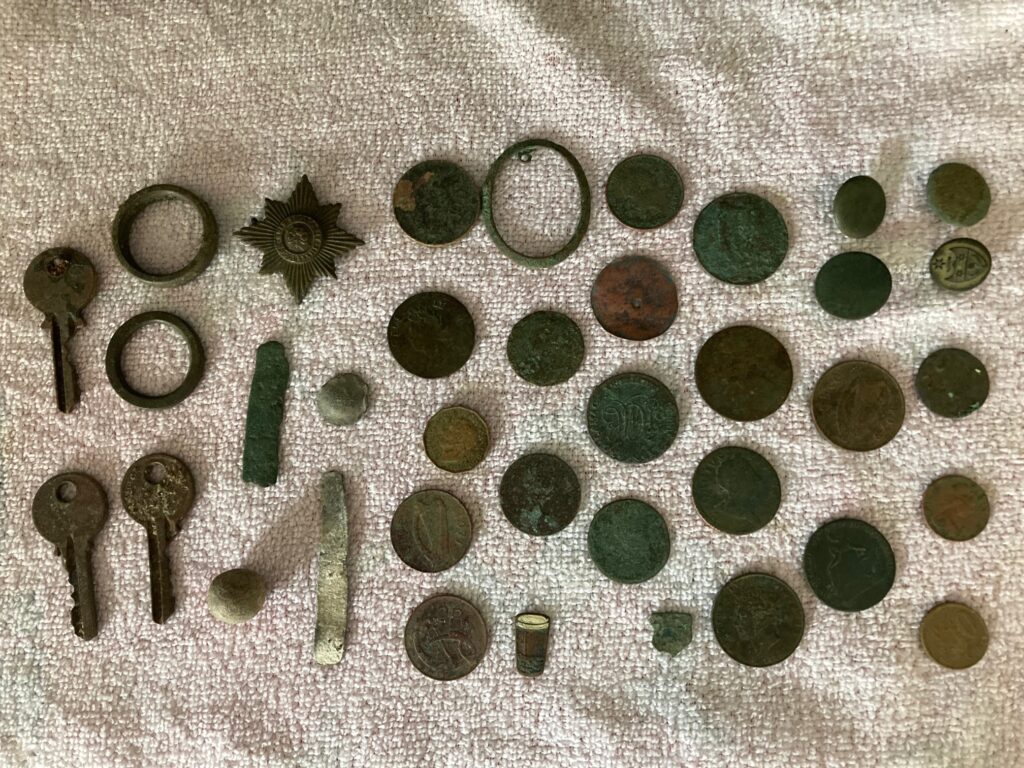
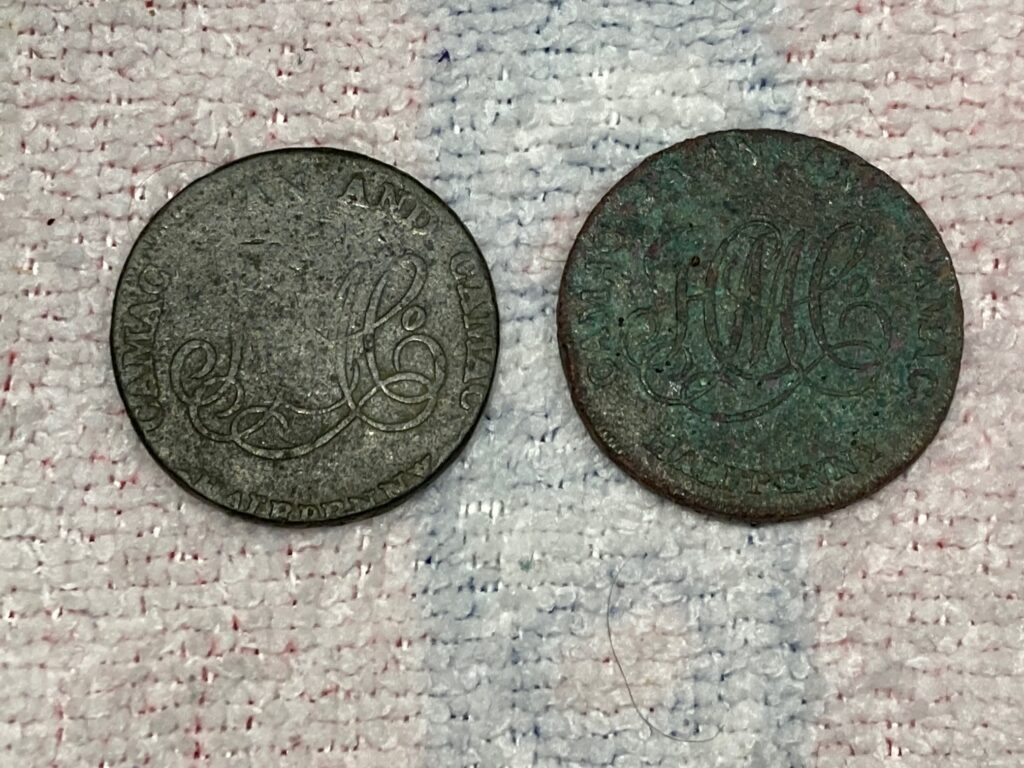
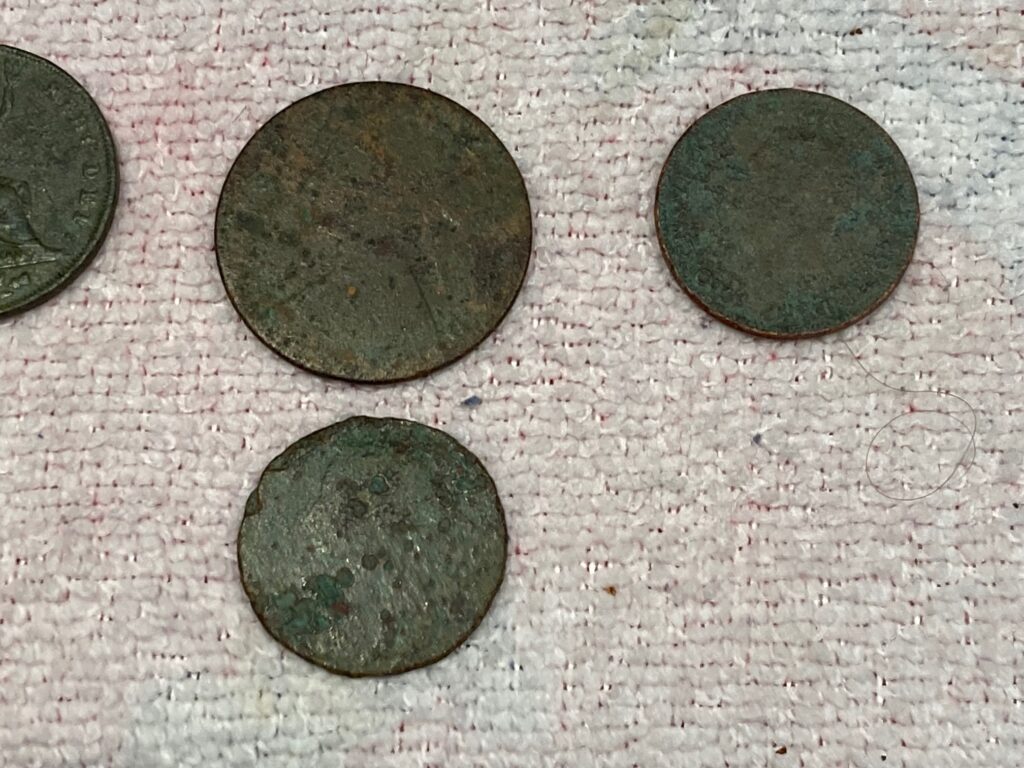
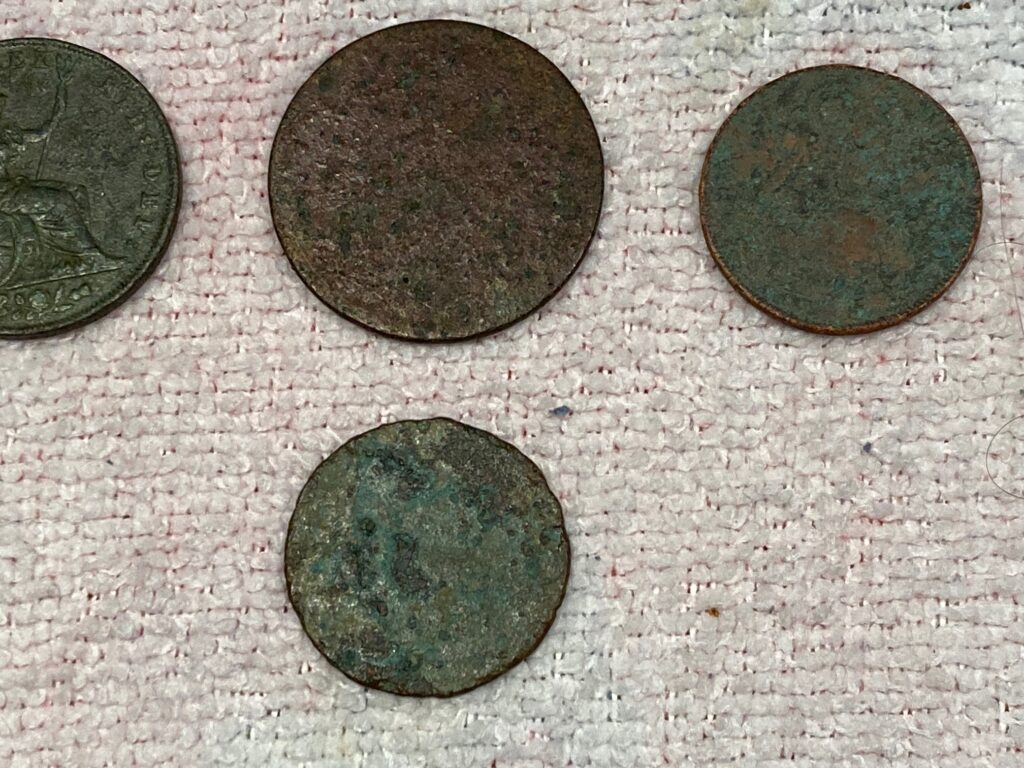
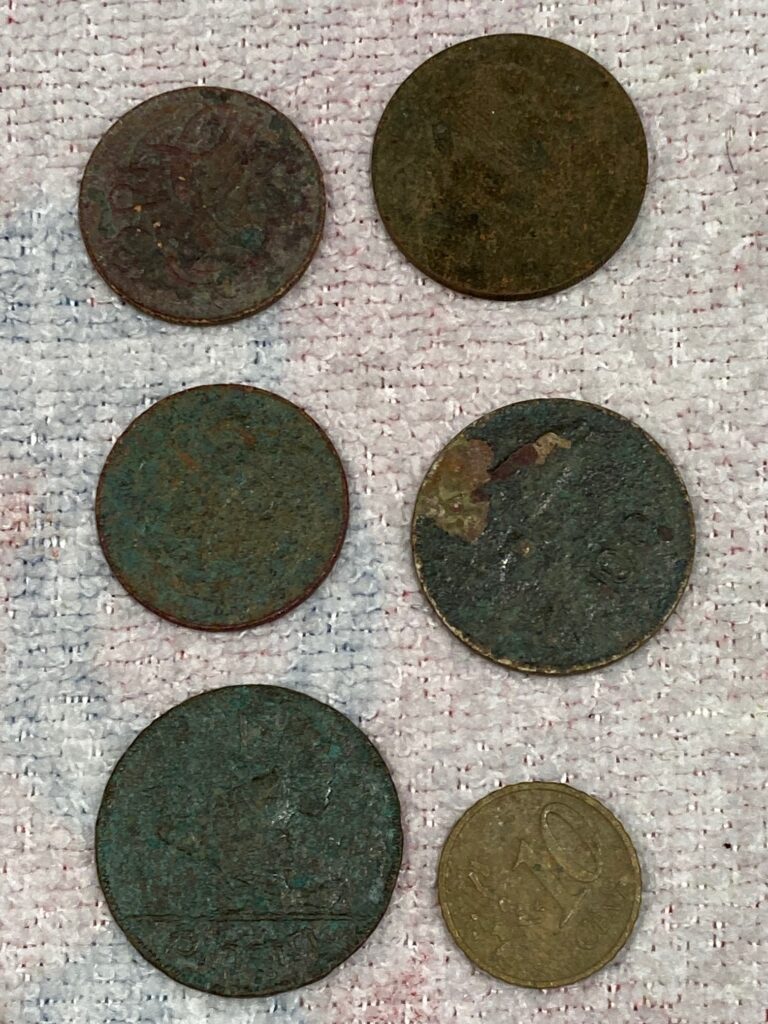
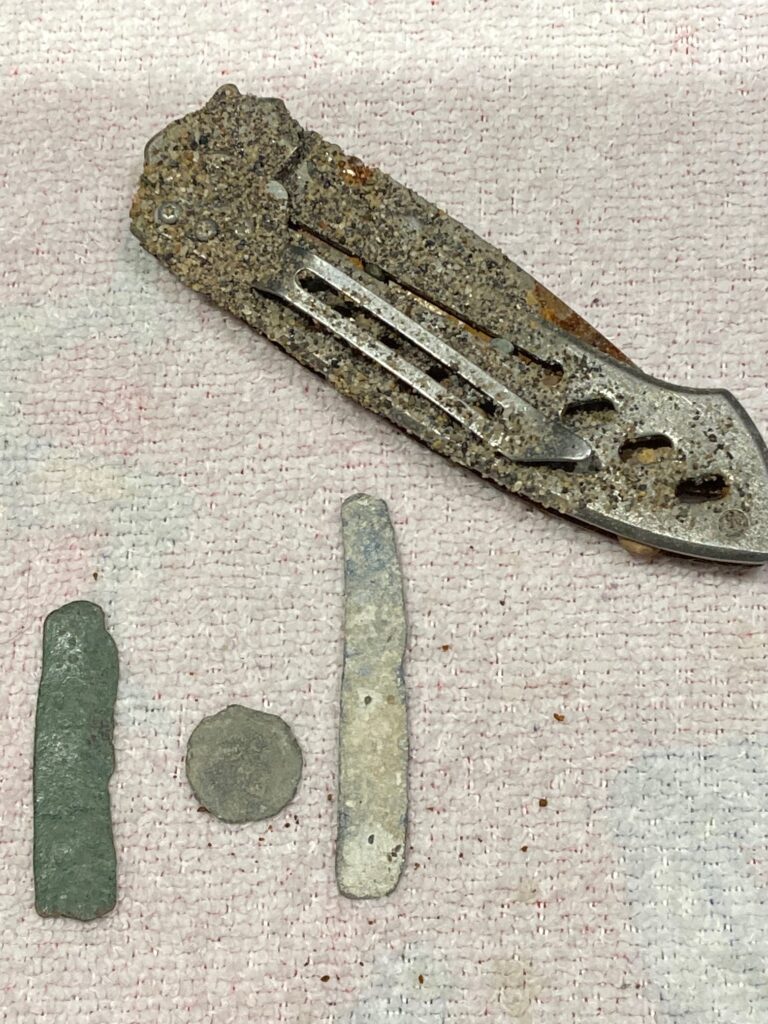
The photograph above is everything recovered in one session.
I will go through them in turn.
The Georgian Layer — George II, III, IV
Before coming here I had barely handled a Georgian coin.
Now the album thickens.
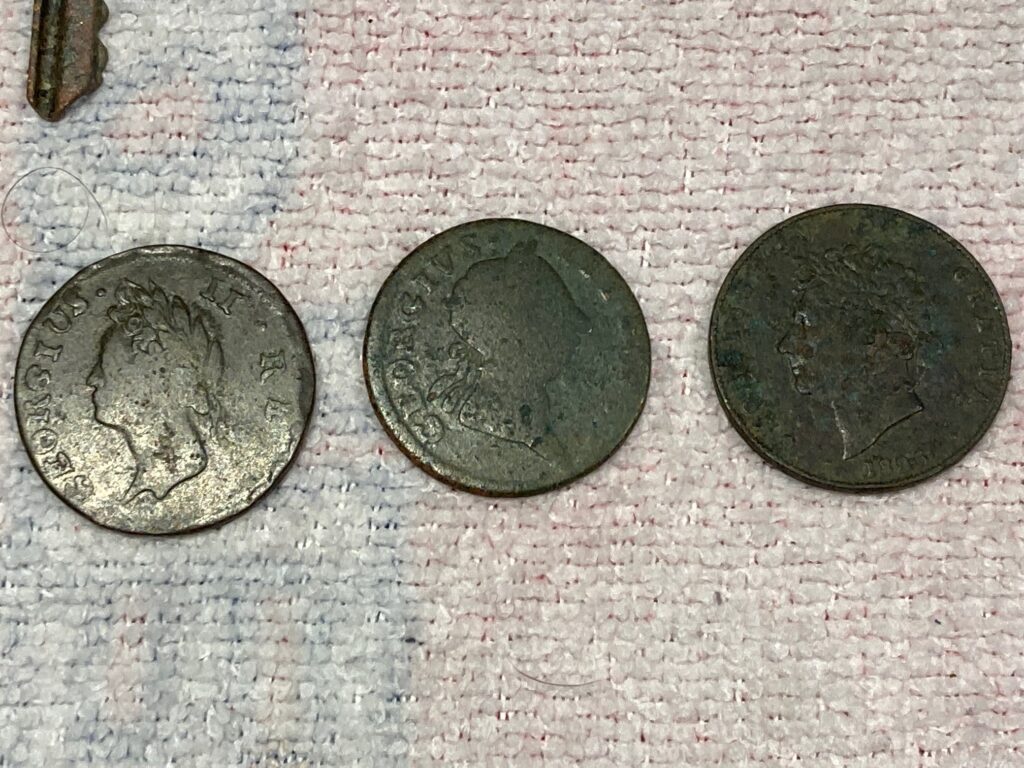
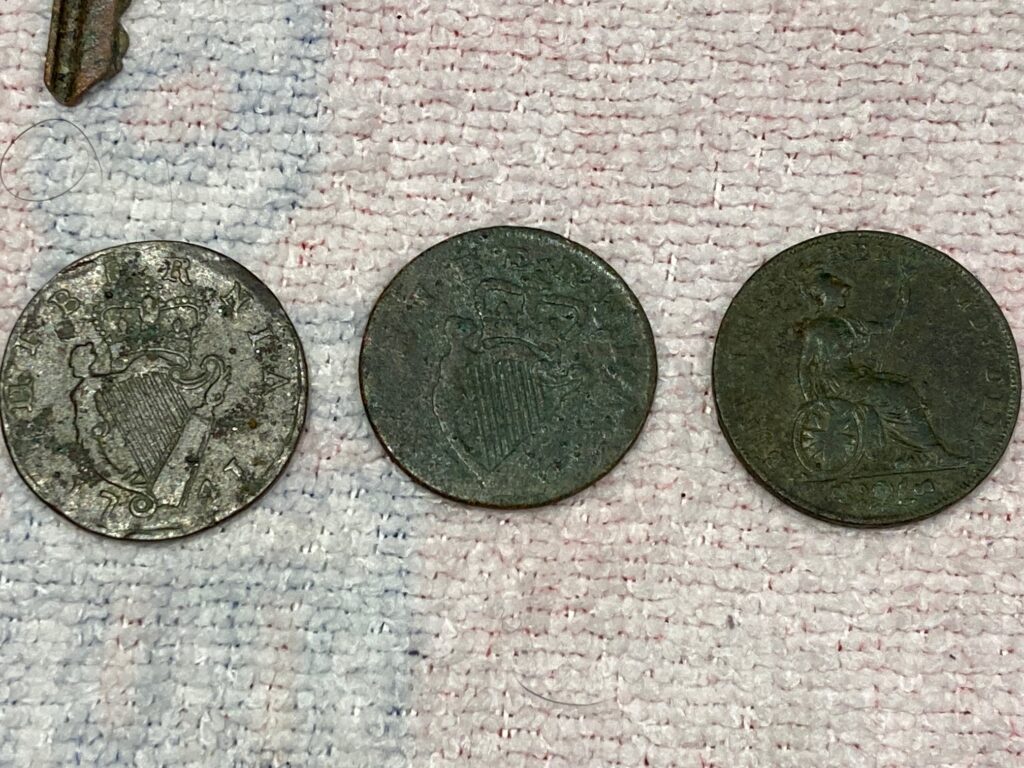
Yesterday I lifted three in one tide — George II, George III, George IV. Three reigns from one strip of sand.
The George II is 1747. Hibernia, the harp. Mid-18th century confidence. Protestant ascendancy intact. Parishes full. Structures certain of themselves.
George III follows — longer reign, longer shadow. Revolution in America. Union with Ireland. Empire consolidating even as strain increases.
Then George IV. Factory-milled. Cleaner edges. Sharper strike. Hardly worn. Dropped close to new. It did not travel far before the sand took it.
That detail stays with me.
Some coins pass through decades of hands. Others fall almost immediately. History is not evenly circulated.
George II appears more often here than III or IV. That suggests density — of trade, of settlement, of mid-18th century movement along this coast. The beach offers hints, not conclusions.
Three kings. Nearly a century. All reduced to copper discs surrendered to tide.
The sand does not rank reigns.
It records loss.
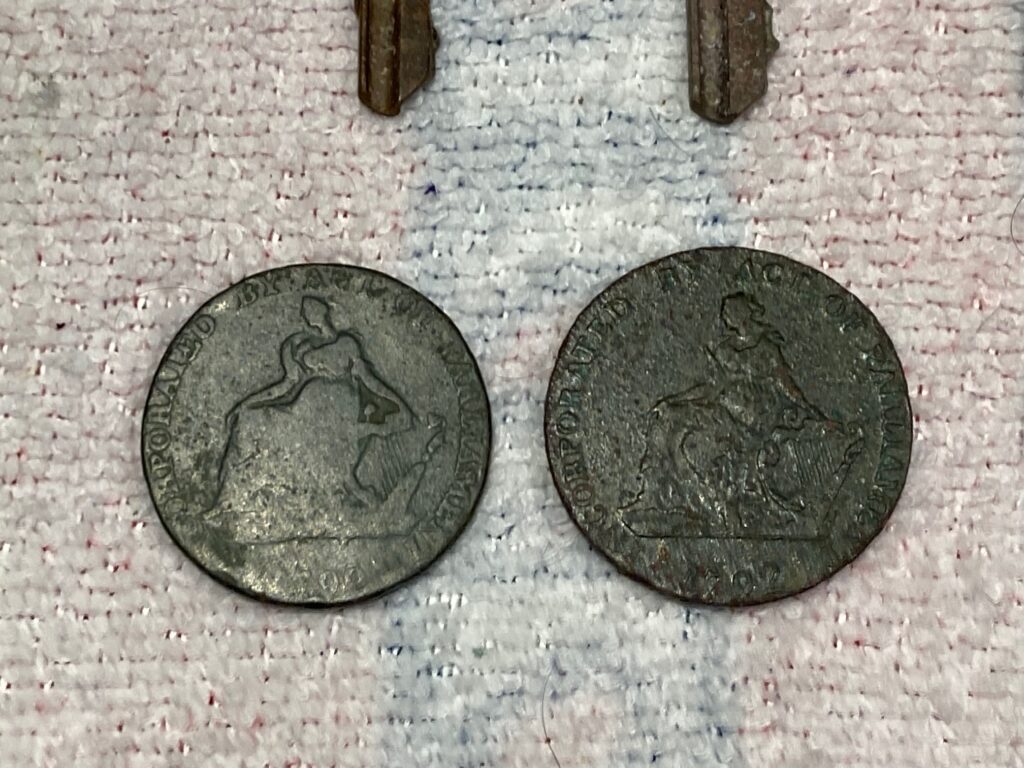
Private Money — Camac, 1792
Two more from the same stretch.
Both dated 1792. Both Camac.
Not royal issues. Merchant tokens. Private money struck in Dublin when official copper ran thin.
When the state cannot supply enough small change, commerce improvises.
These pieces often carry more copper than the crown’s own issue. Heavier. Honest metal, struck to keep exchange alive.
Shortage precedes adaptation.
Barter yields to token. Token fills the gap the state cannot.
The year matters. 1792 sits just before fracture — before 1798, before rebellion. Monetary improvisation often arrives before political rupture.
The beach makes no distinction between crown and merchant.
It receives both.
And returns them centuries later without preference.
Empire Copper — Victoria and George V
These are not the thick Georgian discs of mid-eighteenth century Ireland.
They are imperial copper.
Victoria. George V.
By now Ireland is no longer semi-separate in coinage. There is no distinct Hibernia seated in quiet autonomy. The designs align fully with London. The empire standardises.
One currency. One monarch. One system.
On the surface, it suggests strength.
And yet these coins feel different in the hand.
They are thinner. The relief softer. The surfaces seem less resilient than the Georgian pieces — despite being a century younger. They have not endured the salt in the same way.
Mass production replaces solidity.
The Victoria is administration. Industry. Railways. Bureaucracy. Expansion at scale.
The George V carries another weight entirely.
I found it among brass.
Fragments of shell casing. Twisted scrap. Repeated false signals. I had to dig through war to reach coin.
This stretch of coast feels militarised. A training ground once. Drills before embarkation.
George V was struck in a time of mobilisation, not confidence.
Did it fall from the pocket of a young man practising here before being shipped to France?
Perhaps.
The detector cannot answer that.
But the layering is undeniable:
Copper. Brass. Empire. War.
The Georgian coins feel rooted in land and trade.
The Victorian and George V pieces feel industrial — faster, thinner, more uniform.
Peak empire often looks secure.
Its metal sometimes looks strained.
Lead and Brass
After copper comes lead.
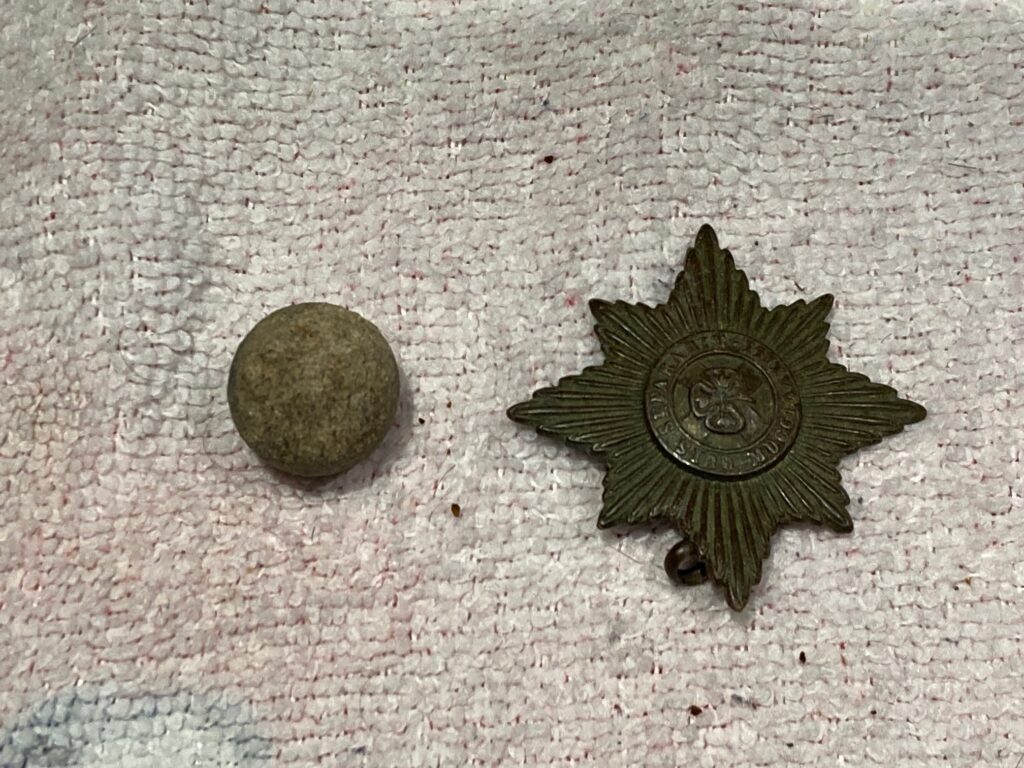
A musket ball. Unused.
It was cast to fly and never did.
No flattening. No impact scar. Just intention, suspended.
Eighteenth century? Early nineteenth? The coast has seen volunteers, militia, watchful men facing outward across the Irish Sea. Days of Napoleon. Days of fear.
Not far from where I found the Napoleonic button.
Preparedness without discharge.
Then brass.
A star.
Pre-1922 Irish Dragoons.
Cavalry. Imperial Ireland in saddle and sabre.
Now the layers tighten.
Musket lead. Georgian copper. Victorian administration. George V war coin. Shell fragments in the sand.
Was it one man who lost the halfpenny and the badge? One pocket shedding pay and insignia in the same wind?
Or are we forcing coherence on a beach that collapses centuries into one afternoon?
Imperial penny. Free State imitation. Decimal prelude. Euro coin.
Three stages of independence. Then absorption into something wider.
Empires change form.
Copper remains.
The harp survives on some pieces. Disappears on others.
The tide is indifferent.
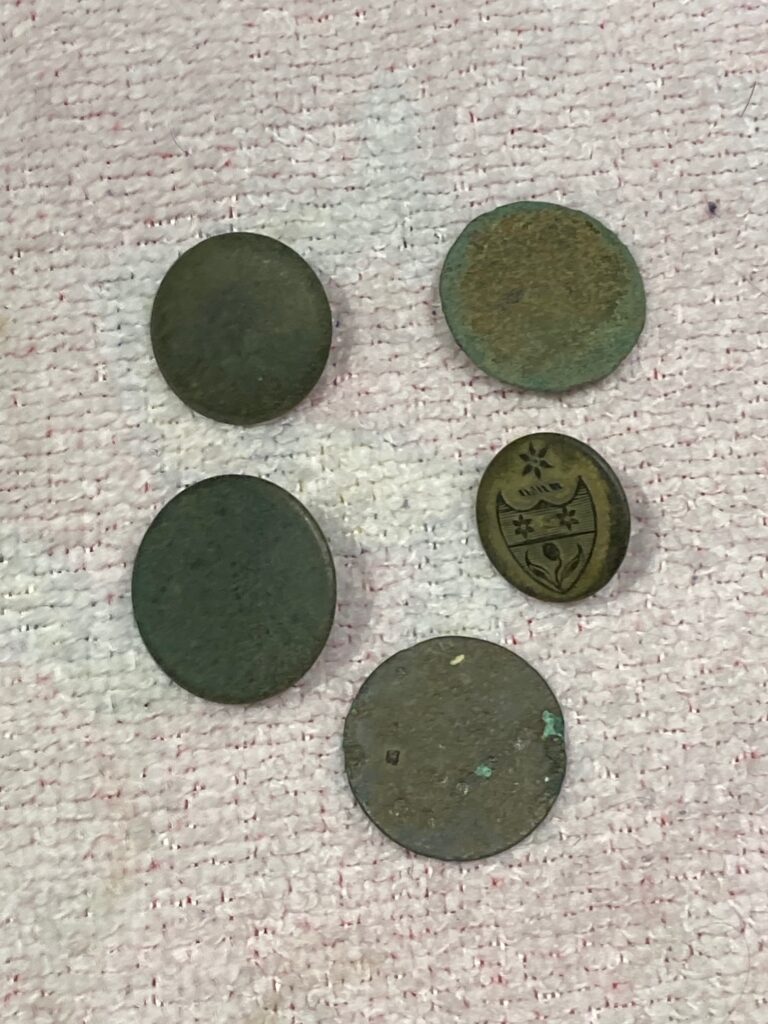
Buttons — The Smallest Losses
Coins speak of systems.
Buttons speak of people.
I have a jar full of them now.
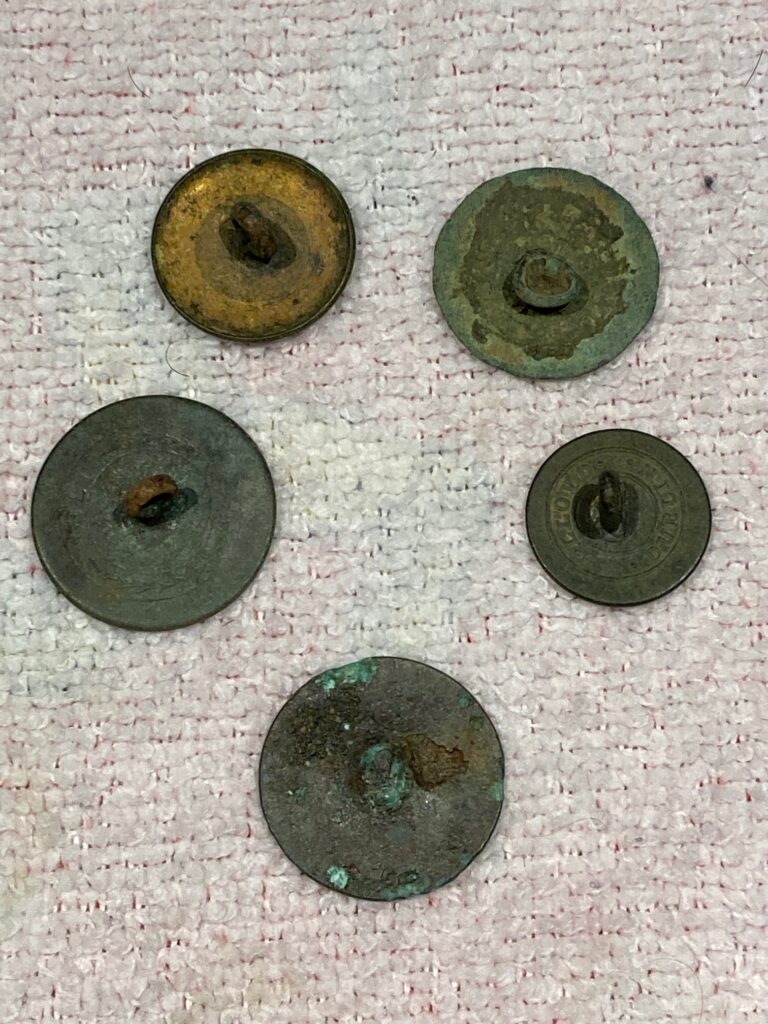
Not modern plastic. Not disposable moulded convenience. These are metal. Cast. Pressed. Sometimes lathe-turned. Some clearly handmade. Imperfect. Individual.
Many likely date to the 1700s. Some perhaps earlier. The shanks are hand-soldered. The backs show tool marks. The fronts still carry faint crests, simple patterns, the geometry of another century’s clothing.
They are beautiful.
We underestimate how much craft once went into small things.
A button was not trivial. It secured coat against wind. Cloak against rain. Shirt against exposure. On this coast, that mattered.
I imagine a travelling man walking the strand in the 18th century. Long coat. Salt air. Wind pulling at cloth. A button gives way. Falls into shingle. Gone.
No easy replacement. No shop on every corner. No cheap packet of ten.
Loss meant inconvenience. Repair required skill.
Each button here represents a small moment of irritation. A pause. A hand patting at a coat and finding absence.
Some are plain. Some carry regimental markings. Some are decorative, worn on civilian jackets. One bears the mark of a manufacturer long vanished.
They outlasted the garments they once held together.
The fabric rotted. The wearer died. The empire shifted. The tide moved.
The button remained.
There is something deeply human about them.
Coins are circulation. Badges are allegiance. Musket balls are intent.
Buttons are daily life.
A jar full of minor inconveniences from three centuries.
The beach gives them back one by one.
And I keep them.
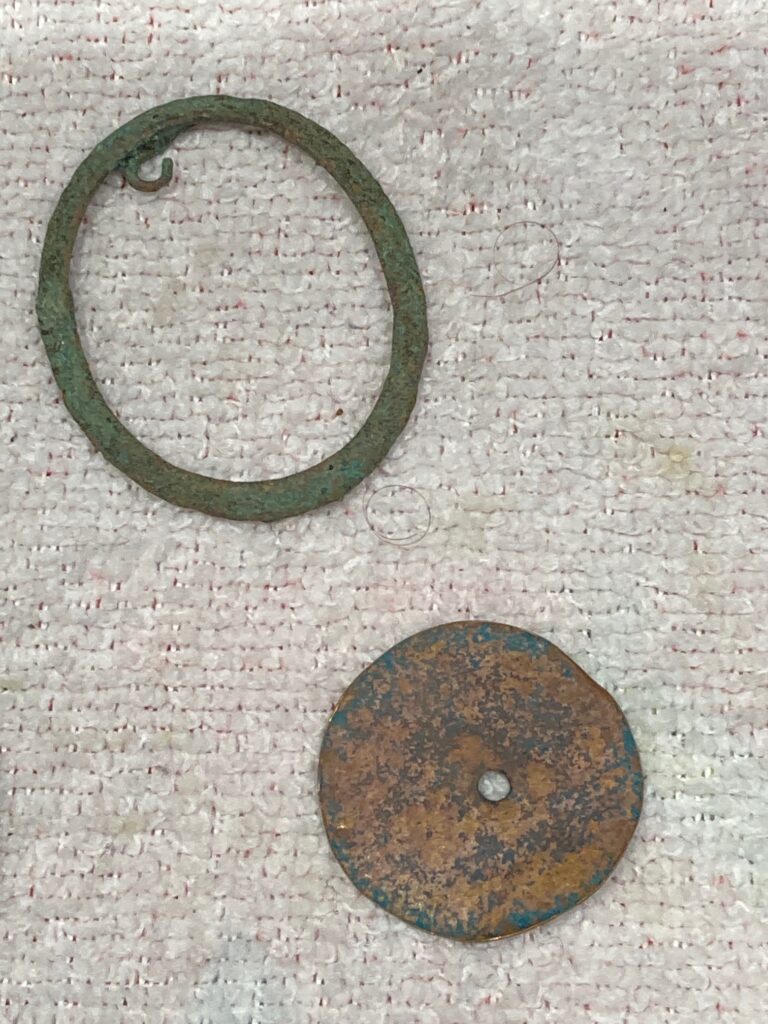
The Copper Disc and the Cameo Frame
Not everything lost here was currency or service.
Some pieces were intimate.
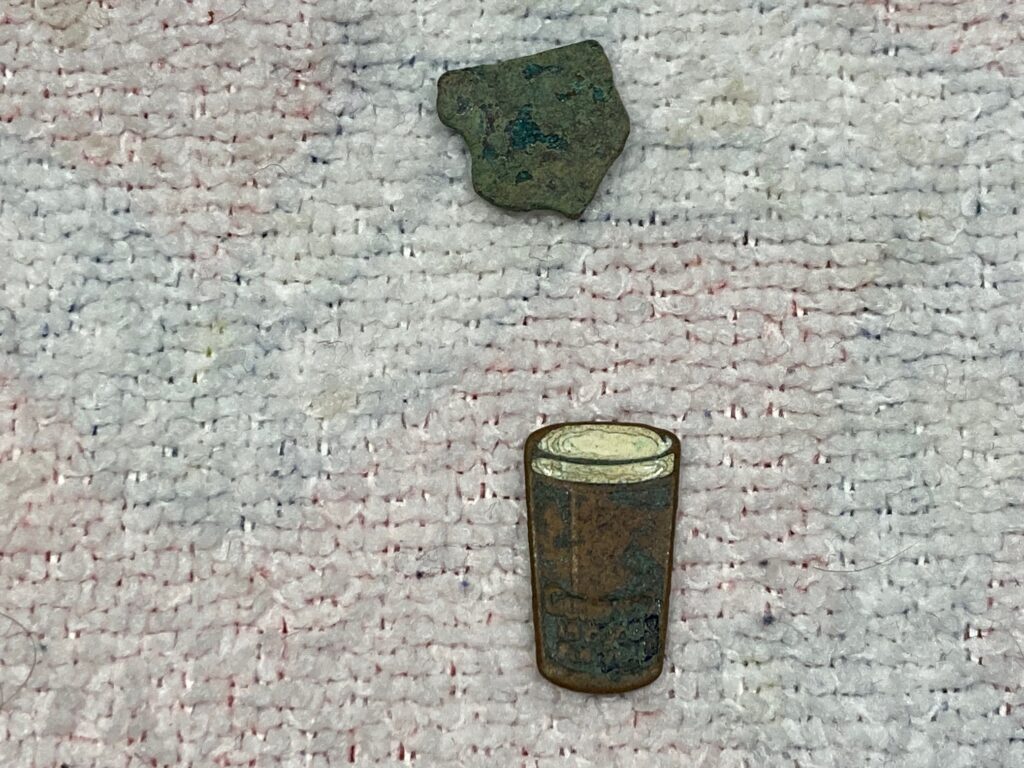
A simple copper disc. No inscription. No monarch. Just a worked circle with a central pierce.
Was it a makeshift token? A washer repurposed? Or part of something decorative — perhaps once polished, perhaps once mounted?
Copper oxidises beautifully. Even now, it carries colour.
And then the frame.
Oval. Delicate. A small suspension loop still intact.
Almost certainly Georgian.
A cameo once sat within it. A miniature portrait. A profile. A lock of hair. A loved face carried close to the chest.
The glass is gone. The image gone. The sentiment gone.
Only the surround remains.
It is the opposite of coinage.
A coin is designed for circulation. A cameo is designed for closeness.
Someone wore this.
Someone fastened it in the morning.
Someone lost it — perhaps without knowing until much later.
There is something unsettling about finding only the frame.
The empire fades. The copper endures. The portrait disappears.
What we carry closest is often the first thing surrendered to time.
The beach does not prioritise power.
It preserves fragments.
A disc with no name. A frame with no face.
And yet they feel heavier than some of the coins.
The Penknife and the Fragments
Not all finds are symbolic.
Some are simply tools.
A penknife.
Modern by comparison. Steel still recognisable beneath the sand. Hinges stiff with salt. Once carried in a pocket, opened for rope, twine, food, small repairs.
A working object.
It does not belong to empire or rebellion. It belongs to habit. To hands. To ordinary days on the coast.
Someone used it. Someone dropped it. Someone replaced it.
Even here, the layers compress. Georgian copper lies metres from stainless steel.
Time folds.
Then the scraps.
A flattened strip of copper alloy. Another narrow blade-like piece. A small round disc, lead or pewter perhaps.
One fragment could be the broken tip of a lead spoon. If so, it once stirred porridge or broth in a cottage not far from here. Lead spoons were common. Cheap. Soft. Repairable until they were not.
The coastline keeps the leftovers.
The broken end. The snapped piece. The part no longer useful.
Coins are deliberate loss.
Fragments are accident.
Yet they tell as much.
A civilisation is not only its crowns and crests.
It is also its cutlery.
Its pocket tools.
Its worn-out metal repurposed until it fails.
The penknife reminds me of something simple:
Every era believes it is modern.
Every era leaves rust.
The Keys
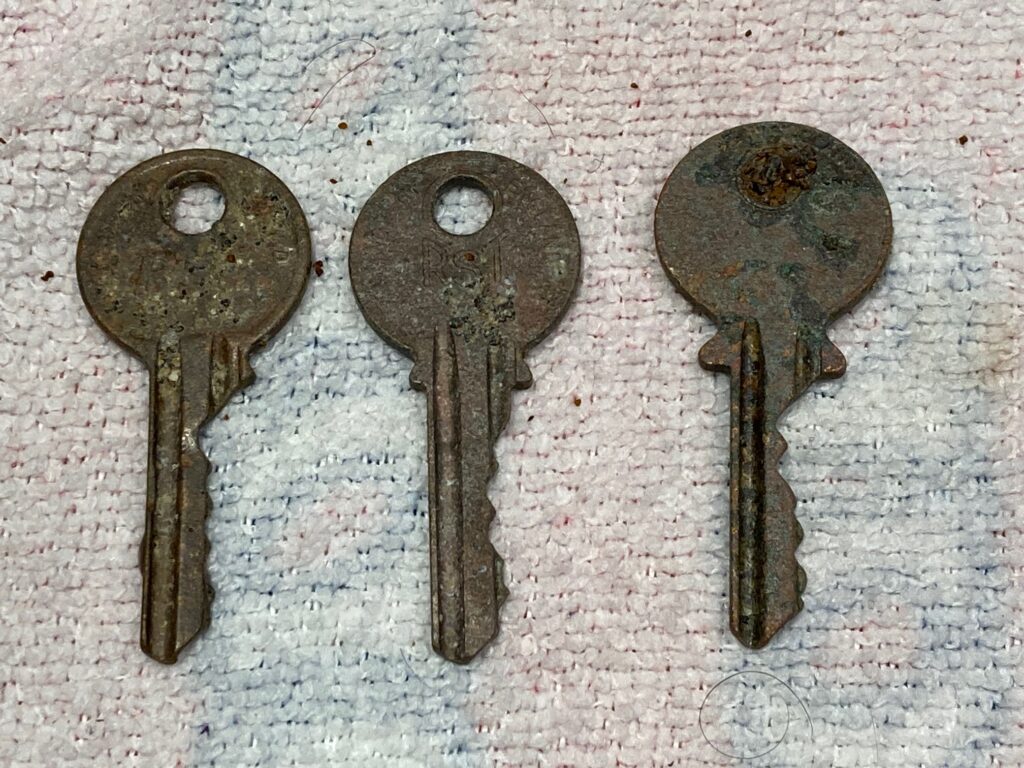
I find so many keys.
Almost as many as coins some days.
Three here alone. All different teeth. All once precise.
Each one cut to open a specific door.
A cottage. A barracks room. A shed near the dunes. A rented house by the sea.
A key is intimate authority.
It is trust made metal.
Someone carried these daily. Slipped them into a pocket. Felt their weight without thinking. The small reassurance of access. Of entry. Of belonging somewhere that closed against the wind.
And then — loss.
A fall from a pocket. A hole torn in lining. A moment of distraction in sand.
The door remained.
The key did not.
There is something stark about that.
Coins can be replaced. Buttons can be resewn. Badges reissued.
A lost key means exclusion.
Somewhere along this coast a man returned to a locked door and felt the cold certainty of inconvenience — or worse.
These are not ceremonial keys.
They are ordinary.
Mass-cut. Functional. Twentieth century perhaps. No romance.
And yet they speak loudly.
Keys are about control. About ownership. About territory defined by a lock and a threshold.
Empires issue currency.
Homes issue keys.
I find them in clusters.
Sometimes I wonder how many of those doors still stand.
The sand has no use for access.
It receives the instrument of entry and leaves the door behind.
The Unknown Coin
And then this.
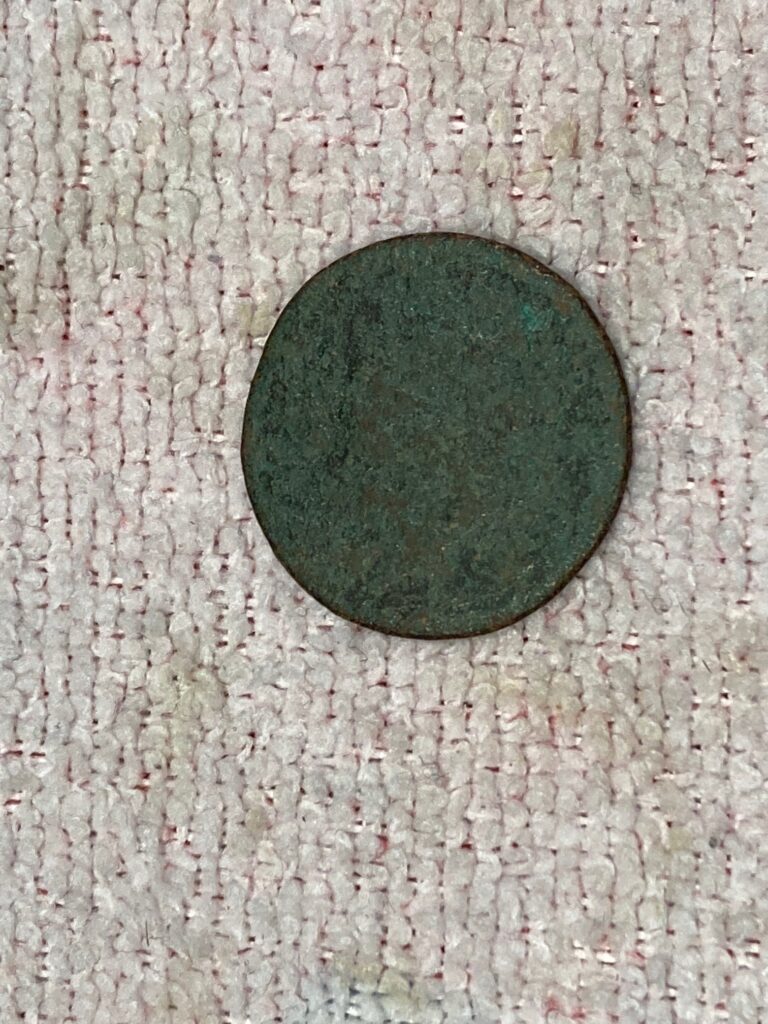
A coin with no face.
No monarch. No harp. No date.
Time has erased it.
The outline remains. The weight remains. The diameter tells me it once mattered enough to be struck deliberately.
But its allegiance is gone.
It might be Georgian. It might be Victorian. It might be local token or foreign drift.
It resists classification.
And there is something fitting about that.
I have spent the day assigning eras.
George II. George III. Victoria. George V. Free State. Euro.
Each coin neatly slotted into a chapter of history.
This one refuses.
It has been in the sea long enough to forget.
The face worn smooth. The message dissolved. The authority flattened into anonymity.
Perhaps that is the final stage of all currency.
First it commands.
Then it circulates.
Then it corrodes.
Then it becomes simply metal.
The unknown coin is honest.
It does not carry narrative. It does not wave a flag. It does not argue sovereignty.
It is just copper that survived.
There is something almost liberating in that.
Empires insist on inscription.
The tide insists on erosion.
In the end, everything becomes an unknown coin.
And perhaps that is the most truthful state of all.
The Guinness Badge
And finally, this.
A small enamel badge. Guinness pint still visible beneath corrosion. The glass upright, white head intact in miniature.
Likely 1930s to 1950s.
Not ancient. Not imperial. Not revolutionary.
Just Irish.
By then the empire was gone. The Free State had become the Republic. Flags had changed. Allegiances redefined.
But Guinness endured.
It is almost comic in its steadiness.
Kings fade. Currencies shift. Empires dissolve. Rebellions harden into administrations.
The pint remains.
This badge was once pinned to a lapel. Worn with quiet pride perhaps. Or simple affiliation. A night out. A railway platform. A coastal stroll after work.
It speaks not of conquest, nor mobilisation, nor monetary union.
It speaks of habit. Of culture. Of something rooted enough to survive regime change.
There is something grounding about ending the day with it.
After Georgian copper. After private tokens. After Dragoon brass. After Free State imitation and euro alignment.
A pint.
Not ideology.
Not sovereignty theory.
Just continuity of a different kind.
Commercial. Cultural. Familiar.
The tide does not care.
But I do.
Because this badge feels like the most honest artefact of the lot.
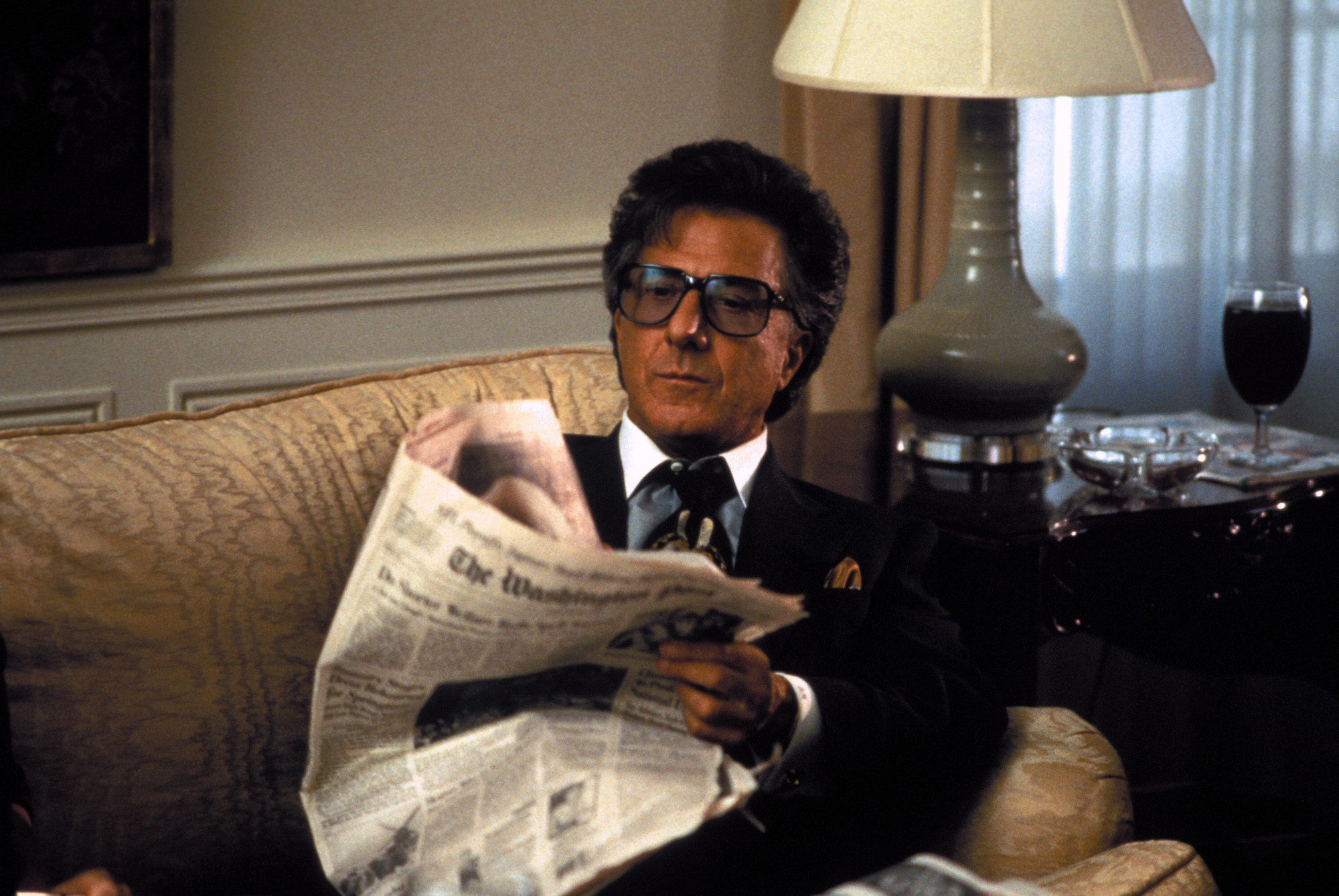
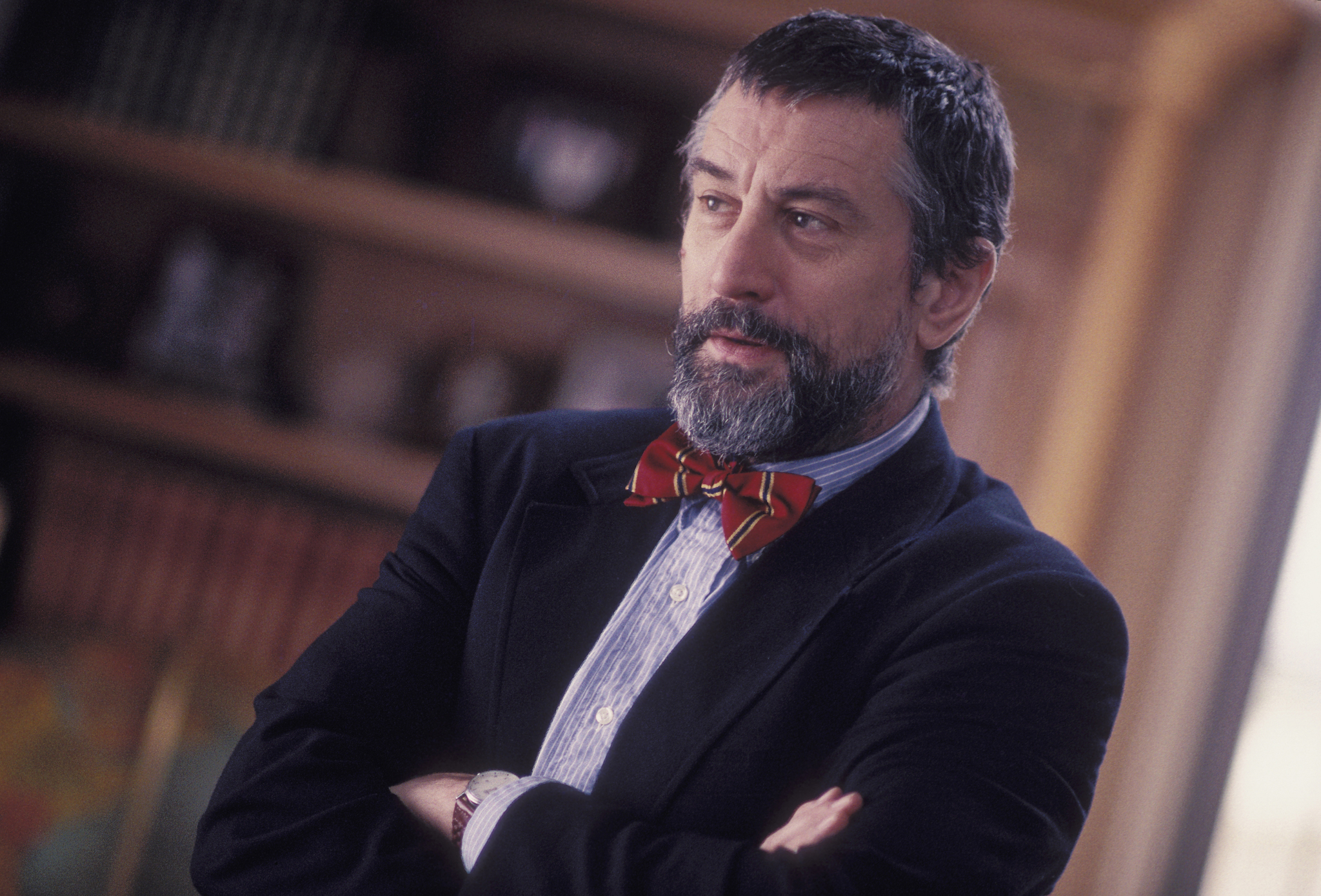
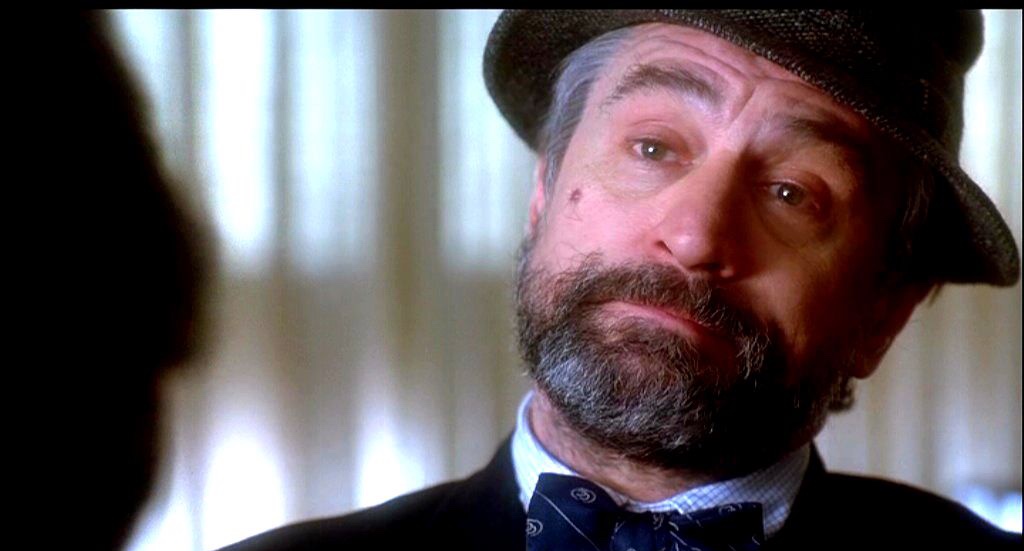
It was released in 1997, directed by Barry Levinson and starring Robert De Niro and Dustin Hoffman, but I encountered it a year later — and it stayed with me far longer than most films do.
At the time, I thought it was clever.
Later, I realised it was instructional.
What the Film Actually Shows
A president faces a scandal days before an election. The solution is not defence. It is distraction. A war is manufactured — complete with imagery, music, a hero, a narrative arc.
The public sees it on television. The media amplifies it. Politicians align behind it.
The war exists because it is broadcast.
What unsettled me wasn’t the satire. It was the mechanics.
The film shows that in modern systems, narrative is not commentary on reality.
It is architecture.
Watching It in the 1990s
When I saw it, the Balkans were not abstract.
The Kosovo War and the NATO bombing of Yugoslavia were unfolding. Iraq was already in a cycle of sanctions and intervention, culminating in Operation Desert Fox.
On screen: a fabricated Balkan conflict used for domestic political containment. In real life: televised Balkan conflict accompanied by political crisis.
I’m not interested in simplistic causation.
What struck me was structural similarity.
Crisis appears. Media synchronises. Emotional imagery floods the screen. Consensus hardens before analysis completes.
Deniers are denounced.
Once you see that sequence, it becomes difficult to consume headlines innocently again.
Manufactured Symbols
The film’s brilliance is that it doesn’t rely on grand conspiracy.
It shows small things:
A song engineered to stir patriotism.
A refugee image staged for emotional impact.
A slogan crafted for repetition.
A soldier turned into a moral totem.
Meaning is assembled deliberately.
The public doesn’t require truth. It requires coherence.
That realisation never quite leaves you.
The Ending That Lingers
At the end, Hoffman’s producer wants credit. He hints he may expose the entire operation.
He dies.
Not dramatically. Not theatrically. Just… removed.
The system continues.
The film never lectures about hidden hands. It simply demonstrates incentive structures: when exposure threatens continuity, continuity wins.
That ending always reminded me of how certain figures — political, financial, inconvenient — sometimes exit at remarkably convenient moments.
No outrage here. Just pattern recognition.
Why I Don’t Watch Breaking News
One of the lasting effects of that film is behavioural.
I no longer watch breaking news at all.
I learn about events after the fact, usually through conversation. Stripped of soundtrack, graphics, urgency, and emotive framing, the event feels different. Slower. Cleaner. Less hypnotic.
Breaking news is theatre with a live orchestra.
Remove the orchestra and you can inspect the stagecraft.
Timing and Markets
Another pattern I’ve noticed: how often major geopolitical flashpoints seem to emerge on weekends.
When markets are closed.
When equity exchanges cannot react in real time. When price discovery is delayed. When institutions already positioned can adjust quietly before Asia opens.
Does that prove orchestration? No.
But incentives matter.
If information moves markets, then timing information when markets are shut reduces chaotic repricing and limits uncontrolled losses. It also preserves opportunities for those already hedged.
Gold was already moving upward last week. Was that anticipation? Quiet positioning? Or simply macro fragility expressing itself? Markets often signal stress before headlines catch up.
Correlation is not confirmation.
But patterns are data.
Iran This Weekend
When events flare in places like Iran, the script is familiar:
Energy spikes. Gold bids. Volatility expands. Media harmonises tone within hours.
The first 24 hours are emotional. The first week is positioning. The first month reveals whether escalation was strategic or theatrical.
I’m not claiming events are fabricated.
I’m observing that events are leveraged.
Narrative velocity now precedes verification. And whoever controls narrative velocity controls perception, which in turn influences capital, policy, and public mood.
That machinery has only become more sophisticated since 1997.
“The real revolution, if it ever happens, will not be televised.”
That line has echoed in my mind for years.
If real structural change ever occurs, it won’t arrive with theme music and sponsored graphics. It won’t be pre-packaged with slogans and expert panels.
It will likely happen quietly, outside the broadcast frame.
Which is perhaps why I stepped outside the frame myself.
Not in protest. Not in paranoia.
Just in recognition that sovereignty begins with what you choose not to watch.
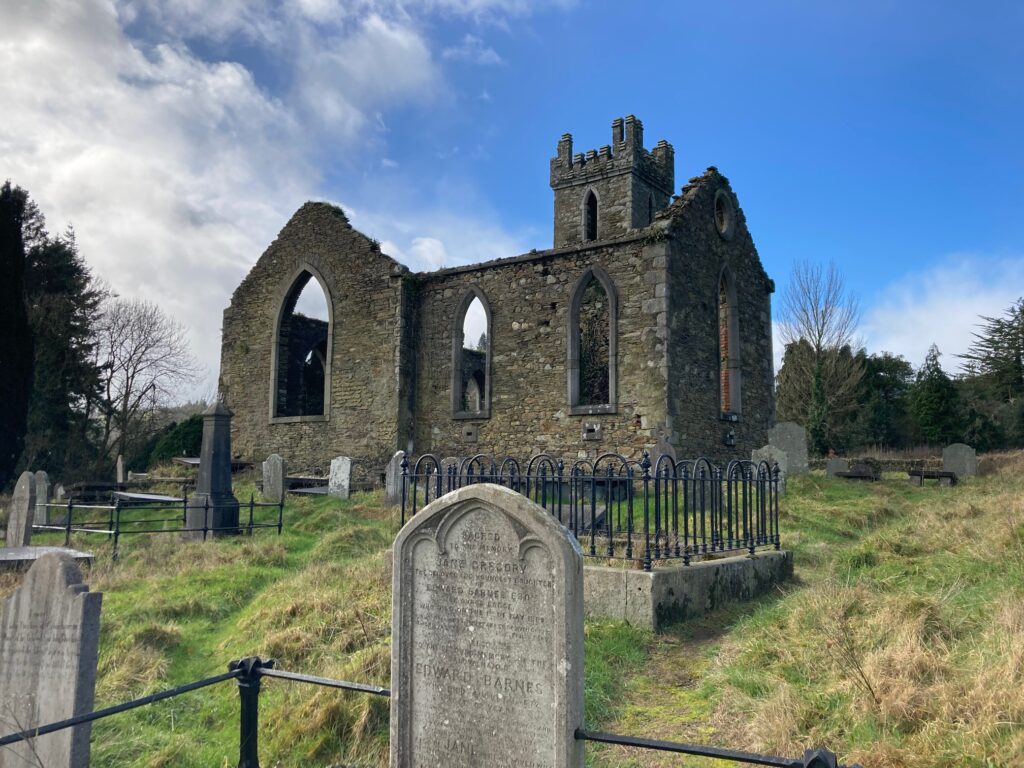
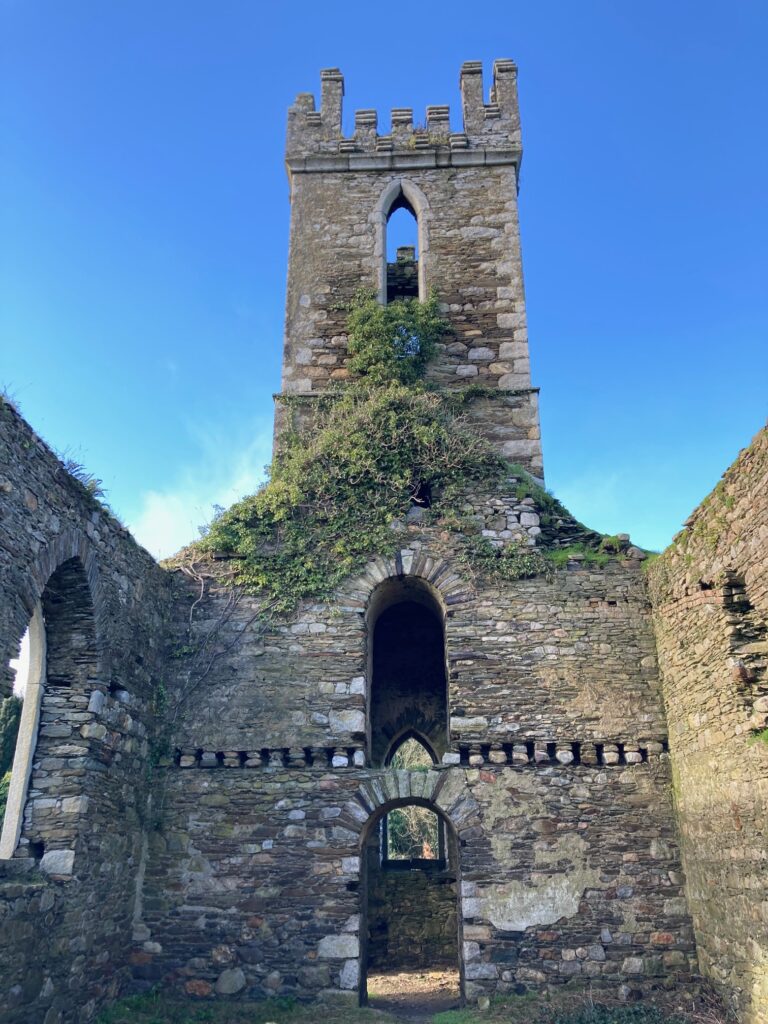
Yesterday I stood inside the ruins of Castle MacAdam Church near Avoca.
Georgian stone. Tall, empty lancets. Gravestones from the 1760s leaning into Wicklow grass.
It is not romantic. It is posthumous.
Once it held a Protestant parish certain of its continuity — baptisms, marriages, burials, sermons absorbed into timber and lime. The structure assumed endurance. The families who filled it assumed the same.
They are gone. The walls remain.
Standing there, the pattern felt older than Ireland.
Confidence. Consolidation. Moral certainty. Demographic thinning. Repurposing or abandonment.
No dramatic fall. Just erosion.
I thought of Consett. The church where my own family passed through its rites still stands, but the density has changed. Attendance narrows. Conviction competes with comfort. Ritual competes with distraction.
Across Europe, Christianity contracts.
An underused sacred space does not remain underused for long.
Capital enters first.
Active churches — not only deconsecrated chapels — now host candlelit concerts and pop retrospectives. ABBA lyrics about casual intimacy rising into vaults built for penitence. A Rolling Stones tribute singing Sympathy for the Devil would not feel implausible.
The acoustics remain. The geometry remains. The symbolism remains.
And something else remains — the accumulated imprint of prayer. If repetition imprints atmosphere, then centuries of petition are not erased by lighting rigs and ticket scanners. Stone stores more than sound.
When I saw the chequerboard floor at Notre-Dame Cathedral, especially in the wake of the fire and restoration, I became conscious of how symbols intensify in moments of weakness.
Black and white geometry is ancient. Medieval. It is also associated with later initiatory traditions, including Freemasonry. I make no declarative claim. But I notice timing. After fire. After fracture. During reconstruction. Perhaps Nostradamus was right?
Subconscious signs matter most when institutions falter.
Is that occult takeover? I do not assert it as fact. I consider the possibility that when conviction weakens, form becomes available for reinterpretation. Not through theatrical conquest, but through vacancy.
Belief drains. Form persists. Meaning shifts.
Other energies move in.
The Roman Empire followed its own arc. Its temples once carried incense and oath. When conviction thinned and power shifted, those temples were stripped, repurposed, abandoned. Their gods did not vanish in a day; they eroded across generations.
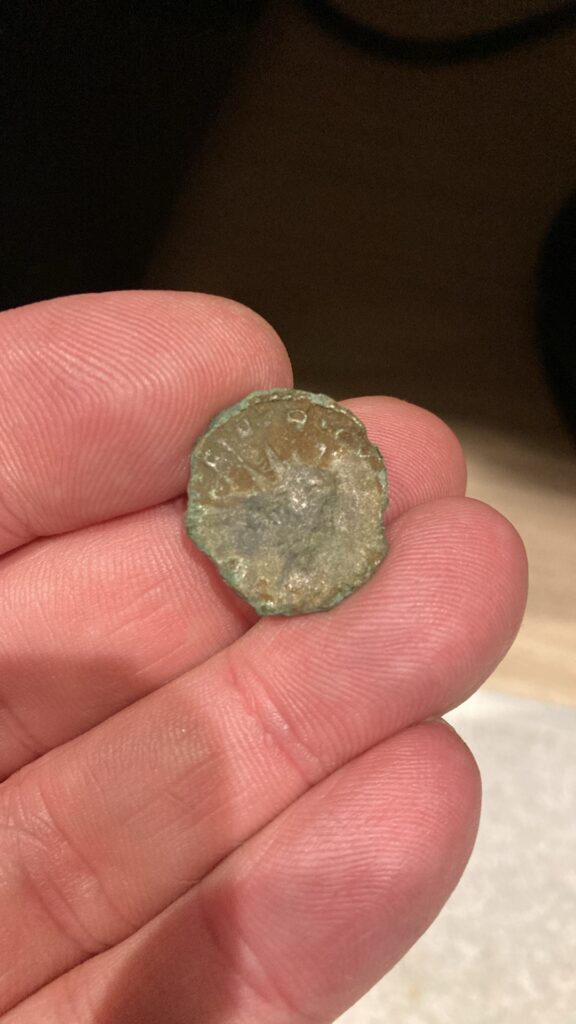
A Roman coin surfaced in my detector this week — thin, worn, carried across centuries before settling in Wicklow sand. Empire leaves residue. It does not preserve intention.
Christian churches in Mogadishu, in Tunis, in parts of Turkey once served confident congregations. Some are ruins now. Some are museums. Some are other things entirely.
Every civilisation believes its sacred architecture is immune to reversal.
History suggests otherwise.
The ruin at Avoca is simply further along the curve.
No concerts. No reinterpretation. No congregation.
Just stone admitting the demographic arithmetic.
What unsettled me was not anger. It was pattern recognition.
Institutions outlive belief for a time. When belief thins, monetisation begins. When monetisation cannot sustain coherence, abandonment follows. When abandonment completes, something else inherits the ground.
If Protestant Ireland travelled that road, Protestant England may be mid-journey.
Every structure eventually reveals whether it was built on conviction or habit.
Castle MacAdam stands as evidence that once conviction drains, the walls may remain — but the force that justified them does not automatically return.
The question is not whether churches survive.
The question is whether the civilisation that built them still believes what they were built to hold.
If not, the stone will endure.
And history will write over it, as it always does.