A record of storms survived and horizons still calling

Category: Psychology

The Leakages

A man can lose his life without any single dramatic fall.

No collapse.
No public ruin.
No one moment when the structure visibly breaks.

Instead, it goes in increments.

An hour here.
A payment there.
A form.
A duty.
A woman who takes more than she gives.
A house that always wants something.
A job that eats the daylight.
A state that never stops asking.

From the outside, he looks intact. Functional. Reliable. Disciplined, perhaps. But if he is honest, something is leaving him all the time. Energy. Time. Money. Attention. Identity. Life-force.

It leaves so steadily that he may not name it for years.

The word I would use now is leakage.

That is what much of modern male life really is: not open defeat, but slow drainage through openings he was never taught to inspect.

And most of what passes for self-improvement never touches the largest openings at all.

The Safe Lie

Men are taught to focus on what I would call level 1 leakage.

Porn.
Doomscrolling.
Drinking.
Passive entertainment.
Low habits.
Screens.
Distraction.
Junk inputs.
Cheap dopamine.

This is the approved territory.

Wake earlier.
Drink less.
Scroll less.
Optimise your mornings.
Tidy your habits.
Become more disciplined.

There is some truth in that, but only enough truth to keep a man busy inside the wrong frame.

Because very often level 1 is not the true source of destruction. It is a symptom. Foam on the surface. The visible weakness that appears after larger systems have already been feeding on him for years.

That is why so much modern advice feels false even when parts of it are technically correct.

A man is told to fix his habits while standing inside a life that is structurally draining him.

He is told to become more orderly inside an arrangement that should never have been accepted in the first place.

He is taught to patch the smallest leak while the hull is split below the waterline.

The Four Levels

I have come to see leakage in four levels.

Not as ideology. As mechanics.

I. Micro Leakage

This is the smallest and most obvious category.

Porn.
Netflix drift.
Social media loops.
Routine drinking.
Gambling.
YouTube wandering.
Digital sedation.
The dead hour that becomes three.

This is where most advice begins because it is visible, safe, and politically harmless.

And yes, it matters.

A man can absolutely weaken himself here. He can blunt his edge, thin his attention, erode his discipline, and waste years on habits that neither restore nor build anything.

But not all pleasure is leakage.
Not all rest is sedation.

A long meal in good company is not the same as dead consumption.
A drink that becomes memory is not the same as a nightly blur.
A quiet evening is not the same as anaesthesia.

The distinction is simple.

Real life is made of conversion. Energy goes out and something comes back. Strength. Relief. Love. Memory. Money. Meaning. Beauty. Motion.

Sedation is relief without advancement.
Leakage is output without return.

That is the real test.

II. Relational Leakage

This is where things become less socially convenient.

Not all relationships are extractive. Some are among the greatest returns a man will ever know. The right woman can multiply energy. The right friendship can sharpen a decade. The right bond can return warmth, loyalty, humour, desire, peace, and force.

But one-sided relationships are among the deepest drains in a man’s life, precisely because they often arrive wearing the mask of duty, hope, tenderness, or responsibility.

He tells himself he is building something.
Often he is simply being used.

Energy leaves.
Attention leaves.
Money leaves.
Patience leaves.
Stability leaves.
Years leave.

And what comes back?

Sometimes love.
Sometimes loyalty.
Sometimes a shared world worth carrying.

But often very little.

Some relationships do not nourish. They absorb. They absorb logistics, provisioning, emotional steadiness, planning, rescue capacity, financial support, tolerance, and time. They treat male output as normal, expected, ambient. Like electricity in the wall. Available until failure.

The same is true of family dynamics where duty became extraction. A man can be reduced, slowly and almost ceremonially, to a utility function. A wallet. A service platform. A stabilising mechanism others assume will remain in place regardless of cost.

That is not bitterness. It is pattern recognition.

The question again is mechanical: when energy leaves your life, does it return as love, loyalty, peace, freedom, memory, wealth, vitality, or meaning?

Or does it simply disappear into appetite?

III. Structural Leakage

This is the category modern life hides best.

A man may think he is tired because he lacks discipline. In reality, the structure around him may simply be bleeding him every week.

A house can be leakage.
A commute can be leakage.
A job can be leakage.
A routine can be leakage.
A city can be leakage.
Overhead can be leakage.
Maintenance can be leakage.
Life architecture itself can be leakage.

A beautiful old house may look like success and still behave like a permanent mouth. Taxes. Repairs. Upkeep. Vigilance. Administration. Cost. Mental tabs left open at all times. It can take a man’s weekends, money, and psychic space while flattering him with the idea that he owns something substantial.

Often it owns him.

So can a corporate job. Especially the kind that takes the strong hours of the day and leaves behind just enough money and fatigue to keep the arrangement stable. Daylight goes in. Focus goes in. Health goes in. Youth goes in. And the return, once properly counted, may be smaller than advertised.

Many men are structurally exhausted long before they become weak in habit.

That is why so much self-improvement advice misses the point. It treats wear as failure of character when the real issue is often architectural.

The biggest mistake is optimising habits inside the wrong life.

A man can become impressively disciplined inside a prison.

It is still a prison.

IV. Sovereignty Leakage

This is the deepest level, and the one least discussed honestly.

Governments leak men.
Tax systems leak men.
Bureaucracy leaks men.
Reporting burdens leak men.
Legal exposure leaks men.
Jurisdictions leak men.
Institutions leak men simply by existing around them.

Forms.
Declarations.
Compliance.
Deadlines.
Proof.
Identity trails.
Account trails.
Interpretation risk.
Background vigilance.
The constant low-grade awareness that some office, somewhere, may still want something from you.

This is life-force loss in administrative form.

A man can spend immense energy not building, moving, creating, desiring, travelling, or living, but merely remaining legible to systems that have claim over him.

And the worst part is this: after a while, he stops seeing it.

He calls it adulthood.
Responsibility.
Normal life.

But normality is not innocence. Many normal arrangements are extraction systems with good branding.

Over the last year I removed major leakage from my own life. I exited corporate daytime extraction. I left a beautiful old house that demanded taxes, maintenance, and constant attention. I moved away from countries and systems that wanted my energy in forms, compliance, filings, and background stress. I became more precise about where my energy had been going: into one-sided relationships, into institutions that wanted productivity without freedom, into obligations dressed up as virtue, into family structures where duty had hardened into extraction.

That kind of clarity does not make a man reactive.

It makes him accurate.

And accuracy has consequences.

Why the Bigger Truth Stays Hidden

Systems prefer self-improvement that does not threaten the system.

That is the part worth saying plainly.

A man who drinks less, scrolls less, and tidies his morning routine becomes easier to manage if nothing else changes. He may even feel proud of his improvement while remaining trapped inside structures that continue to drain him.

Corporations like this version of self-improvement.
Governments like it.
Wellness culture likes it.
Productivity culture likes it.
Even many relationships like it.

Why?

Because it improves the man without threatening the arrangement.

He remains in the job, but with better posture.
He remains in the draining relationship, but now journals.
He remains in the burdensome house, but drinks green juice.
He remains in the wrong jurisdiction, but meditates.
He remains available to systems that consume him, only now he is calmer about it.

This is why so many men become highly disciplined prisoners.

Wellness culture often helps men function better inside extraction rather than escape it.

That is why the larger truth is so often obscured. The moment a man starts questioning levels 2, 3, and 4, the real stakes appear. He may leave the relationship. Leave the company. Sell the house. Change the routine. Reduce obligations. Exit the jurisdiction. Redesign the entire architecture of his life.

That is not a habit adjustment.

That is a break in ownership.

The Symptom and the Cause

Modern sedatives usually enter after the weakening has already begun.

Netflix.
Porn.
Scrolling.
Routine drinking.
Passive consumption.

These often rise not because a man is morally deficient, but because he has already been drained by larger systems. He is flat from the job. Numb from the relationship. Burdened by the structure. Taxed by the state. Sedation becomes the evening reward for a life that no longer converts effort into aliveness.

Then he is blamed for the sedative while the architecture that produced the need for it remains untouched.

That inversion is everywhere.

He is told to control the symptom.
Rarely to interrogate the machine.

Of course a man still has to take responsibility for his own habits. But responsibility without diagnosis is just another trap. If he fixes level 1 while levels 2, 3, and 4 remain intact, he may become a cleaner, leaner, more efficient servant of the very arrangement that is draining him.

That is not recovery.

It is optimisation of captivity.

The Right Order

Men should identify and tackle their biggest drains first.

Not the most fashionable drains.
Not the most socially acceptable drains.
The biggest ones.

Very often, the right order is this:

First remove sovereignty leakage.
Then structural leakage.
Then relational leakage.
Then micro leakage.

Why this order?

Because sovereignty sits furthest upstream. Jurisdiction, bureaucracy, legal exposure, reporting burdens, and institutional drag shape the whole terrain beneath a man’s life.

Structural leakage comes next because daily architecture determines whether his energy is continually restored or continually consumed.

Relational leakage follows because the people nearest to him either return force or absorb it.

Micro leakage often becomes easier to handle once the larger drains are cut and the man no longer needs constant sedation just to tolerate his own life.

But this is not dogma. For some men, the wrong woman is the largest leak in the system. For others, the house. For others, the job. For others, the state itself.

The principle is simple: find the biggest extractor first.

That is the true audit.

Where does your energy go?
What comes back?
What never did?

The Conversion Test

This is the standard I trust now.

Not whether something is comfortable.
Not whether it is approved.
Not whether it sounds responsible.
Whether it converts.

Real life is made of conversion.

Energy into wealth.
Energy into freedom.
Energy into memory.
Energy into strength.
Energy into beauty.
Energy into a woman who meets you properly.
Energy into movement.
Energy into peace.
Energy into a world that becomes more alive because you entered it.

The issue is not cost. Many worthwhile things are costly.

Travel is costly.
Love is costly.
Building is costly.
Beauty is costly.
A serious project is costly.
Even certain burdens are worth carrying.

But worthwhile things return something worthy. They leave marks that justify the expenditure.

The issue is non-conversion.

That is where rot begins.

What I Learned

Looking back over the last year, what strikes me is not only what drained me, but how long some of it was allowed to masquerade as necessity.

Corporate extraction looked respectable.
The old house looked substantial.
Certain obligations looked virtuous.
Some relational patterns looked normal.
Some jurisdictions looked unavoidable.

They were not all equal.
They were not all necessary.
And they did not all pay back.

Once I began cutting major leakage, the effect was immediate. Not easy, but immediate. Thought sharpened. Space returned. Time stopped vanishing so easily. My own life felt more mine. Energy that had been leaking into structures and systems with poor return could be redirected into motion, women, travel, money, projects, memory, beauty.

That is the real point.

Not purity.
Not behavioural tidiness for its own sake.
Recovery of force.

A man does not come back to life by becoming a better-behaved captive.

He comes back by identifying what truly drains him and cutting it without apology.

Conclusion: Cut the Leak

In the old stories, the danger was rarely the storm alone.

It was the place that made a man forget his direction.
The island where he lingered too long.
The comfort that softened him.
The voice that delayed him.
The duty that was not truly his, yet still took years from his life.

That is how much of male life is lost now.

Not always in open catastrophe, but in slow diversion. In false obligations. In respectable traps. In systems that feed on output and return only enough to keep a man seated at the oar.

So the task is not merely to become better behaved inside whatever has claimed you.

It is to see clearly.

To know what in your life restores force, and what only drains it.
To know which burdens are worthy, and which are tribute.
To know which ties are real, and which are simply ropes.
To know when a structure is shelter, and when it has become a mouth.

A man gets his life back when he stops offering himself to what does not love him, build him, free him, or return him to himself.

He gets it back when he cuts the leak.

Then the lost energy begins to gather again.
Thought sharpens.
Motion returns.
The horizon reappears.

And what was once being fed into maintenance, appeasement, forms, duty, sedation, and background drain can finally be turned toward something worthy of a man’s remaining years: women, roads, money, beauty, work of his own choosing, remembered days, and the forward path that is still open.

That is where recovery begins.

Not in obedience.
Not in optimisation for its own sake.
But in departure.

A man must leave what consumes him and does not pay him back.

Only then does the journey become his again.

Where the Story Thins

As second-date suggestions go, walking Trevor Deely’s route through Dublin was an unusual one.

However, it was a mutually agreed one.

It was daytime. Cold, dry, and bright.

Before we started, she told me she had a feeling that somewhere on the walk, something had happened. She said it simply and left it there.

Later, on Haddington Road, I stopped and said that I did not think he had walked beyond that point.

She looked at me and said that this was where she had felt it too.

That was the interesting thing.

Not because it proved anything. It did not. But because sometimes a place refuses the story made for it. You can hear an official version from a distance and it sounds tidy enough. Then you stand on the ground itself and it starts to thin in your hands. One only needs to visit Praia Del Luz, boots on the ground to begin asking questions around the official narrative regarding Madeline McCann. It was the same here.

The canal idea always struck me as obvious tripe. Too neat. Too convenient. Trevor’s last confirmed sighting was on Haddington Road, way past the canal, walking toward the Beggars Bush area, and Garda appeals have long focused on the unidentified man seen near his office and again shortly after him on CCTV.

It was interesting too to learn that it was the weekend Bill Clinton was in Dublin. Accounts of the case say roads and security arrangements were altered, bins and skips were emptied, and manhole covers were checked before any meaningful search for discarded evidence could happen. That does not prove anything in itself. But it adds another layer of strangeness to a case that already resists easy explanation.

And then there was the setting itself. Trevor worked in investment banking, only a few years before one of the greatest financial crashes in modern history. That too may mean nothing. But when an impressionable young man with banking access disappears into a city still flush with late-boom confidence, and the last ground on which he feels real is a short stretch of road in Dublin 4, the imagination does not need much encouragement.

What stayed with me was simpler than theory.

Two people walking through Dublin in the cold sun, and both feeling, at the same point, that the official map had gone thin.

That is rare.

Not proof.
Just recognition.

Sometimes that is enough.

55 : The Gap and The Gain

I am 55 today.

“Road to Nowhere” is playing in the background. It fits, but not in the way it once might have.

Not because I am lost.

Because a life lived honestly is never a straight road. It is crossings, weather, wrong turns, departures, and long stretches where there is no map, only instinct. Only later does it look like a line.

A birthday is a good day to take stock.

Not the polished version. Not the public story.

A clean ledger.

What was gained.
What was lost.
What was escaped.
What changed.
What returned.


That brings me to the gap and the gain.

The past year was not cosmetic. It was structural.

I stepped away from old gravity — obligations, expectations, patterns that no longer fit. I made space. Not comfortable space, but real space.

In exchange came something harder, and more valuable:

Freedom.
Optionality.
Control over direction.

Not imagined freedom.

Built freedom.

That is gain.


I sharpened too.

I see faster now:

  • weak systems
  • false narratives
  • arrangements that don’t hold

I leave sooner. I trust the signal sooner. I waste less time trying to keep dead things alive.

That is gain.


Life has also become responsive again.

There has been movement. Energy. Intensity.

Moments where something real is felt immediately, without explanation. Moments that remind a man that life is not behind him, but still very much in front of him.

That is gain.


Confidence has returned with it.

Not performance.

Evidence.

Enough to stand differently in one’s own life.

That too is gain.


And yet the gap remains.

Not everything that matters continues.

Some moments are real, vivid, alive — and still do not become more.

Not failure.

Unfinished.

A note that stays in the air a little longer than expected.

That is the gap in its most human form.


The error is simple.

Allowing the unfinished to outweigh the achieved.

Letting what did not fully come to shore obscure what clearly did.

That is not a moral failure.

It is an error of accounting.


So the ledger at 55 is this:

The gain:

  • a life structurally changed
  • greater freedom and control
  • sharper judgement
  • renewed energy
  • forward momentum
  • proof that life still answers when engaged properly

The gap:

  • not everything resolved
  • not everything carried forward
  • not every moment became a chapter
  • gains not always fully realised or optimally banked
  • occasional hesitation at the point where action was required

The position now

No delusion.

No self-congratulation.

Just accuracy.

I do not need to be finished.
I do not need to be settled.

At 55, the correct posture is simple:

under sail

Not drifting.
Not docked.

Moving.


This is not the end of the journey.

But it is not open sea either.

It is one of those islands a man is glad to reach.

A place where life answers him again.

He does not stay forever.

But he does not deny that he arrived.


The gap remains.

It always will.

But so does the gain.

And at 55, I would rather live like a man who knows the difference.

Wag the Dog

Image
Image
Image
Image

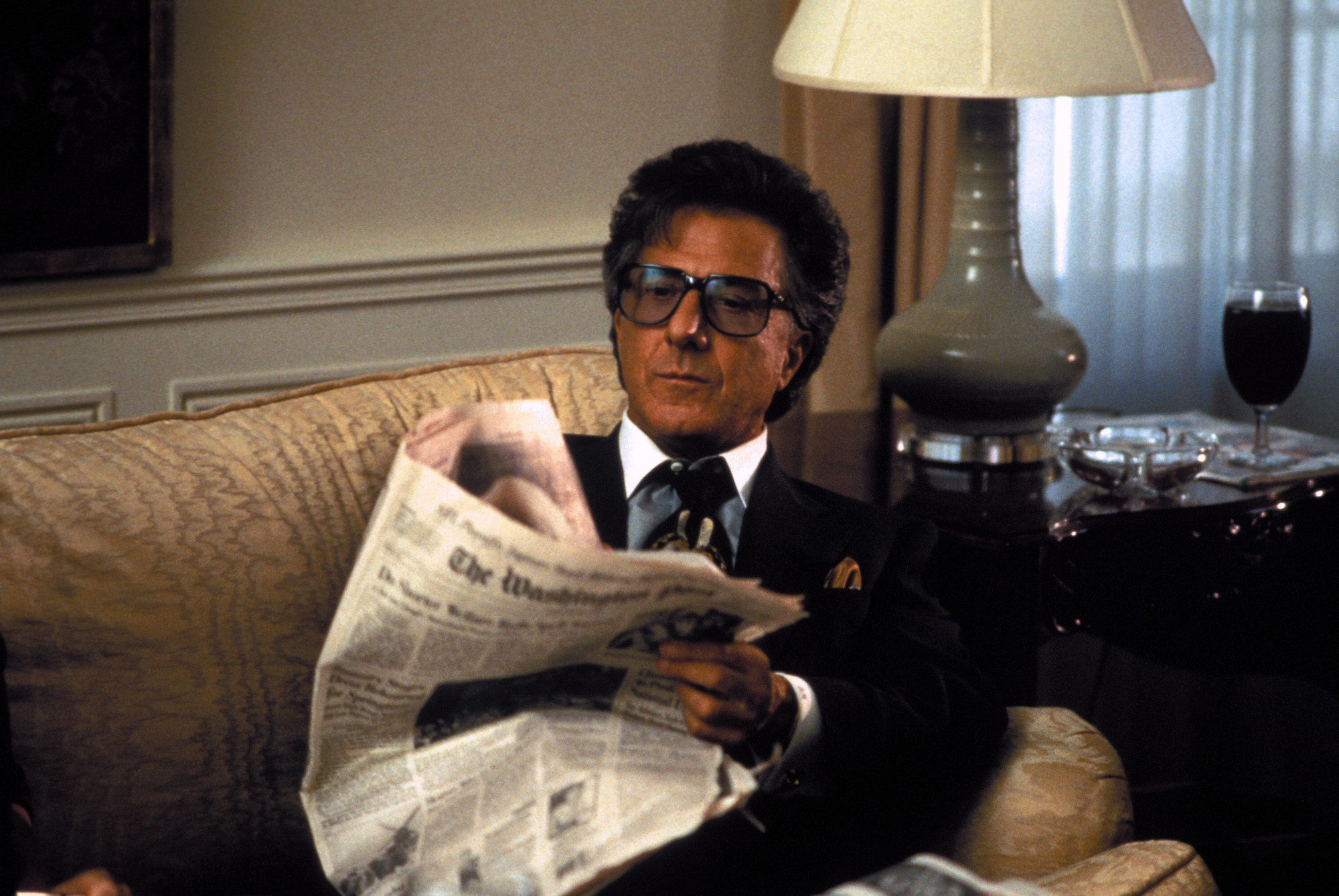
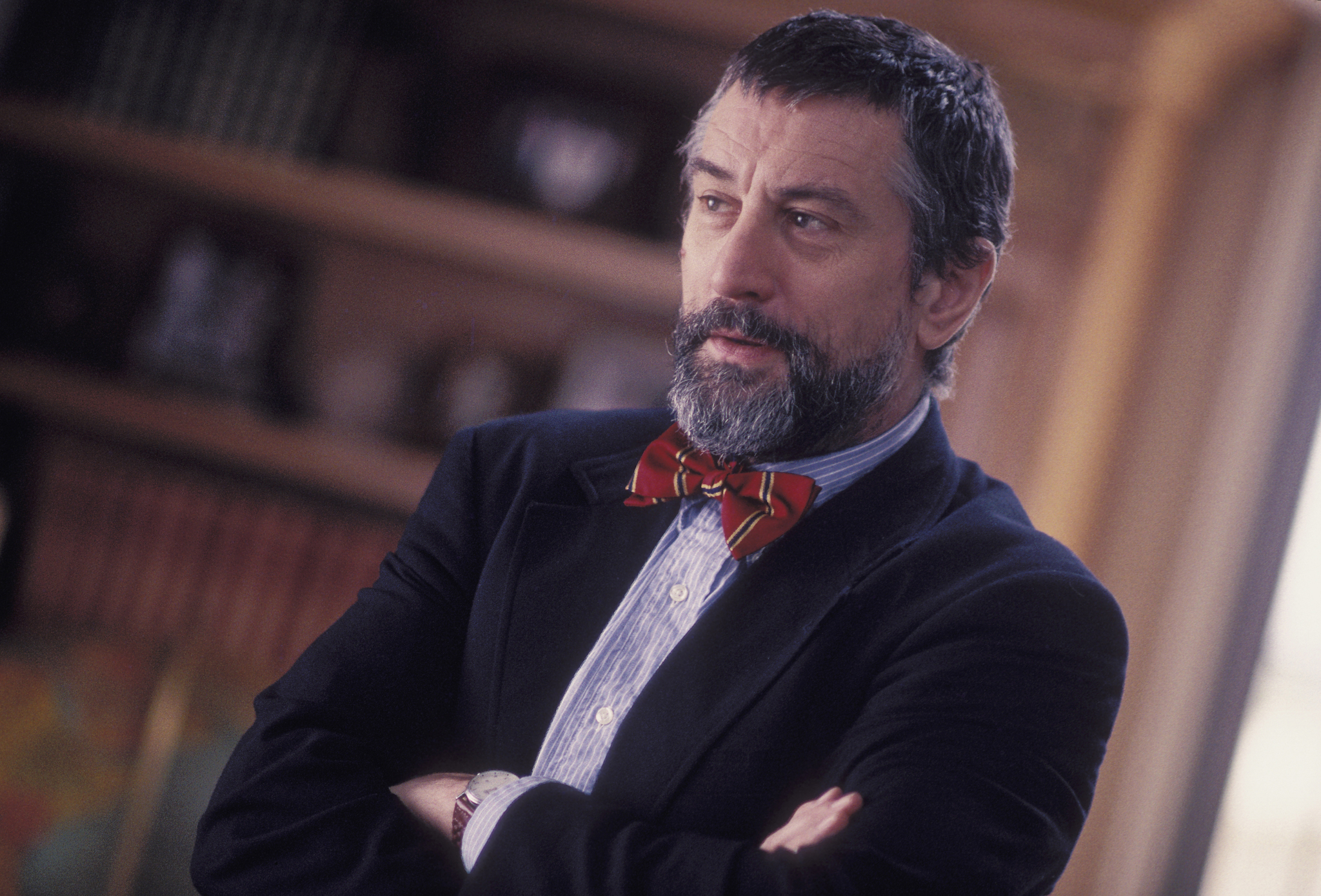
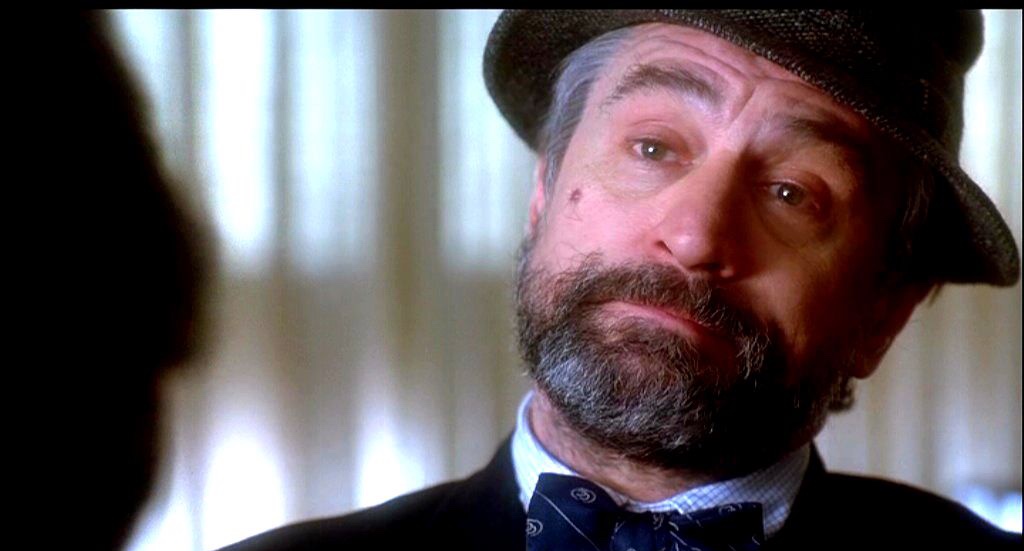
I watched Wag the Dog in 1998.

It was released in 1997, directed by Barry Levinson and starring Robert De Niro and Dustin Hoffman, but I encountered it a year later — and it stayed with me far longer than most films do.

At the time, I thought it was clever.

Later, I realised it was instructional.


What the Film Actually Shows

A president faces a scandal days before an election. The solution is not defence. It is distraction. A war is manufactured — complete with imagery, music, a hero, a narrative arc.

The public sees it on television.
The media amplifies it.
Politicians align behind it.

The war exists because it is broadcast.

What unsettled me wasn’t the satire. It was the mechanics.

The film shows that in modern systems, narrative is not commentary on reality.

It is architecture.


Watching It in the 1990s

When I saw it, the Balkans were not abstract.

The Kosovo War and the NATO bombing of Yugoslavia were unfolding. Iraq was already in a cycle of sanctions and intervention, culminating in Operation Desert Fox.

On screen: a fabricated Balkan conflict used for domestic political containment.
In real life: televised Balkan conflict accompanied by political crisis.

I’m not interested in simplistic causation.

What struck me was structural similarity.

Crisis appears.
Media synchronises.
Emotional imagery floods the screen.
Consensus hardens before analysis completes.

Deniers are denounced.

Once you see that sequence, it becomes difficult to consume headlines innocently again.


Manufactured Symbols

The film’s brilliance is that it doesn’t rely on grand conspiracy.

It shows small things:

  • A song engineered to stir patriotism.
  • A refugee image staged for emotional impact.
  • A slogan crafted for repetition.
  • A soldier turned into a moral totem.

Meaning is assembled deliberately.

The public doesn’t require truth. It requires coherence.

That realisation never quite leaves you.


The Ending That Lingers

At the end, Hoffman’s producer wants credit. He hints he may expose the entire operation.

He dies.

Not dramatically. Not theatrically. Just… removed.

The system continues.

The film never lectures about hidden hands. It simply demonstrates incentive structures: when exposure threatens continuity, continuity wins.

That ending always reminded me of how certain figures — political, financial, inconvenient — sometimes exit at remarkably convenient moments.

No outrage here. Just pattern recognition.


Why I Don’t Watch Breaking News

One of the lasting effects of that film is behavioural.

I no longer watch breaking news at all.

I learn about events after the fact, usually through conversation. Stripped of soundtrack, graphics, urgency, and emotive framing, the event feels different. Slower. Cleaner. Less hypnotic.

Breaking news is theatre with a live orchestra.

Remove the orchestra and you can inspect the stagecraft.


Timing and Markets

Another pattern I’ve noticed: how often major geopolitical flashpoints seem to emerge on weekends.

When markets are closed.

When equity exchanges cannot react in real time.
When price discovery is delayed.
When institutions already positioned can adjust quietly before Asia opens.

Does that prove orchestration? No.

But incentives matter.

If information moves markets, then timing information when markets are shut reduces chaotic repricing and limits uncontrolled losses. It also preserves opportunities for those already hedged.

Gold was already moving upward last week. Was that anticipation? Quiet positioning? Or simply macro fragility expressing itself? Markets often signal stress before headlines catch up.

Correlation is not confirmation.

But patterns are data.


Iran This Weekend

When events flare in places like Iran, the script is familiar:

Energy spikes.
Gold bids.
Volatility expands.
Media harmonises tone within hours.

The first 24 hours are emotional.
The first week is positioning.
The first month reveals whether escalation was strategic or theatrical.

I’m not claiming events are fabricated.

I’m observing that events are leveraged.

Narrative velocity now precedes verification. And whoever controls narrative velocity controls perception, which in turn influences capital, policy, and public mood.

That machinery has only become more sophisticated since 1997.


“The real revolution, if it ever happens, will not be televised.”

That line has echoed in my mind for years.

If real structural change ever occurs, it won’t arrive with theme music and sponsored graphics. It won’t be pre-packaged with slogans and expert panels.

It will likely happen quietly, outside the broadcast frame.

Which is perhaps why I stepped outside the frame myself.

Not in protest.
Not in paranoia.

Just in recognition that sovereignty begins with what you choose not to watch.

Who Moved My Cheese?

I first read it in 2007.

It felt slight. Obvious. Almost condescending. I understood the metaphor and set it aside.

At the time I was still inside the maze.

Still negotiating.
Still adjusting.
Still convinced that effort would restore balance.

There was still something to extract — or at least the belief that there was.

A book about leaving sounds trivial when you are still invested in staying.

Years passed.

The environment shifted in ways that were gradual enough to ignore and cumulative enough to matter. Incentives changed. Effort rose. Return diminished. The arithmetic no longer worked.

There were no explosions. Just erosion.

When I picked the book up again in 2024, it required no interpretation. It wasn’t profound. It was simply accurate.

The cheese had not moved temporarily.
It had gone.

What struck me wasn’t the call to move. It was the attachment of the characters who remained. They weren’t foolish. They were loyal — to routine, to history, to the memory of previous reward.

I recognised that posture.

Staying had once been responsible. Then it became reflex. Eventually it became cost.

There is a point at which endurance stops being strength and starts being delay. It does not arrive with drama. It arrives with arithmetic.

Energy expended. Nothing replenished.

The question changes quietly. Not “How do I make this work?” but “Why am I still here?”

When that question lands without resistance, movement follows without theatrics.

I did not understand the book in 2008 because it did not apply. In 2024 it required no belief. It described a condition that had already formed.

Some texts are instruction. This one is timing.

You either read it while there is still something left to protect, or you read it when the room is already empty.

In the second case, you do not argue with it.

You leave.

The State You’re In

I’ve been thinking about the word state.

Not the flag.
Not the buildings.
Not the men behind desks.

The word itself.

A state is a condition.
A way things are, for a time.

It is not a person.
It does not remember you.
It does not care.

It simply applies.


How It First Appears

Some people meet the state as a helper.

It arrives early.
It pays for things.
It smooths the road.
It makes life feel lighter.

For them, the state feels generous. Almost friendly. Like a great hand that keeps refilling the cup.

Others meet it differently.

As forms.
As rules.
As delays.
As a distant voice saying no.

Both experiences are real.

Both are temporary.


The Error

The mistake is believing the state has a nature.

That it is kind.
That it is cruel.

It is neither.

The state is not a being.
It is a condition applied to circumstances.

When the circumstances change, the condition changes.

That is all.


When Your Life Changes State

There comes a time when your own life shifts.

You earn more.
You move.
You age.
Your family changes shape.

Nothing dramatic needs to happen.

And yet the tone changes.

What once flowed toward you slows.
What once helped now measures.
What once supported now calculates.

People say the state has turned against them.

It hasn’t.

They are simply no longer in the same state.


The Gates

The state works like a series of gates.

If this, then that.
If not, then something else.

Denmark makes this easy to see.

There are supports that apply at certain phases of life — for children, for education, for housing — and there is taxation that applies at others. Under the right inputs, the flows can be substantial. Life can feel buoyant. Even generous.

Then one input changes.

Income.
Residence.
Age.
Status.

The gate flips.

The same machinery produces a different outcome.

No anger.
No memory.
No apology.

Just logic.


From Supported to Supplying

This is the moment many find hardest.

When they are no longer carried, but counted.

Benefits stop.
Obligations begin.
The tone sharpens.

People look for a reason.

There is none.

The state did not decide anything.

It recalculated.


Why This Hurts

We are taught stories instead of mechanics.

That the state cares.
That it protects.
That it provides.

Sometimes it does.

But only while the conditions hold.

The state does not see people.
It sees categories.

Fall inside them and life feels warm.
Fall outside and it feels cold.

Both are impersonal.


Seeing It Clearly

Once you understand this, much anger falls away.

You stop arguing with the weather.
You stop pleading with the tide.

You position yourself instead.

You learn when to sail.
When to anchor.
When to move on.


An Odyssean Ending

I do not see the state as an enemy.
I do not see it as a saviour.

I see it as a sea.

Sometimes calm.
Sometimes rough.
Always indifferent.

A man who mistakes the sea for a home will drown.
A man who learns its moods may cross it many times.

Odysseus did not curse the water.
He read it.

He lost ships.
He lost years.
He lost companions.

But he kept his hand on the helm.

Home, when it came, was not given.
It was reached.

And the mistake was never the journey.

The mistake was believing the waters would always be kind.

The Neutral Zone

I’ve realised I’m in what can only be described as a neutral zone.

The old life is no longer close enough to touch. The house is gone. Accounts have been closed — not just the obvious, literal ones, but the quieter mental ledgers too. Obligations that once occupied bandwidth have loosened their grip. Narratives that once defined me now feel distant, almost abstract.

And yet, the new world hasn’t fully arrived.

The life I mapped out in early 2025 is taking shape, but it’s doing so in its own time. Some elements are already in motion. Others are still gathering quietly behind the scenes. Nothing feels stuck — but nothing can be forced either.

This in-between has a texture of its own.

What’s surprised me most is how much easier it was to say goodbye to certain things than I expected. Not because they lacked meaning, but because their season had clearly ended. Once that becomes obvious, clinging feels unnecessary. There’s relief in recognising completion when it arrives.

The neutral zone is not emptiness.
It’s space.

Space without urgency.
Space without explanation.
Space without the need to perform continuity for anyone else.

I can see now how much of life is spent rushing from one identity to the next, terrified of the pause in between. But the pause is where recalibration happens. It’s where noise falls away and signal returns.

Things are happening. Just not always on a visible timetable.

And I’m increasingly aware that some outcomes only materialise when attention is elsewhere. A watched pot never boils — not because nothing is happening, but because constant monitoring interferes with the process.

So I’m getting on with life.

Walking.
Reading.
Thinking.
Writing.
Paying attention to what’s in front of me rather than what’s forming in the distance.

The neutral zone doesn’t need to be filled. It needs to be inhabited.

If this period has taught me anything, it’s that transition doesn’t require drama. It requires patience and trust — not in outcomes, but in direction.

The old life is gone.
The new one is coming.

And for now, that’s enough.

Kellie’s Castle and the Men Who Stay Too Long

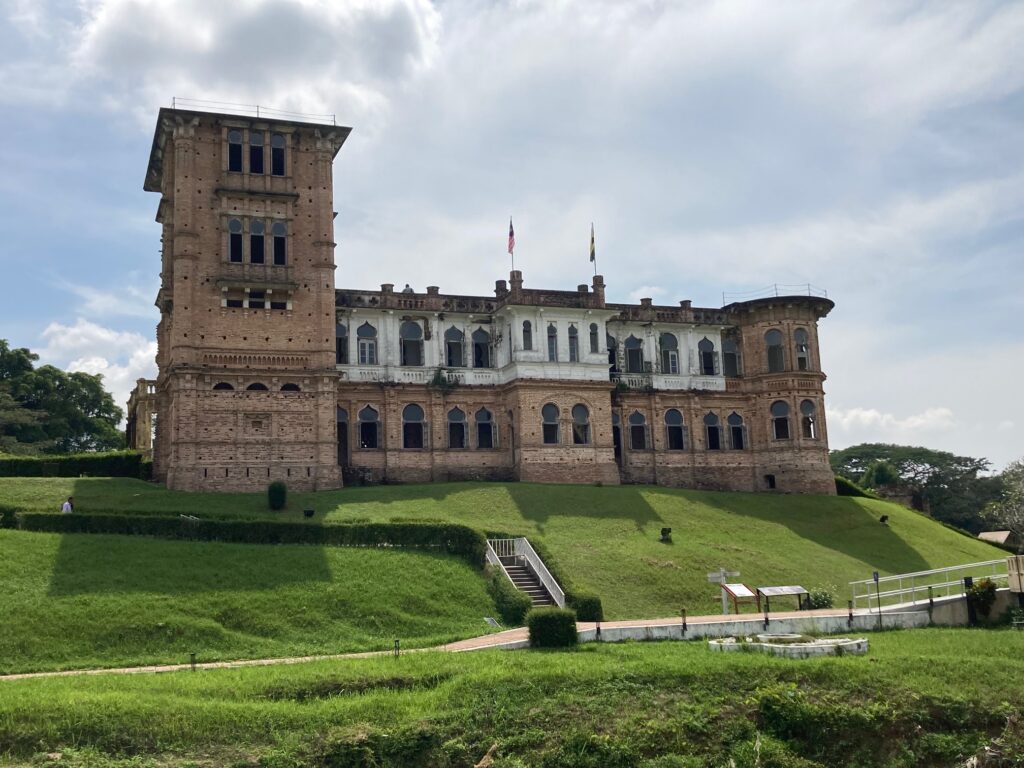
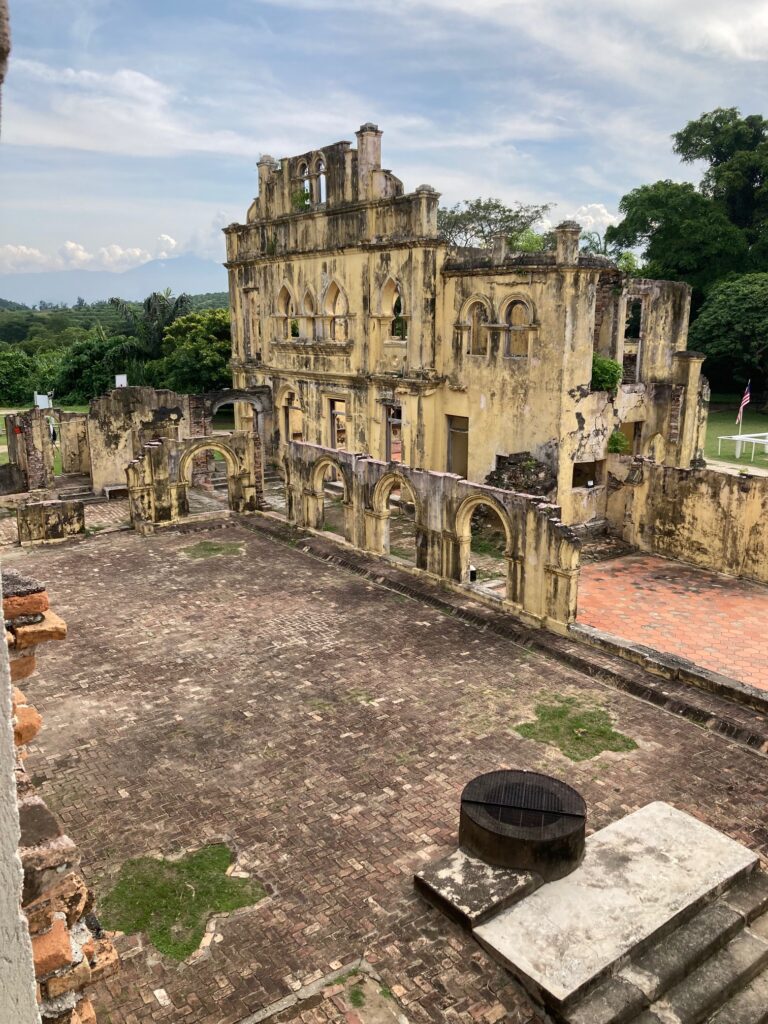
I had waited to see this place for thirty-five years. Michael Palin’s railway journeys put me onto it long ago, but nothing prepared me for the feeling of standing in the shell of another man’s unfinished ambitions.

Kellie built this hill like a man laying out his immortality brick by brick. He wanted a palace, a monument, a statement carved into the heat and stone of Malaya. And yet, here it stands — empty, echoing, beautiful, and broken. A place half-born and never lived in.

You walk these corridors and you wonder:

Was there ever a better monument to how fleeting success and happiness really are?

How quickly a legacy can rot or die?

How quietly a story can end without anyone truly noticing?

Today, standing in the abandoned rooms, I thought of Montana — my own project, my own obligation, the weight I carried for years. I held onto that house until it was time to let it go, and when the moment came, I walked away. I exited my castle long before it had the chance to imprison me.

Kellie never had that luxury. He died in Portugal at fifty-six, still fighting bureaucrats and labour shortages, still believing he had more time. They say his ghost walks the upper corridor here. Not in anger — in yearning. A man trapped in the dream he never escaped.

There’s a curse whispered locally:

Any man who binds his identity to his creation will lose both.

Kellie’s story follows that script with frightening precision — a child lost, a labour force wiped out by influenza, a dream stalled by red tape, and finally, a sudden death. The castle became a tomb for his intentions.

I realised as I walked through the wine cellar — the one he planned to air-condition, the first in Malaya — that I am only two years younger than he was when he died. That hit harder than I expected. It forced a question I’ve avoided for most of my life:

What dream of mine is unfinished, and will I have the courage to leave it behind when the time comes?

The truth is this: legacy is fragile, memory is temporary, and the world is ruthless with sentiment. Even Ipoh reminded me of that this week — the colonial cemeteries bulldozed, the graves poured over with fresh concrete. Whole lives, whole sorrows, erased in an afternoon.

Maybe that’s why this castle struck me.

Maybe this is the lesson:

Do not stay too long.

Do not cling to the past.

Do not become a ghost in a house you once loved.

Kellie tried to build permanence.

I am learning to build only momentum.

And perhaps that is the real inheritance of these ruins — the quiet instruction to walk forward, lightly, before the walls close in.

Goodbye, Montana

There are houses you live in, and there are houses that live in you.
Montana was the second kind.

I didn’t choose it casually.
I felt it the very first time I saw it — the weight of its old bones, the quiet pride in its Edwardian-era lines, the way it waited without demanding anything. It was a house built for seasons and storms, the kind that stands while everything around it changes. A man can come to love a place like that.

And I did.

I loved the wide rooms and the light that moved across the house as the day progressed.
I loved the heavy doors that closed with certainty, the high ceilings that held silence like a cathedral.
I loved the garden in early summer, quiet, private and still, the leaves emerging on the huge old copper beech.
I loved how the house watched over everyone inside it, even when no one noticed.

But Montana was also the place where the old life gathered around me.
A museum of years I outgrew.
A stage where I carried weight meant for three men, not one.
A place that held memories I had long outlasted.

For all its beauty, it became a harbour I could no longer stay anchored in.

Every house has its truth.
Montana’s truth was simple:
I was no longer the man to fit what I had built inside its walls.

There comes a point in a man’s life when he realises he cannot rebuild himself in the same place he was broken. Montana was filled with ghosts that never left — not tragic ghosts, just the kind created by routine, obligation, and the quiet dying of years you can’t get back.

I learned many things inside that house.
How to endure.
How to protect.
How to keep going when the foundation cracks.
How to hold a life together when everything else fell apart.

But I also learned the hardest lesson:
A man cannot stay where he is slowly disappearing.

So I left.
Not because I stopped loving it,
but because I finally understood that Montana belonged to a chapter of my life that had to end before I could begin the next one.

The day I walked through its rooms for the last time, the house felt lighter — as if it, too, knew the story was finished. The echoes were softer. The air felt still. There was no anger, no grief, just a quiet acknowledgment between a man and the place that sheltered him:

“It’s time.”

Montana will go on without me.
Houses do.
They take new families, new laughs, new storms, new light.
They outlive all of us.

But a part of me will always stand in the hallway, hand on the mahogany banister, knowing I was shaped there — hardened, humbled, and finally pushed out into the world to reclaim the man I should have been all along.

Some places you leave to save your future.
Montana was one of them.

This is my goodbye —
not in sorrow,
but in gratitude for a house that carried me long after it should have.

And now the road ahead is open,
the horizon wider,
the past sealed gently behind a closing door.

The last day

© 2026 The Dunwiddie Post

Theme by Anders NorénUp ↑