Only in Ireland do you discover that the country’s biggest pyramid is half an hour from home and had been sitting there all along.
So I went.
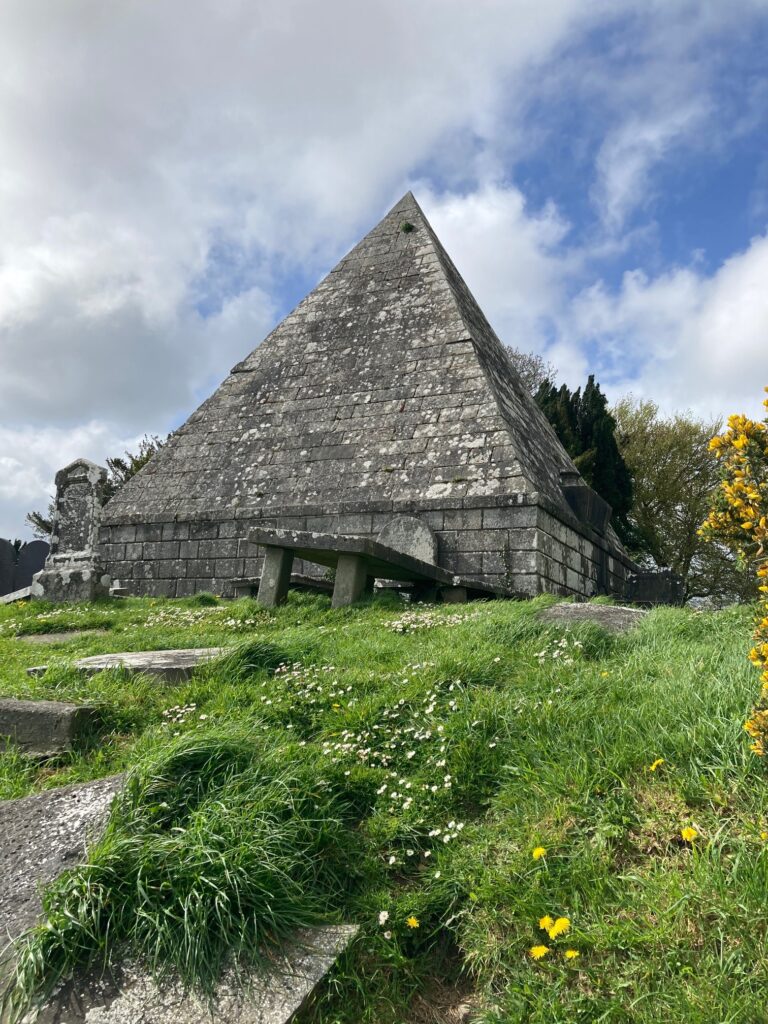
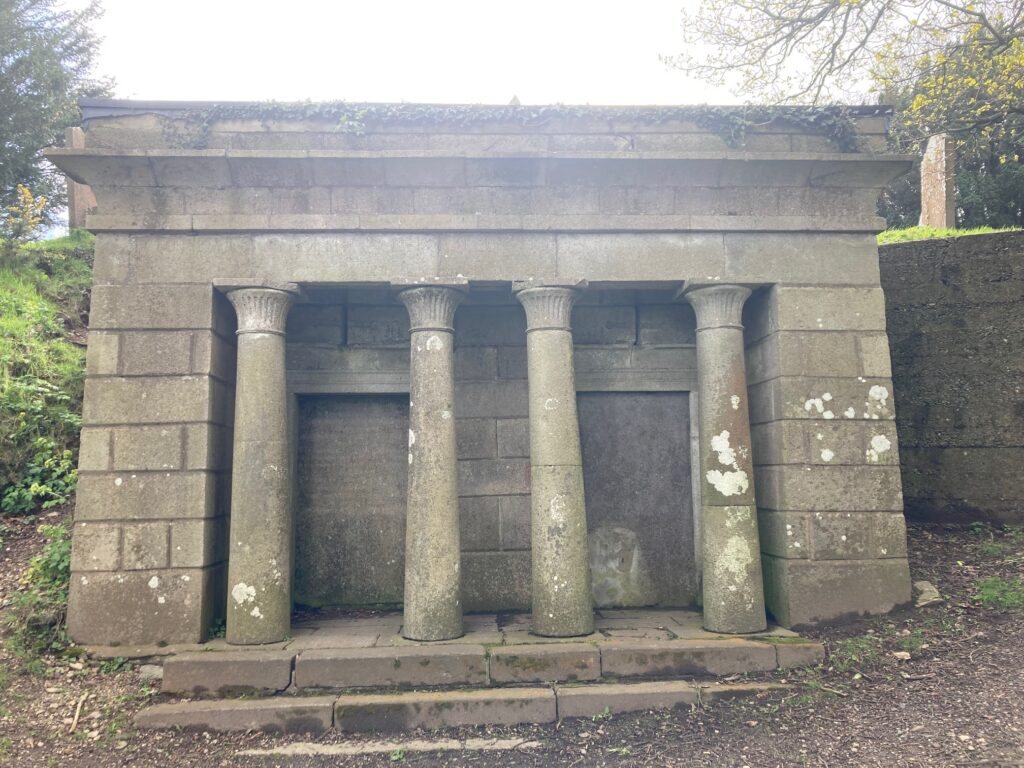
The Howard Mausoleum is worth the visit. Its location is strange from the outset — isolated, slightly uncanny, set down in the landscape with no need to explain itself. Beside it stands a Greek temple. And the pyramid itself has real presence: solid, heavy, unyielding, built not as ornament but as statement. Inside, there was space for 33 burials.
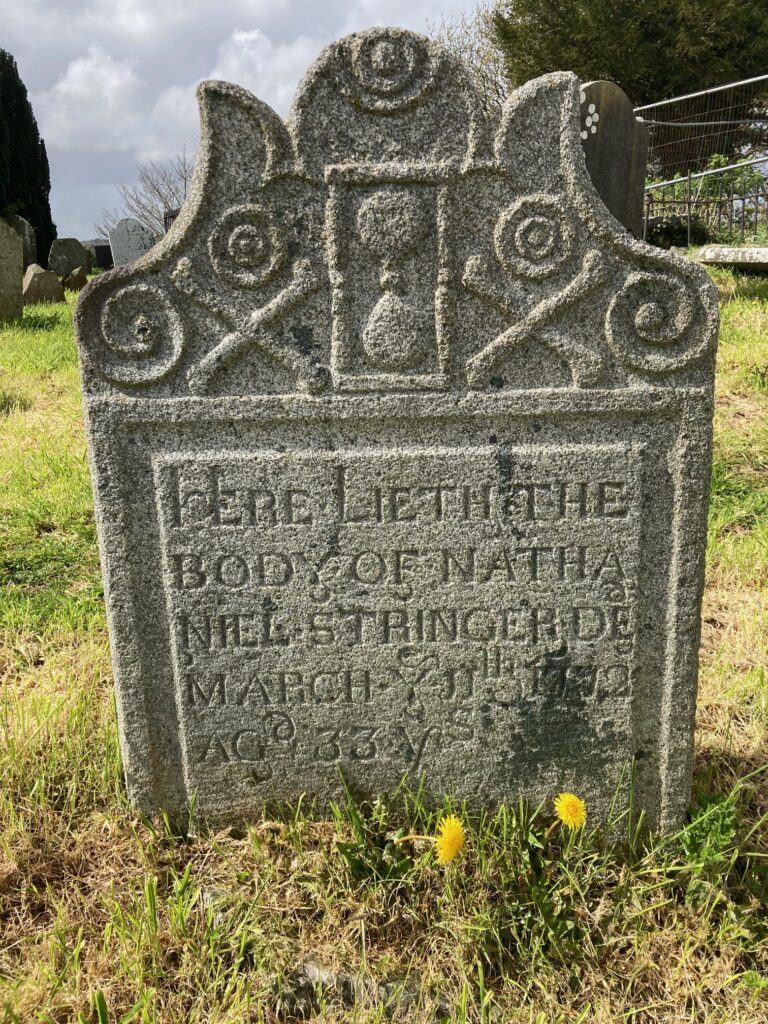
That number stayed with me when I noticed the gravestone of Nathaniel Stringer: dead at 33, on 11/3. One of those details that means nothing, perhaps. Yet still catches in the mind.
Then there was the woman.
As I walked the grounds, I saw her lying behind a gravestone. Not mourning in any obvious way. Not resting either. Just there. When she rose, she gave no eye contact, no hello, no how’re you doing — very un-Irish in that silence. She walked back without a word to the taxi waiting outside. I left at about the same time.
Places like that make you wonder what else lies underneath. Old sacred ground is rarely used only once. New faiths, new families, new monuments — they build over what came before. A tomb may be eighteenth century. The pull of the place may be far older.
Then I got home and heard the final layer: that the tomb was sealed after a baby was buried there in the 1800s, and that afterwards people said the screams of the tormented child could be heard from within.
That, too, felt Irish.
A pyramid. A temple. Thirty-three spaces for the dead. Silence in the graveyard. And the old certainty that stone remembers more than it says.