A record of storms survived and horizons still calling

Category: Masculinism (Page 1 of 2)

The Hidden Tourist Tax

I went back to Tunisia to test a memory.

I had worked in Tunis in 2010, and the city had stayed with me. Not just as a place, but as an energy: French and Italian bones, Arab life, Mediterranean confidence, cafés, traffic, white façades, old streets, movement, beauty, possibility.

Some cities vanish when you leave them.

Tunis had remained.

So I returned to ask a simple question.

Was it still there?

The answer was yes.

Not exactly as I remembered it. No city waits sixteen years to confirm a private myth. But the charge was still there. Tunis still had that layered, urban, slightly theatrical quality I had carried with me since 2010. It still felt alive in more than one direction at once.

That is Tunisia’s strength.

It is not one thing.

It is Punic, Roman, Arab, Ottoman, French, Italian, African, Mediterranean and modern Tunisian, all folded into the same landscape. Not cleanly. Not politely. But visibly. You can walk a few streets and feel one civilisation’s confidence turn into another civilisation’s afterlife.

That was what I came for.

I wanted Roman stones, sea air, cafés, railway stations, louages, whitewashed towns, old streets, medinas, fragments of empire, and the ordinary theatre of North African life.
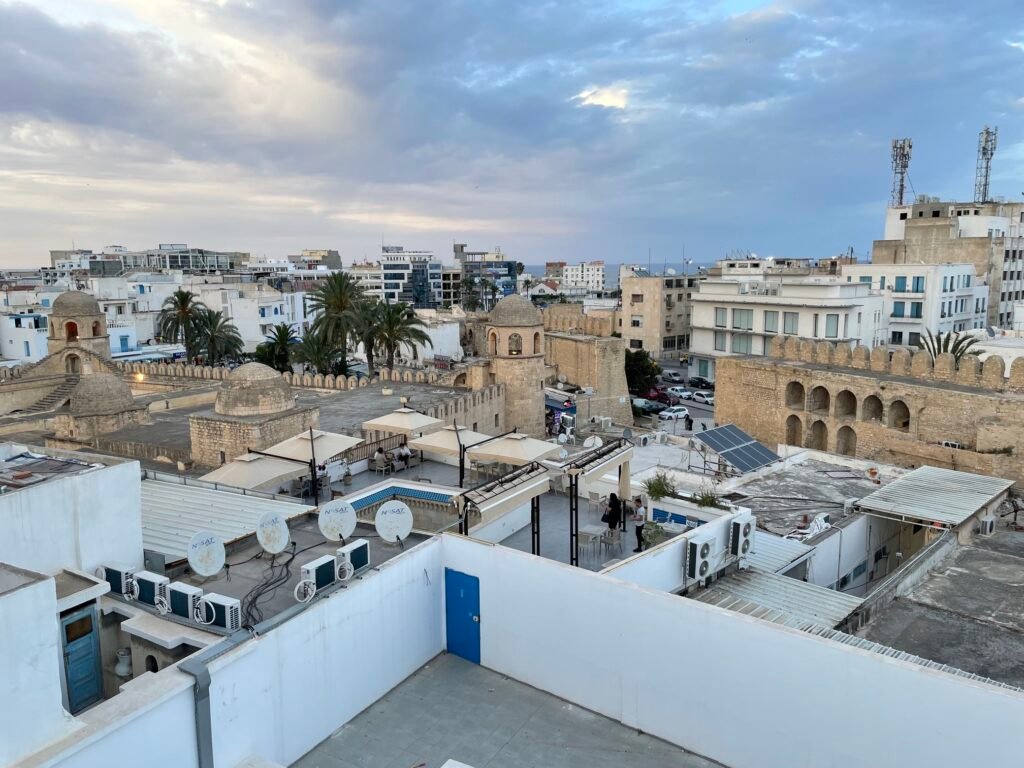
I found all of it.
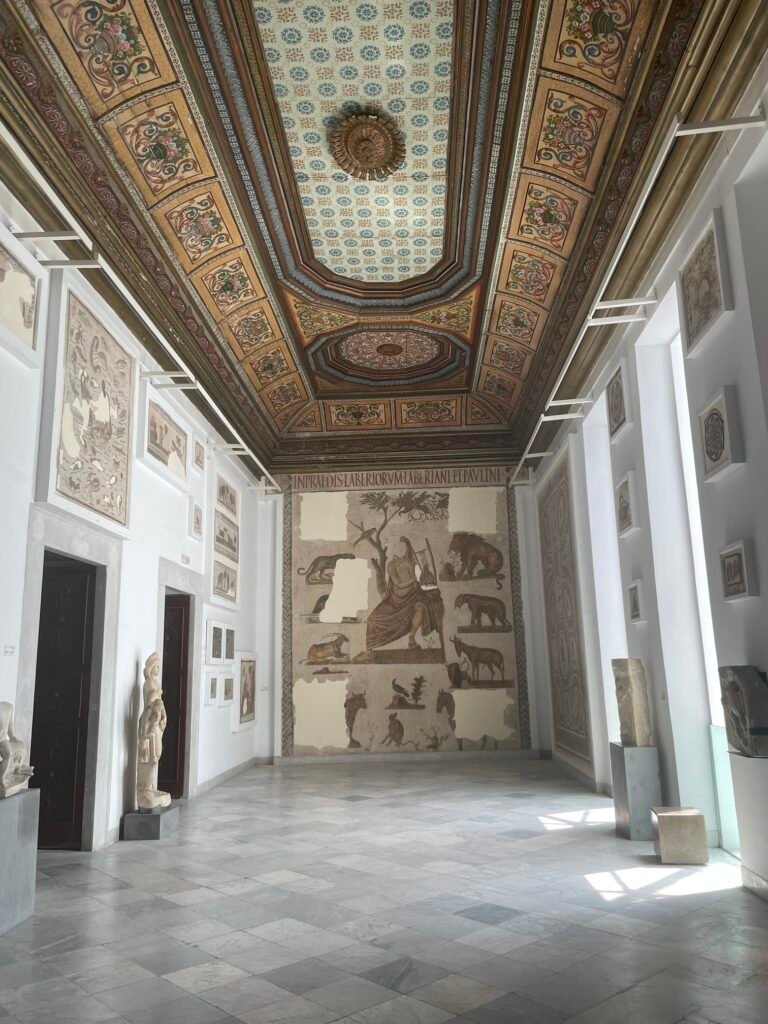
The old French and Italian city of Tunis was, unsurprisingly, one of the strongest parts of the trip. I loved it back in 2010. After all, it is recent history, only being vacated in 1956 by fleeing French, Italian, Greek and Jewish families with their stories of loss blown away by the winds of time. It is not polished heritage. It is better than that. It is a surviving layer. Art Nouveau, Art Deco, occasional 1950s modernist. Balconies, churches, façades, cafés, apartment blocks, commercial buildings, shaded streets, traces of a European Mediterranean world that once assumed it had a future there.
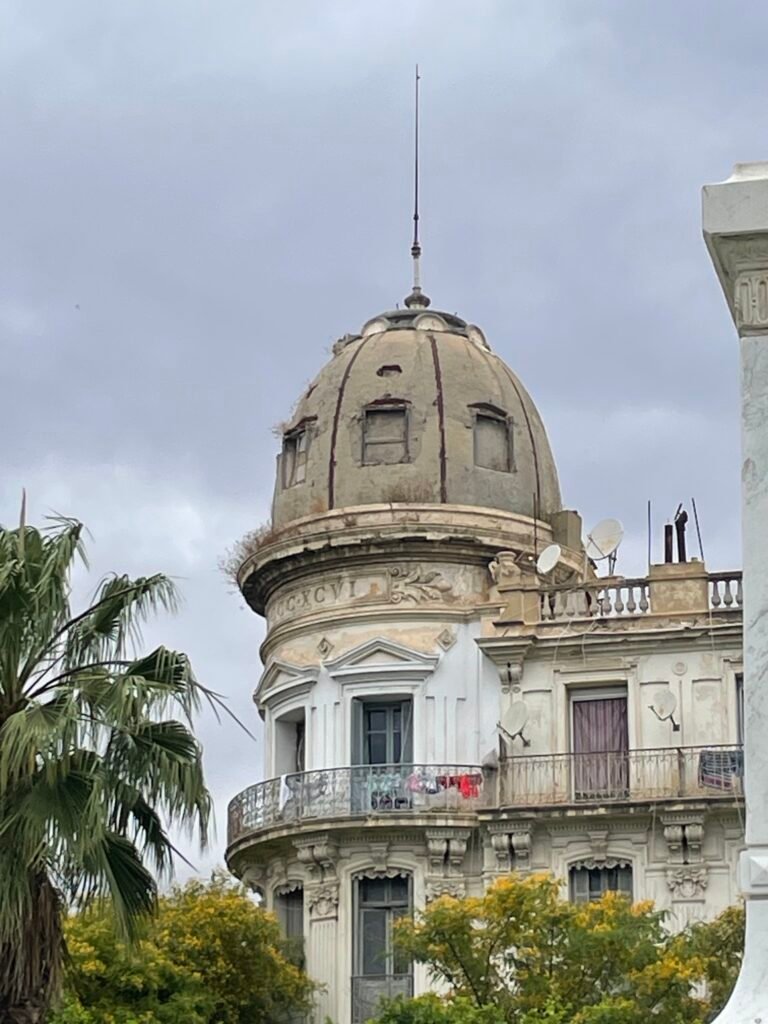
People had lived in those buildings as themselves.

They worked, prayed, argued, made money, lost money, loved, aged, raised children, and imagined that their world would continue.

Then history moved.

The buildings remained.
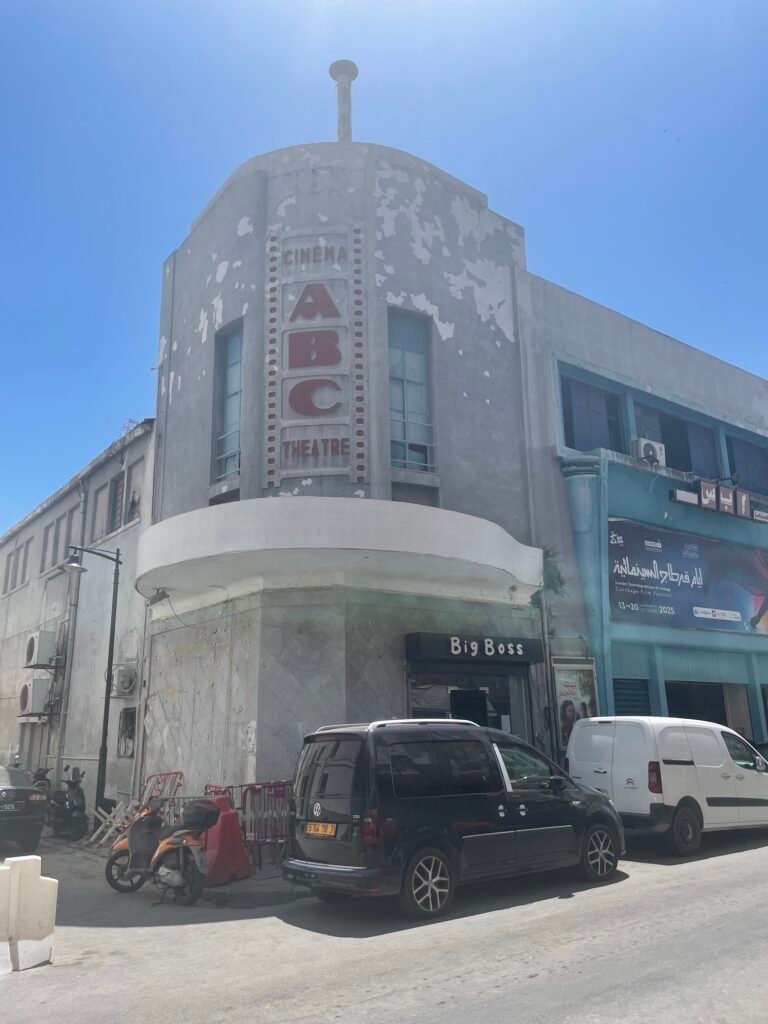
That is the power of Tunis. It does not give you history as a museum sequence. It gives you layers under your feet.

The cathedrals made the same point in stone.

Nobody builds a cathedral for a temporary mood. A cathedral is confidence made physical. Religious confidence, civic confidence, imperial confidence, cultural confidence. It says: we are here, and our world has weight.

And yet there they stand now in a changed Tunisia, no longer central, no longer commanding the same world that built them.
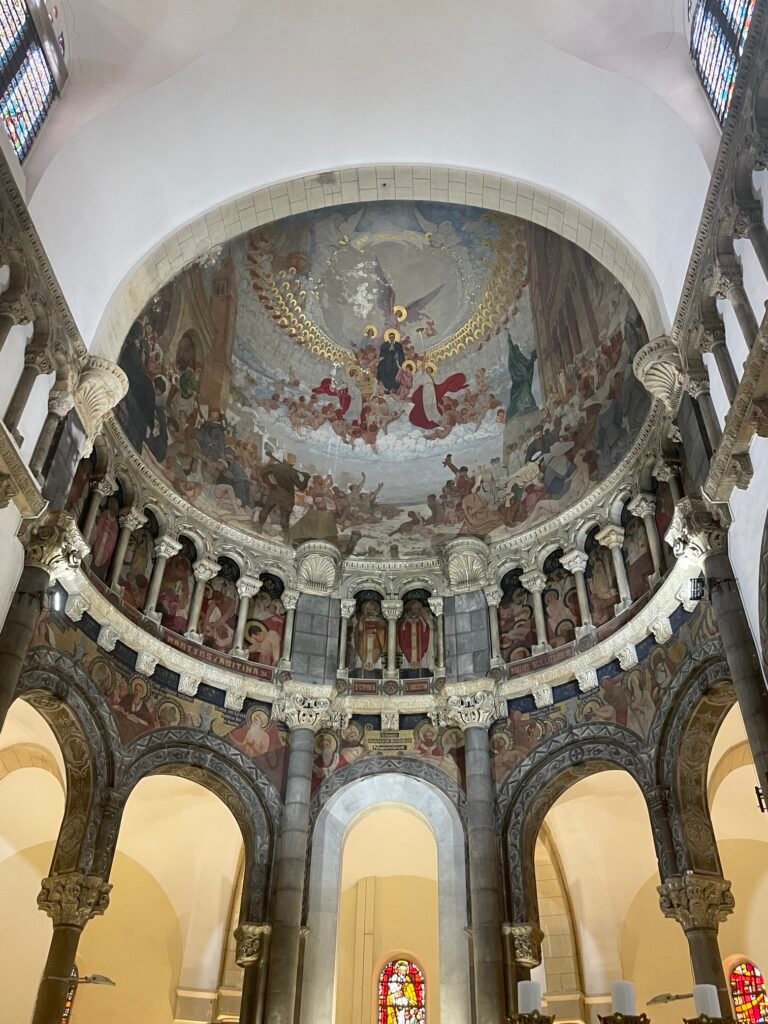
Evidence.

Not decoration.

The strongest refuge was the Protestant church and cemetery garden.
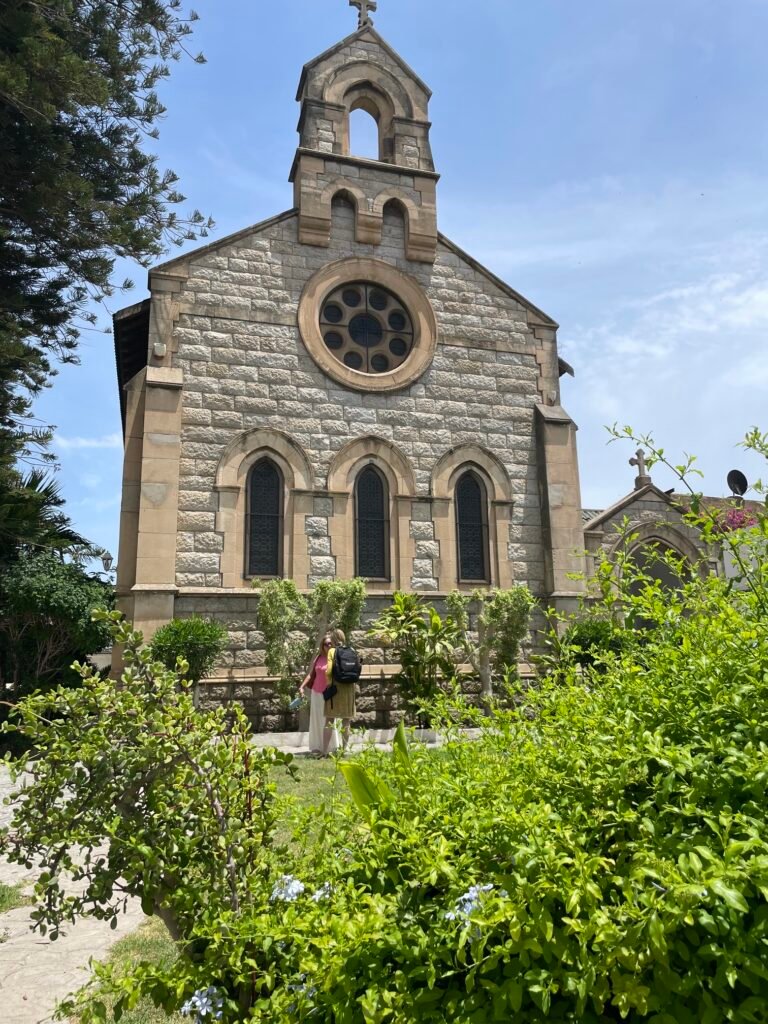
Outside: traffic, heat, call-outs, movement, negotiation, the small frictions of the street.

Inside: shade, stone, graves, names, flowers, silence.

There were British graves, as expected. But there were also Danish and Swedish names, and those struck deeper because of my years in Denmark. A Scandinavian name in a cemetery garden in Tunis is a small thing, but small things often carry the most human weight.

People had come south. They had traded, served, married, fallen ill, died, and been buried far from the cold north.

That garden was not an attraction.

It was a pause in history where nobody wanted anything from me.

And that mattered.

Because Tunisia also taught me the hidden tourist tax.

Not money.

Attention.

The low-level street approaches were not dramatic. This was not danger. It was not a siege. It was usually small: “Where are you from?” “My friend.” “Taxi?” “Restaurant?” “Guide?” “Come, come.”

The first time, you answer.

The second time, you recognise the shape.

After that, you know the script before it has properly begun.

The cost is not the dinars.

The cost is the interruption.

You are walking. Looking. Thinking. Building a map of the place. Comparing Tunis now with Tunis in 2010. Noticing a façade, a street angle, a church door, a café, a railway board, a piece of colonial geometry under modern traffic.

Then someone inserts himself into your attention.

Now you must classify him.

Friendly? Commercial? Taxi? Guide? Scam? Harmless? Persistent? Do I answer? Ignore? Refuse? Walk faster?

It takes two seconds.

But the thread breaks.

That is the tax.

A tax on solitude.

A tax on observation.

A tax on the direct experience of a place.

So the rule is simple.

No drama. No lecture. No anger.

“No, merci.”

“La, merci.”

Keep walking.

Attention preserved.

Trip restored.

Because the best of Tunisia deserved attention.

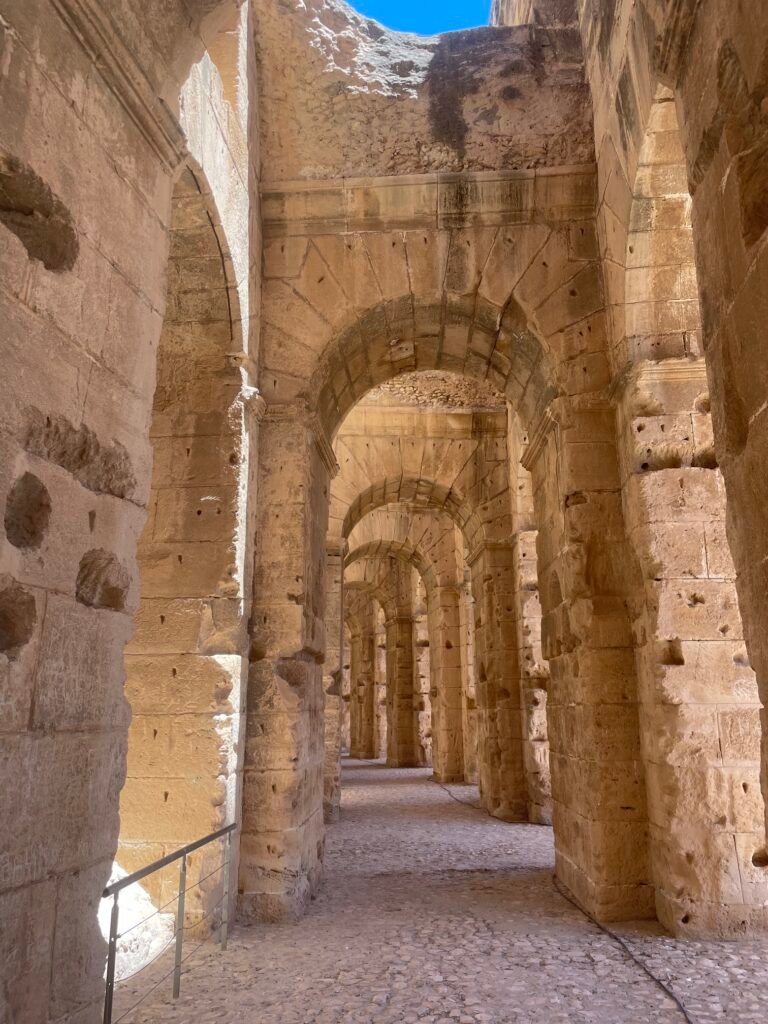
El Jem deserved it.

At the top of that amphitheatre, looking down into the arena and out across the ordinary town around it, Tunisia became enormous. Not peripheral. Not minor. Not some footnote to Rome. This land was rich: grain, olive oil, cities, ports, villas, baths, theatres, roads, amphitheatres.

The Roman map of North Africa is crowded with lost significance.

El Jem makes modern arrogance look temporary.
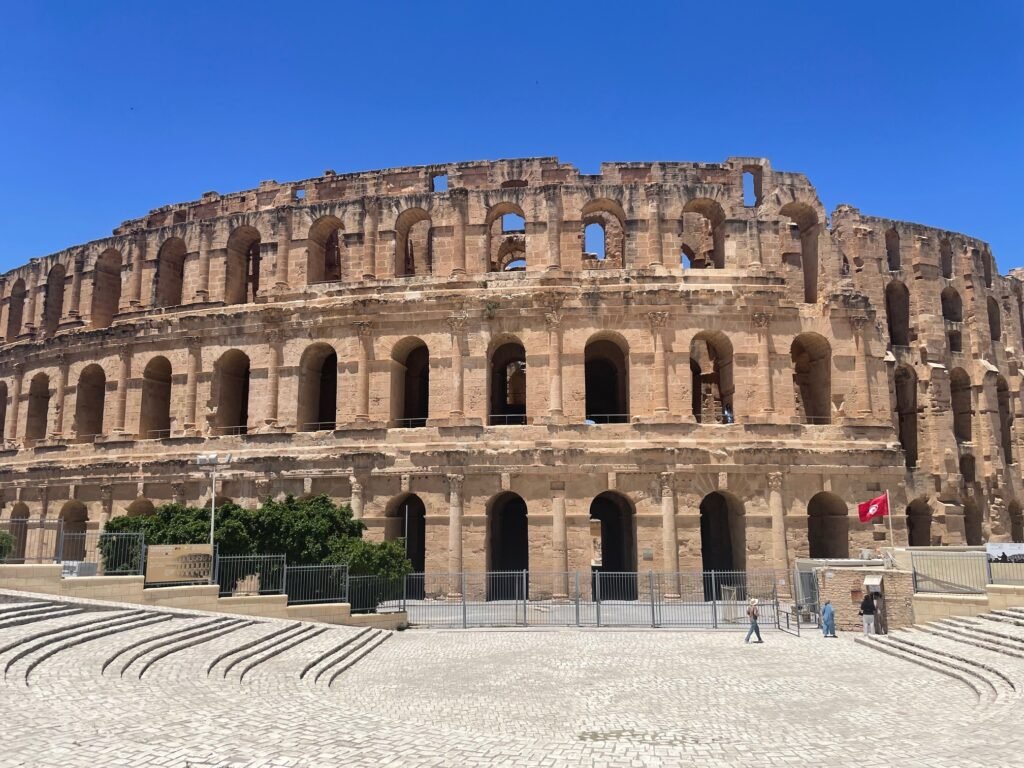
The stones do not perform. They do not sell. They do not ask where you are from. They simply stand there, long after the world that built them has disappeared.

That is real travel.

The sudden perception of depth.

Mahdia deserved attention too.

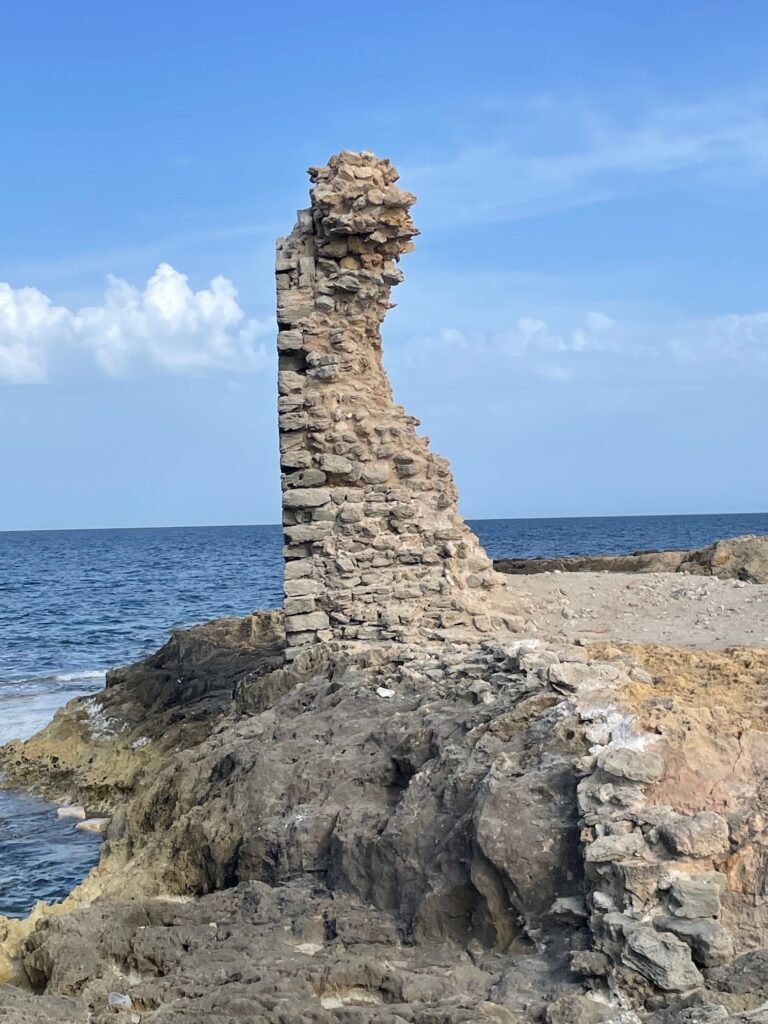
Sea, walls, old stones, light, space. It did not need to shout. Some places work because they allow the mind to settle. Mahdia had that. It gave the trip a coastal shape that was better than the original plan.

My route changed because Tunisia corrected it.

The first idea had been more ambitious: Tunis, Monastir, Sfax, Gabès, maybe further south.

But travel is not a spreadsheet.

A route can be logical and still wrong.

The better trip became Tunis, Sousse, Mahdia, El Jem, Sidi Bou Said.

Less heroic.

More coherent.

More historical.

More coastal.

Closer to what I actually value.

That is a useful rule.

Do not defend the itinerary against the country.

Let the place speak.

Tunisia spoke in fragments.

A railway board photographed because the internet could not be trusted.

A taxi price descending in stages.

A restaurant bill corrected when challenged.

A host message turning a zero-review hotel from possible phantom into real arrangement.

Old European streets in Tunis carrying the outline of a vanished world.

Cathedrals proving that confident communities become historical layers.

A Protestant cemetery garden where Danish and Swedish names lay quietly beneath North African light.

El Jem rising out of ordinary life like a warning from antiquity.
Mahdia giving the trip sea air and stillness.
Sidi Bou Said doing what it always does: white, blue, bright, theatrical, beautiful, over-known and still somehow effective.

This is why Tunisia stayed interesting.

Not because every moment was easy.

Because the country has depth.

It rewards attention.

And that became the lesson.

The real currency of travel is not money. Money matters, but it is not the core. The real currency is attention.

Spend it badly and even a cheap country becomes expensive.

Spend it well and a simple day becomes memorable.

A quiet coffee can outlive a famous sight.

A churchyard can restore more than a bar.

A walk by the sea can beat a guided tour.

A ruin at the right hour can outweigh five guidebook obligations.

The travel industry sells flights, beds, meals, transfers and experiences.

But the traveller is really buying conditions for attention.

A good hotel gives rest.

A good café gives a place to observe.

A good walk lets the mind stretch.

A good ruin gives attention somewhere worthy to land.

A good conversation expands the day instead of hijacking it.

A good destination gives your attention back in better condition than it found it.

Tunisia did that.

The street interruptions were noise. Irritating, yes. Revealing, yes. But still noise.

The country itself was not the noise.

The country was the old city of Tunis.

The cathedrals.

The cemetery garden.

The Roman stones.

The sea at Mahdia.

The amphitheatre at El Jem.

The medina walls.

The railway stations.

The cafés.

The energy I remembered from 2010, still alive enough to justify the return.

That was the signal.

Everything else was a tax.

Pay as little as possible.

Keep walking.

Look properly.
The Leakages

A man can lose his life without any dramatic fall.

Not in one blow.
In drips.

An hour here.
A payment there.
A form.
A duty.
A house that always wants something.
A job that eats the day.
A woman who takes more than she gives.
A state that never stops asking.

From the outside, he looks fine. Functional. Reliable. But something is leaving him all the time.

Energy.
Time.
Money.
Attention.
Life.

That is the real story for many men.

Leakage.

The Small Leak

Most self-improvement begins at the smallest hole in the hull.

Porn.
Scrolling.
Drinking.
Screens.
Passive entertainment.
Junk habits.

Cut this. Improve that. Wake earlier. Drink less. Be sharper.

Fine. Some of that helps.

But it is also safe.

Because a man who fixes his habits while staying inside the same draining life is still being drained. He is simply becoming more efficient inside it.

That is why so much advice feels false.

It treats the symptom and leaves the structure untouched.

The Bigger Leaks

There are larger leakages, and they cost more.

Relational

Some relationships return force.
Some take it.

A man can lose years giving energy, money, steadiness, patience, and provision into bonds that return little but demand.

The same is true of family dynamics where duty became extraction.

Not all relationships are a drain. Some are among the best returns in life.

But some are wells with no bottom.

Structural

A house can drain a man.
A commute can drain a man.
A job can drain a man.
Routine can drain a man.

What looks stable from the outside may be feeding on him each week.

Many men are not weak.

They are overtaxed by the architecture of their lives.

Sovereignty

This is the deepest leak.

Governments.
Tax systems.
Bureaucracy.
Forms.
Compliance.
Reporting.
Background vigilance.

A man can spend immense life-force simply remaining legible to systems that have claim over him.

He calls it adulthood.

Often it is tribute.

What I Learned

Over the last year I began cutting major leakage from my own life.

I left corporate daytime extraction.
I left a beautiful old house that demanded tax, maintenance, and constant attention.
I moved away from systems that wanted energy in forms, filings, compliance, and background stress.
I became harder about where my life was going.

That changed more than mood.

It changed structure.

Not all pleasure is leakage.
Not all rest is sedation.
Not all relationships are extractive.

The question is simpler than that.

Does energy leave your life and come back as freedom, love, peace, wealth, memory, vitality, or meaning?

Or does it just go?

That is the test.

The Lie Men Are Sold

Systems prefer self-improvement that does not threaten the system.

A man who scrolls less and drinks less is easier to manage if he stays in the same job, same structure, same dead arrangement, same draining jurisdiction.

He becomes a better-behaved captive.

That is why so much modern advice stops at habits.

It helps men function better inside extraction.

It rarely tells them to leave.

The Real Order

Most men should not start with the smallest leak.

They should start with the biggest.

Often that means:

first sovereignty leakage,
then structural leakage,
then relational leakage,
then micro leakage.

But the rule is simple. Start where the real blood is leaving.

For some men it is the state.
For some it is the house.
For some it is the job.
For some it is the woman.

Find the biggest drain first.

Cut the Leak

In the old stories, the danger was not only the storm.

It was the place that made a man forget his direction.
The comfort that softened him.
The duty that was never truly his.
The delay that became years.

That is how many men lose themselves now.

Not in open ruin.

In slow diversion.

A man gets his life back when he sees clearly what drains him and cuts it without apology.

Not to become purer.
Not to behave better.
But to live.

Then the lost energy begins to gather again.

Thought sharpens.
Motion returns.
The horizon opens.

And what was being fed into maintenance, duty, paperwork, sedation, and dead structures can be turned toward something worthy at last:

women, roads, money, beauty, work of his own choosing, remembered days, and the forward path.

That is recovery.

Not better behaviour inside the cage.

Departure.

Half the World Away

I found Oasis’s Half the World Away in Hobro in 2024.

Some songs arrive as entertainment. Some arrive as truth. This one arrived as recognition.

By then, much of my old life was still standing in the outer world, but inwardly it had already begun to fall away. That is a dangerous phase in a man’s life. He is still present in the visible structure, but no longer belongs to it. He can still perform the role, but the role has gone dead in his hands.

That was Hobro.

The song is not about collapse. It is about misplacement. It is the sound of a man who knows he is not where he should be. There is no panic in it. No pleading. Just the quiet knowledge that the ground under him is not his ground.

That is what struck me.

There are times when life does not fail in one dramatic blow. It simply becomes false. The outer frame remains, but the spirit has already stepped away. A man feels it first as restlessness, then as distance, then as truth. He sees that what once held him no longer does. He understands that staying too long in the wrong place can do more damage than leaving.

Hobro was not home. It was a waystation where that fact became impossible to ignore.

Looking back, I can see the song named something before I did. My problem was not that I was lost. My problem was that I was living on the wrong ground. That is a harder thing to admit, because once a man sees it clearly, he cannot remain innocent. He must either move, or consent to his own diminishment.

Some men are built for settled fields and known roads. Others are made for crossings. They know, even when they resist it, that life comes alive again only when they leave dead terrain behind.

That was the gift of the song. It gave shape to a truth I was already living.

Not broken.
Not beaten.
Not finished.

Just half a world away from where I was meant to be.

And sometimes that is the beginning.

55 : The Gap and The Gain

I am 55 today.

“Road to Nowhere” is playing in the background. It fits, but not in the way it once might have.

Not because I am lost.

Because a life lived honestly is never a straight road. It is crossings, weather, wrong turns, departures, and long stretches where there is no map, only instinct. Only later does it look like a line.

A birthday is a good day to take stock.

Not the polished version. Not the public story.

A clean ledger.

What was gained.
What was lost.
What was escaped.
What changed.
What returned.


That brings me to the gap and the gain.

The past year was not cosmetic. It was structural.

I stepped away from old gravity — obligations, expectations, patterns that no longer fit. I made space. Not comfortable space, but real space.

In exchange came something harder, and more valuable:

Freedom.
Optionality.
Control over direction.

Not imagined freedom.

Built freedom.

That is gain.


I sharpened too.

I see faster now:

  • weak systems
  • false narratives
  • arrangements that don’t hold

I leave sooner. I trust the signal sooner. I waste less time trying to keep dead things alive.

That is gain.


Life has also become responsive again.

There has been movement. Energy. Intensity.

Moments where something real is felt immediately, without explanation. Moments that remind a man that life is not behind him, but still very much in front of him.

That is gain.


Confidence has returned with it.

Not performance.

Evidence.

Enough to stand differently in one’s own life.

That too is gain.


And yet the gap remains.

Not everything that matters continues.

Some moments are real, vivid, alive — and still do not become more.

Not failure.

Unfinished.

A note that stays in the air a little longer than expected.

That is the gap in its most human form.


The error is simple.

Allowing the unfinished to outweigh the achieved.

Letting what did not fully come to shore obscure what clearly did.

That is not a moral failure.

It is an error of accounting.


So the ledger at 55 is this:

The gain:

  • a life structurally changed
  • greater freedom and control
  • sharper judgement
  • renewed energy
  • forward momentum
  • proof that life still answers when engaged properly

The gap:

  • not everything resolved
  • not everything carried forward
  • not every moment became a chapter
  • gains not always fully realised or optimally banked
  • occasional hesitation at the point where action was required

The position now

No delusion.

No self-congratulation.

Just accuracy.

I do not need to be finished.
I do not need to be settled.

At 55, the correct posture is simple:

under sail

Not drifting.
Not docked.

Moving.


This is not the end of the journey.

But it is not open sea either.

It is one of those islands a man is glad to reach.

A place where life answers him again.

He does not stay forever.

But he does not deny that he arrived.


The gap remains.

It always will.

But so does the gain.

And at 55, I would rather live like a man who knows the difference.

Who Moved My Cheese?

I first read it in 2007.

It felt slight. Obvious. Almost condescending. I understood the metaphor and set it aside.

At the time I was still inside the maze.

Still negotiating.
Still adjusting.
Still convinced that effort would restore balance.

There was still something to extract — or at least the belief that there was.

A book about leaving sounds trivial when you are still invested in staying.

Years passed.

The environment shifted in ways that were gradual enough to ignore and cumulative enough to matter. Incentives changed. Effort rose. Return diminished. The arithmetic no longer worked.

There were no explosions. Just erosion.

When I picked the book up again in 2024, it required no interpretation. It wasn’t profound. It was simply accurate.

The cheese had not moved temporarily.
It had gone.

What struck me wasn’t the call to move. It was the attachment of the characters who remained. They weren’t foolish. They were loyal — to routine, to history, to the memory of previous reward.

I recognised that posture.

Staying had once been responsible. Then it became reflex. Eventually it became cost.

There is a point at which endurance stops being strength and starts being delay. It does not arrive with drama. It arrives with arithmetic.

Energy expended. Nothing replenished.

The question changes quietly. Not “How do I make this work?” but “Why am I still here?”

When that question lands without resistance, movement follows without theatrics.

I did not understand the book in 2008 because it did not apply. In 2024 it required no belief. It described a condition that had already formed.

Some texts are instruction. This one is timing.

You either read it while there is still something left to protect, or you read it when the room is already empty.

In the second case, you do not argue with it.

You leave.

Shingle, Silver, and the Long View

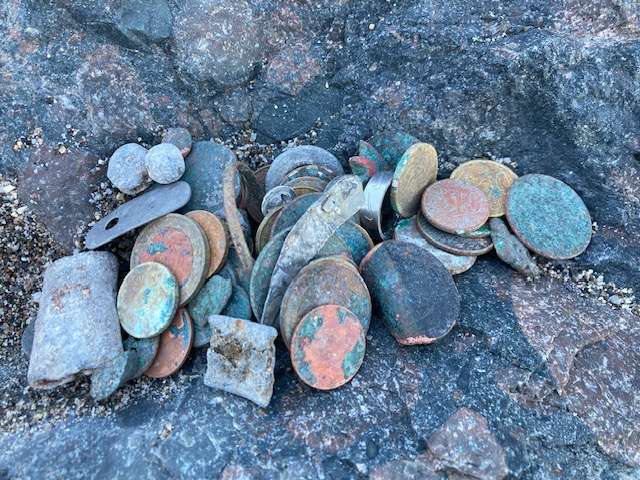
I went out metal detecting yesterday.

The sea had reclaimed the beach. After the recent storms, the shingle had come back in and covered the sand again, resetting the ground as if nothing had passed before. It wasn’t one of those rare, generous days like the bumper outing back in early December, but it was finally dry — and that was reason enough to go.

Everything they say about Irish weather at this time of year is true. You learn to move when the window opens.

What struck me most wasn’t the number of finds, but the number of conversations.

On an almost deserted beach, people wanted to talk. In fact, I probably spent a quarter of the trip standing still, leaning on the detector, chatting with strangers who were curious, cheerful, and entirely unguarded.

One couple had opportunistically decided to collect scallops that had been washed ashore by the tide. Another pair were searching for sea glass. They didn’t find much, but they were perfectly content — happy simply to be there, pockets light, spirits not.

Further along, on the long walk back, I met a man who stopped to ask about the detector. He turned out to be a long-time Time Team viewer and had always fancied having a go himself. That opened the door to stories — him gold prospecting in the mountains, the patience it demands, the silence, the feeling of working ground that doesn’t yield easily. Add that to the list.

He mentioned he had a four-year-old son.

That stayed with me.

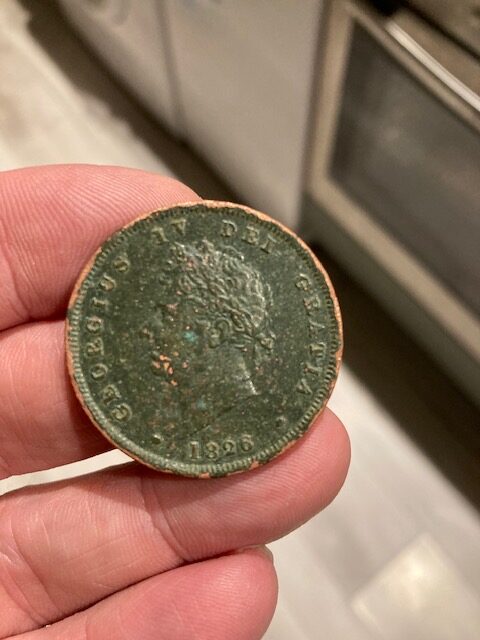
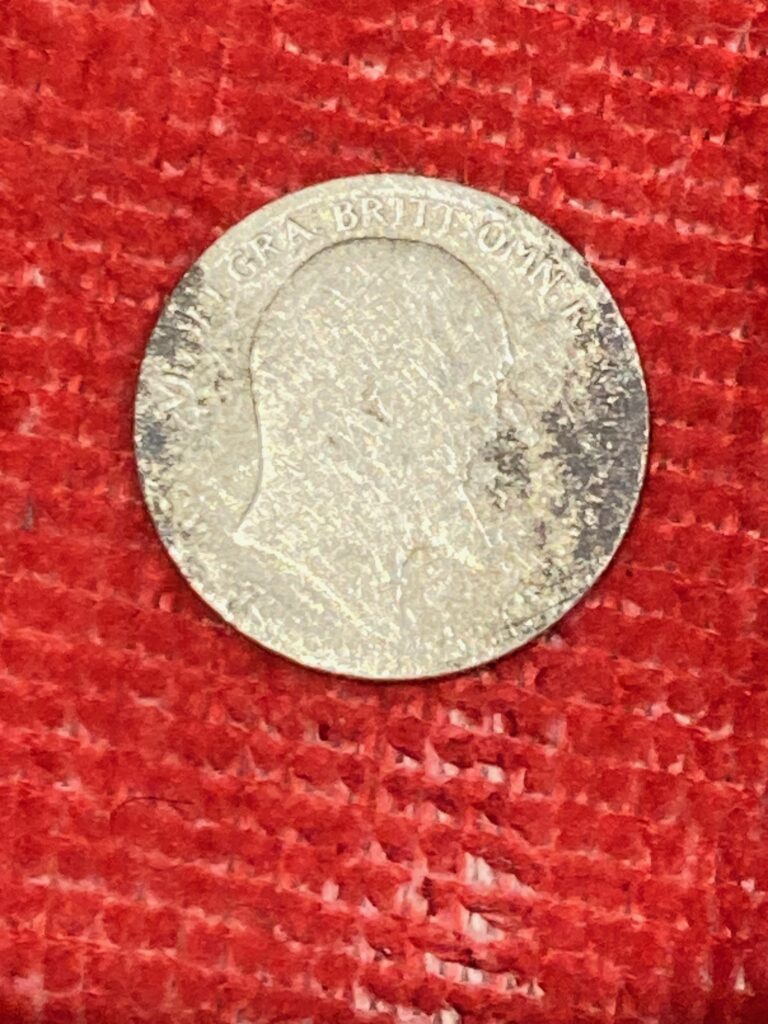
It reminded me how I returned to metal detecting as an adult after a childhood moment that never quite left me — the wild excitement of finding an Edwardian penny, green with age, still carrying the authority of its era. It’s still in a tin somewhere.

My son may no longer be part of these walks. That chapter has closed. But years later, here I am again — this time finding Edwardian silver, a sixpence lifted cleanly from the Irish sand.


Sound Money Unearthed

Hold a coin like that and you feel something modern life rarely offers: density.

Not symbolic value. Actual weight.

The British pound sterling was once exactly that — a pound of sterling silver. This Edwardian sixpence now carries around four pounds’ worth of silver by weight alone. A figure I suspect is heading higher, given the modern appetite for silver — AI infrastructure, solar panels, electrification, and weapons all competing for the same finite metal. The beer pint index (BPI) agrees with me. This sixpence would’ve bought 3-4 pints back in 1905, now it doesn’t even buy one most places.

Fiat erodes quietly, daily, through mechanisms designed to go unnoticed. This coin has endured wars, resets, empires, and ideologies — and still holds value simply by existing.

No promises.
No counterparty.
No narrative required.

Just metal.


Sovereign Parallels

Metal detecting mirrors the nomadic path.

You move steadily. You ignore the noise. You dig where the signal rings true. Most swings yield nothing. Then, occasionally, the ground gives something back — a quiet confirmation that patience still works.

Ireland’s beaches reset every day. The tides erase tracks, cover ground, and rearrange the surface. But history persists beneath your feet, indifferent to policy cycles or opinion.

That man’s curiosity — and his young son — felt like a reminder. Cycles renew. People come and go. Systems rise and decay. But the hunt endures.

Next rain-free day, I may follow those mountain prospecting leads.

Sound assets over fiat traps.
Weight over promises.
Ground truth over abstraction.

Always.

The Neutral Zone

I’ve realised I’m in what can only be described as a neutral zone.

The old life is no longer close enough to touch. The house is gone. Accounts have been closed — not just the obvious, literal ones, but the quieter mental ledgers too. Obligations that once occupied bandwidth have loosened their grip. Narratives that once defined me now feel distant, almost abstract.

And yet, the new world hasn’t fully arrived.

The life I mapped out in early 2025 is taking shape, but it’s doing so in its own time. Some elements are already in motion. Others are still gathering quietly behind the scenes. Nothing feels stuck — but nothing can be forced either.

This in-between has a texture of its own.

What’s surprised me most is how much easier it was to say goodbye to certain things than I expected. Not because they lacked meaning, but because their season had clearly ended. Once that becomes obvious, clinging feels unnecessary. There’s relief in recognising completion when it arrives.

The neutral zone is not emptiness.
It’s space.

Space without urgency.
Space without explanation.
Space without the need to perform continuity for anyone else.

I can see now how much of life is spent rushing from one identity to the next, terrified of the pause in between. But the pause is where recalibration happens. It’s where noise falls away and signal returns.

Things are happening. Just not always on a visible timetable.

And I’m increasingly aware that some outcomes only materialise when attention is elsewhere. A watched pot never boils — not because nothing is happening, but because constant monitoring interferes with the process.

So I’m getting on with life.

Walking.
Reading.
Thinking.
Writing.
Paying attention to what’s in front of me rather than what’s forming in the distance.

The neutral zone doesn’t need to be filled. It needs to be inhabited.

If this period has taught me anything, it’s that transition doesn’t require drama. It requires patience and trust — not in outcomes, but in direction.

The old life is gone.
The new one is coming.

And for now, that’s enough.

On Metal Detecting

Metal detecting entered my life quietly, but it stayed because it spoke to something fundamental.

It connects me to history in two ways at once — the literal and the metaphorical.
Actual objects, buried and forgotten.
And actual meaning, hidden beneath surfaces most people never question.

I walk ground that thousands of others have crossed without pause. Beaches, fields, edges of towns. Ordinary places, endlessly repeated. Most people see nothing there. They’re looking ahead, not down. They assume value is visible, signposted, approved.

I don’t.

I slow down. I listen. I trust signals that don’t shout.

Sometimes the ground gives nothing. That’s part of the discipline.
Metal detecting punishes expectation and rewards patience. You cannot force it. You cannot negotiate with it. There is no entitlement.

Then occasionally, the earth offers something precise:
a coin worn smooth by hands long gone,
a button, a clasp, a fragment of a life that once mattered intensely to someone.

When you hold it, history stops being abstract.

It has weight.
Texture.
Temperature.

You realise that the past wasn’t an idea — it was people moving through days, making choices, losing things, loving things, surviving systems that no longer exist.

That matters to me.


Actual Gold, Metaphorical Gold

Sometimes you find actual value — silver, old coins, things that once had economic meaning and still do. That’s satisfying, but it’s not the real reward.

The real gold is what the process trains you to notice.

Metal detecting teaches that:

  • value is often buried, not advertised
  • the obvious path is rarely the richest
  • patience compounds in non-linear ways
  • most people walk over opportunity every day

That applies to land, to history, to investment — and to life.

I’ve connected with metaphorical gold the same way I’ve occasionally found actual gold:
by ignoring noise, trusting instinct, and accepting long stretches of nothing without complaint.

That’s not optimism.
It’s realism.


Solitude Without Isolation

Metal detecting is solitary, but it is not lonely.

I didn’t realise this at first, but you are observed.

People watch quietly as you work. Some are curious. Some are respectful. Some simply want to understand what you’re doing. And quite often, they engage.

Strangers ask questions.
Conversations begin — unforced, unguarded, meaningful.

There is something disarming about a person absorbed in a task that isn’t performative. It invites genuine interaction. No status. No agenda. Just interest.

Metal detecting reminds me that solitude doesn’t sever connection.
It refines it.

Even when you’re alone, good people remain present in the world. They notice. They speak. They engage with curiosity rather than extraction.

That’s reassuring.

It’s physical without being competitive.
Focused without being anxious.
Purposeful without being productive in the modern sense.

There is no audience.
No performance.
No outcome demanded.

Just movement, attention, and response.

In a world obsessed with validation, that’s a relief.


The Keys

One of the things I find most often are house keys.

Not coins.
Not jewellery.
Keys.

They turn up in the sand after storms, half-buried, corroded, sometimes still on a ring. Ordinary objects, easy to overlook — but they always stop me for a moment.

Because every key marks a precise instant of panic.

Somewhere, long ago, someone finished a relaxed day at the beach. Sun, salt, ease. The sort of day where time loosens its grip. Then the moment comes — hands go to pockets, or a bag is opened — and the weight is wrong.

Keys gone.

What follows is easy to imagine:
the sudden tightening in the chest,
the frantic retracing of steps,
the dawning realisation that the door home will not open.

That quiet domestic crisis is now all that remains of the day. The laughter, the warmth, the pleasure — gone. The key is what survives.

I hold them sometimes and think about how small the moment was, and how large it must have felt at the time.

That appeals to me more than gold.

Because keys aren’t symbols of wealth — they’re symbols of access, shelter, belonging. They open doors that mattered to someone, once.

Now they belong to the ground.

Metal detecting teaches you that history isn’t only made of grand events. It’s made of dropped things, small mistakes, moments of distraction, lives briefly intersecting with chance.

Empires fall.
Houses change hands.
Keys rust.

And yet the story remains intact enough to be felt.


Why It Fits This Life

Metal detecting suits the life I’m building now because it aligns with everything else:

Sovereignty — no institution grants permission to listen to the ground.
History — not curated, not moralised, just encountered.
Health — walking, air, rhythm, patience.
Clarity — long hours strip thought down to what actually matters.

It also keeps ambition honest.

When you spend time with artefacts from collapsed empires and forgotten lives, you stop believing in permanence as a given. You build more carefully. You choose what’s worth carrying forward.


The Ground Remembers

The ground remembers far more than we do.

It keeps what was dropped, lost, hidden, or discarded — without judgement.
It offers it back occasionally, without promise.

I like that.

Metal detecting reminds me that history isn’t finished, value isn’t always visible, and progress isn’t always forward-facing.

Sometimes the most meaningful work is done with your eyes down, your pace slow, and your expectations restrained.

That’s not nostalgia.

That’s discipline.

The Man Who Spoke and Asked for Nothing

The Man Who Spoke and Asked for Nothing

I have met him three times this year.

Once in Morocco, once in Ireland, and now again in Malaysia.

Different faces. Different languages. Different climates.

But the same man.

He speaks.

And then he leaves.

And he asks for nothing.

In Morocco he came to me without ceremony. No smile meant to sell. No story rehearsed for tourists. He said a few sentences—about the place, about the way things used to be—and then he was gone. No request. No lingering. No expectation that I would remember him.

But I did.

At the time, I didn’t understand why. I only knew that something in me had gone quiet afterwards, the way the sea does after a boat passes.

Ireland was different.

Ireland is my old world, not my exotic one. The fields are familiar. The air carries memory. When the man appeared there, it surprised me more. He spoke as if I already belonged, even though I felt between lives at the time. He said something ordinary—almost nothing at all—but it landed with weight.

He did not ask who I was.

He did not ask what I did.

He did not offer advice.

He simply acknowledged my presence, and then walked on.

That, too, stayed with me.

Malaysia was the third time.

By then I was no longer searching. I was moving slowly. Watching. Letting days be days. And that is when he appeared again. A few words. Calm eyes. No curiosity about my plans. No attempt to extract anything—money, story, validation.

He spoke because speaking was right.

And then he left because staying was unnecessary.

These men do not exist in the modern West, or if they do, they are buried beneath noise.

In the West, conversation is a transaction. Men speak to gain ground, establish position, sell something, or defend themselves. Silence is suspicious. Time is monetised. Presence is rare.

But in certain places—what I can only call intact cultures—there are still men who have nothing to prove.

They are not mentors.

They are not guides.

They are not mystical sages.

They are witnesses.

They appear when a man is alone but not lonely. When he is not extracting from the world. When he is walking without performance. They do not come to everyone. They cannot be summoned. They cannot be chased.

And if you try to turn them into a story too quickly, they disappear.

Odysseus met many men on his journey. Kings who demanded allegiance. Hosts who offered shelter at a price. Monsters who tested his strength. But there were also quiet figures along the way—men who pointed once, spoke briefly, and asked nothing in return.

Those were the moments that told him he was still on the right path.

Not home yet.

But not lost.

I don’t tell everyone about these encounters. I didn’t tell my inner circle this time. Some things lose their truth when spoken aloud too often. What is given freely should be carried quietly.

I don’t believe this is destiny.

I don’t believe it makes me special.

I believe it means something simpler, and harder to earn:

For brief moments this year, in Morocco, in Ireland, and now in Malaysia, I was walking correctly.

And that is enough.

I keep going.

Kellie’s Castle and the Men Who Stay Too Long

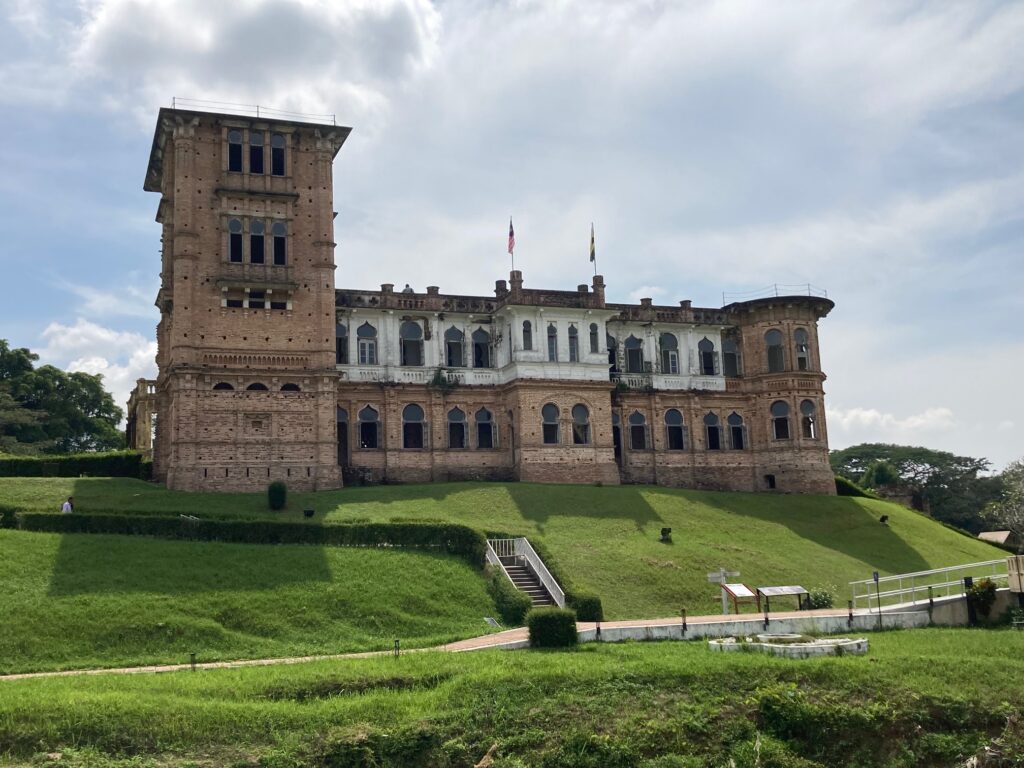
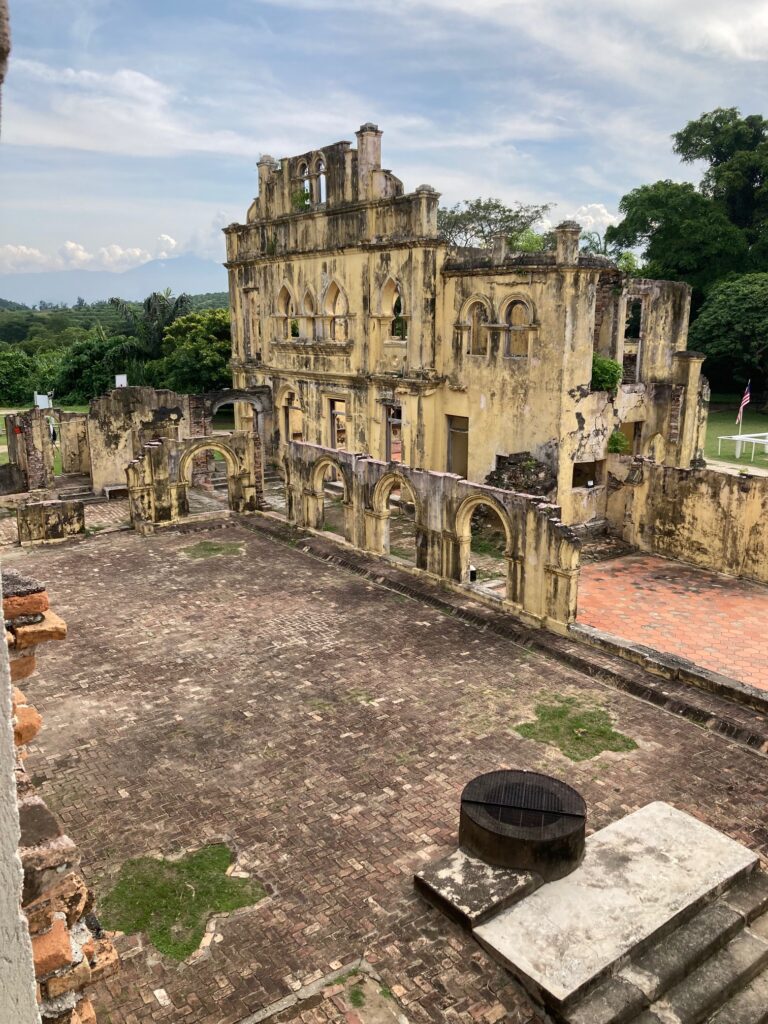
I had waited to see this place for thirty-five years. Michael Palin’s railway journeys put me onto it long ago, but nothing prepared me for the feeling of standing in the shell of another man’s unfinished ambitions.

Kellie built this hill like a man laying out his immortality brick by brick. He wanted a palace, a monument, a statement carved into the heat and stone of Malaya. And yet, here it stands — empty, echoing, beautiful, and broken. A place half-born and never lived in.

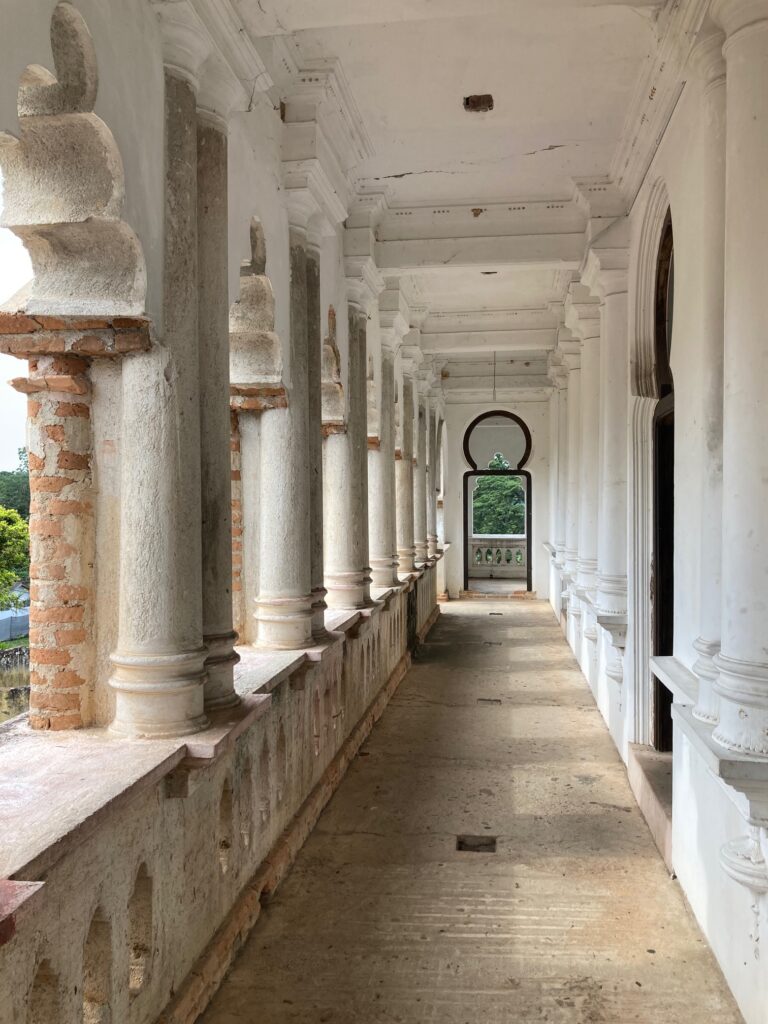
You walk these corridors and you wonder:

Was there ever a better monument to how fleeting success and happiness really are?

How quickly a legacy can rot or die?

How quietly a story can end without anyone truly noticing?

Today, standing in the abandoned rooms, I thought of Montana — my own project, my own obligation, the weight I carried for years. I held onto that house until it was time to let it go, and when the moment came, I walked away. I exited my castle long before it had the chance to imprison me.

Kellie never had that luxury. He died in Portugal at fifty-six, still fighting bureaucrats and labour shortages, still believing he had more time. They say his ghost walks the upper corridor here. Not in anger — in yearning. A man trapped in the dream he never escaped.

There’s a curse whispered locally:

Any man who binds his identity to his creation will lose both.

Kellie’s story follows that script with frightening precision — a child lost, a labour force wiped out by influenza, a dream stalled by red tape, and finally, a sudden death. The castle became a tomb for his intentions.

I realised as I walked through the wine cellar — the one he planned to air-condition, the first in Malaya — that I am only two years younger than he was when he died. That hit harder than I expected. It forced a question I’ve avoided for most of my life:

What dream of mine is unfinished, and will I have the courage to leave it behind when the time comes?

The truth is this: legacy is fragile, memory is temporary, and the world is ruthless with sentiment. Even Ipoh reminded me of that this week — the colonial cemeteries bulldozed, the graves poured over with fresh concrete. Whole lives, whole sorrows, erased in an afternoon.

Maybe that’s why this castle struck me.

Maybe this is the lesson:

Do not stay too long.

Do not cling to the past.

Do not become a ghost in a house you once loved.

Kellie tried to build permanence.

I am learning to build only momentum.

And perhaps that is the real inheritance of these ruins — the quiet instruction to walk forward, lightly, before the walls close in.

« Older posts

© 2026 The Dunwiddie Post

Theme by Anders NorénUp ↑