I had never heard of Yantai until I began working out a route north through China. Then it appeared for two entirely different reasons.
It was the port from which I could take the ferry across the Bohai Sea to Dalian. It had also been one of the great treaty ports of northern China, with a remarkable collection of European consulates and houses still standing around Yantai Hill.
A ferry and a lost colony on the same route. Two nights seemed sufficient.
Yantai opened as a treaty port in 1861. The British established the first consulate. The French, Americans, Germans, Danes and others followed, until the hill and harbour had acquired an entire foreign quarter.
And so I stopped to inspect the colony.
I booked a hotel beside the railway station. It was a surprise to discover that the passenger station on Beima Road was not completed until 1958. For most of its commercial history, Yantai had faced the sea. The railway came late to a city built around ships.
The approach by train was another surprise. Under a clear blue sky, the low hills, fields and coastal light looked at moments more like Tuscany or Greece than the China presented to us on television. Stepping out into the Yantai sunshine only strengthened the impression.
It was no surprise to discover later that this was wine country.
I spent much of the first day wandering around Yantai Hill. The old consulates, residences and trading buildings had not been cleared away or buried beneath a grand redevelopment. They remained among the trees and paths, forming something close to an open-air museum.
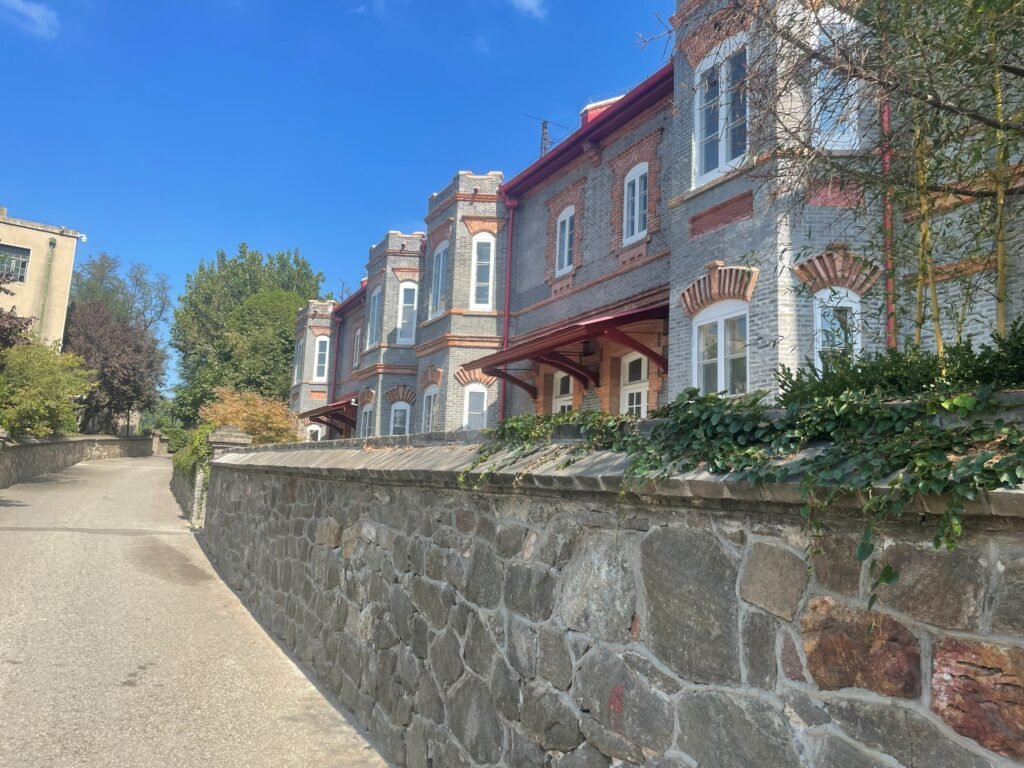
Down by the harbour, the European buildings stood with modern Yantai rising behind them. The German presence was easy to spot. I later discovered that the neighbouring building was Danish. Of course it was.
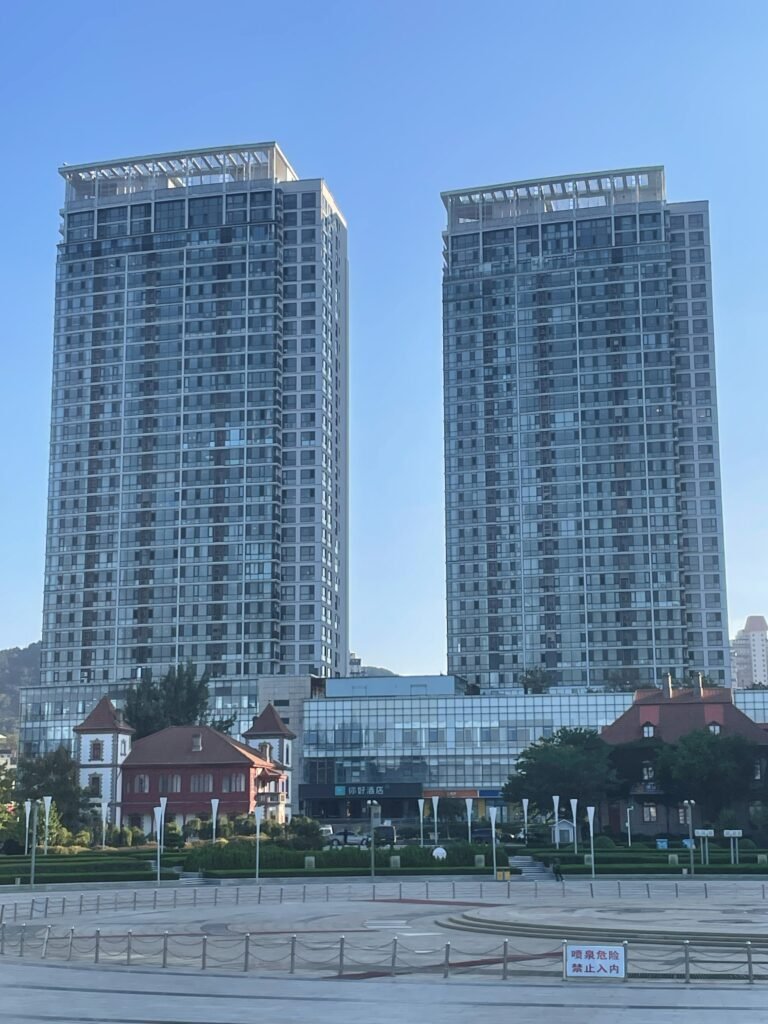
The contrast was the interesting part. The old foreign quarter had not been left as a dead imperial exhibit. It sat inside a working Chinese port, with ships in the harbour, towers behind it and a modern city continuing to grow around the remains.
The next major stop was the Changyu Wine Culture Museum. I bought the premium ticket without quite understanding what it included, then found myself tasting wine in the old cellar and later receiving an entire second tasting in the 1892 House. After the first tasting, when everyone else had left, one of the women brought me a separate glass of their best award-winning red.
The wine deserves its own post. It is enough to say here that it was excellent, the museum was far better than expected, and it revealed another side of China I had not imagined finding.
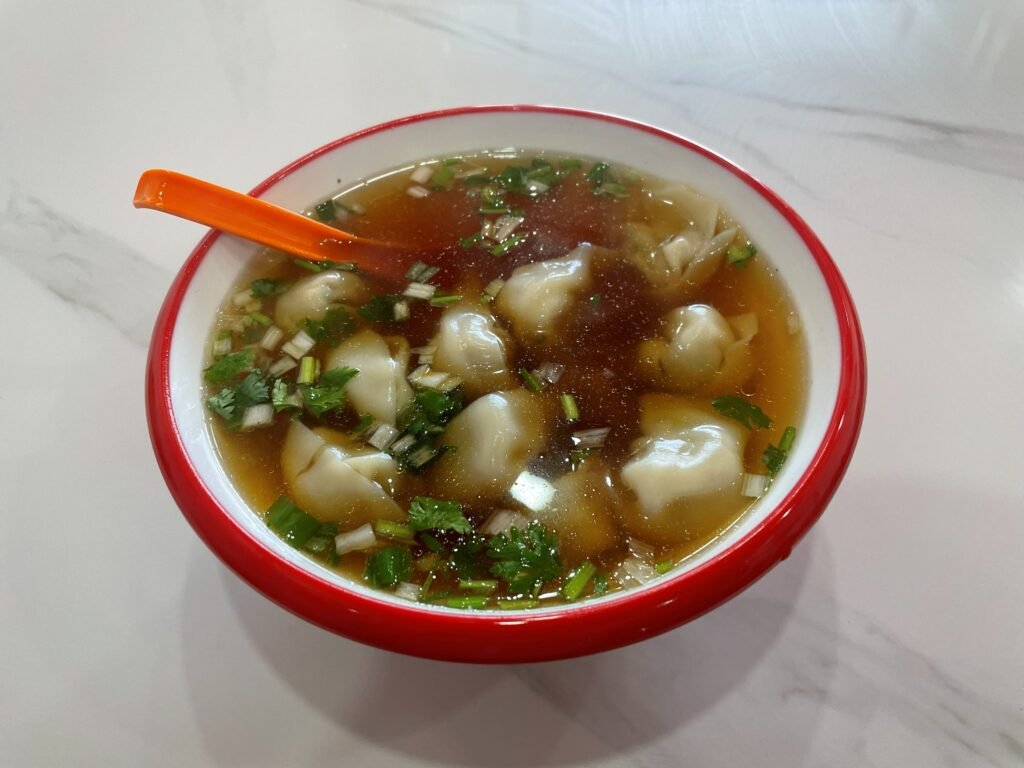
Yantai also supplied a more immediate discovery. Near the hotel was a small place serving wonton soup for about £1.30. I went back every morning. Whether my new addiction is to wontons or monosodium glutamate remains under investigation.
Then it was time for the ferry.
As a two-day stop, Yantai had been almost perfect: Mediterranean light, Victorian consulates, Chinese wine, cheap wonton soup and a working harbour from which I could continue north.
I had inspected the colony and found, regrettably, that the Europeans had all left.
The Chinese had kept their houses and made a living museum of the hill.
Dalian was waiting. There were more colonies to inspect.
Leave a Reply