A record of storms survived and horizons still calling

Category: Travel (Page 1 of 2)

Attention, the Hidden Tourist Tax

I went back to Tunisia to see whether the energy I remembered was still there.

That matters.

I was not arriving as a naive first-time visitor with a guidebook, a bucket list and a head full of borrowed expectations. I had worked in Tunis in 2010. I had known something of the city before: its streets, its European bones, its Arab life, its Mediterranean confidence, its mixture of French, Italian, African and North African currents. Tunis had left an impression on me then.

Not just as a place.

As an energy.

There had been life in it. Movement. Beauty. Possibility. A certain charged urban quality I had carried with me for years afterwards. Some cities vanish from memory almost as soon as you leave them. Others remain as an unresolved note.

Tunis had remained.

So I returned, not simply to see Tunisia, but to test memory against reality.

Was the energy still there?

Had the city changed?

Had I changed?

Had I remembered it accurately, or had 2010 become one of those private myths that time polishes into something cleaner than it was?

That is a different kind of travel from first arrival. A first visit asks, “What is this place?” A return asks, “What remains?” It asks what survived, what has shifted, what memory preserved correctly, and what life now allows you to see that you were not ready to see before.

I came back to Tunis with more life behind me.

That changes the eye.

I still wanted history, ruins, sea air, Roman stones, cafés, whitewashed streets, old towns, railway stations, louages, and the usual North African mixture of hospitality, negotiation and theatre.

I found all of that.

I also found something else.

Not danger.

Not hostility.

Not even serious hassle in the grand dramatic sense.

Something smaller.

A repeated claim on my attention.

“Where are you from?”

“My friend.”

“Taxi?”

“I show you a good place.”

“Restaurant?”

“Guide?”

“Come, come.”

This did not happen every ten metres. It was not a constant siege. Some days it happened once. One day it happened twice. On paper, that sounds like nothing.

But travel is not lived on paper.

A man calls out to you in the street. You smile. You answer. You say England, Britain, Ireland, or whatever degree of accuracy the next ten seconds deserve. He welcomes you to Tunisia. He asks if it is your first time. He says he knows a good restaurant, or a nice shop, or a place tourists do not know. Perhaps he says the street is closed. Perhaps his cousin has a business. Perhaps he is a guide. Perhaps he just wants to help.

Then comes the story.

Then comes the ask.

Money, restaurant, taxi, shop, tip, guide fee, cigarettes, “just one minute,” “come look,” “no obligation,” “special price.”

The first time, you are polite.

The second time, you are cautious.

After a few repetitions, you already know the script before the second line has been delivered.

And what begins to irritate is not the money.

It is not even the attempted extraction.

It is the interruption.

That is what took me a while to understand. The real cost of the low-level street hassle in Tunisia was not financial. I was never seriously at risk of being ruined by a bad taxi fare, a tourist-priced couscous, or a man with an invented story about a restaurant. The sums were small. The stakes were minor.

The real cost was cognitive.

That is the hidden tourist tax.

Attention.

Tourists are trained to think in prices. How much is the taxi? How much is the hotel? How much is lunch? How much is the museum ticket? How much should I pay for this ride, this meal, this bottle of water, this transfer, this guide?

Those questions matter.

But they are not the whole account.

There is another ledger.

Who interrupted your walk?

Who broke your thought?

Who made you classify them while you were trying to observe a place?

Who turned a street into a sales funnel?

Who took ten seconds of your consciousness without permission?

That tax is harder to measure, but after a few days you feel it.

I had come to look.

That sounds simple, but it is not. Looking properly is one of the great pleasures of travel. Not looking as a consumer. Not looking as a tourist ticking off sights. Looking as a man trying to understand where he is.

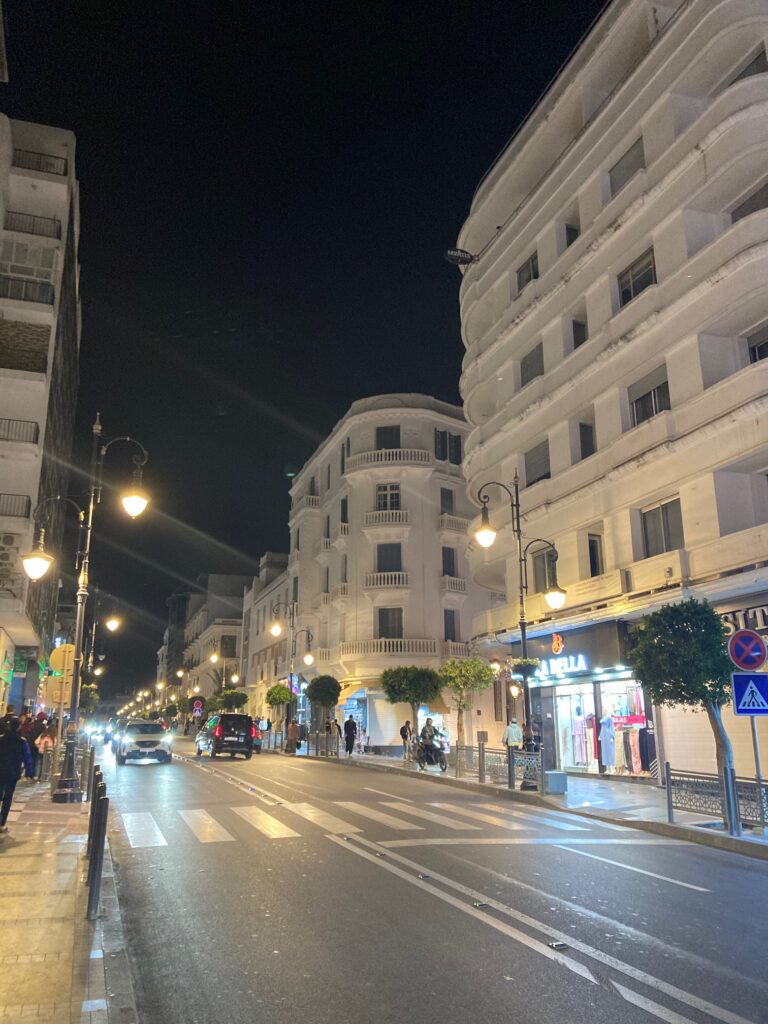
To walk down Avenue Habib Bourguiba and notice the French colonial bones beneath the modern traffic.

To return to streets I had known in 2010 and compare them with the version still living in memory.

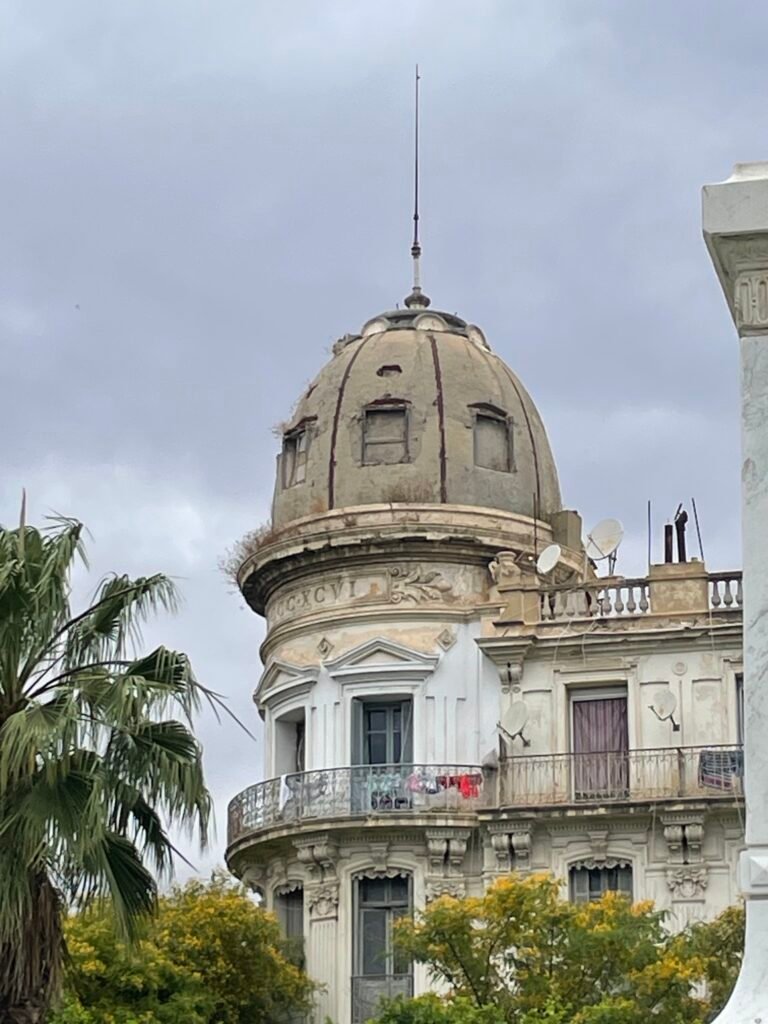
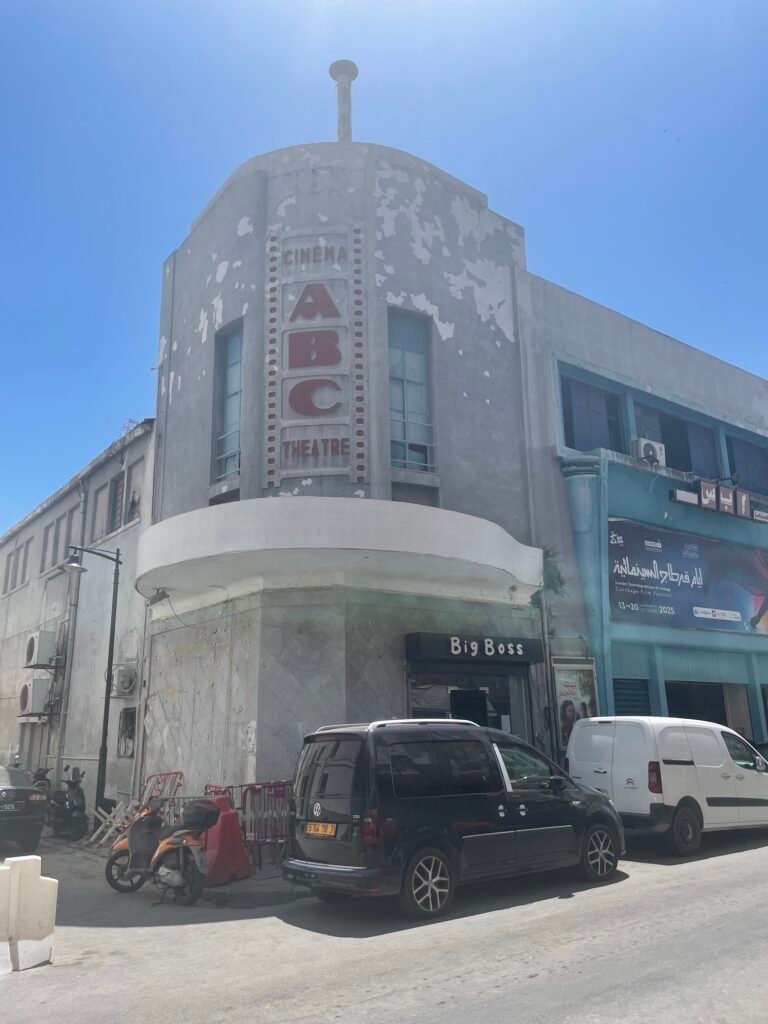
To wander through the old French and Italian city, that European Mediterranean layer of Tunis, with its balconies, façades, cafés, churches, apartment blocks, commercial buildings, shaded streets and half-faded ambitions.

This became one of my favourite parts of the trip.

Not because it was picturesque in some shallow way, but because it carried atmosphere. It was not a theme park or a preserved colonial postcard. It was a surviving urban layer. A whole world had once existed there in daily form. People had worked in those buildings, worshipped in those churches, argued in those cafés, taken trams, buried their dead, sent letters home, raised children, made money, lost money, loved, aged, and imagined futures.

They did not live as historical symbols.

They lived as themselves.

Then history moved.

The buildings remained.

That old French and Italian city fascinated me because it was close enough in time to feel almost touchable, yet already remote. It belonged neither fully to Europe nor fully to the modern Tunisia around it. It was a layer of confidence left behind by people who assumed their institutions, language, churches, clubs, consulates, banks, cemeteries and routines would outlast them.

They did not.

That is one of Tunisia’s great powers as a travel destination. It does not present history as a single period. It layers it. Punic, Roman, Arab, Ottoman, French, Italian, modern Tunisian — not cleanly separated, but folded into one another.

In Tunis, especially, you can walk from one civilisation’s confidence into another civilisation’s afterlife within a few streets.

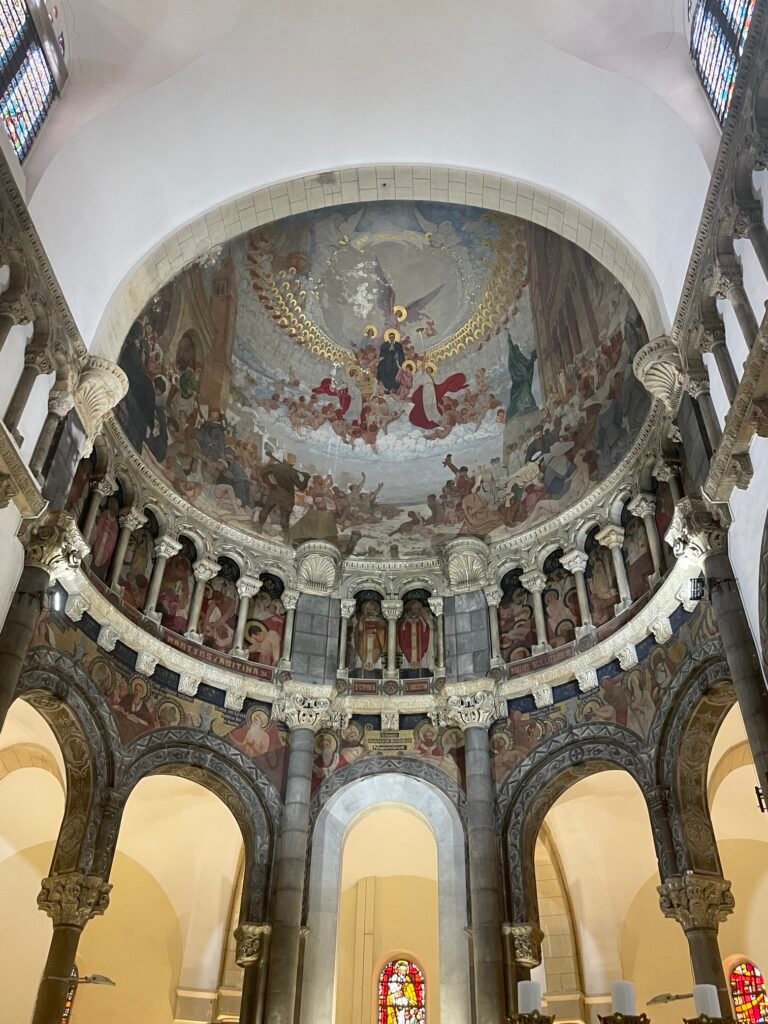
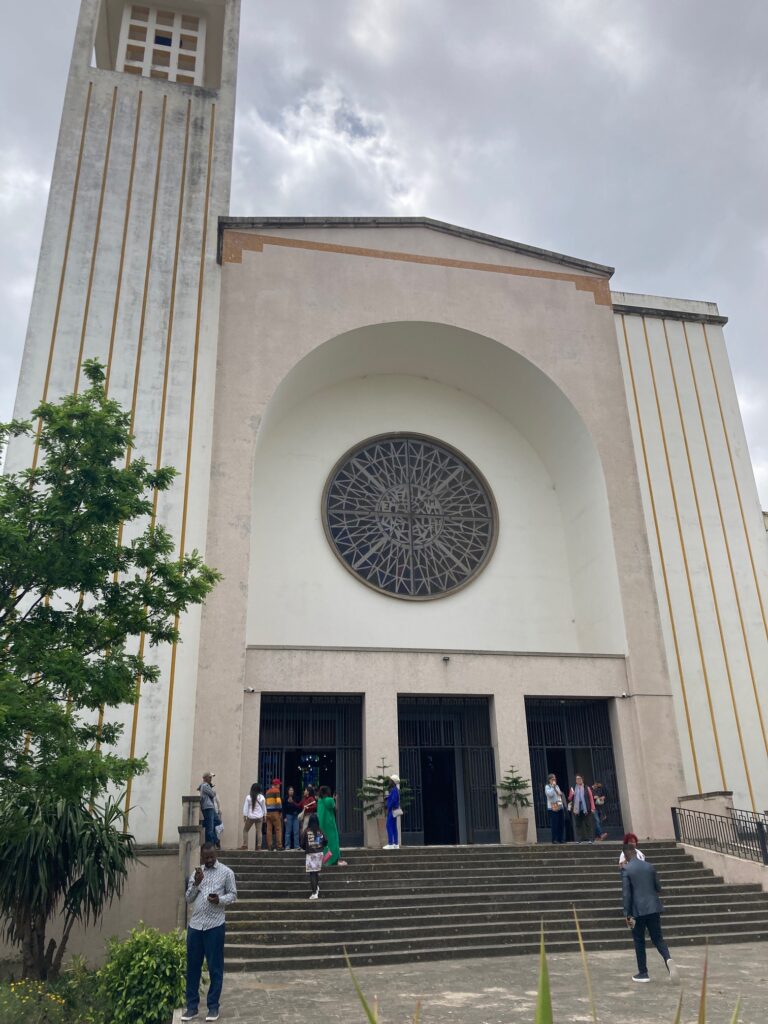
I saw two cathedrals.

That alone is a reminder that Tunisia is not the simplified country imagined by people who have never looked properly at North Africa. Churches, synagogues, mosques, Roman ruins, colonial boulevards, Ottoman traces, French apartment blocks, Italian names, Arab medinas, African migration, European memory, modern statehood — the country is not one thing.

It is a palimpsest.

The cathedrals mattered not because I wanted to consume them as sights, but because they revealed the impermanence of power.

A cathedral is built by people who believe, at some level, that their world has weight. It may be religious weight, imperial weight, civic weight, cultural weight. But it is never casual. Nobody builds a cathedral for a temporary mood.

And yet in Tunisia, the cathedrals now stand in a changed world.

That is what made them interesting.

They were not merely pretty buildings. They were evidence. Evidence that people had once belonged there, or believed they belonged there, and then, in the long movement of history, no longer did.

The most powerful refuge, however, was not one of the grander cathedrals.

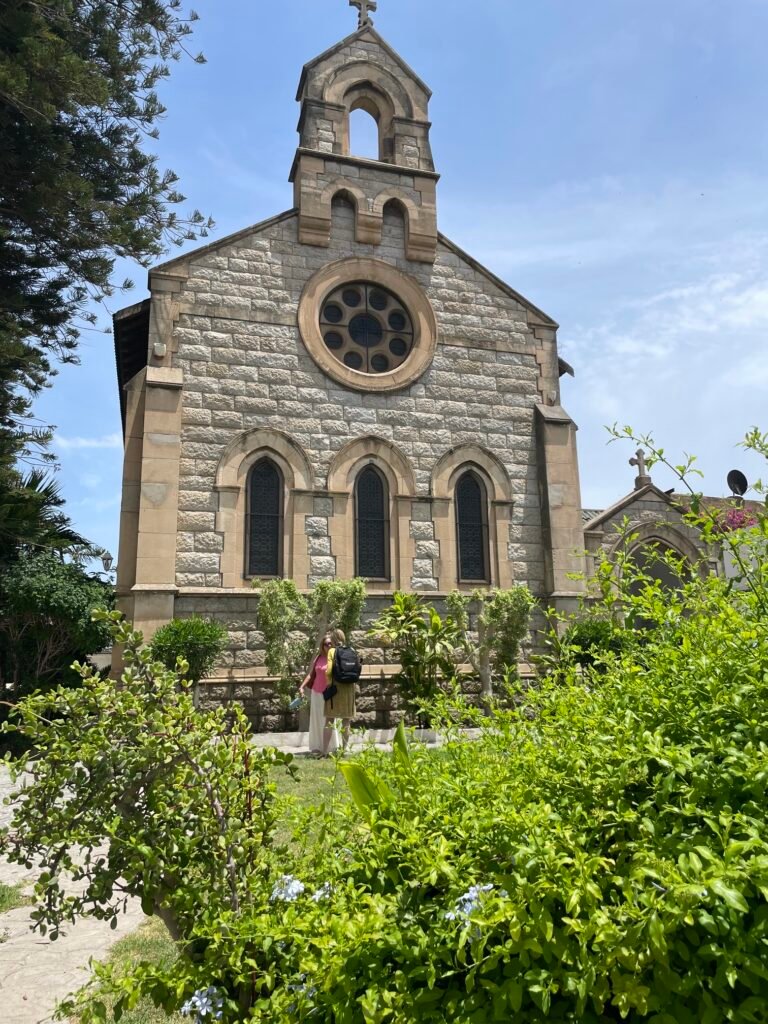
It was the Protestant church.

I had been walking through the busy street atmosphere of Tunis, with all the life and interruption that comes with it. The traffic, the call-outs, the street approaches, the little claims on your time, the small negotiations, the commercial noise, the “my friend” routine, the feeling that even a quiet walk could be turned into someone else’s opportunity.

Then I stepped into the Protestant church and its cemetery garden.

The change was immediate.

Outside: movement, demand, noise, heat, salesmanship, traffic, human friction.

Inside: shade, stone, names, graves, flowers, silence.

It was not silence in the empty sense. It was a full silence. A silence with memory in it.

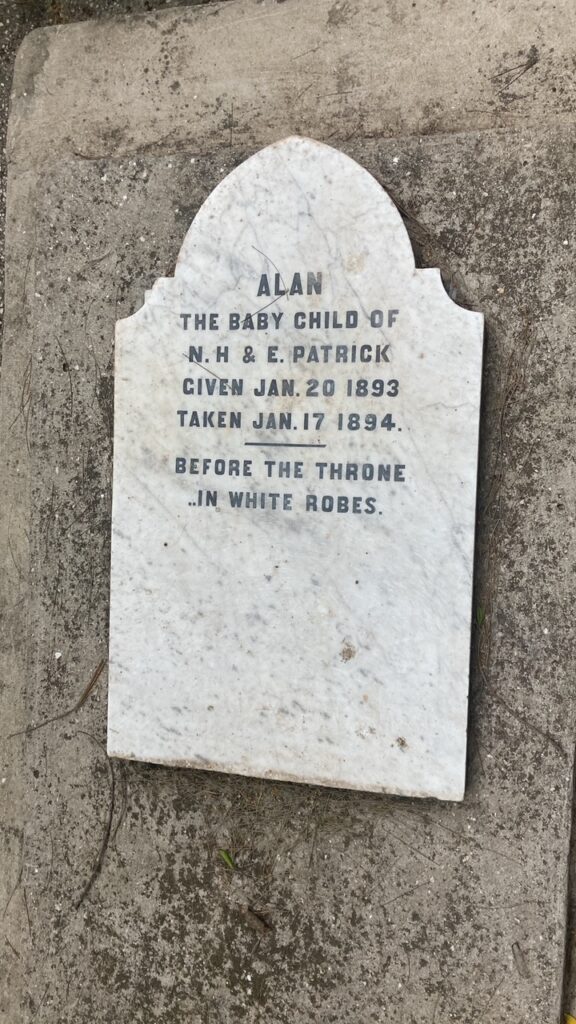
There were British graves, as one might expect. But there were also Danish and Swedish graves, and those touched me in a different way. I had lived in Denmark for many years. To find Danish names in a cemetery garden in Tunis was to be reminded again that lives cross in ways official history rarely captures.

Men and women had come south. They had lived, traded, served, married, fallen ill, died, and been buried far from the cold north.

A Scandinavian name in Tunis is a small thing, but small things often carry the most human weight.

That cemetery was not an attraction.

It was a refuge.

And in the context of the trip, that mattered.

Because it showed me the contrast I had been feeling all along. The irritation of street hassle was not really about Tunisia, or poverty, or sellers, or guides, or taxi men. It was about the right to experience a place without being constantly pulled out of the experience.

In the cemetery garden, nobody wanted anything from me.

The dead do not pitch restaurants.

They do not ask where you are from.

They do not offer to show you a special place for a special price.

They simply remain.

And because they remain, you can think.

That kind of looking requires attention.

And attention is not an unlimited resource.

When a stranger inserts himself into your walk, he is not merely asking a question. He is taking control of the next few seconds of your consciousness.

You are walking. You are thinking. You are building a map of the place. You are comparing Tunisia with 2010, with Morocco, with Denmark, with Ireland, with Malaysia, with all the other places that have left marks on you. You are noticing how the light falls on a wall, how a street bends, how a railway station functions, how a café fills, how people dress, how men gather, how women move through public space, how old empires leave behind buildings that outlive the people who built them.

Then:

“Hello my friend.”

The thread breaks.

Now you must classify the approach.

Friendly? Commercial? Scam? Guide? Taxi? Beggar? Harmless? Persistent? Does he want to sell something? Is there a story coming? Do I answer? Do I ignore? Do I say no? Do I walk faster? Is he going to follow?

All this happens in a second or two, but it happens.

The cost is the context switch.

And after a while, the context switches accumulate.

Not because it happens constantly.

Because it happens at the wrong moment.

A single interruption can break the thread of a place. Two in a day can make you feel watched as an opportunity rather than left alone as a traveller. One more on another day is enough to remind you that the same script is waiting at the edge of the street.

That is the hidden tax.

A tax on solitude.

A tax on observation.

A tax on the very thing travel is supposed to give you: direct experience of a place.

This is why I found myself liking certain Tunisian moments far more than others.

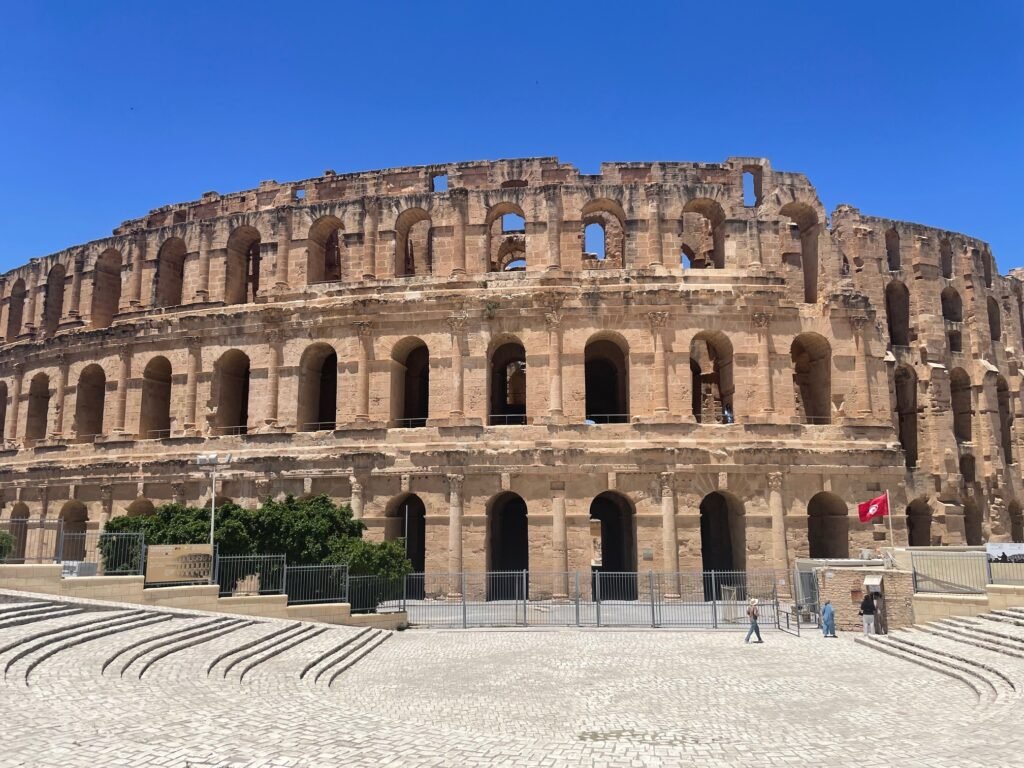
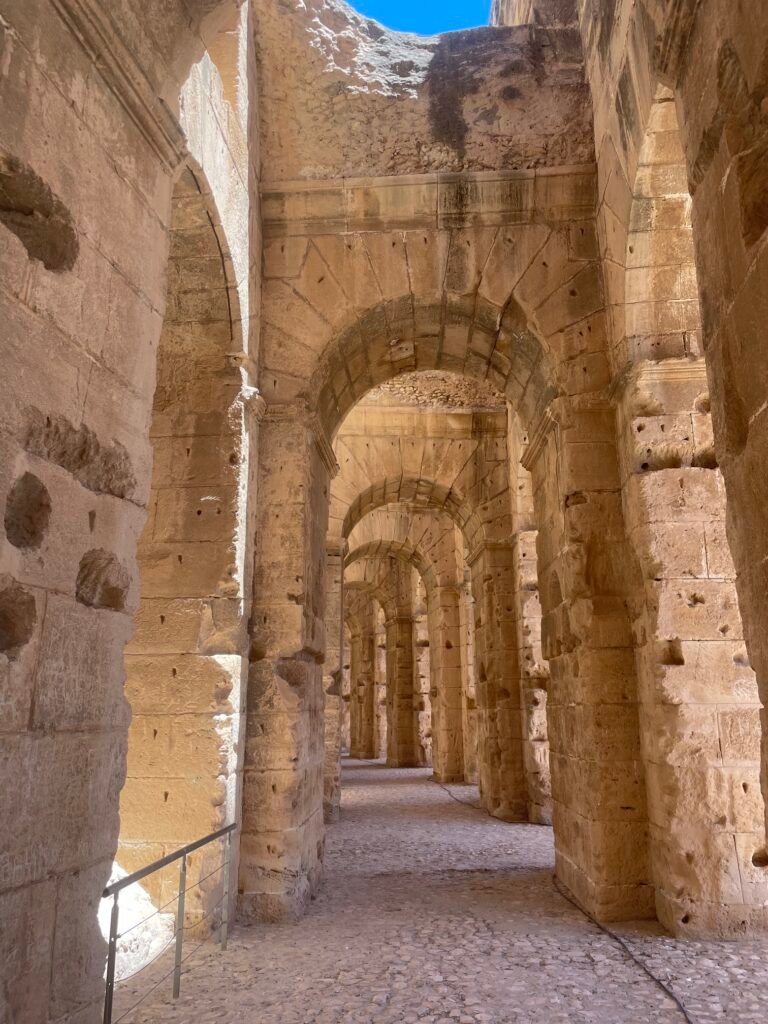
El Jem was magnificent not only because the amphitheatre is magnificent, though it is. It was magnificent because, at the top, looking down into the arena and out across the town, nobody wanted anything from me.

The place simply existed.

The amphitheatre did not ask where I was from. The stones did not have a cousin with a restaurant. The ghosts of Thysdrus did not want a tip for showing me something “very special.” I could sit there and absorb the absurdity of it: one of the great Roman structures of Africa, still standing, while the city that justified it had largely vanished beneath ordinary Tunisian life.

That is real travel.

Not consumption.

Not checklist tourism.

Not the deadening routine of taking the same photograph as everyone else.

Real travel is the sudden perception of depth.

You look at a modern town and realise another city is beneath it. You look at a ruin and understand it was not built as a ruin. You look at Tunisia and realise how absurdly underrated it is as a Roman country.

This land was not peripheral. It was rich. Grain, olive oil, cities, theatres, baths, amphitheatres, ports, roads, villas, trade. Carthage, Dougga, Utica, Thuburbo Majus, Uthina, El Jem.

The map of ancient North Africa is not empty.

It is crowded with lost significance.

Tunisia is full of these half-visible depths.

The country rewards people who look beyond the obvious.

That is the kind of thought I travel for.

And it needs silence.

Not absolute silence. I do not mean the absence of sound. Tunisia is not quiet, and I would not want it to be. I like the noise of cafés, the call of streets, the comedy of transport, the mild chaos of railway boards, the bargaining over taxis, the cigarette smoke, the scooters, the men talking too loudly, the waiters pretending not to notice you, the small dramas of ordinary life.

That is atmosphere.

What I object to is not noise.

It is claim.

There is a difference between a city being alive around you and a stranger repeatedly trying to recruit you into his agenda.

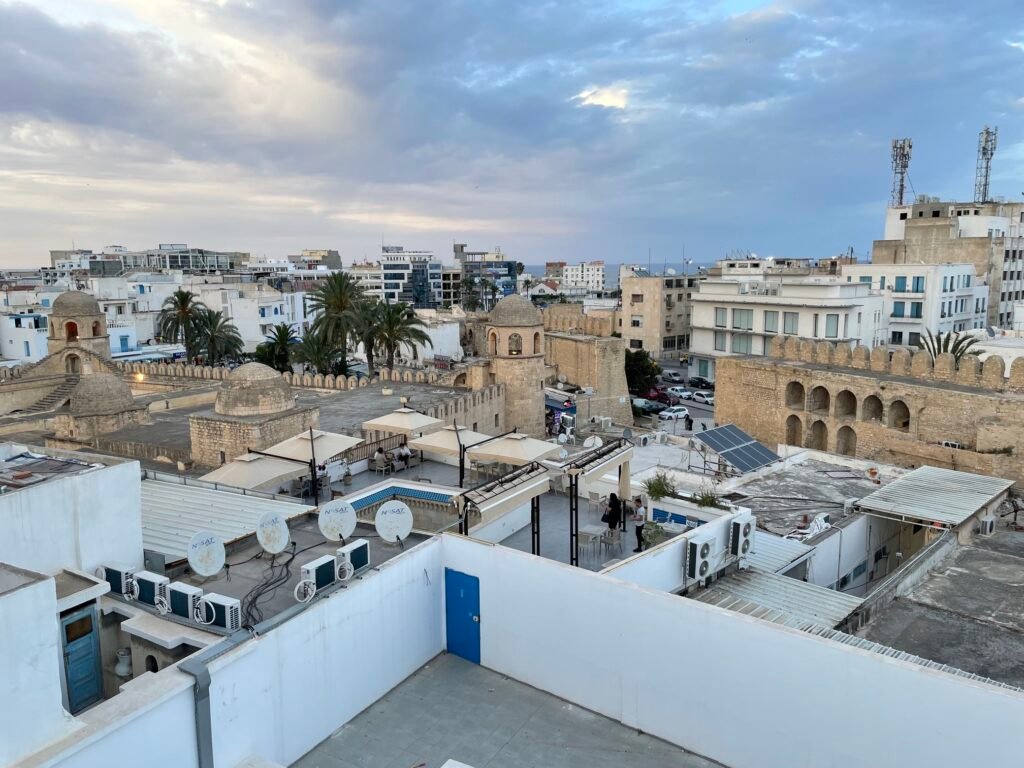
A train station is alive. A café is alive. A market is alive. A louage station is alive. Sousse is alive. Tunis is alive. Mahdia is alive. El Jem is alive in the strange way that a place can be half modern town and half buried empire.

But the street hustler does not merely add to the life of the place.

He redirects yours.

That is why the irritation can seem disproportionate if described badly.

Someone at home might say, “What is the problem? Just say no.”

And yes, that is the technical answer.

Say no. Keep walking. Do not answer the opening question. Do not stop. Do not explain. Do not negotiate unless you have chosen to negotiate. Do not let “Where are you from?” become the first step in a sales funnel.

But the deeper answer is that travel depends on voluntary attention.

The best moments of a trip are chosen.

You choose the café.

You choose the walk.

You choose the ruin.

You choose the conversation.

You choose to step into the Protestant church and sit among the graves.

You choose to stand beneath the shadow of a cathedral built for a vanished community.

You choose to sit at the top of El Jem.

You choose to look at the sea.

You choose to get on a train, even when the timetable is less obvious than it should be.

You choose to change the route when the original route no longer fits the reality of the trip.

My Tunisia plan changed because Tunisia itself corrected it.

The first version was more ambitious: Tunis, Monastir, Sfax, Gabès, perhaps further south, perhaps a grander line across the map.

But travel is not a spreadsheet.

A route can be logical and still wrong.

Once I was there, the trip began to reveal its proper shape: Tunis, Sousse, Mahdia, El Jem, Sidi Bou Said. Less heroic, perhaps. Better. More coherent. More coastal. More historical. More atmospheric. More in tune with what I actually value.

That is a good travel lesson.

Do not defend the itinerary against the country.

Let the place speak.

Tunisia spoke in fragments.

A restaurant bill that began too high and came down when challenged.

A taxi price that started at thirty dinars, then twenty-five, then twenty.

A man in the street with a story that eventually became a request.

A railway board photographed because the internet could not be trusted.

A town like Mahdia, where the sea and the old stones did more for the spirit than another box ticked on a map.

A message from a host before arrival, transforming a hotel with zero reviews from a possible phantom into a real human arrangement.

The old French and Italian city of Tunis, still carrying the outline of a vanished European Mediterranean world.

Two cathedrals that showed how even confident communities can become historical layers.

A Protestant cemetery garden where Danish and Swedish names lay quietly beneath North African light.

An amphitheatre in El Jem that made modern assumptions look temporary.

And all through it, the same lesson kept returning.

Freedom is not only movement.

Freedom is also the right to decide what enters your mind.

I used to think of travel mostly in terms of money, logistics, time, risk and reward. What does the hotel cost? How much is the taxi? Is the train running? Is the area safe? Is the food good? Is the route efficient? How many nights should I stay? What is the best base?

Those things matter.

But they are not the core.

The real currency of travel is attention.

Spend it badly and even a cheap country becomes expensive.

Spend it well and a simple day becomes memorable.

That is why a quiet coffee can be worth more than a famous attraction. Why a walk by the sea can outlast a guided tour in memory. Why a churchyard can restore you more than a bar. Why a ruin at the right hour can do more than five items from a tourist list. Why the old French and Italian city of Tunis may linger longer in the mind than a sight that guidebooks insist is more important.

The travel industry sells movement, accommodation, meals, excursions and experiences.

But the traveller is really buying conditions for attention.

A good hotel gives you rest, so your attention is clean the next day.

A good café gives you a place to observe without being processed.

A good walk lets the mind stretch.

A good churchyard gives silence a physical form.

A good ruin gives attention somewhere worthy to land.

A good conversation expands the day rather than hijacking it.

A good destination does not merely entertain you. It gives your attention back to you in better condition than it found it.

That is why low-level hassle is so corrosive. It may not be dangerous. It may not even be dishonest in every case. Often it is just local economic theatre: poorer country meets richer foreigner, and each side knows the game to some extent.

But repetition changes everything.

The first approach is human.

The second is recognisable.

The next one feels like a pattern.

And the experienced traveller learns to protect himself without becoming closed.

That is the balance.

I do not want to become the man who ignores everyone. Some of the best travel moments come from saying yes when there was no plan to say yes. Lives cross. Moments are made. Places are explored. A stranger can become a story. A conversation can change a day. A host can turn a booking into a welcome. A woman in a café can alter the temperature of an evening. A waiter, a driver, a shopkeeper, a fellow passenger — any of them can become part of the trip.

But not everyone gets access.

That is the line.

Travel requires openness, but not availability.

Curiosity, but not gullibility.

Warmth, but not compliance.

The right to wander includes the right not to be recruited.

So the lesson from Tunisia is not “avoid people.”

That would be a dead way to travel.

The lesson is sharper.

Choose your openings.

Do not let every outstretched hand, every “my friend,” every “where are you from,” every invented guide, every restaurant recommendation, every taxi whisper, every little claim from the edge of the street determine the shape of your inner life.

There is no need to be dramatic.

No lecture.

No anger.

No explanation.

Just a small refusal and forward motion.

“No, merci.”

“La, merci.”

“Not today.”

Keep walking.

Attention preserved.

Trip restored.

Because the best of Tunisia was worth attention.

The energy I remembered from 2010 deserved it.

The old French and Italian streets of Tunis deserved it.

The Roman dead deserved it.

The sea at Mahdia deserved it.

The medina walls deserved it.

The railway stations deserved it.

The cafés deserved it.

The two cathedrals deserved it.

The Protestant cemetery garden deserved it.

The strange sight of El Jem rising from ordinary life deserved it.

The feeling of changing the plan because reality had spoken deserved it.

Even the irritation deserved it, in the end, because it clarified something I already knew but had not yet expressed so cleanly:

The hidden tourist tax is not always money.

Sometimes it is attention.

And once I understood that, Tunisia made more sense.

The country had not failed me. It had taught me another rule.

Move freely.

Look properly.

Spend attention only where it compounds.

Everything else is noise.

Tara and Bective

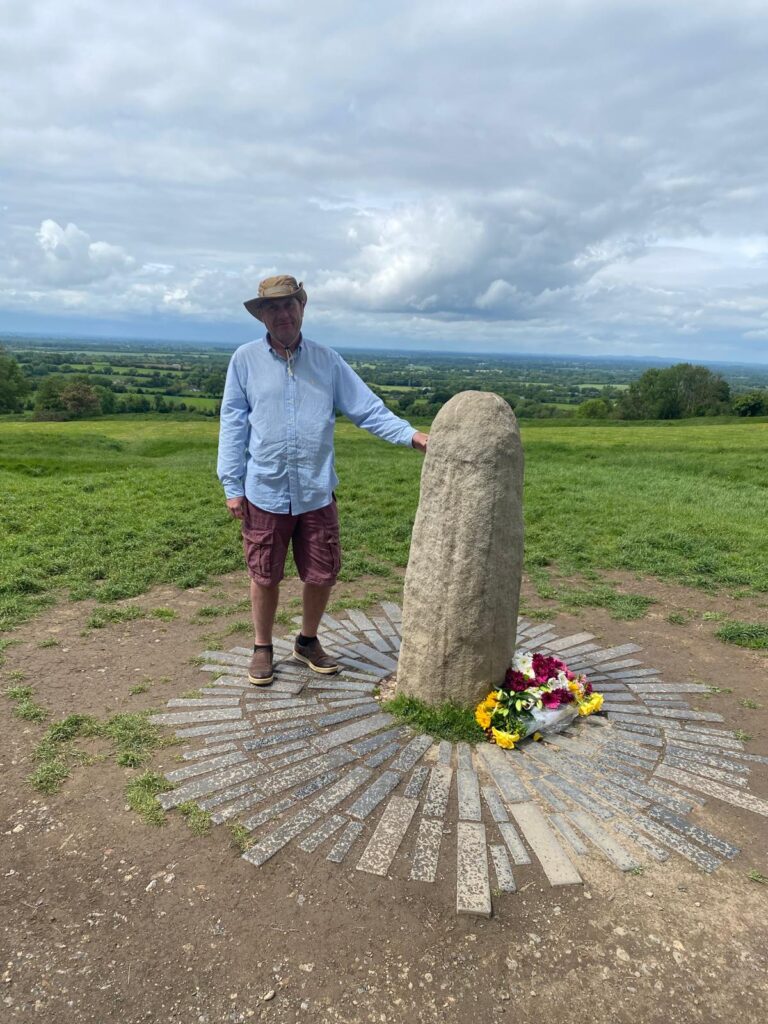
The Hill of Tara had been waiting for me since last year.

I had read about the Lia Fáil, the Stone of Destiny, said to cry out beneath the true king of Ireland. Some places are sights. Others are summons.

Tara was a summons.

We drove there through Meath, through low green country that felt older than the official story. Four thousand years is the number usually given, but the ground seemed deeper than that. I had felt the same at Baltinglass, where the neglected remnants of a bygone age seemed too large for the explanation placed around them.

I touched the Stone of Destiny.

No sky opened.

No thunder crossed Meath.

No voice named me ruler of Ireland.

A pity. Ireland could use help now. Not from Brussels, policy, or another consent-manufacturing committee. Something older would be required. Something beneath process. Something that remembered what a people is.

Perhaps no king was there.

Perhaps the stone has learned discretion.

Odysseus did not announce himself at every shore.

The church stood nearby, turned into a visitor centre. I did not go inside. There was an entry fee, and the stained-glass windows had been completely removed. That was enough. A sacred building emptied of meaning does not become more sacred because someone charges admission.

The churchyard was better.

Fewer people went there. That is usually a sign. It felt older than the church placed over it. A Bronze Age enclosure perhaps. There were quiet stones there, unexplained and overlooked. One of them could have been the real Stone of Destiny.

That is not a claim.

It is what the hand thinks when the eye has finished.

I touched them anyway.

Still nothing.

The stones kept their counsel.

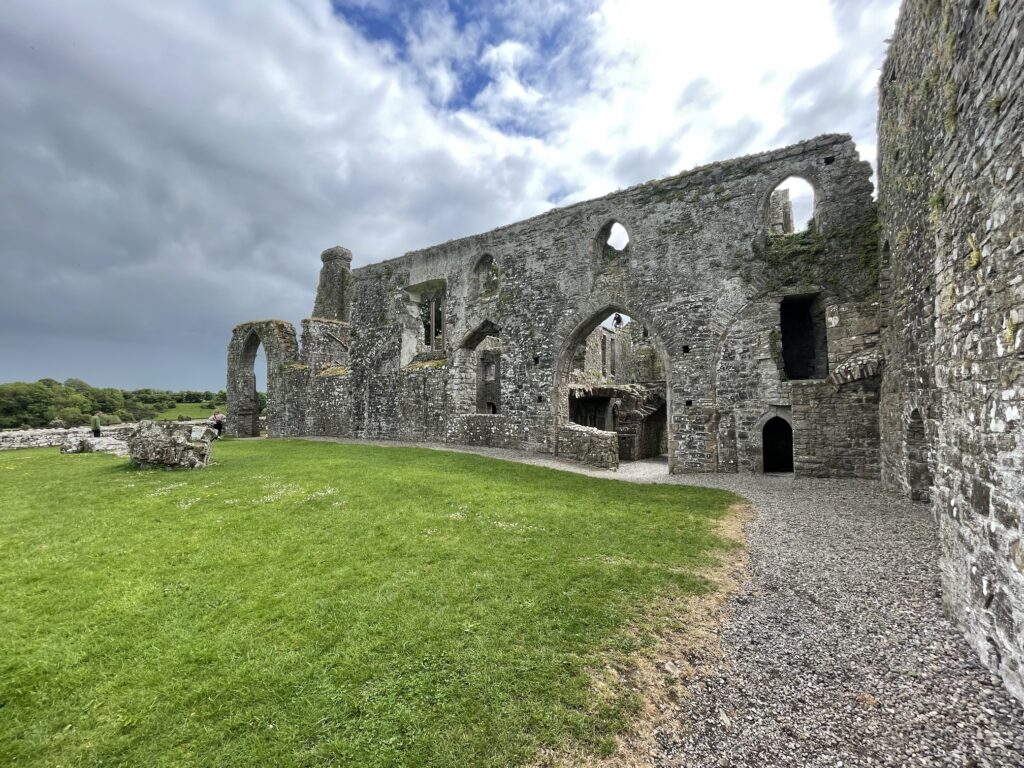
After Tara we drove to Bective Abbey. An ex-colleague from more than twenty years ago had mentioned it to me, out of nowhere. Strange how these things happen.

Bective was lower, heavier, quieter. A ruin, but still coherent. Sometimes a ruin remembers its purpose better than a living institution.

That was enough.

Tara did not cry out.

Bective did not explain.

The stones kept their counsel.

And I went on.

An Evening in Parliament

There are evenings that feel borrowed from another life.

I left home expecting little more than dinner and conversation, and somehow found myself standing beneath the lamps of the Irish Parliament while chants and drums rolled through the Dublin air outside the gates.

Flags moved in the wind beyond the barriers. Protestors clustered beneath speakers and banners, their voices carrying across the street in waves of anger, rhythm and conviction. Nearby stood two quiet watchers who I instinctively suspected were plain-clothes police, their eyes drifting casually across arrivals and faces while I waited to be invited inside.

Soon afterwards I passed through the security gates, exchanged my name for a temporary badge and crossed quietly into the inner world beyond the barriers.

There is always something slightly surreal about entering places normally reserved for the machinery of the state. As children we see such buildings through television screens and distant ceremony. They exist symbolically long before they ever exist physically.

Yet once inside, symbolism faded quickly.

The first thing that struck me was not power, but humanity.

The old guards at the doors carried themselves with the calm confidence of men who had watched governments rise and fall for decades. Staff members spoke warmly about the building as though it were a living thing they had spent years protecting.

One security man casually quoted Oscar Wilde to me.

“A cynic knows the price of everything and the value of nothing.”

He had no idea it was already one of my favourite quotations.

That somehow made the moment even better.

Outside, only a short distance away, stands Wilde’s former home. Dublin has a habit of folding history quietly into ordinary conversation when you least expect it.

The deeper into the evening I drifted, the more the atmosphere softened. Formality dissolved into conversation. Politicians spoke openly over drinks, sharing stories not of ideology, but of pressure, campaigns, close calls and moments they had stood their ground when events turned hostile around them.

At one point, a senior political figure moved swiftly through the restaurant with the practiced instinct of someone accustomed to constant movement and constant demands.

And yet even that moment felt strangely human rather than grand.

That was perhaps the strangest thing of all.

Inside the Parliament itself, the surreal quickly became normal.

You shake hands with ministers.
You wander corridors lined with history.
You eat in the restaurant and share drinks in the bar with politicians.
And after a while it simply feels like another gathering of human beings trying to navigate the age they were born into.

There was, at one point, a sense that the night had reached its natural conclusion. I had already wandered the corridors of Parliament, eaten in the restaurant, shared drinks in the bar and stepped back out into the Dublin night.

That alone would have been enough to remember.

Yet life occasionally opens a second door after the first has already closed.

An invitation came almost casually — a suggestion that the night continue elsewhere, this time in a Dublin pub accompanied by three politicians.

And so naturally, I went.

Away from Parliament itself, titles loosened further. The conversations became warmer, funnier and more reflective. Stories emerged not from prepared political language, but from lived experience — campaigns fought, moments of pressure endured, strange encounters, narrow victories and private doubts.

The deeper the evening drifted, the more Ireland itself seemed to reveal its character not through institutions, but through people.

Only later, stepping back out once more into the cool Dublin night, did the unreality begin to settle in properly.

The chants were gone. Dublin carried on around me exactly as before, indifferent to who had passed through which rooms only an hour earlier.

And I found myself thinking how strange life becomes once you begin moving again.

A few years ago my world had narrowed into obligation and repetition. Yet here I was — wandering through parliamentary corridors, listening to old guards dispense quiet truths while politicians traded stories over whiskey and wine deep into the night.

Life does not return all at once.

It arrives in fragments.

Autumn in Odessos.
Christmas Eve in the heat of colonial Georgetown.
A church in Tangier.
A windswept beach at dusk with a metal detector humming softly from finds beneath the sand.
An unexpected invitation.
The sudden opening of a gate.

And one day you realise the current has begun flowing through your world again.

Tangier

Tangier had lived in my imagination long before I ever reached it.

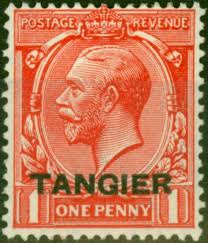
As a boy I used to stare at old British stamps overprinted with a single improbable word: Tangier. Small imperial artefacts from a vanished world. Something about them haunted me. Britain, but not Britain. Europe, but not Europe. A frontier city where the edges of empires touched Africa and then slowly dissolved into dust.

Years later I finally arrived there myself by train from Rabat.

Not into the old city, of course.

Modernity rarely enters through the old gates.

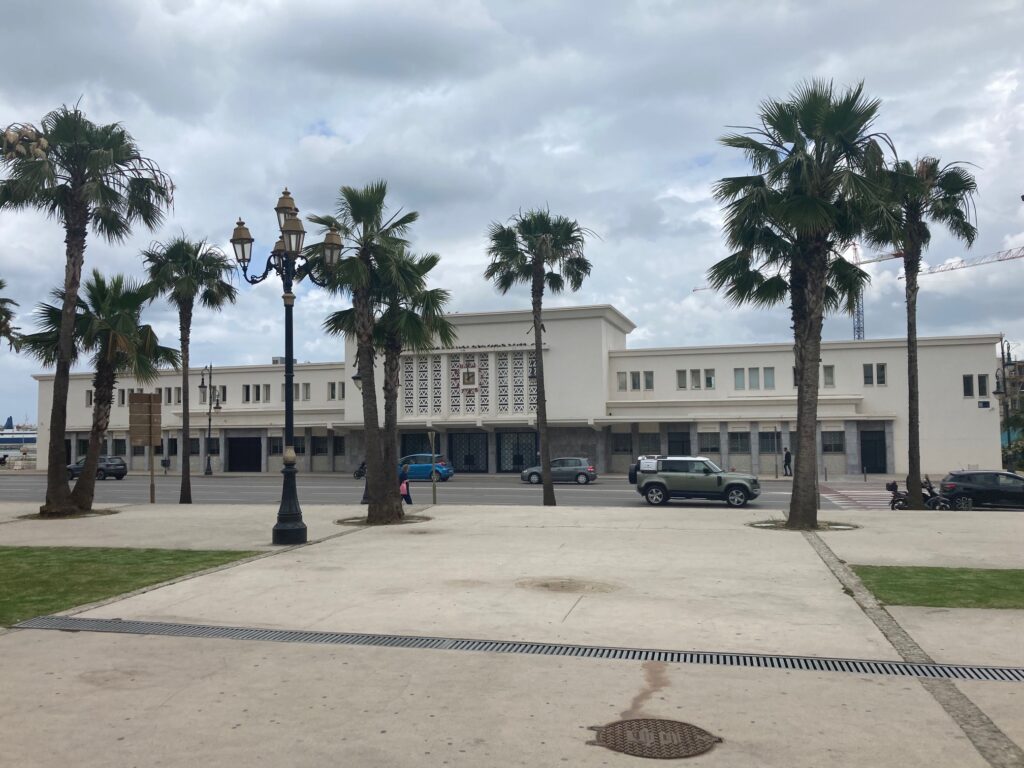
The new station now sits outside the ancient heart of Tangier, functional and detached, while the beautiful old Art Deco station nearer the port survives like a forgotten actor after the audience has gone home. Rail-less now. Disconnected from the line that once carried diplomats, merchants, officers and travellers directly into the old international city. One more elegant relic stranded by time.

Tangier is full of such things.

Ghost structures.

Fragments of abandoned futures.

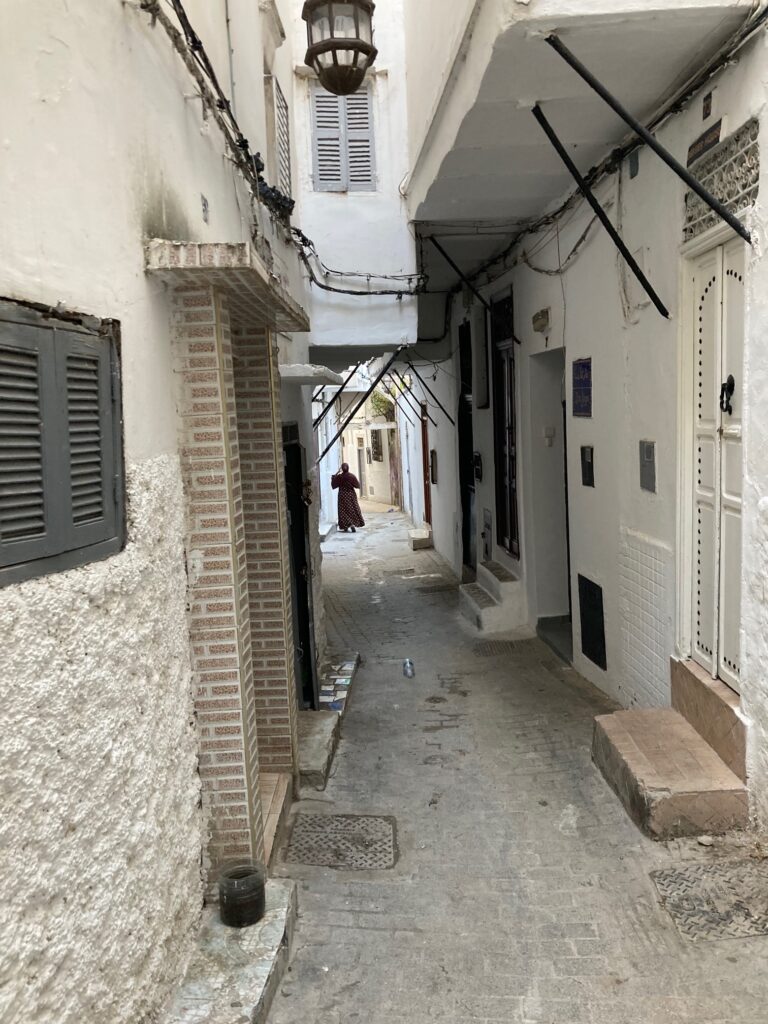
I stayed inside the Medina, where the old Arab city still breathes beneath the noise of modern Morocco. White walls reflecting afternoon light. Narrow passages winding endlessly downhill towards the sea. The call to prayer floating over rooftops as gulls circled above the Strait.

There are cities which feel built for commerce.

Tangier feels built for memory.

One walks through it with the strange sensation that history never fully departed. It merely withdrew into the walls.

By day I wandered through the old Medina. By evening I walked the Rue d’Italie, absorbing the remnants of the European Tangier that once existed alongside the Arab one. Faded balconies. Colonial façades. Cafés that seemed to belong to another century. Spanish voices still drifting through the streets long after the flags themselves disappeared.

Tangier was once an international city where empires overlapped rather than ruled outright. British, Spanish, French, Arab, Jewish, European and African worlds collided there beside the sea.

And traces of all of them remain.

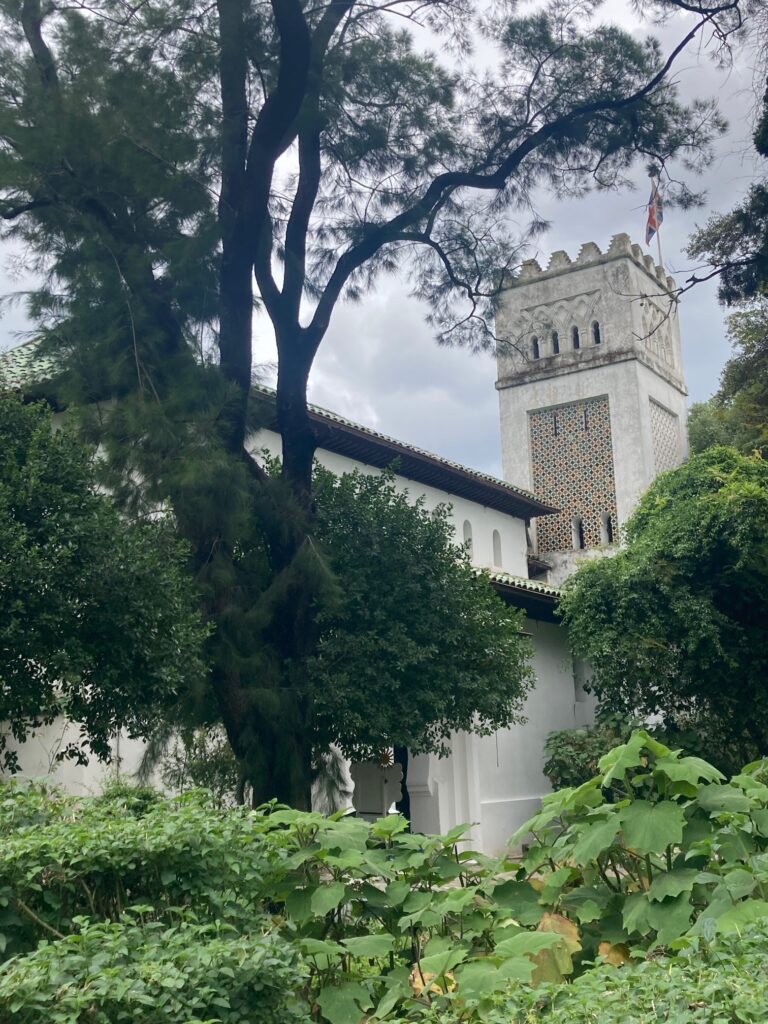
On Sunday morning I attended service at the old Protestant church built by the British in the early twentieth century.

That hour stayed with me.

Not because of doctrine, but because of continuity.

For a moment it felt possible to step backward through time and glimpse the old British Tangier community exactly as it may once have existed. Merchants in linen suits. Naval officers. Consular staff. Families carrying hymn books through North African sunlight while believing, as all civilisations eventually do, that their presence there might somehow endure.

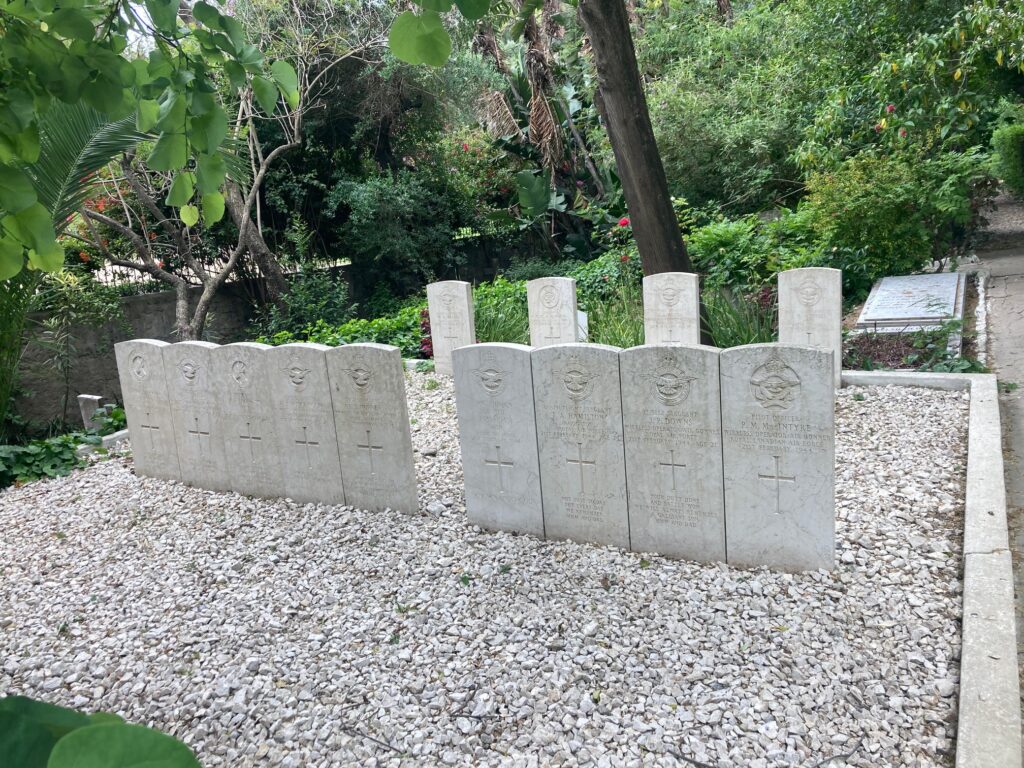
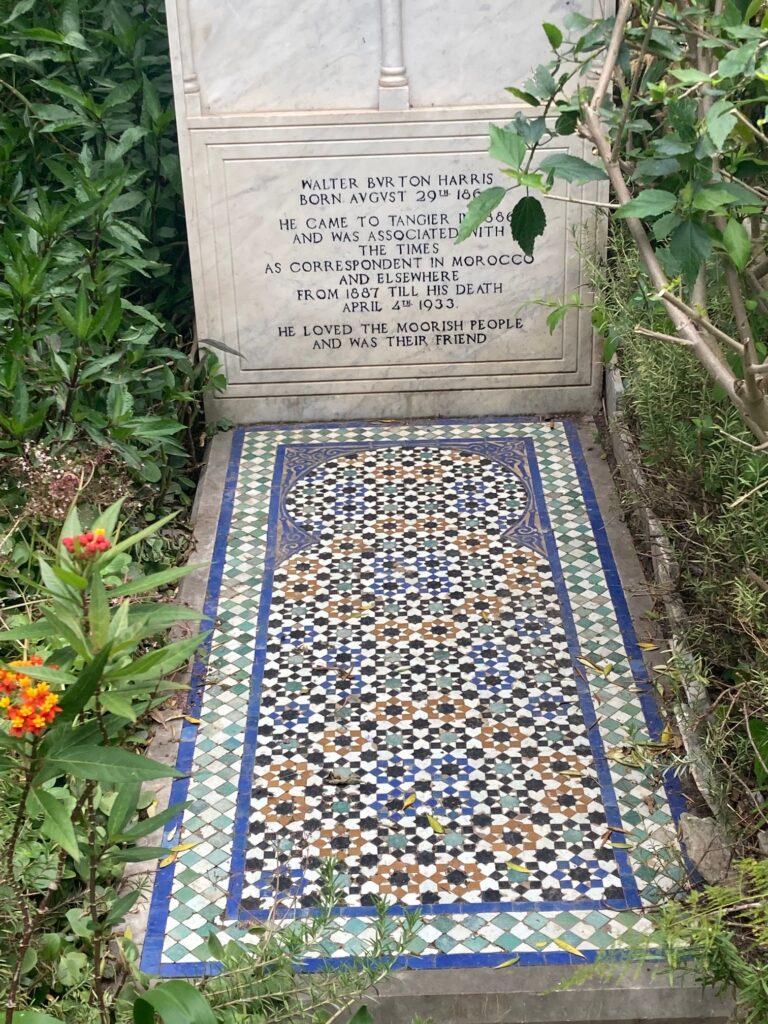
Afterwards I walked slowly through the church graveyard.

War graves.

Empire builders.

Forgotten surnames carved into weathered stone.

People who once stood confidently at the edge of empire, believing history itself moved in their direction.

Now most lie unvisited beneath palm trees and Atlantic light.

Tangier teaches a hard lesson quietly.

Nothing remains at its height forever.

Not empires.
Not languages.
Not influence.

Not even memory itself.

What fascinated me most was realising how close Tangier came to becoming something else entirely. In many ways the city feels as though it should have become Spanish. Even today Spanish lingers everywhere beneath the surface — in speech, architecture, rhythm and temperament. It remains the city’s second language long after the age that created it has passed.

Yet even that influence now feels impermanent.

Perhaps nowhere more so than in the enormous modernist Spanish cathedral built during the late 1950s. A brutal concrete declaration of permanence. Spain, it seemed, still imagined itself rooted there indefinitely.

But today the building already carries the melancholy of a future that failed to arrive.

That is Tangier.

A city where every civilisation eventually becomes an echo.

Arab.
Spanish.
French.
British.

One layer settling quietly upon another beside the sea.

And perhaps that is why I loved it so much.

Because Tangier does not flatter modern illusions of permanence.

It reminds a man that all power is temporary.
All empires recede.
All railways eventually stop at another station.

Even the ones that once printed their names upon the stamps of the world.

The Room With Two Windows

There was a room in Ireland with two windows.

One looked toward the sea. The other looked toward the road.

Dunwiddie preferred the sea window.

The road window showed delivery vans, dog walkers, Irish weather, the small democracy of other people’s errands. It reminded him of accounts, appointments, forms, banks, proofs of address, mobile numbers, and the long tail of jurisdictions that did not like to be left.

The sea window gave less away. It showed colour, wind, tide, distance. A man could look at it and think in longer lines.

On the table beneath the window were three objects: a Danish letter, a Moroccan train ticket, and a small silver coin blackened by sand.

The letter had been opened twice and answered once. It was written in the flat language of people who believed that language itself created obedience. It referred to deadlines, obligations, processes, and consequences. It had the tone of a schoolmaster addressing a boy who had not yet understood that school was finished.

The train ticket was for Rabat to Tangier. First class. It had cost more than he expected, which irritated him, but the irritation had passed. Prices rose. Doors closed. Seats disappeared. The point was not to get the cheapest ticket. The point was to move.

The coin had no paperwork.

He had found it after a storm, when the shingle had been pulled back like a curtain. At first he thought it was a washer. Then he rubbed one edge with his thumb and saw a faint rim, a suggestion of an old head, something imperial and half-erased.

The coin was the most honest of the three.

That afternoon a woman sent him a message.

She was younger, prettier in photographs than she would likely be in real light, and she had the polished indifference of a woman who had learned that attention could be converted into meals, lifts, compliments, and temporary male confusion.

“Maybe we can meet,” she wrote.

Maybe.

Dunwiddie considered the word.

In investing, maybe was a useful word before entry. It kept a man alert. It meant uncertainty, optionality, conditional sizing. But after entry, maybe became poison. Maybe I should hold. Maybe the discount will narrow further. Maybe she means it. Maybe the country will be fair. Maybe the system will forget. Maybe the woman will soften. Maybe the letter is harmless.

Maybe was where capital went to rot.

He wrote back:

“Tonight at seven, a drink near the station.”

She replied twenty minutes later.

“Let’s see.”

He put the phone face down.

There had been a time when he would have chased the little thread. Not desperately. He was never that crude. He would have been witty, playful, apparently careless. He would have made the uncertainty feel like movement. He would have enjoyed the chemical flicker of the game, and mistaken the flicker for value.

Now he saw the structure.

A woman who wanted to meet made the meeting easy. A market that wanted to rerate did not require prayer. A country that wanted your presence did not trap you in paperwork. A good holding survived examination. A bad one survived only while unexamined.

He poured a bath.

The water ran hot, clouding the mirror. He placed a glass of wine on the edge and lowered himself in slowly. His body, which he had once treated as a machine for enduring obligations, now seemed more like an estate that had finally been returned to its owner.

Outside, the wind rose.

The phone buzzed again on the chair.

He let it buzz.

For ten minutes he thought of nothing except the heat, the steam, and the strange fact that escape was not dramatic once achieved. It was not a trumpet. It was not a speech. It was a set of accounts closed, a number moved, a woman not answered, a train booked, a small refusal repeated until the old structure lost jurisdiction.

After the bath he dried himself and checked the phone.

The younger woman had written:

“Actually I’m tired tonight. Maybe another time.”

He laughed.

Not loudly. Just enough.

Then he deleted the exchange.

He sat by the sea window with the silver coin in his palm. The old monarch’s face was nearly gone, but the metal had endured. It had passed through pockets, wars, marriages, markets, tides, and the hands of men who all imagined their troubles permanent.

On impulse he opened the Danish letter again.

There was a line near the bottom he had missed.

It said that if he did not respond by the stated date, the authority would proceed on the basis of the information available to it.

He looked at the date.

It had passed before the letter arrived.

For a moment the old anger rose. Then something cleaner replaced it.

He took out a pen and wrote across the top:

Received after deadline. No lawful opportunity to respond.

Then he placed the letter in a folder.

Not because the sentence would defeat anything by itself. It might. It might not. That was not the point.

The point was that the paper had been turned from command into evidence.

That was the twist he had been slow to learn.

For years he had believed freedom came from winning the argument. Later he thought it came from leaving the room.

But real freedom came when the same object changed category in his hand.

A woman’s delay became data.

A market’s rise became an exit.

A state’s threat became a file note.

A lost coin became proof that value could survive burial.

He looked once more through the sea window.

The tide was coming in now, covering the dark strip of sand where the coin had been found. By morning, there would be no sign it had ever been exposed.

That was fine.

He had already taken what was his.

Where the Story Thins

As second-date suggestions go, walking Trevor Deely’s route through Dublin was an unusual one.

However, it was a mutually agreed one.

It was daytime. Cold, dry, and bright.

Before we started, she told me she had a feeling that somewhere on the walk, something had happened. She said it simply and left it there.

Later, on Haddington Road, I stopped and said that I did not think he had walked beyond that point.

She looked at me and said that this was where she had felt it too.

That was the interesting thing.

Not because it proved anything. It did not. But because sometimes a place refuses the story made for it. You can hear an official version from a distance and it sounds tidy enough. Then you stand on the ground itself and it starts to thin in your hands. One only needs to visit Praia Del Luz, boots on the ground to begin asking questions around the official narrative regarding Madeline McCann. It was the same here.

The canal idea always struck me as obvious tripe. Too neat. Too convenient. Trevor’s last confirmed sighting was on Haddington Road, way past the canal, walking toward the Beggars Bush area, and Garda appeals have long focused on the unidentified man seen near his office and again shortly after him on CCTV.

It was interesting too to learn that it was the weekend Bill Clinton was in Dublin. Accounts of the case say roads and security arrangements were altered, bins and skips were emptied, and manhole covers were checked before any meaningful search for discarded evidence could happen. That does not prove anything in itself. But it adds another layer of strangeness to a case that already resists easy explanation.

And then there was the setting itself. Trevor worked in investment banking, only a few years before one of the greatest financial crashes in modern history. That too may mean nothing. But when an impressionable young man with banking access disappears into a city still flush with late-boom confidence, and the last ground on which he feels real is a short stretch of road in Dublin 4, the imagination does not need much encouragement.

What stayed with me was simpler than theory.

Two people walking through Dublin in the cold sun, and both feeling, at the same point, that the official map had gone thin.

That is rare.

Not proof.
Just recognition.

Sometimes that is enough.

Half the World Away

I found Oasis’s Half the World Away in Hobro in 2024.

Some songs arrive as entertainment. Some arrive as truth. This one arrived as recognition.

By then, much of my old life was still standing in the outer world, but inwardly it had already begun to fall away. That is a dangerous phase in a man’s life. He is still present in the visible structure, but no longer belongs to it. He can still perform the role, but the role has gone dead in his hands.

That was Hobro.

The song is not about collapse. It is about misplacement. It is the sound of a man who knows he is not where he should be. There is no panic in it. No pleading. Just the quiet knowledge that the ground under him is not his ground.

That is what struck me.

There are times when life does not fail in one dramatic blow. It simply becomes false. The outer frame remains, but the spirit has already stepped away. A man feels it first as restlessness, then as distance, then as truth. He sees that what once held him no longer does. He understands that staying too long in the wrong place can do more damage than leaving.

Hobro was not home. It was a waystation where that fact became impossible to ignore.

Looking back, I can see the song named something before I did. My problem was not that I was lost. My problem was that I was living on the wrong ground. That is a harder thing to admit, because once a man sees it clearly, he cannot remain innocent. He must either move, or consent to his own diminishment.

Some men are built for settled fields and known roads. Others are made for crossings. They know, even when they resist it, that life comes alive again only when they leave dead terrain behind.

That was the gift of the song. It gave shape to a truth I was already living.

Not broken.
Not beaten.
Not finished.

Just half a world away from where I was meant to be.

And sometimes that is the beginning.

Limerick, Waterford, and the Roads Between

I went to Limerick to face a younger man.

Twenty-eight and a half years ago, I had an MRI scan that resulted in me being told I might never walk again. Some sentences do not fade. They divide a life. There is the man before them, and the man after.

I wanted to stand again where that fracture began. Not for closure. I have no use for that word. I wanted to look back at the man who heard it, and at the road he took afterwards, with all that followed from it, for better and for worse.

Ireland can do that. It can alter the course of a life without warning, and only decades later do you see the full shape of the turn.

I visited a few places in Limerick, but took no photographs. It seemed wrong somehow. Not every place should be converted into an image. Some are better left as encounter.

And yet Limerick, appropriately enough, also gave me a limerick:

There once was a man from Hobro
Who knew it was time to go,
And start a new life
Without all that strife,
And so he went off to Wicklow.

A joke, obviously. But not only a joke.

From there I drove on, meaning to see Cahir Castle, and instead found myself halted by something else: one of the most beautiful churches I have seen in Ireland.

You could see it from far off. Protestant Gothic. Intact, solid, self-possessed. Built in 1818 and designed by Nash, it immediately pulled me toward the age I so often meet in the earth and on the beaches: the late Georgian and Regency world, the world of old copper, worn silver, and the coins that still surface beneath the grass and sand. Then there was the door, painted a challenging orange. In Ireland, orange is never merely orange. History still speaks through colour.

Then Dungarvan.

A beautiful seaside town, but one marked by subtraction. You can feel the railway’s absence in the place. The town remains handsome, but the old line still haunts it. The Greenway now runs through that lost corridor, with so much railway architecture still standing that the old movement has not entirely gone. It has only changed form.

Then Waterford.

The energy shifted again. Medieval, certainly, but not trapped in its own past. Some towns feel burdened by memory. Waterford did not. It felt old, but still open. Less weighed down by what it had been. More alive to what it may yet become.

That, perhaps, was the shape of the journey.

Limerick was reckoning.
Cahir was surprise.
Dungarvan was beauty marked by loss.
Waterford was old stone with forward motion still in it.

Tomorrow I will head home. But first there is Waterford city centre, and perhaps, if the weather opens, a new beach or two to detect. I have already identified them.

Then Passage East, literally. A rarity now: a car ferry between Irish places. After years in Denmark, I like the thought of that more than I should. Driving onto a boat, crossing a stretch of water, and letting it put me down elsewhere. Not exile. Not escape. Just passage.

And then home.

And perhaps that is enough for now: not answers, but movement.

Who Ate All the Pies?

I had just come back from Consett, which still feels like home in some older sense, and went through security at Newcastle Airport.

It was busy. The gates were full. The trays moved forward in a slow line under the white lights. The staff were in no mood to wave anything through. They were checking everything properly, or at least thoroughly, which is not always the same thing.

Then my tray slid off for inspection.

That feeling came at once. The small drop in the stomach. There were five trays ahead of mine in the queue and no way round it.

The man in front had already been stopped. He opened his bag. They took out some bananas and swabbed them. He turned and shouted something in Polish to his friend about the delay and his banan, half angry, half laughing, while they tested the fruit as though it might bring down the airport.

When they gave the bananas back, he looked at me and smiled. Not much. Just enough to say that now it was my turn.

Then they opened my bag.

The suspicious item was a few corned beef pies I was bringing back with me.

The woman opened the clear plastic bag carefully. She was about to take them out. I said, “They’re pies. Can I get them out for you?”

That changed it.

You could see it happen. Something in her face shifted. The programme broke for a second. She looked slightly embarrassed, as though she had suddenly seen herself from outside and did not much like what she saw.

No, she said, and put them back in the bag.

That was all.

But it stayed with me.

A man has his bananas swabbed. Another man has his pies inspected. Everyone stands there under the lights, waiting, obedient, serious, playing his part. The staff play theirs too. That is how much of life is now. Not evil. Not dramatic. Just people inside systems, doing what the system says, until the thing itself becomes too foolish to ignore.

Then sometimes the spell breaks.

A pie is a pie again. A person becomes a person again. For a moment the machine weakens and common sense comes back into the room.

Then the trays moved on. The airport survived.

Who ate all the pies? Me, of course. The last one disappeared at breakfast today.

Forgotten Megaliths

I’ve come to realise that much of the history we are taught is little more than a convenient story. Yet the real clues sit quietly around us, waiting to be noticed. Often all it takes is looking up, or down, to see that the world is not quite what we are repeatedly told it is.

Baltinglass is a good place to begin.

You will not find it in many guidebooks. It is not promoted as a destination. Yet a chance video on YouTube suggested the valley may hold one of the largest Bronze Age landscapes in Europe, certainly one of the most significant in Ireland.

While tourists head for Newgrange, the officially presented megalithic site, I chose the opposite direction and drove south into the Wicklow Mountains.

The mountains feel older than the road that crosses them. Clear water cuts through the valleys. Strange stones appear where you would not expect them. Hills rise in shapes that seem deliberate rather than accidental. It is the kind of landscape that makes you slow down and pay attention.

My first stop in Baltinglass was the abbey.

It stands ruined now, but inside the walls sits another building — a Protestant church constructed within the remains of the medieval structure, and now itself also abandoned. Layers of occupation. Different groups arriving centuries apart and choosing the same place to build.

That alone tells you something about the location.

Walking through the grounds I came upon a tomb structure topped with a pyramid. The tomb itself is now empty. There was no chequerboard pattern here, but the symbolism still brought to mind the same geometric language that appears elsewhere — pyramids, grids, and repeating forms that surface again and again across different cultures.

It makes you wonder what ideas sit behind those symbols, and how old they really are.

Looking out from the abbey, the surrounding hills have strange shapes.

They reminded me of Penshaw Hill near Sunderland and the old story of the Lambton Worm winding itself around the hill before it was slain. Today that hill is crowned with a Greek temple. Another structure placed on top of something older, as if each generation feels compelled to mark the same point in the landscape.

The pyramid above the abbey tomb seemed to belong to the same instinct.

I walked toward the largest of the hilltop forts overlooking the town. There are several scattered around the valley.

The slope of one hill has become a vast cemetery. At its centre stands a tower that feels older than the graves surrounding it. Beside it sits Ireland’s national brain injury hospital, another modern institution that has somehow found its place on this same ground.

Places with long histories seem to keep attracting new occupants.

Later I walked down into the town itself.

I stopped at the butcher and bought some local lamb. It felt right to eat something raised in the same valley I had been walking through. If places carry energy, perhaps the animals raised there do too.

Nearby I came across something I had not expected at all — a United Nations memorial.

It commemorates Irish soldiers killed in the Congo during the UN operations of the early 1960s. I knew little about the incident before seeing the memorial, but one discovery always leads to another. Research tends to follow later.

What caught my attention most was the map carved into the monument — the familiar UN world projection surrounded by a laurel wreath. A symbol most people see without ever looking closely.

It took me many years myself before I began noticing how many narratives are quietly constructed for us.

Eventually I returned to the car.

There was one last thing I wanted to see — the old railway station.

To my surprise the building still exists. It now sits inside an agricultural retail yard belonging to Quinns. I was about to leave after taking a quick look when someone knocked on the car window and asked if I needed help with anything.

When I explained I had only come to see the station, I was suddenly being given a private tour.

Inside the old office the station still has its safe, the kind of heavy metal vault you would expect in a historic house, Montana had one too. The place felt frozen in time. It was a quiet day, so perhaps that made the difference, but the generosity was appreciated, as was the company calendar I was given.

Encounters like that happen now and then to me.

Once in Georgetown a local gave me a full tour of a colonial cemetery. Another time in Newcastle someone walked me through the history of the village church and the old castle nearby. Some people still care about preserving these stories.

And that matters.

Now it really was time to head home.

There was just one final stop.

A stone circle standing quietly in a field outside the town.

Officially the circle is dated to around 2,500 years ago. Perhaps that was the last time it was used. Personally I suspect the site is far older.

When I stepped inside the circle my legs shivered slightly. Cold wind perhaps. Or something else.

What I did notice were threads and ribbons tied to nearby branches. Someone had been here before me, leaving small offerings or tokens. Even now people feel that places like this hold something.

Stones carry a presence modern culture tends to ignore.

Our ancestors may have understood that better than we do.

When I arrived home YouTube suggested another video for me.

The subject was Larry Murphy — Ireland’s notorious serial killer, often called the Beast of Baltinglass.

The valley clearly holds its share of darker stories too.

Places with deep histories often do.

« Older posts

© 2026 The Dunwiddie Post

Theme by Anders NorénUp ↑