A record of storms survived and horizons still calling

Category: Writing and Thinking Aloud (Page 1 of 3)

Tangier

Tangier had lived in my imagination long before I ever reached it.

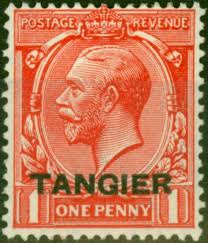
As a boy I used to stare at old British stamps overprinted with a single improbable word: Tangier. Small imperial artefacts from a vanished world. Something about them haunted me. Britain, but not Britain. Europe, but not Europe. A frontier city where the edges of empires touched Africa and then slowly dissolved into dust.

Years later I finally arrived there myself by train from Rabat.

Not into the old city, of course.

Modernity rarely enters through the old gates.

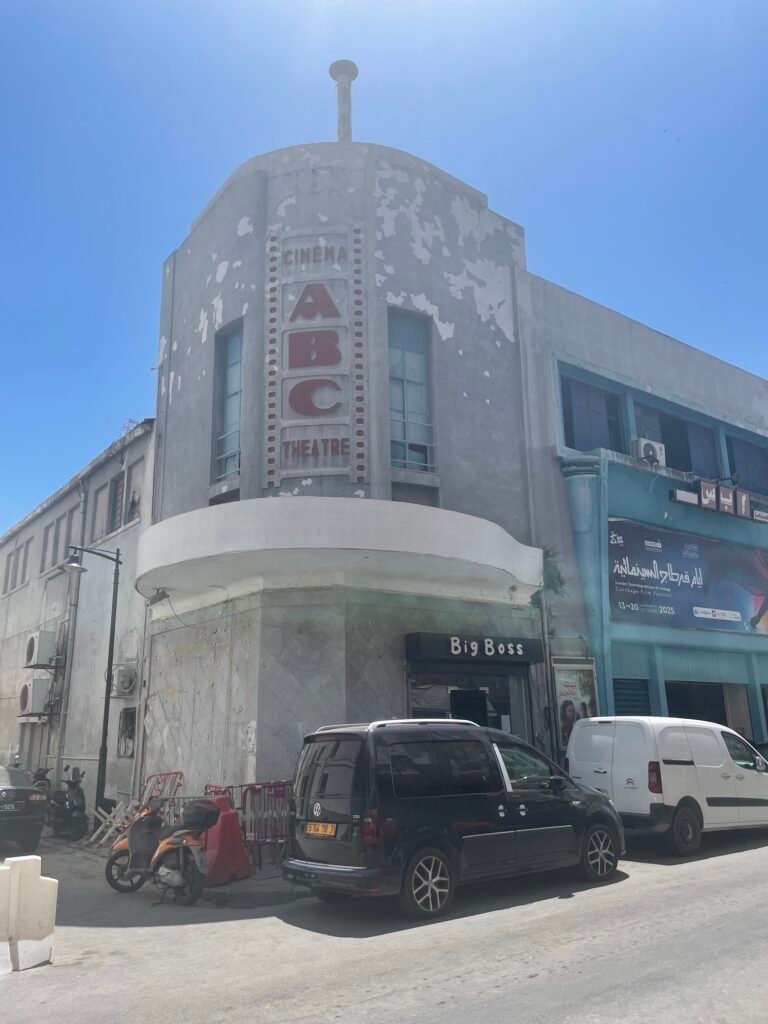
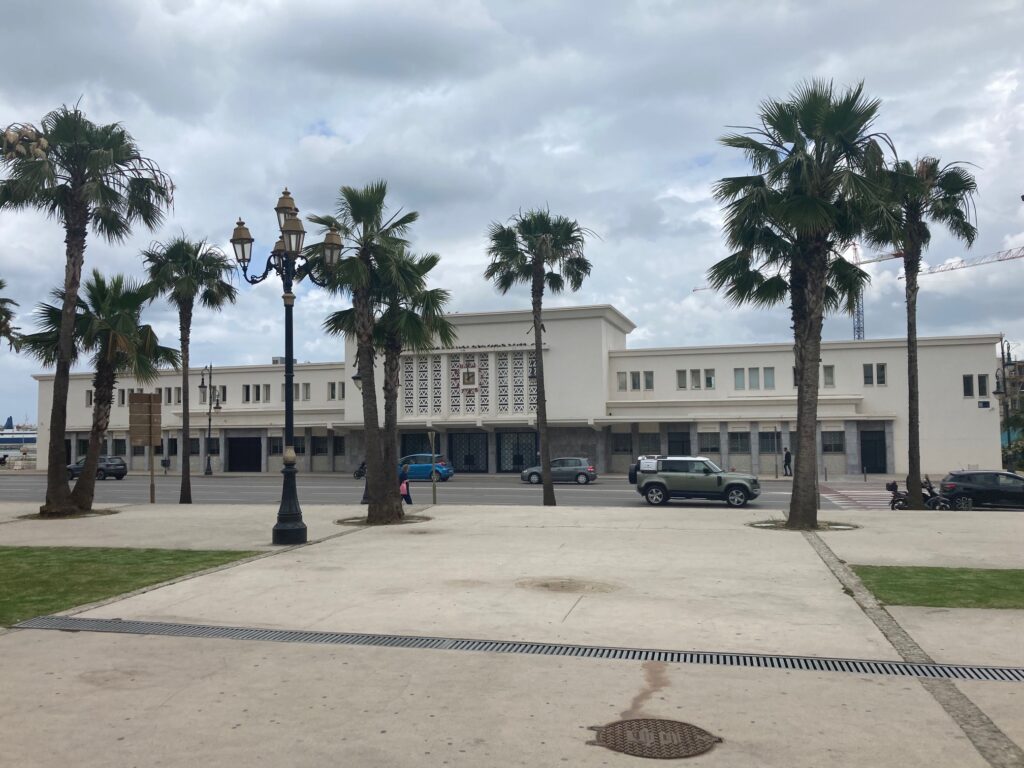
The new station now sits outside the ancient heart of Tangier, functional and detached, while the beautiful old Art Deco station nearer the port survives like a forgotten actor after the audience has gone home. Rail-less now. Disconnected from the line that once carried diplomats, merchants, officers and travellers directly into the old international city. One more elegant relic stranded by time.

Tangier is full of such things.

Ghost structures.

Fragments of abandoned futures.

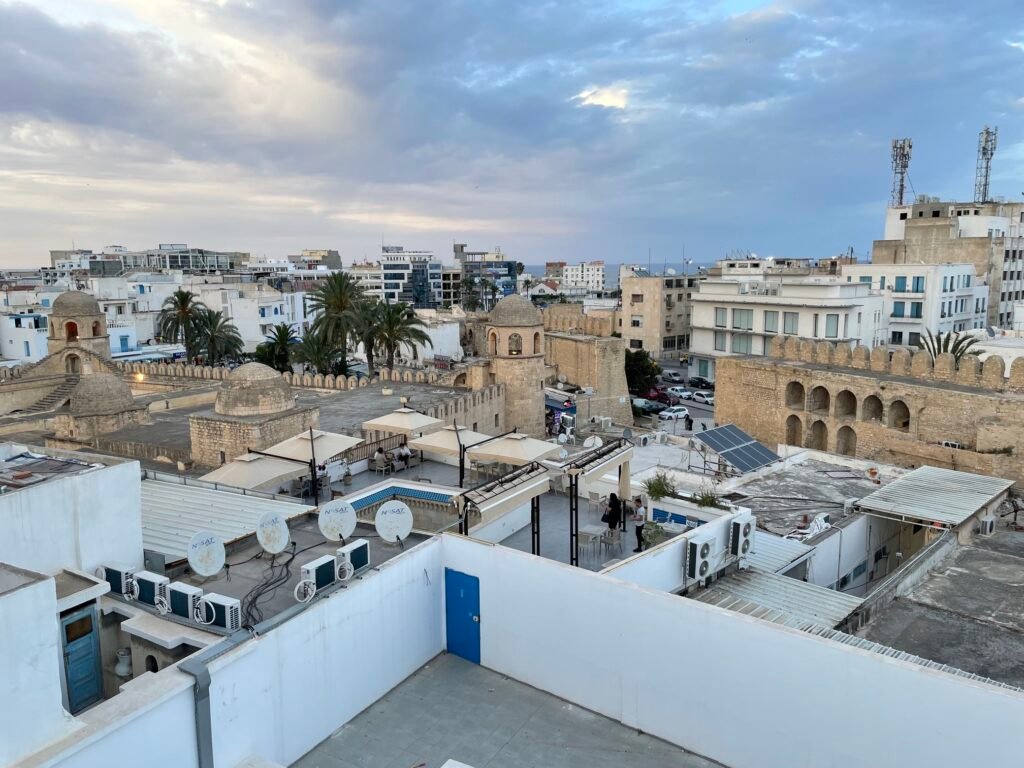
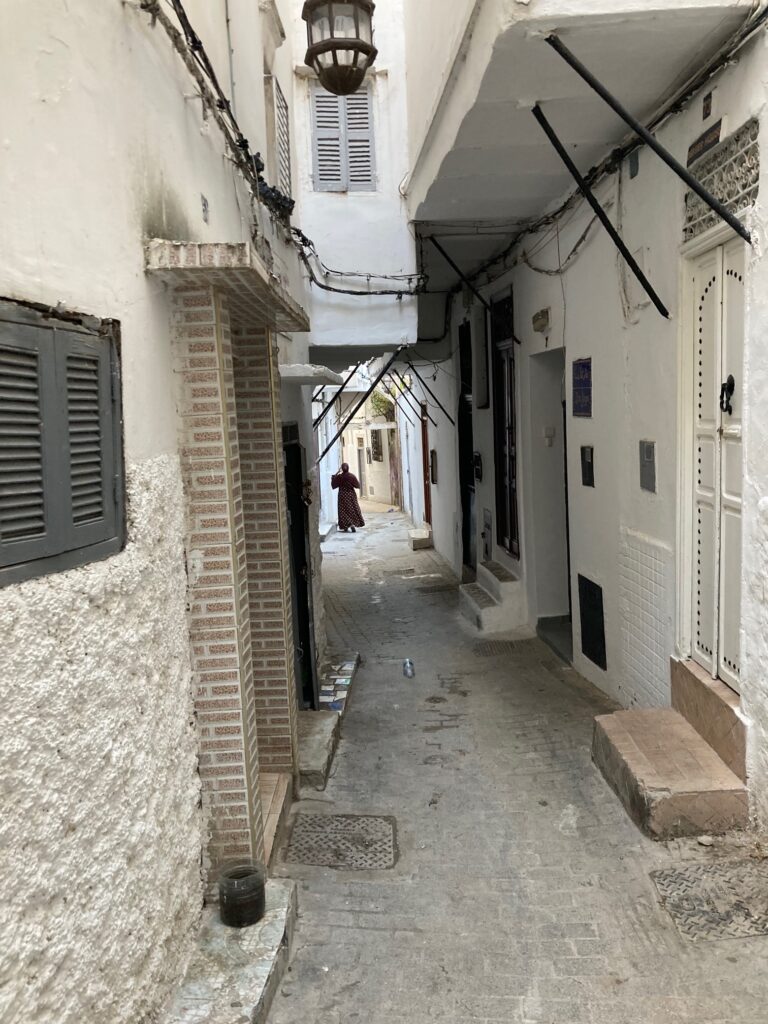
I stayed inside the Medina, where the old Arab city still breathes beneath the noise of modern Morocco. White walls reflecting afternoon light. Narrow passages winding endlessly downhill towards the sea. The call to prayer floating over rooftops as gulls circled above the Strait.

There are cities which feel built for commerce.

Tangier feels built for memory.

One walks through it with the strange sensation that history never fully departed. It merely withdrew into the walls.

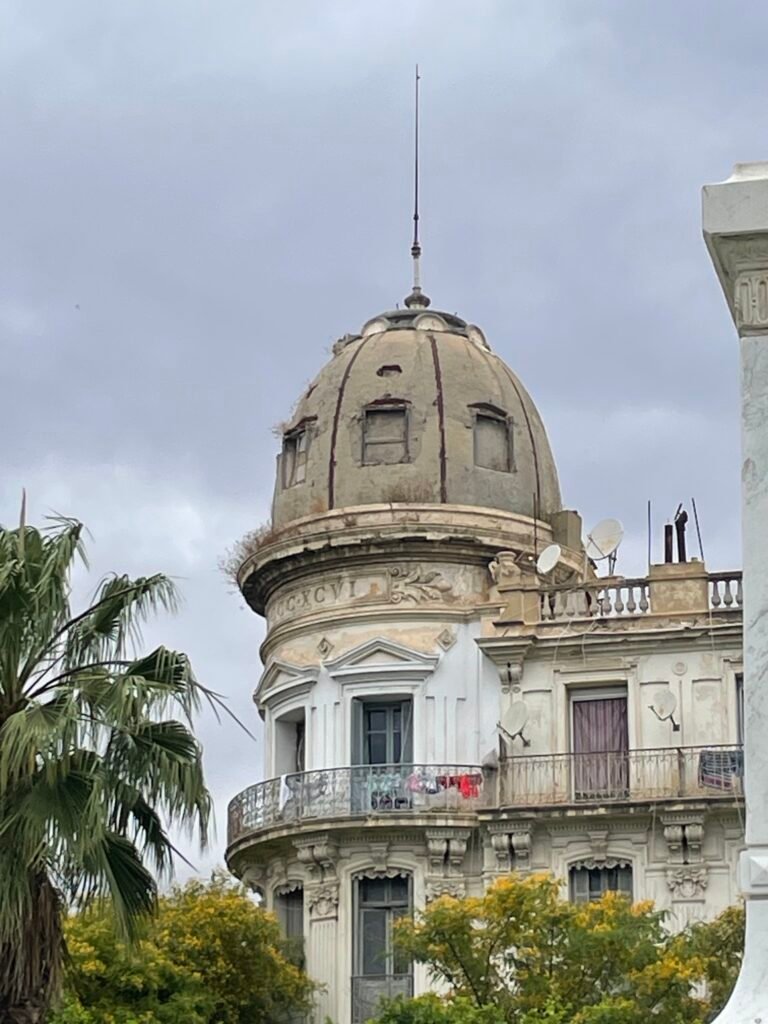
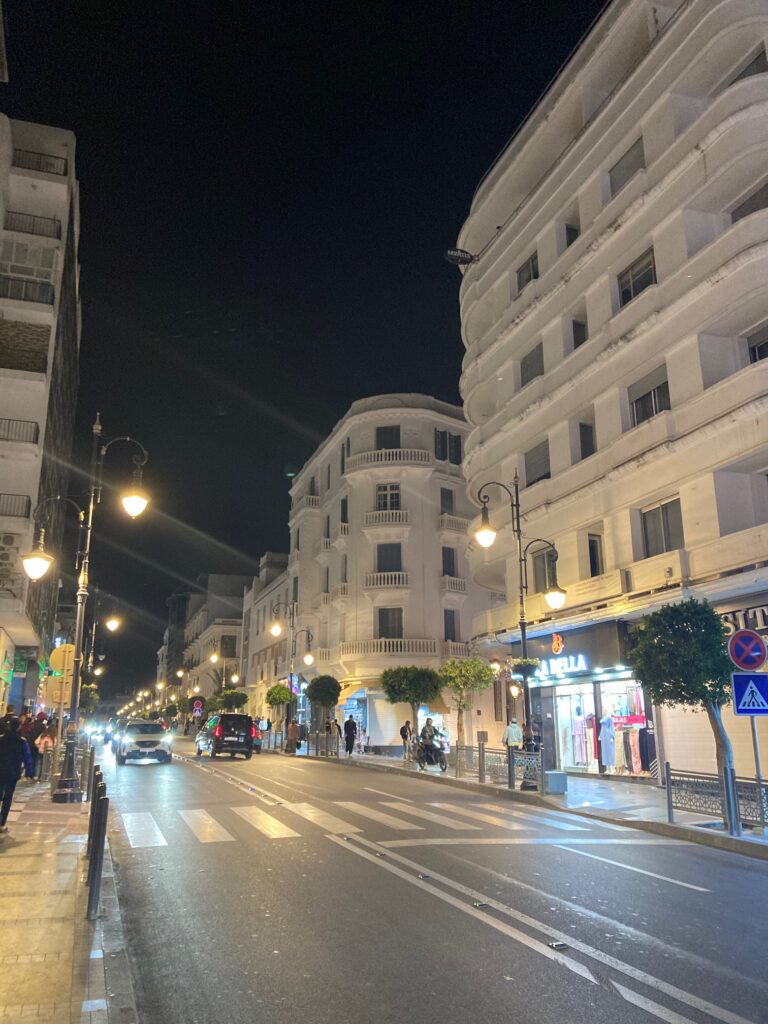
By day I wandered through the old Medina. By evening I walked the Rue d’Italie, absorbing the remnants of the European Tangier that once existed alongside the Arab one. Faded balconies. Colonial façades. Cafés that seemed to belong to another century. Spanish voices still drifting through the streets long after the flags themselves disappeared.

Tangier was once an international city where empires overlapped rather than ruled outright. British, Spanish, French, Arab, Jewish, European and African worlds collided there beside the sea.

And traces of all of them remain.

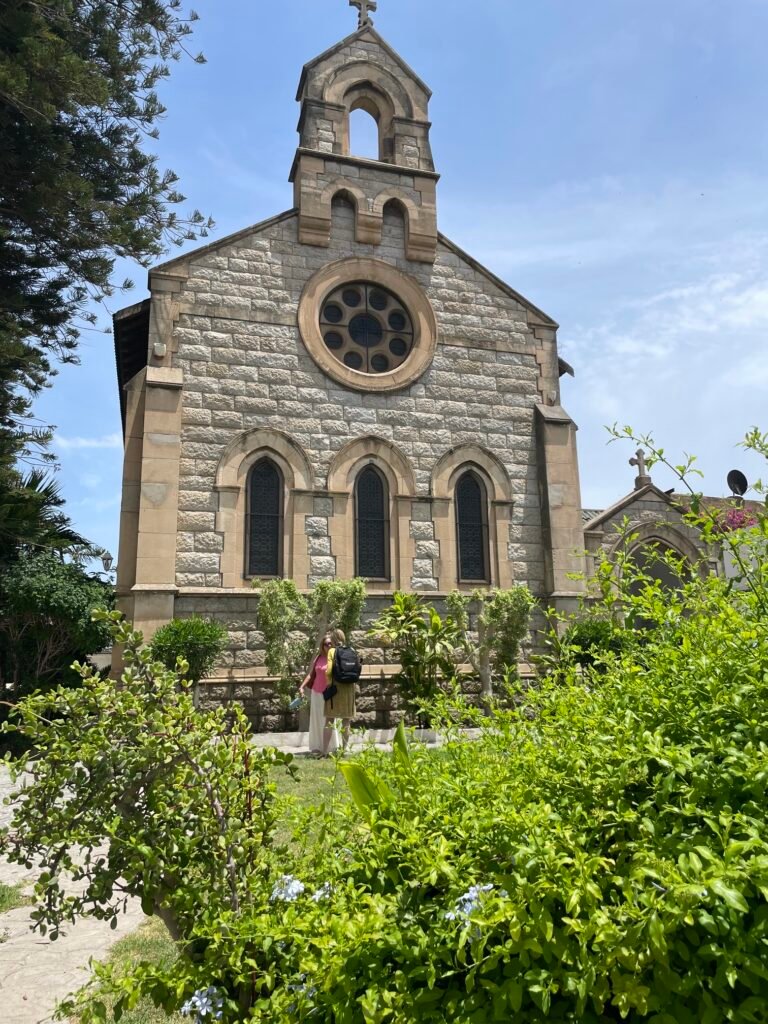
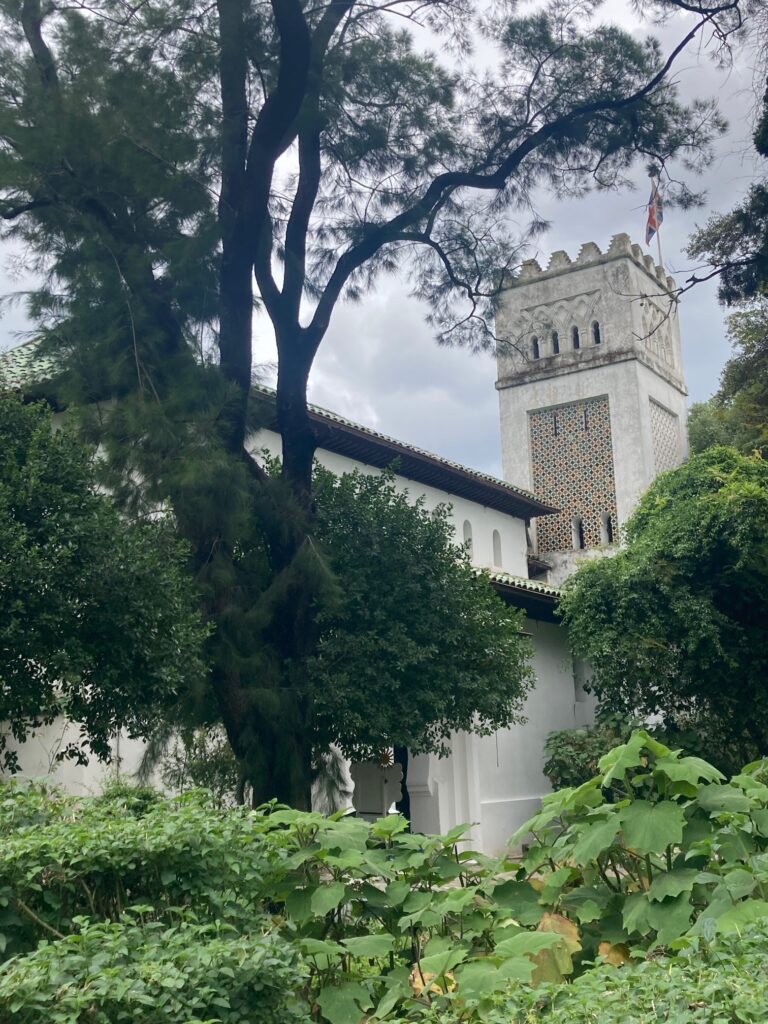
On Sunday morning I attended service at the old Protestant church built by the British in the early twentieth century.

That hour stayed with me.

Not because of doctrine, but because of continuity.

For a moment it felt possible to step backward through time and glimpse the old British Tangier community exactly as it may once have existed. Merchants in linen suits. Naval officers. Consular staff. Families carrying hymn books through North African sunlight while believing, as all civilisations eventually do, that their presence there might somehow endure.

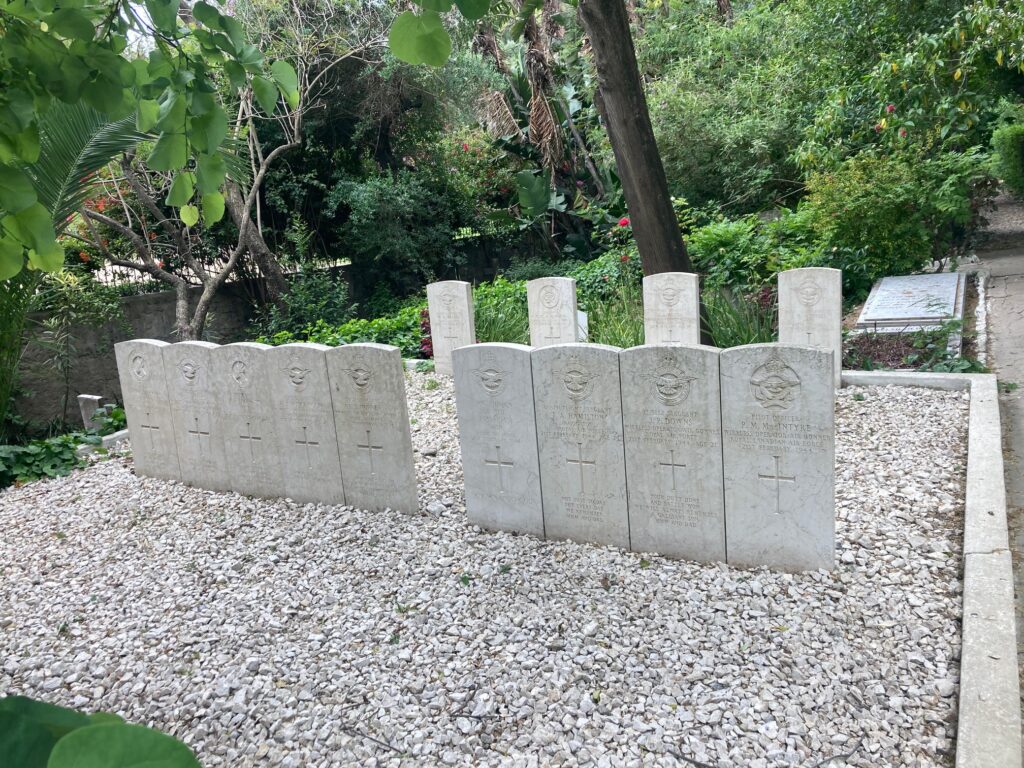
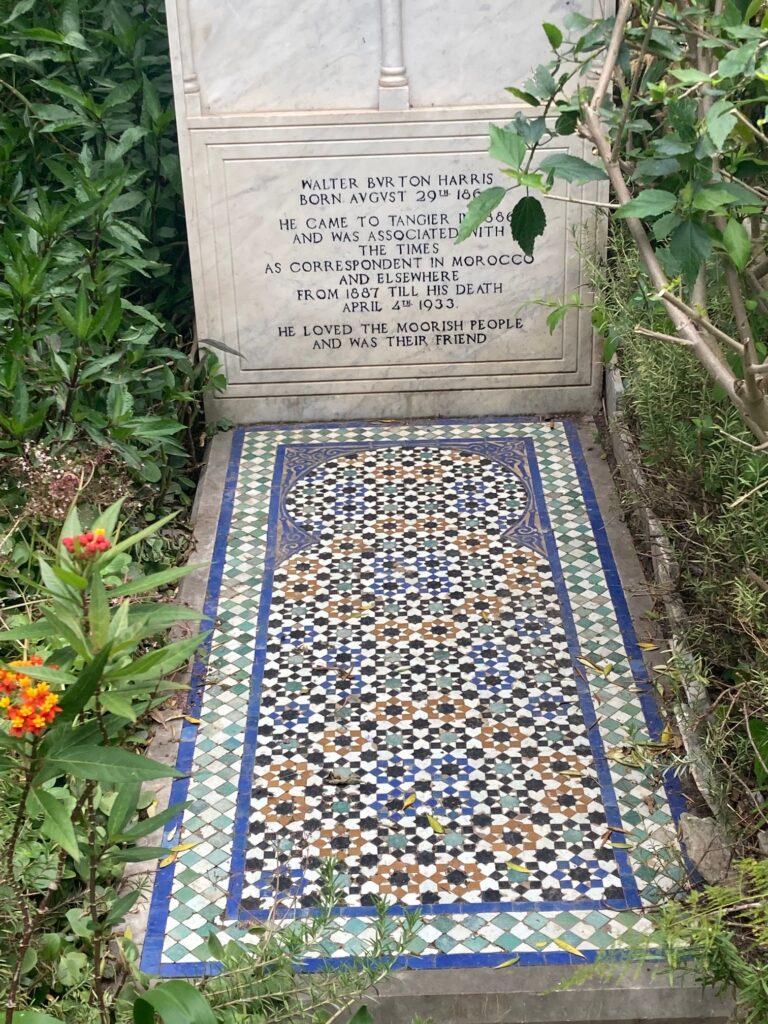
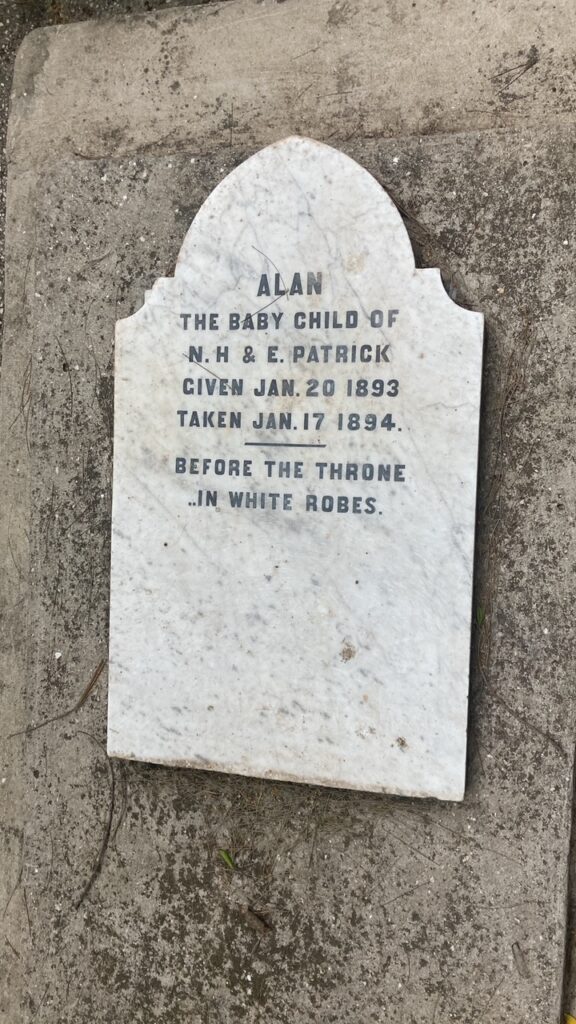
Afterwards I walked slowly through the church graveyard.

War graves.

Empire builders.

Forgotten surnames carved into weathered stone.

People who once stood confidently at the edge of empire, believing history itself moved in their direction.

Now most lie unvisited beneath palm trees and Atlantic light.

Tangier teaches a hard lesson quietly.

Nothing remains at its height forever.

Not empires.
Not languages.
Not influence.

Not even memory itself.

What fascinated me most was realising how close Tangier came to becoming something else entirely. In many ways the city feels as though it should have become Spanish. Even today Spanish lingers everywhere beneath the surface — in speech, architecture, rhythm and temperament. It remains the city’s second language long after the age that created it has passed.

Yet even that influence now feels impermanent.

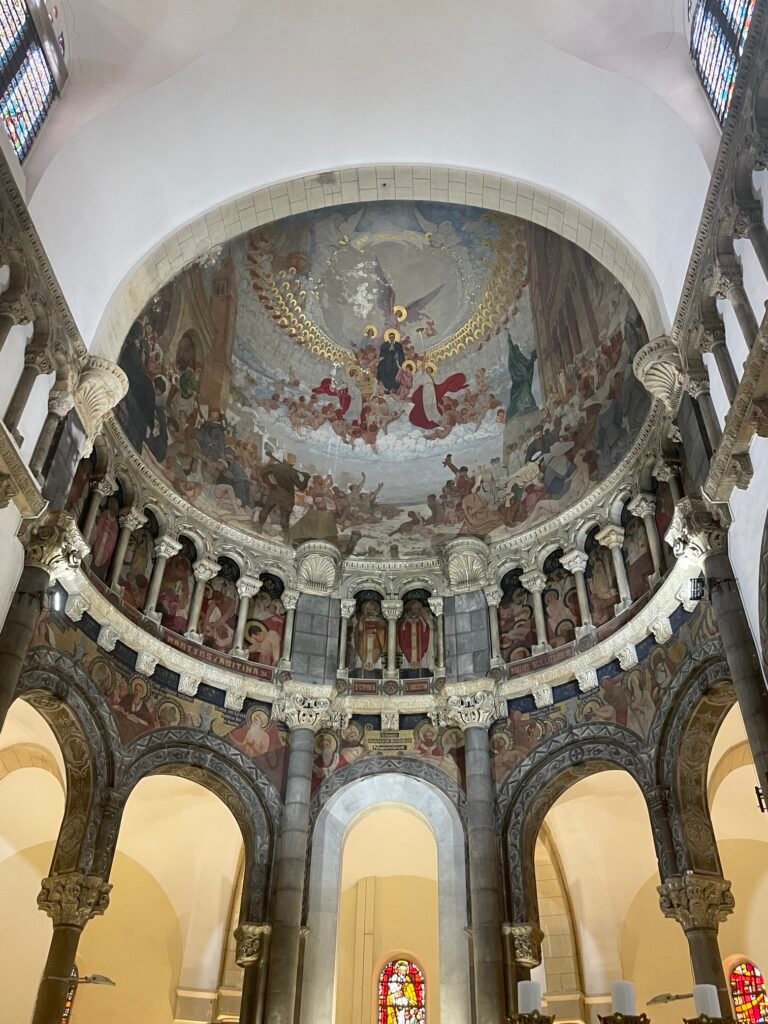
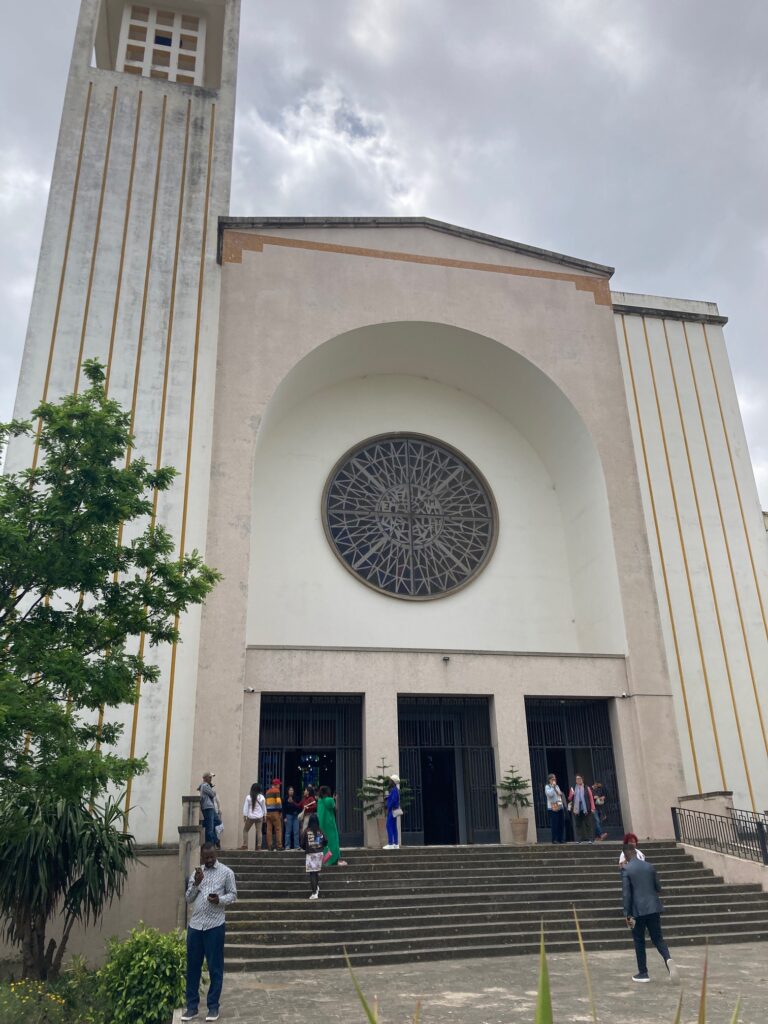
Perhaps nowhere more so than in the enormous modernist Spanish cathedral built during the late 1950s. A brutal concrete declaration of permanence. Spain, it seemed, still imagined itself rooted there indefinitely.

But today the building already carries the melancholy of a future that failed to arrive.

That is Tangier.

A city where every civilisation eventually becomes an echo.

Arab.
Spanish.
French.
British.

One layer settling quietly upon another beside the sea.

And perhaps that is why I loved it so much.

Because Tangier does not flatter modern illusions of permanence.

It reminds a man that all power is temporary.
All empires recede.
All railways eventually stop at another station.

Even the ones that once printed their names upon the stamps of the world.

The Room With Two Windows

There was a room in Ireland with two windows.

One looked toward the sea. The other looked toward the road.

Dunwiddie preferred the sea window.

The road window showed delivery vans, dog walkers, Irish weather, the small democracy of other people’s errands. It reminded him of accounts, appointments, forms, banks, proofs of address, mobile numbers, and the long tail of jurisdictions that did not like to be left.

The sea window gave less away. It showed colour, wind, tide, distance. A man could look at it and think in longer lines.

On the table beneath the window were three objects: a Danish letter, a Moroccan train ticket, and a small silver coin blackened by sand.

The letter had been opened twice and answered once. It was written in the flat language of people who believed that language itself created obedience. It referred to deadlines, obligations, processes, and consequences. It had the tone of a schoolmaster addressing a boy who had not yet understood that school was finished.

The train ticket was for Rabat to Tangier. First class. It had cost more than he expected, which irritated him, but the irritation had passed. Prices rose. Doors closed. Seats disappeared. The point was not to get the cheapest ticket. The point was to move.

The coin had no paperwork.

He had found it after a storm, when the shingle had been pulled back like a curtain. At first he thought it was a washer. Then he rubbed one edge with his thumb and saw a faint rim, a suggestion of an old head, something imperial and half-erased.

The coin was the most honest of the three.

That afternoon a woman sent him a message.

She was younger, prettier in photographs than she would likely be in real light, and she had the polished indifference of a woman who had learned that attention could be converted into meals, lifts, compliments, and temporary male confusion.

“Maybe we can meet,” she wrote.

Maybe.

Dunwiddie considered the word.

In investing, maybe was a useful word before entry. It kept a man alert. It meant uncertainty, optionality, conditional sizing. But after entry, maybe became poison. Maybe I should hold. Maybe the discount will narrow further. Maybe she means it. Maybe the country will be fair. Maybe the system will forget. Maybe the woman will soften. Maybe the letter is harmless.

Maybe was where capital went to rot.

He wrote back:

“Tonight at seven, a drink near the station.”

She replied twenty minutes later.

“Let’s see.”

He put the phone face down.

There had been a time when he would have chased the little thread. Not desperately. He was never that crude. He would have been witty, playful, apparently careless. He would have made the uncertainty feel like movement. He would have enjoyed the chemical flicker of the game, and mistaken the flicker for value.

Now he saw the structure.

A woman who wanted to meet made the meeting easy. A market that wanted to rerate did not require prayer. A country that wanted your presence did not trap you in paperwork. A good holding survived examination. A bad one survived only while unexamined.

He poured a bath.

The water ran hot, clouding the mirror. He placed a glass of wine on the edge and lowered himself in slowly. His body, which he had once treated as a machine for enduring obligations, now seemed more like an estate that had finally been returned to its owner.

Outside, the wind rose.

The phone buzzed again on the chair.

He let it buzz.

For ten minutes he thought of nothing except the heat, the steam, and the strange fact that escape was not dramatic once achieved. It was not a trumpet. It was not a speech. It was a set of accounts closed, a number moved, a woman not answered, a train booked, a small refusal repeated until the old structure lost jurisdiction.

After the bath he dried himself and checked the phone.

The younger woman had written:

“Actually I’m tired tonight. Maybe another time.”

He laughed.

Not loudly. Just enough.

Then he deleted the exchange.

He sat by the sea window with the silver coin in his palm. The old monarch’s face was nearly gone, but the metal had endured. It had passed through pockets, wars, marriages, markets, tides, and the hands of men who all imagined their troubles permanent.

On impulse he opened the Danish letter again.

There was a line near the bottom he had missed.

It said that if he did not respond by the stated date, the authority would proceed on the basis of the information available to it.

He looked at the date.

It had passed before the letter arrived.

For a moment the old anger rose. Then something cleaner replaced it.

He took out a pen and wrote across the top:

Received after deadline. No lawful opportunity to respond.

Then he placed the letter in a folder.

Not because the sentence would defeat anything by itself. It might. It might not. That was not the point.

The point was that the paper had been turned from command into evidence.

That was the twist he had been slow to learn.

For years he had believed freedom came from winning the argument. Later he thought it came from leaving the room.

But real freedom came when the same object changed category in his hand.

A woman’s delay became data.

A market’s rise became an exit.

A state’s threat became a file note.

A lost coin became proof that value could survive burial.

He looked once more through the sea window.

The tide was coming in now, covering the dark strip of sand where the coin had been found. By morning, there would be no sign it had ever been exposed.

That was fine.

He had already taken what was his.

The Leakages

A man can lose his life without any dramatic fall.

Not in one blow.
In drips.

An hour here.
A payment there.
A form.
A duty.
A house that always wants something.
A job that eats the day.
A woman who takes more than she gives.
A state that never stops asking.

From the outside, he looks fine. Functional. Reliable. But something is leaving him all the time.

Energy.
Time.
Money.
Attention.
Life.

That is the real story for many men.

Leakage.

The Small Leak

Most self-improvement begins at the smallest hole in the hull.

Porn.
Scrolling.
Drinking.
Screens.
Passive entertainment.
Junk habits.

Cut this. Improve that. Wake earlier. Drink less. Be sharper.

Fine. Some of that helps.

But it is also safe.

Because a man who fixes his habits while staying inside the same draining life is still being drained. He is simply becoming more efficient inside it.

That is why so much advice feels false.

It treats the symptom and leaves the structure untouched.

The Bigger Leaks

There are larger leakages, and they cost more.

Relational

Some relationships return force.
Some take it.

A man can lose years giving energy, money, steadiness, patience, and provision into bonds that return little but demand.

The same is true of family dynamics where duty became extraction.

Not all relationships are a drain. Some are among the best returns in life.

But some are wells with no bottom.

Structural

A house can drain a man.
A commute can drain a man.
A job can drain a man.
Routine can drain a man.

What looks stable from the outside may be feeding on him each week.

Many men are not weak.

They are overtaxed by the architecture of their lives.

Sovereignty

This is the deepest leak.

Governments.
Tax systems.
Bureaucracy.
Forms.
Compliance.
Reporting.
Background vigilance.

A man can spend immense life-force simply remaining legible to systems that have claim over him.

He calls it adulthood.

Often it is tribute.

What I Learned

Over the last year I began cutting major leakage from my own life.

I left corporate daytime extraction.
I left a beautiful old house that demanded tax, maintenance, and constant attention.
I moved away from systems that wanted energy in forms, filings, compliance, and background stress.
I became harder about where my life was going.

That changed more than mood.

It changed structure.

Not all pleasure is leakage.
Not all rest is sedation.
Not all relationships are extractive.

The question is simpler than that.

Does energy leave your life and come back as freedom, love, peace, wealth, memory, vitality, or meaning?

Or does it just go?

That is the test.

The Lie Men Are Sold

Systems prefer self-improvement that does not threaten the system.

A man who scrolls less and drinks less is easier to manage if he stays in the same job, same structure, same dead arrangement, same draining jurisdiction.

He becomes a better-behaved captive.

That is why so much modern advice stops at habits.

It helps men function better inside extraction.

It rarely tells them to leave.

The Real Order

Most men should not start with the smallest leak.

They should start with the biggest.

Often that means:

first sovereignty leakage,
then structural leakage,
then relational leakage,
then micro leakage.

But the rule is simple. Start where the real blood is leaving.

For some men it is the state.
For some it is the house.
For some it is the job.
For some it is the woman.

Find the biggest drain first.

Cut the Leak

In the old stories, the danger was not only the storm.

It was the place that made a man forget his direction.
The comfort that softened him.
The duty that was never truly his.
The delay that became years.

That is how many men lose themselves now.

Not in open ruin.

In slow diversion.

A man gets his life back when he sees clearly what drains him and cuts it without apology.

Not to become purer.
Not to behave better.
But to live.

Then the lost energy begins to gather again.

Thought sharpens.
Motion returns.
The horizon opens.

And what was being fed into maintenance, duty, paperwork, sedation, and dead structures can be turned toward something worthy at last:

women, roads, money, beauty, work of his own choosing, remembered days, and the forward path.

That is recovery.

Not better behaviour inside the cage.

Departure.

Howard Mausoleum

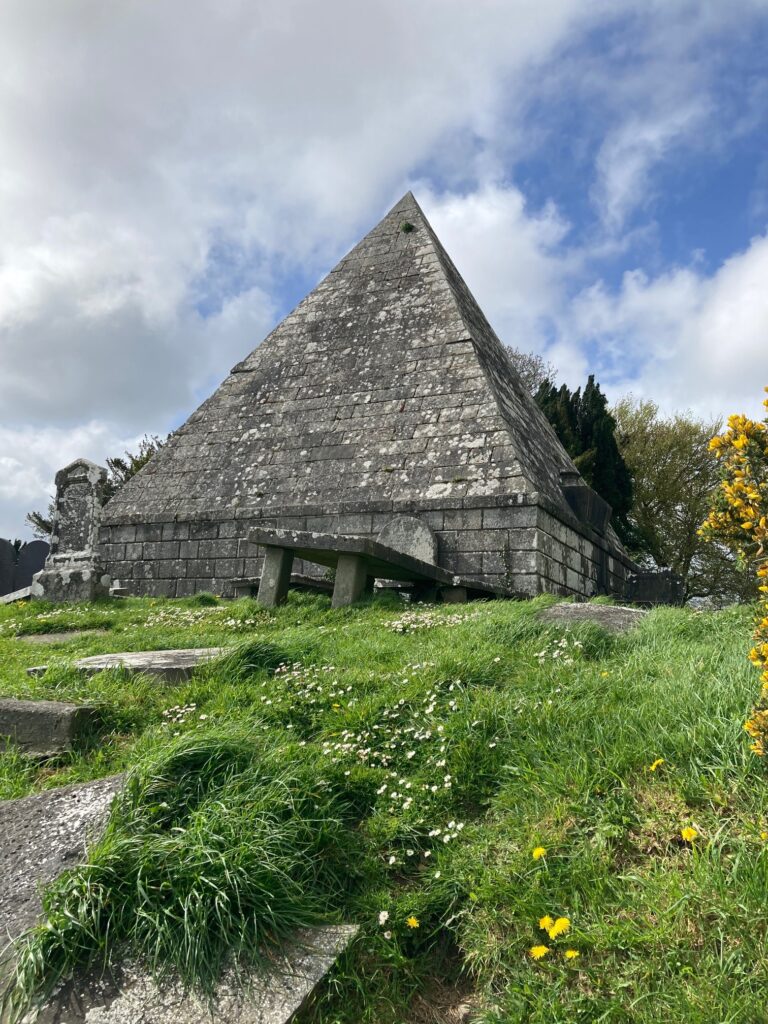
Only in Ireland do you discover that the country’s biggest pyramid is half an hour from home and had been sitting there all along.

So I went.

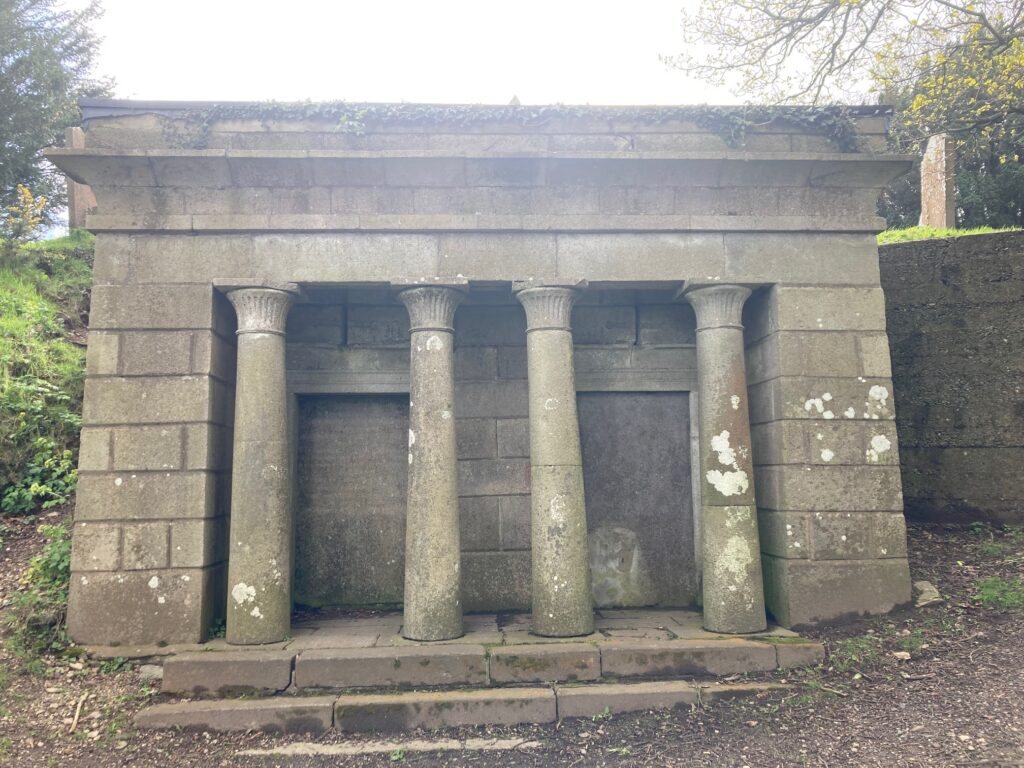
The Howard Mausoleum is worth the visit. Its location is strange from the outset — isolated, slightly uncanny, set down in the landscape with no need to explain itself. Beside it stands a Greek temple. And the pyramid itself has real presence: solid, heavy, unyielding, built not as ornament but as statement. Inside, there was space for 33 burials.

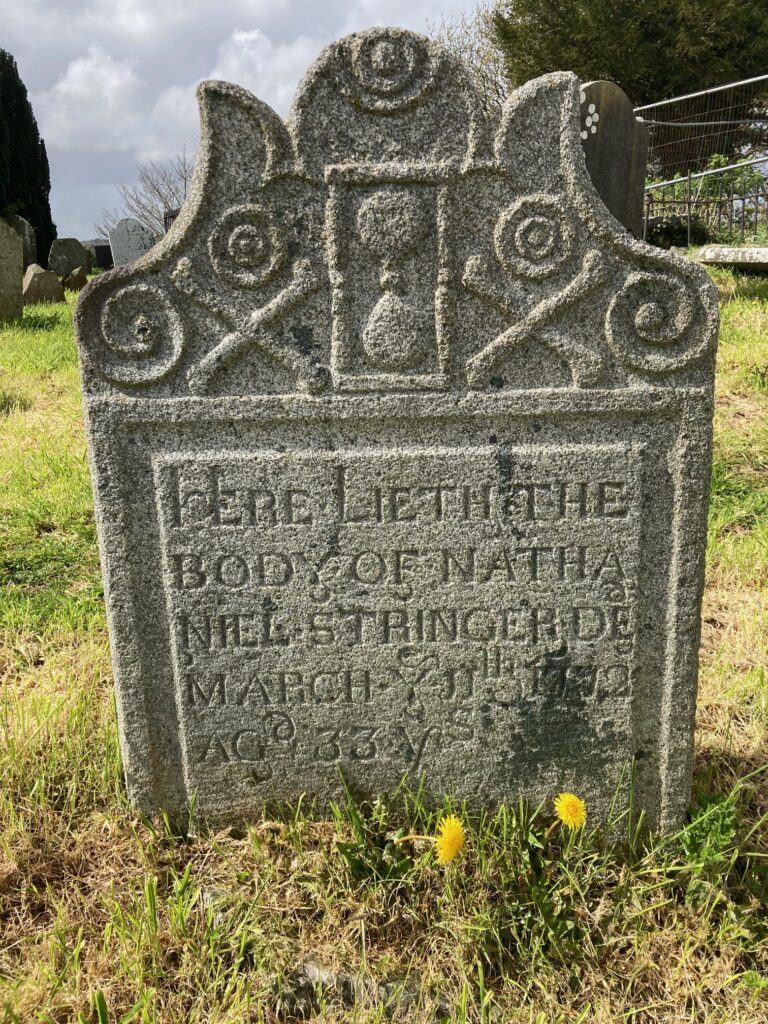
That number stayed with me when I noticed the gravestone of Nathaniel Stringer: dead at 33, on 11/3. One of those details that means nothing, perhaps. Yet still catches in the mind.

Then there was the woman.

As I walked the grounds, I saw her lying behind a gravestone. Not mourning in any obvious way. Not resting either. Just there. When she rose, she gave no eye contact, no hello, no how’re you doing — very un-Irish in that silence. She walked back without a word to the taxi waiting outside. I left at about the same time.

Places like that make you wonder what else lies underneath. Old sacred ground is rarely used only once. New faiths, new families, new monuments — they build over what came before. A tomb may be eighteenth century. The pull of the place may be far older.

Then I got home and heard the final layer: that the tomb was sealed after a baby was buried there in the 1800s, and that afterwards people said the screams of the tormented child could be heard from within.

That, too, felt Irish.

A pyramid. A temple. Thirty-three spaces for the dead. Silence in the graveyard. And the old certainty that stone remembers more than it says.

Where the Story Thins

As second-date suggestions go, walking Trevor Deely’s route through Dublin was an unusual one.

However, it was a mutually agreed one.

It was daytime. Cold, dry, and bright.

Before we started, she told me she had a feeling that somewhere on the walk, something had happened. She said it simply and left it there.

Later, on Haddington Road, I stopped and said that I did not think he had walked beyond that point.

She looked at me and said that this was where she had felt it too.

That was the interesting thing.

Not because it proved anything. It did not. But because sometimes a place refuses the story made for it. You can hear an official version from a distance and it sounds tidy enough. Then you stand on the ground itself and it starts to thin in your hands. One only needs to visit Praia Del Luz, boots on the ground to begin asking questions around the official narrative regarding Madeline McCann. It was the same here.

The canal idea always struck me as obvious tripe. Too neat. Too convenient. Trevor’s last confirmed sighting was on Haddington Road, way past the canal, walking toward the Beggars Bush area, and Garda appeals have long focused on the unidentified man seen near his office and again shortly after him on CCTV.

It was interesting too to learn that it was the weekend Bill Clinton was in Dublin. Accounts of the case say roads and security arrangements were altered, bins and skips were emptied, and manhole covers were checked before any meaningful search for discarded evidence could happen. That does not prove anything in itself. But it adds another layer of strangeness to a case that already resists easy explanation.

And then there was the setting itself. Trevor worked in investment banking, only a few years before one of the greatest financial crashes in modern history. That too may mean nothing. But when an impressionable young man with banking access disappears into a city still flush with late-boom confidence, and the last ground on which he feels real is a short stretch of road in Dublin 4, the imagination does not need much encouragement.

What stayed with me was simpler than theory.

Two people walking through Dublin in the cold sun, and both feeling, at the same point, that the official map had gone thin.

That is rare.

Not proof.
Just recognition.

Sometimes that is enough.

Half the World Away

I found Oasis’s Half the World Away in Hobro in 2024.

Some songs arrive as entertainment. Some arrive as truth. This one arrived as recognition.

By then, much of my old life was still standing in the outer world, but inwardly it had already begun to fall away. That is a dangerous phase in a man’s life. He is still present in the visible structure, but no longer belongs to it. He can still perform the role, but the role has gone dead in his hands.

That was Hobro.

The song is not about collapse. It is about misplacement. It is the sound of a man who knows he is not where he should be. There is no panic in it. No pleading. Just the quiet knowledge that the ground under him is not his ground.

That is what struck me.

There are times when life does not fail in one dramatic blow. It simply becomes false. The outer frame remains, but the spirit has already stepped away. A man feels it first as restlessness, then as distance, then as truth. He sees that what once held him no longer does. He understands that staying too long in the wrong place can do more damage than leaving.

Hobro was not home. It was a waystation where that fact became impossible to ignore.

Looking back, I can see the song named something before I did. My problem was not that I was lost. My problem was that I was living on the wrong ground. That is a harder thing to admit, because once a man sees it clearly, he cannot remain innocent. He must either move, or consent to his own diminishment.

Some men are built for settled fields and known roads. Others are made for crossings. They know, even when they resist it, that life comes alive again only when they leave dead terrain behind.

That was the gift of the song. It gave shape to a truth I was already living.

Not broken.
Not beaten.
Not finished.

Just half a world away from where I was meant to be.

And sometimes that is the beginning.

55 : The Gap and The Gain

I am 55 today.

“Road to Nowhere” is playing in the background. It fits, but not in the way it once might have.

Not because I am lost.

Because a life lived honestly is never a straight road. It is crossings, weather, wrong turns, departures, and long stretches where there is no map, only instinct. Only later does it look like a line.

A birthday is a good day to take stock.

Not the polished version. Not the public story.

A clean ledger.

What was gained.
What was lost.
What was escaped.
What changed.
What returned.


That brings me to the gap and the gain.

The past year was not cosmetic. It was structural.

I stepped away from old gravity — obligations, expectations, patterns that no longer fit. I made space. Not comfortable space, but real space.

In exchange came something harder, and more valuable:

Freedom.
Optionality.
Control over direction.

Not imagined freedom.

Built freedom.

That is gain.


I sharpened too.

I see faster now:

  • weak systems
  • false narratives
  • arrangements that don’t hold

I leave sooner. I trust the signal sooner. I waste less time trying to keep dead things alive.

That is gain.


Life has also become responsive again.

There has been movement. Energy. Intensity.

Moments where something real is felt immediately, without explanation. Moments that remind a man that life is not behind him, but still very much in front of him.

That is gain.


Confidence has returned with it.

Not performance.

Evidence.

Enough to stand differently in one’s own life.

That too is gain.


And yet the gap remains.

Not everything that matters continues.

Some moments are real, vivid, alive — and still do not become more.

Not failure.

Unfinished.

A note that stays in the air a little longer than expected.

That is the gap in its most human form.


The error is simple.

Allowing the unfinished to outweigh the achieved.

Letting what did not fully come to shore obscure what clearly did.

That is not a moral failure.

It is an error of accounting.


So the ledger at 55 is this:

The gain:

  • a life structurally changed
  • greater freedom and control
  • sharper judgement
  • renewed energy
  • forward momentum
  • proof that life still answers when engaged properly

The gap:

  • not everything resolved
  • not everything carried forward
  • not every moment became a chapter
  • gains not always fully realised or optimally banked
  • occasional hesitation at the point where action was required

The position now

No delusion.

No self-congratulation.

Just accuracy.

I do not need to be finished.
I do not need to be settled.

At 55, the correct posture is simple:

under sail

Not drifting.
Not docked.

Moving.


This is not the end of the journey.

But it is not open sea either.

It is one of those islands a man is glad to reach.

A place where life answers him again.

He does not stay forever.

But he does not deny that he arrived.


The gap remains.

It always will.

But so does the gain.

And at 55, I would rather live like a man who knows the difference.

Limerick, Waterford, and the Roads Between

I went to Limerick to face a younger man.

Twenty-eight and a half years ago, I had an MRI scan that resulted in me being told I might never walk again. Some sentences do not fade. They divide a life. There is the man before them, and the man after.

I wanted to stand again where that fracture began. Not for closure. I have no use for that word. I wanted to look back at the man who heard it, and at the road he took afterwards, with all that followed from it, for better and for worse.

Ireland can do that. It can alter the course of a life without warning, and only decades later do you see the full shape of the turn.

I visited a few places in Limerick, but took no photographs. It seemed wrong somehow. Not every place should be converted into an image. Some are better left as encounter.

And yet Limerick, appropriately enough, also gave me a limerick:

There once was a man from Hobro
Who knew it was time to go,
And start a new life
Without all that strife,
And so he went off to Wicklow.

A joke, obviously. But not only a joke.

From there I drove on, meaning to see Cahir Castle, and instead found myself halted by something else: one of the most beautiful churches I have seen in Ireland.

You could see it from far off. Protestant Gothic. Intact, solid, self-possessed. Built in 1818 and designed by Nash, it immediately pulled me toward the age I so often meet in the earth and on the beaches: the late Georgian and Regency world, the world of old copper, worn silver, and the coins that still surface beneath the grass and sand. Then there was the door, painted a challenging orange. In Ireland, orange is never merely orange. History still speaks through colour.

Then Dungarvan.

A beautiful seaside town, but one marked by subtraction. You can feel the railway’s absence in the place. The town remains handsome, but the old line still haunts it. The Greenway now runs through that lost corridor, with so much railway architecture still standing that the old movement has not entirely gone. It has only changed form.

Then Waterford.

The energy shifted again. Medieval, certainly, but not trapped in its own past. Some towns feel burdened by memory. Waterford did not. It felt old, but still open. Less weighed down by what it had been. More alive to what it may yet become.

That, perhaps, was the shape of the journey.

Limerick was reckoning.
Cahir was surprise.
Dungarvan was beauty marked by loss.
Waterford was old stone with forward motion still in it.

Tomorrow I will head home. But first there is Waterford city centre, and perhaps, if the weather opens, a new beach or two to detect. I have already identified them.

Then Passage East, literally. A rarity now: a car ferry between Irish places. After years in Denmark, I like the thought of that more than I should. Driving onto a boat, crossing a stretch of water, and letting it put me down elsewhere. Not exile. Not escape. Just passage.

And then home.

And perhaps that is enough for now: not answers, but movement.

Who Ate All the Pies?

I had just come back from Consett, which still feels like home in some older sense, and went through security at Newcastle Airport.

It was busy. The gates were full. The trays moved forward in a slow line under the white lights. The staff were in no mood to wave anything through. They were checking everything properly, or at least thoroughly, which is not always the same thing.

Then my tray slid off for inspection.

That feeling came at once. The small drop in the stomach. There were five trays ahead of mine in the queue and no way round it.

The man in front had already been stopped. He opened his bag. They took out some bananas and swabbed them. He turned and shouted something in Polish to his friend about the delay and his banan, half angry, half laughing, while they tested the fruit as though it might bring down the airport.

When they gave the bananas back, he looked at me and smiled. Not much. Just enough to say that now it was my turn.

Then they opened my bag.

The suspicious item was a few corned beef pies I was bringing back with me.

The woman opened the clear plastic bag carefully. She was about to take them out. I said, “They’re pies. Can I get them out for you?”

That changed it.

You could see it happen. Something in her face shifted. The programme broke for a second. She looked slightly embarrassed, as though she had suddenly seen herself from outside and did not much like what she saw.

No, she said, and put them back in the bag.

That was all.

But it stayed with me.

A man has his bananas swabbed. Another man has his pies inspected. Everyone stands there under the lights, waiting, obedient, serious, playing his part. The staff play theirs too. That is how much of life is now. Not evil. Not dramatic. Just people inside systems, doing what the system says, until the thing itself becomes too foolish to ignore.

Then sometimes the spell breaks.

A pie is a pie again. A person becomes a person again. For a moment the machine weakens and common sense comes back into the room.

Then the trays moved on. The airport survived.

Who ate all the pies? Me, of course. The last one disappeared at breakfast today.

Until The Tide Turns

I went back to the favoured beach yesterday.

The shingle has already begun to return.

What was open weeks ago is now half-sealed. Large stretches are silent again. Only selected corridors of exposed sand remain workable — thin veins between stone.

You can feel the closing.

I moved further up the coast than usual. A stretch I hadn’t worked properly before. The signals were immediate. Dense. Layered. The kind of day that makes you realise how rare the conditions have been.

Storms strip. Tides expose. Then the sea takes it back.

What is available now may not be available again for years. And if it opens again, will I even still be here to walk it?

That isn’t sentiment. It’s timing.

So I am recording this day properly.

The depth of finds. The spread. The density. My assessment of the ground while it is still readable.

I have yet to see a metal detecting video with this level of single-day intensity.

The photograph above is everything recovered in one session.

I will go through them in turn.

The Georgian Layer — George II, III, IV

Before coming here I had barely handled a Georgian coin.

Now the album thickens.

Yesterday I lifted three in one tide — George II, George III, George IV. Three reigns from one strip of sand.

The George II is 1747. Hibernia, the harp. Mid-18th century confidence. Protestant ascendancy intact. Parishes full. Structures certain of themselves.

George III follows — longer reign, longer shadow. Revolution in America. Union with Ireland. Empire consolidating even as strain increases.

Then George IV. Factory-milled. Cleaner edges. Sharper strike. Hardly worn. Dropped close to new. It did not travel far before the sand took it.

That detail stays with me.

Some coins pass through decades of hands. Others fall almost immediately. History is not evenly circulated.

George II appears more often here than III or IV. That suggests density — of trade, of settlement, of mid-18th century movement along this coast. The beach offers hints, not conclusions.

Three kings.
Nearly a century.
All reduced to copper discs surrendered to tide.

The sand does not rank reigns.

It records loss.


Private Money — Camac, 1792

Two more from the same stretch.

Both dated 1792.
Both Camac.

Not royal issues. Merchant tokens. Private money struck in Dublin when official copper ran thin.

When the state cannot supply enough small change, commerce improvises.

These pieces often carry more copper than the crown’s own issue. Heavier. Honest metal, struck to keep exchange alive.

Shortage precedes adaptation.

Barter yields to token.
Token fills the gap the state cannot.

The year matters. 1792 sits just before fracture — before 1798, before rebellion. Monetary improvisation often arrives before political rupture.

These tokens are small, but they speak clearly.

Confidence thins.
Supply falters.
Private actors step forward.

The beach makes no distinction between crown and merchant.

It receives both.

And returns them centuries later without preference.


Empire Copper — Victoria and George V

These are not the thick Georgian discs of mid-eighteenth century Ireland.

They are imperial copper.

Victoria.
George V.

By now Ireland is no longer semi-separate in coinage. There is no distinct Hibernia seated in quiet autonomy. The designs align fully with London. The empire standardises.

One currency.
One monarch.
One system.

On the surface, it suggests strength.

And yet these coins feel different in the hand.

They are thinner. The relief softer. The surfaces seem less resilient than the Georgian pieces — despite being a century younger. They have not endured the salt in the same way.

Mass production replaces solidity.

The Victoria is administration. Industry. Railways. Bureaucracy. Expansion at scale.

The George V carries another weight entirely.

I found it among brass.

Fragments of shell casing. Twisted scrap. Repeated false signals. I had to dig through war to reach coin.

This stretch of coast feels militarised. A training ground once. Drills before embarkation.

George V was struck in a time of mobilisation, not confidence.

Did it fall from the pocket of a young man practising here before being shipped to France?

Perhaps.

The detector cannot answer that.

But the layering is undeniable:

Copper.
Brass.
Empire.
War.

The Georgian coins feel rooted in land and trade.

The Victorian and George V pieces feel industrial — faster, thinner, more uniform.

Peak empire often looks secure.

Its metal sometimes looks strained.


Lead and Brass

After copper comes lead.

A musket ball.
Unused.

It was cast to fly and never did.

No flattening. No impact scar. Just intention, suspended.

Eighteenth century? Early nineteenth? The coast has seen volunteers, militia, watchful men facing outward across the Irish Sea. Days of Napoleon. Days of fear.

Not far from where I found the Napoleonic button.

Preparedness without discharge.

Then brass.

A star.

Pre-1922 Irish Dragoons.

Cavalry. Imperial Ireland in saddle and sabre.

Now the layers tighten.

Musket lead.
Georgian copper.
Victorian administration.
George V war coin.
Shell fragments in the sand.

Was it one man who lost the halfpenny and the badge? One pocket shedding pay and insignia in the same wind?

Or are we forcing coherence on a beach that collapses centuries into one afternoon?

There is no answer.

Only proximity.

Napoleonic unease.
Victorian certainty.
Edwardian mobilisation.
1914–18.
1916–22.

A lifetime could have spanned all of it.

The badge says service.
The musket ball says readiness.
The coin says wage.

I hope he survived what he trained for.

And what followed.

The tide does not record who returned.

It keeps the metal.

And waits.


Modern Ireland — Freedom, Imitation, Union

Then the newer layer.

Independence.

Or stages of it.

A Free State penny.

Same size as the imperial penny.
Same copper weight.
Same diameter in the hand.

The monarch removed.
The harp retained.
Form preserved.

Revolution often keeps the mould.

It looks different.
It feels familiar.

Was that continuity pragmatic — or psychological?

Would Michael Collins have approved of how the arc continued?

Then come the decimals.

Two 2p.
Two 10p.

Decimalisation in preparation. Not merely convenience — alignment. A stepping stone toward something larger.

The geometry changes.
The system shifts.

National copper becomes transitional metal.

Then the euro.

A 10 cent piece.

Not sovereign currency.
Not imperial either.

A different structure entirely.

Monetary union.
Centralised issuance.
Contribution upward.

Some call it integration.
Some call it tribute.

The beach does not argue ideology.

It simply layers evidence:

Imperial penny.
Free State imitation.
Decimal prelude.
Euro coin.

Three stages of independence.
Then absorption into something wider.

Empires change form.

Copper remains.

The harp survives on some pieces.
Disappears on others.

The tide is indifferent.


Buttons — The Smallest Losses

Coins speak of systems.

Buttons speak of people.

I have a jar full of them now.

Not modern plastic. Not disposable moulded convenience. These are metal. Cast. Pressed. Sometimes lathe-turned. Some clearly handmade. Imperfect. Individual.

Many likely date to the 1700s. Some perhaps earlier. The shanks are hand-soldered. The backs show tool marks. The fronts still carry faint crests, simple patterns, the geometry of another century’s clothing.

They are beautiful.

We underestimate how much craft once went into small things.

A button was not trivial. It secured coat against wind. Cloak against rain. Shirt against exposure. On this coast, that mattered.

I imagine a travelling man walking the strand in the 18th century. Long coat. Salt air. Wind pulling at cloth. A button gives way. Falls into shingle. Gone.

No easy replacement. No shop on every corner. No cheap packet of ten.

Loss meant inconvenience. Repair required skill.

Each button here represents a small moment of irritation. A pause. A hand patting at a coat and finding absence.

Some are plain. Some carry regimental markings. Some are decorative, worn on civilian jackets. One bears the mark of a manufacturer long vanished.

They outlasted the garments they once held together.

The fabric rotted.
The wearer died.
The empire shifted.
The tide moved.

The button remained.

There is something deeply human about them.

Coins are circulation.
Badges are allegiance.
Musket balls are intent.

Buttons are daily life.

A jar full of minor inconveniences from three centuries.

The beach gives them back one by one.

And I keep them.


The Copper Disc and the Cameo Frame

Not everything lost here was currency or service.

Some pieces were intimate.

A simple copper disc. No inscription. No monarch. Just a worked circle with a central pierce.

Was it a makeshift token? A washer repurposed? Or part of something decorative — perhaps once polished, perhaps once mounted?

Copper oxidises beautifully. Even now, it carries colour.

And then the frame.

Oval. Delicate. A small suspension loop still intact.

Almost certainly Georgian.

A cameo once sat within it. A miniature portrait. A profile. A lock of hair. A loved face carried close to the chest.

The glass is gone.
The image gone.
The sentiment gone.

Only the surround remains.

It is the opposite of coinage.

A coin is designed for circulation.
A cameo is designed for closeness.

Someone wore this.

Someone fastened it in the morning.

Someone lost it — perhaps without knowing until much later.

There is something unsettling about finding only the frame.

The empire fades.
The copper endures.
The portrait disappears.

What we carry closest is often the first thing surrendered to time.

The beach does not prioritise power.

It preserves fragments.

A disc with no name.
A frame with no face.

And yet they feel heavier than some of the coins.


The Penknife and the Fragments

Not all finds are symbolic.

Some are simply tools.

A penknife.

Modern by comparison. Steel still recognisable beneath the sand. Hinges stiff with salt. Once carried in a pocket, opened for rope, twine, food, small repairs.

A working object.

It does not belong to empire or rebellion. It belongs to habit. To hands. To ordinary days on the coast.

Someone used it.
Someone dropped it.
Someone replaced it.

Even here, the layers compress. Georgian copper lies metres from stainless steel.

Time folds.

Then the scraps.

A flattened strip of copper alloy.
Another narrow blade-like piece.
A small round disc, lead or pewter perhaps.

One fragment could be the broken tip of a lead spoon. If so, it once stirred porridge or broth in a cottage not far from here. Lead spoons were common. Cheap. Soft. Repairable until they were not.

The coastline keeps the leftovers.

The broken end.
The snapped piece.
The part no longer useful.

Coins are deliberate loss.

Fragments are accident.

Yet they tell as much.

A civilisation is not only its crowns and crests.

It is also its cutlery.

Its pocket tools.

Its worn-out metal repurposed until it fails.

The penknife reminds me of something simple:

Every era believes it is modern.

Every era leaves rust.


The Keys

I find so many keys.

Almost as many as coins some days.

Three here alone. All different teeth. All once precise.

Each one cut to open a specific door.

A cottage.
A barracks room.
A shed near the dunes.
A rented house by the sea.

A key is intimate authority.

It is trust made metal.

Someone carried these daily. Slipped them into a pocket. Felt their weight without thinking. The small reassurance of access. Of entry. Of belonging somewhere that closed against the wind.

And then — loss.

A fall from a pocket.
A hole torn in lining.
A moment of distraction in sand.

The door remained.

The key did not.

There is something stark about that.

Coins can be replaced.
Buttons can be resewn.
Badges reissued.

A lost key means exclusion.

Somewhere along this coast a man returned to a locked door and felt the cold certainty of inconvenience — or worse.

These are not ceremonial keys.

They are ordinary.

Mass-cut. Functional. Twentieth century perhaps. No romance.

And yet they speak loudly.

Keys are about control. About ownership. About territory defined by a lock and a threshold.

Empires issue currency.

Homes issue keys.

I find them in clusters.

Sometimes I wonder how many of those doors still stand.

The sand has no use for access.

It receives the instrument of entry
and leaves the door behind.


The Unknown Coin

And then this.

A coin with no face.

No monarch.
No harp.
No date.

Time has erased it.

The outline remains. The weight remains. The diameter tells me it once mattered enough to be struck deliberately.

But its allegiance is gone.

It might be Georgian.
It might be Victorian.
It might be local token or foreign drift.

It resists classification.

And there is something fitting about that.

I have spent the day assigning eras.

George II.
George III.
Victoria.
George V.
Free State.
Euro.

Each coin neatly slotted into a chapter of history.

This one refuses.

It has been in the sea long enough to forget.

The face worn smooth. The message dissolved. The authority flattened into anonymity.

Perhaps that is the final stage of all currency.

First it commands.

Then it circulates.

Then it corrodes.

Then it becomes simply metal.

The unknown coin is honest.

It does not carry narrative.
It does not wave a flag.
It does not argue sovereignty.

It is just copper that survived.

There is something almost liberating in that.

Empires insist on inscription.

The tide insists on erosion.

In the end, everything becomes an unknown coin.

And perhaps that is the most truthful state of all.


The Guinness Badge

And finally, this.

A small enamel badge. Guinness pint still visible beneath corrosion. The glass upright, white head intact in miniature.

Likely 1930s to 1950s.

Not ancient. Not imperial. Not revolutionary.

Just Irish.

By then the empire was gone. The Free State had become the Republic. Flags had changed. Allegiances redefined.

But Guinness endured.

It is almost comic in its steadiness.

Kings fade.
Currencies shift.
Empires dissolve.
Rebellions harden into administrations.

The pint remains.

This badge was once pinned to a lapel. Worn with quiet pride perhaps. Or simple affiliation. A night out. A railway platform. A coastal stroll after work.

It speaks not of conquest, nor mobilisation, nor monetary union.

It speaks of habit. Of culture. Of something rooted enough to survive regime change.

There is something grounding about ending the day with it.

After Georgian copper.
After private tokens.
After Dragoon brass.
After Free State imitation and euro alignment.

A pint.

Not ideology.

Not sovereignty theory.

Just continuity of a different kind.

Commercial. Cultural. Familiar.

The tide does not care.

But I do.

Because this badge feels like the most honest artefact of the lot.

Not power.
Not command.
Not authority.

Just belonging.

And perhaps that is what survives longest of all.

« Older posts

© 2026 The Dunwiddie Post

Theme by Anders NorénUp ↑