I went to Limerick to face a younger man.
Twenty-eight and a half years ago, in that city, I had an MRI scan that resulted in me being told I might never walk again. Some sentences do not fade. They divide a life. There is the man before them, and the man after.
I wanted to stand again where that fracture began. Not for closure. I have no use for that word. I wanted to look back at the man who heard it, and at the road he took afterwards, with all that followed from it, for better and for worse.
Ireland can do that. It can alter the course of a life without warning, and only decades later do you see the full shape of the turn.
I visited a few places in Limerick, but took no photographs. It seemed wrong somehow. Not every place should be converted into an image. Some are better left as encounter.
And yet Limerick, appropriately enough, also gave me a limerick:
There once was a man from Hobro
Who knew it was time to go,
And start a new life
Without all that strife,
And so he went off to Wicklow.
A joke, obviously. But not only a joke.
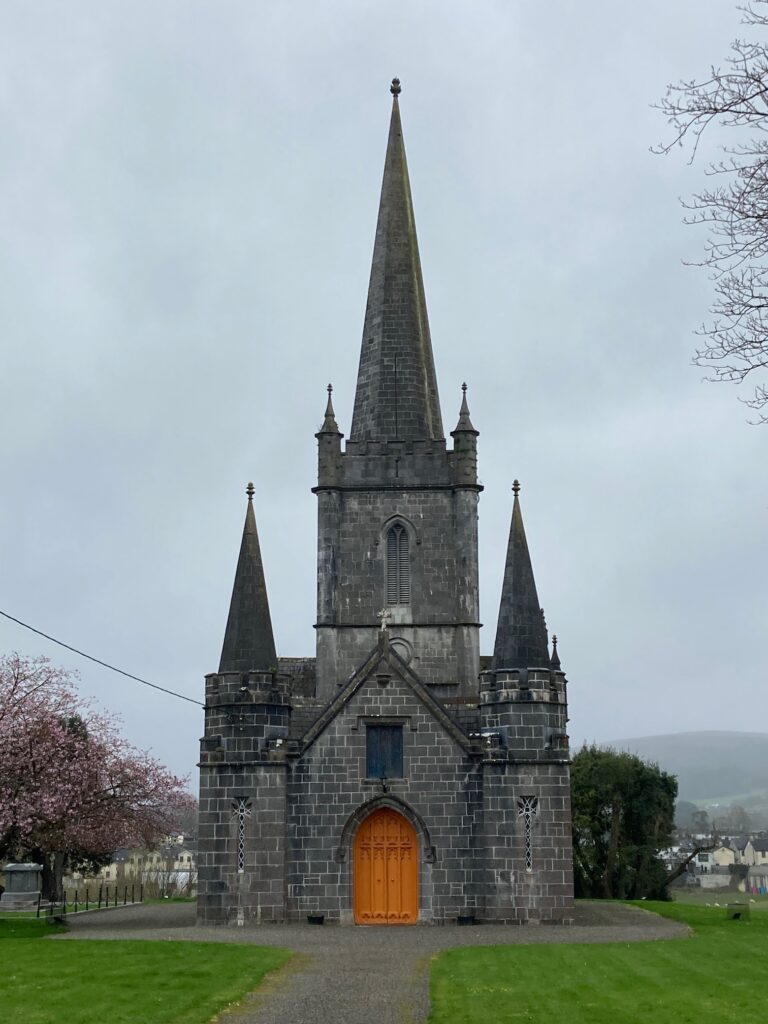
From there I drove on, meaning to see Cahir Castle, and instead found myself halted by something else: one of the most beautiful churches I have seen in Ireland.
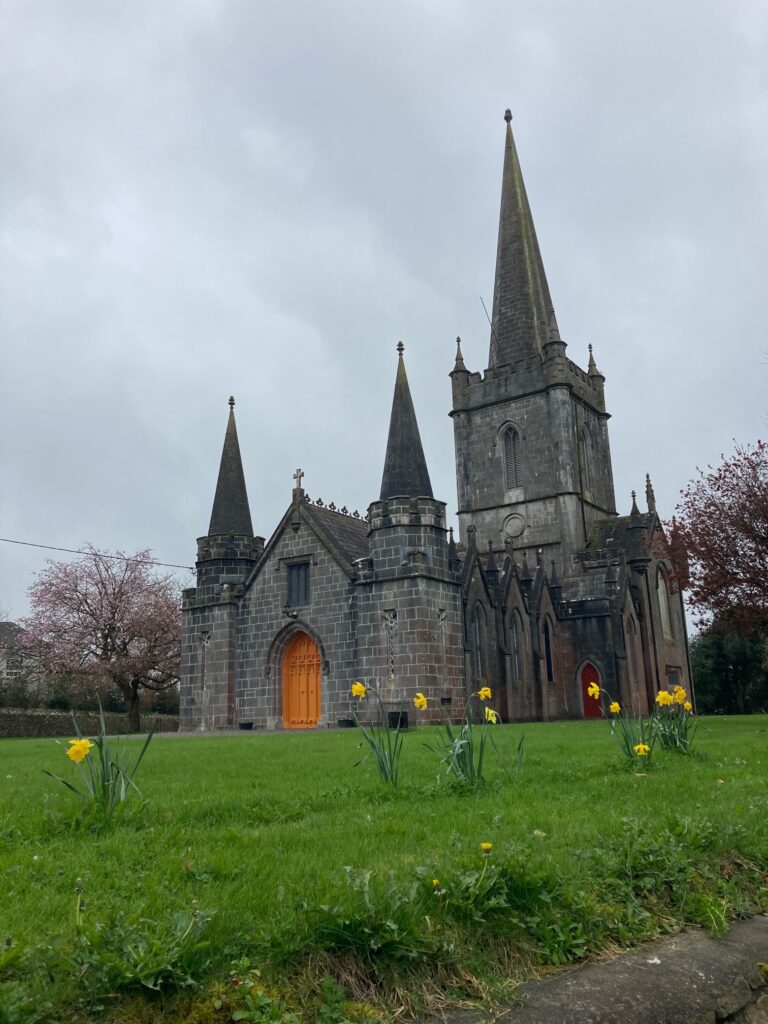
You could see it from far off. Protestant Gothic. Intact, solid, self-possessed. Built in 1818 and designed by Nash, it immediately pulled me toward the age I so often meet in the earth and on the beaches: the late Georgian and Regency world, the world of old copper, worn silver, and the coins that still surface beneath the grass and sand. Then there was the door, painted a challenging orange. In Ireland, orange is never merely orange. History still speaks through colour.
Then Dungarvan.
A beautiful seaside town, but one marked by subtraction. You can feel the railway’s absence in the place. The town remains handsome, but the old line still haunts it. The Greenway now runs through that lost corridor, with so much railway architecture still standing that the old movement has not entirely gone. It has only changed form.
Then Waterford.
The energy shifted again. Medieval, certainly, but not trapped in its own past. Some towns feel burdened by memory. Waterford did not. It felt old, but still open. Less weighed down by what it had been. More alive to what it may yet become.
That, perhaps, was the shape of the journey.
Limerick was reckoning.
Cahir was surprise.
Dungarvan was beauty marked by loss.
Waterford was old stone with forward motion still in it.
Tomorrow I will head home. But first there is Waterford city centre, and perhaps, if the weather opens, a new beach or two to detect. I have already identified them.
Then Passage East, literally. A rarity now: a car ferry between Irish places. After years in Denmark, I like the thought of that more than I should. Driving onto a boat, crossing a stretch of water, and letting it put me down elsewhere. Not exile. Not escape. Just passage.
And then home.
And perhaps that is enough for now: not answers, but movement.
Leave a Reply