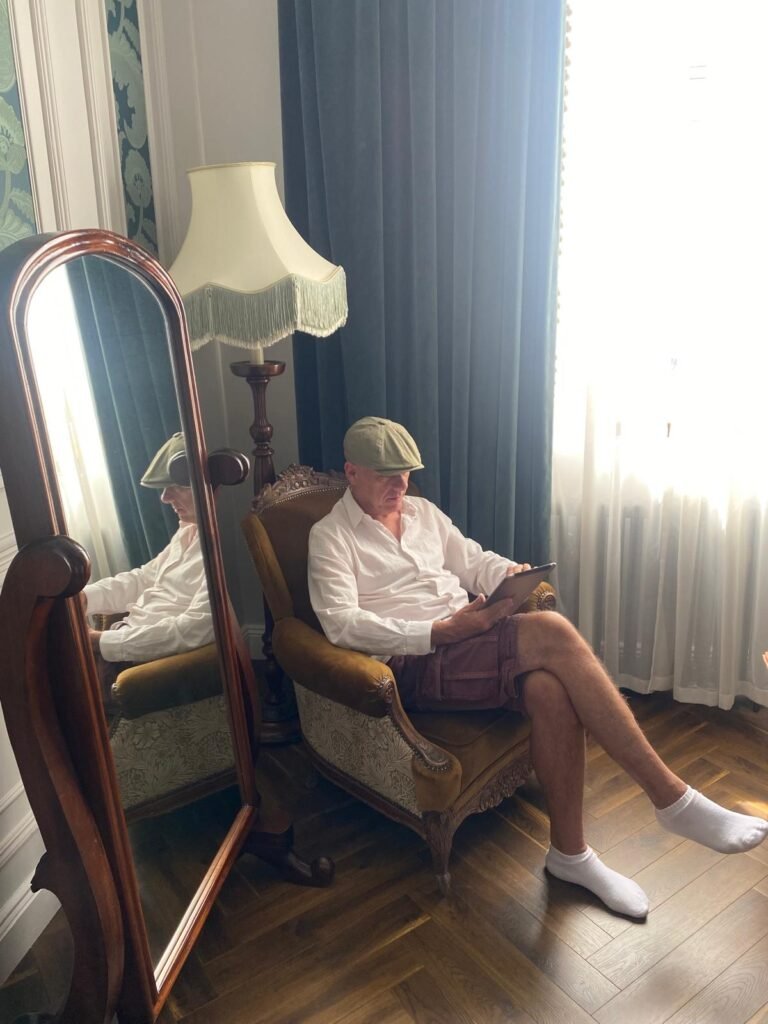
There are trips where you visit history.
Then there are trips where history starts arranging itself around you.
Staying in Cork, in Room 115 at the Imperial Hotel: the Michael Collins Suite. It sounds almost too neat, as if someone had written the itinerary after watching the film.
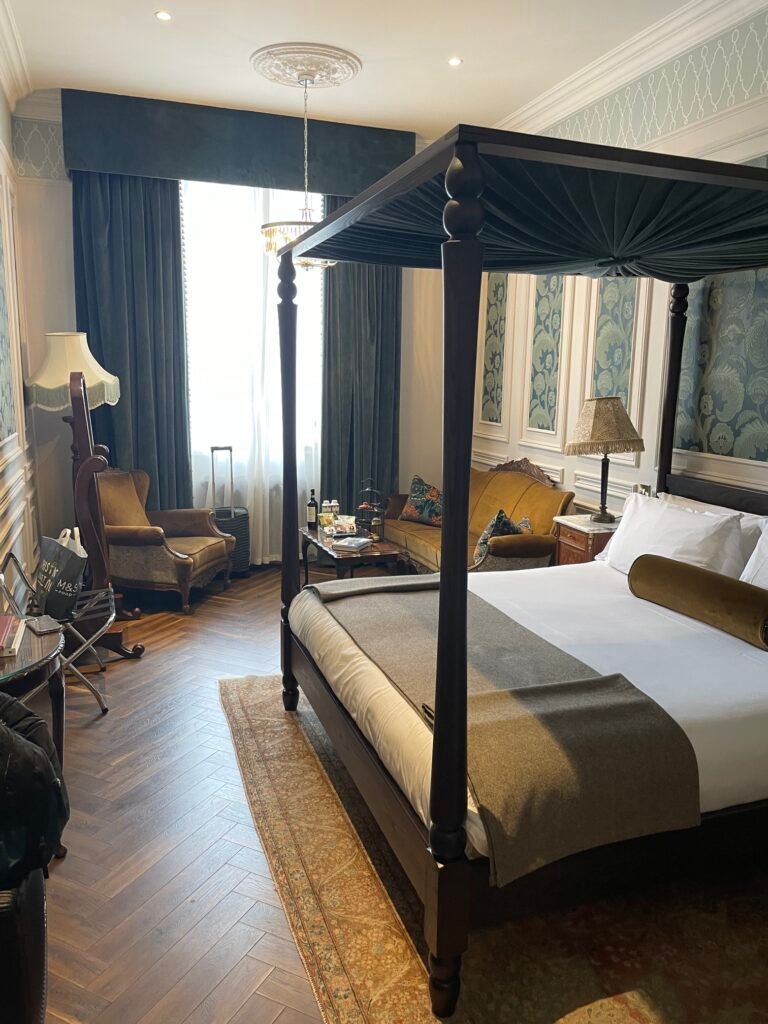
The Imperial is not just another old hotel with a plaque and a story. It sits in the heart of Cork, close to the streets that burned in 1920, close to the world Collins moved through, close enough that the whole period stops feeling like a chapter in a book and starts feeling like a physical place.
That is the strange power of staying in a historical room.
You do not simply think about Michael Collins.
You imagine him arriving.
You imagine the conversations that took place in the space you are sitting and sleeping.
You imagine the footsteps in corridors, the meetings behind closed doors, the pressure of being hunted, admired, used, opposed, and needed, all at once.
Was there anything spiritual there?
Yes.
Or at least something close to that. A sixth sense. A pressure in the room. A sense that the place had stored more than furniture, wallpaper, and hotel stories.
Was it Collins?
We do not know.
That is the only honest answer.
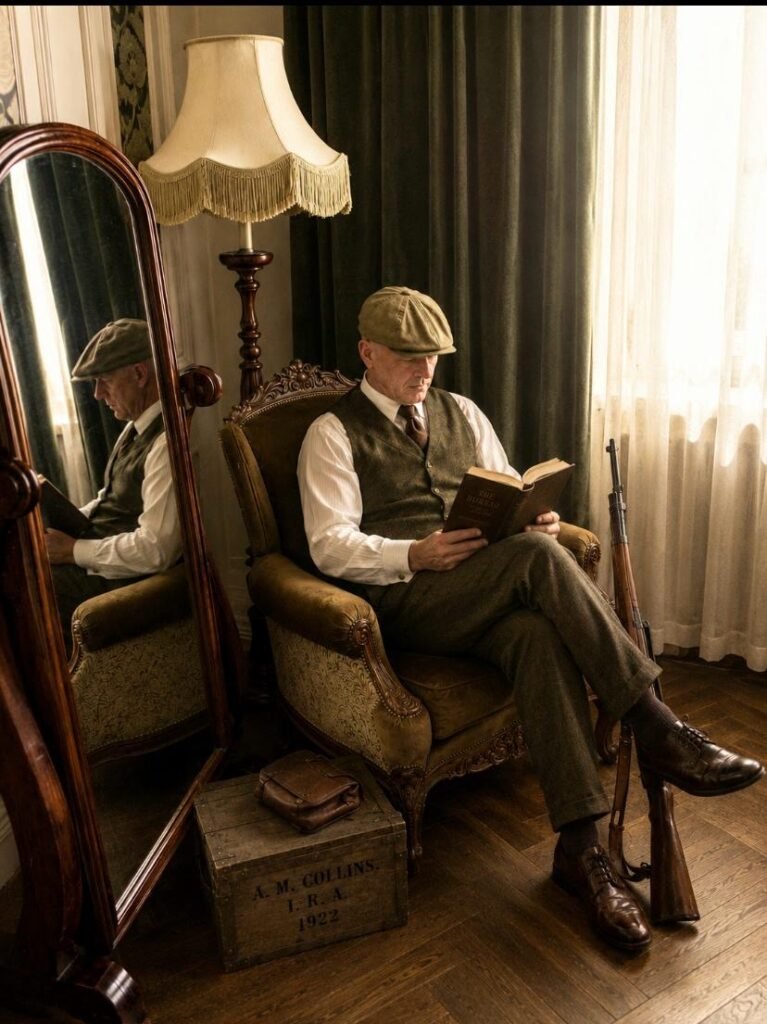
Maybe it was the room. Maybe it was Cork. Maybe it was the fact of knowing who had been there and what followed. Maybe it was the city itself, with its layers of rebellion, fire, empire, commerce, and memory pressed tightly together in a few streets.
But there was something.
Two nights mattered.
One night would have made the Imperial a curiosity. Two nights made it a base. Time to walk Cork, look around properly, take in the streets, the river, the old commercial city, the rebuilt city, the Cork that survived and the Cork that had to be made again.
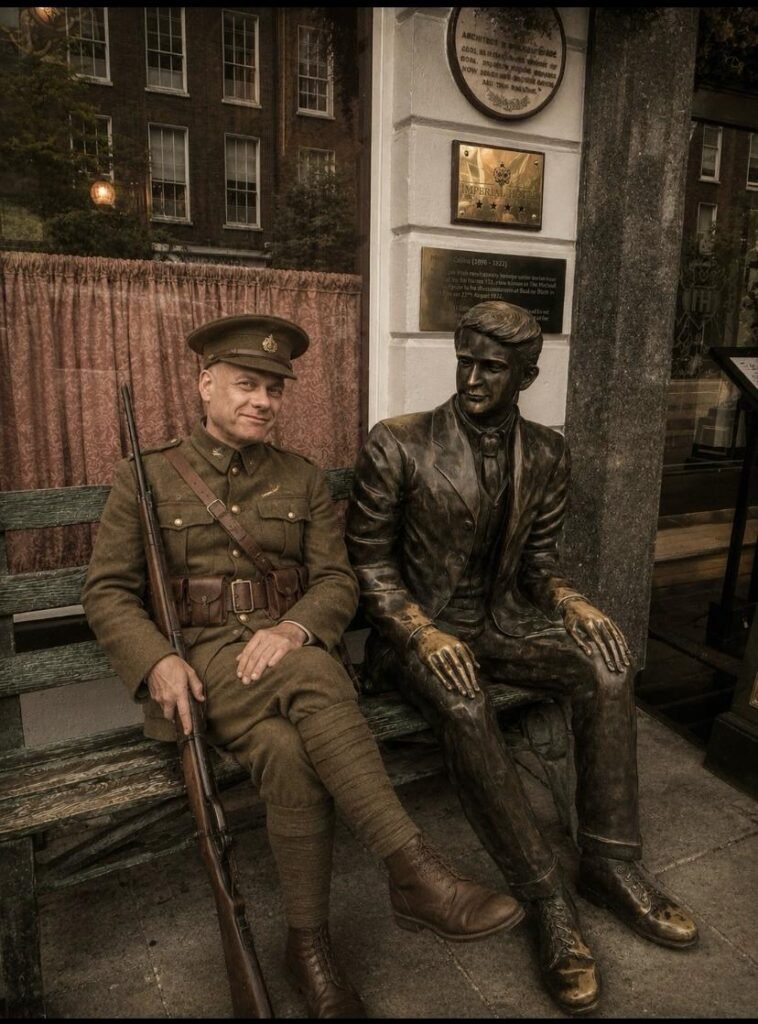
Then began the drive west.
Not as a solemn pilgrimage. Not as a checklist.
Through the country roads slowly towards Macroom, then back down towards Bandon.
That was enough.
The story arrived through bends, fields, hedges, old houses, railway ghosts, small roads, and the slow pull of West Cork.
In Bandon, the Munster and a snack. Just like Collins himself that fateful day.
That mattered too.
History is not only plaques and monuments. It is also food, weather, roads, rooms, jokes, dogs, conversations, and half-formed thoughts.
There was no stop at Béal na Bláth.
By then, the road had already done enough.
The known story is simple.
Collins travels through Cork during the Civil War. His convoy is ambushed. He stops. There is firing. He is hit. He dies.
But driving that country does not make the story feel simple.
It makes it stranger.
Why that route?
Why that level of exposure?
Why stop and fight?
Why did a man whose whole reputation had been built on intelligence, secrecy, movement, and avoiding predictable patterns end his life exposed on a road in his own county?
And why does history so often give us the same image?
A powerful man.
A public route.
An open-topped car.
Gunfire.
Archduke Franz Ferdinand in Sarajevo.
John F. Kennedy in Dallas.
Michael Collins in Cork.
Different men. Different countries. Different causes. Yet the shape repeats.
It proves nothing.
But it catches.
There is something almost theatrical about the open car. It turns status into exposure. It makes a man visible from a distance. It says: here he is. Watch him pass.
Maybe that was just how things were done.
Maybe security was primitive.
Maybe Collins trusted Cork too much.
Maybe he thought former comrades would not kill him.
Maybe the route was ordinary and only became strange because of the ending.
Maybe.
But the details remain.
The open car.
The road.
The decision to stop.
The low casualty count.
The political consequences.
The man who survived the British intelligence war did not survive a road in West Cork.
None of this gives certainty.
That is not the point.
The point is attention.
History smooths itself after the event. The rough edges get planed down. The narrative becomes clean. The questions become impolite. The dead become statues, then lessons, then slogans.
But the ground resists that.
Room 115 made Collins human.
Cork made the struggle physical.
The slow road west made the ending unresolved.
Bandon placed the story back inside ordinary Ireland: a town, a hotel, a snack, the road continuing beyond.
No need to stand at the memorial.
The trail was already there.
Sometimes history is not found by arriving at the final place. Sometimes it is found by moving through the country slowly enough for the questions to rise.
And sometimes the most honest sentence is not:
“This is what happened.”
It is:
“Look at this carefully.”