Tianjin left me with the feeling that a great deal had gone missing.
The city opened to foreign trade in 1860. Over the following decades, nine countries acquired concessions: Britain, France, the United States, Germany, Japan, Russia, Italy, Belgium and Austria-Hungary. Each secured its own patch of China. Banks, consulates, churches, clubs and houses followed.
For an inspection of the colonies, it was a promising address.
Walking around, I found only scattered remnants in their original condition. Elsewhere, it was often difficult to tell whether I was looking at a new building or an old one that had undergone extensive refurbishment and refitting. I kept wondering how much more there must once have been. I wanted to see the streets before the gaps appeared.
The Tangshan earthquake of 1976 did serious damage to Tianjin. It does not explain everything. Neglect, demolition and redevelopment have also had their turns. An earthquake cannot account for all the decisions made afterwards.
The former Italian concession was possibly the best preserved of those I visited. It was also one of the most disappointing parts of the visit. Lovely Italian Art Nouveau villas had been given a layer of tourist kitsch. Inflatables decorated some of the buildings. Modern fountains and assorted Italian flourishes completed a version of Italy that I doubted had ever existed on those streets.
At least Dalian’s imitation Venice did not pretend to be the real thing. It was an openly invented attraction. Here, genuine Italian buildings had become props in a contrived version of Italy. That was a much more ridiculous kind of fake. The history was already there. It did not need inflatables.
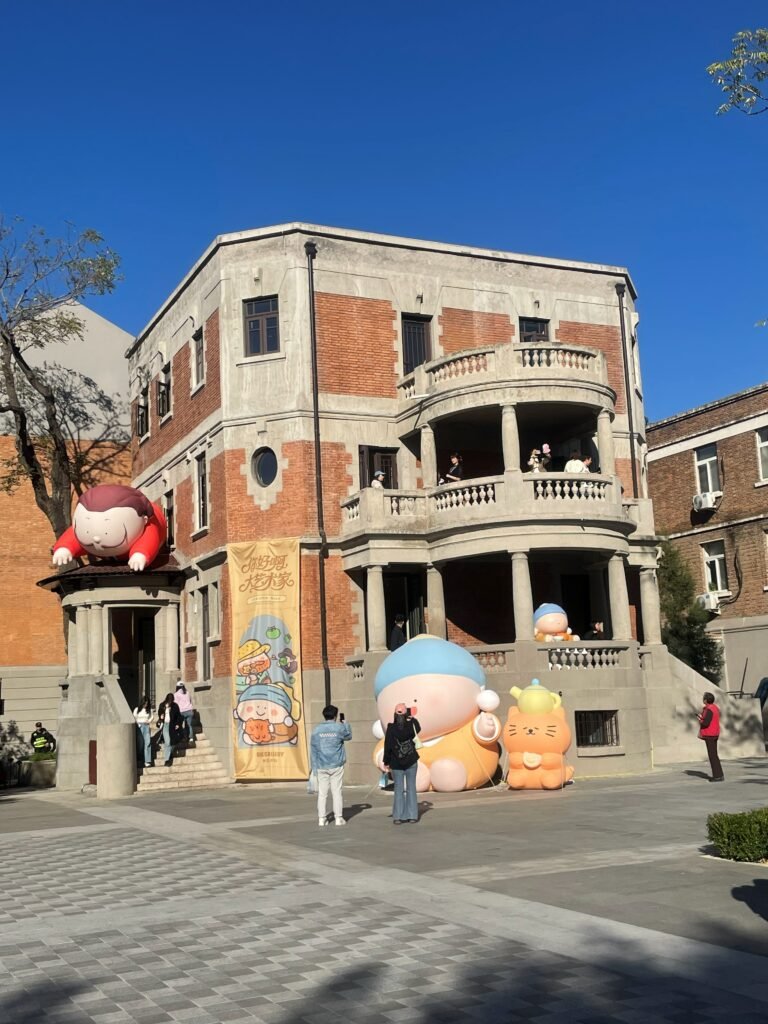
I would rather find one battered original than an entire street of modern imperial fancy dress.
The Astor Hotel was a welcome survivor. Founded in 1863 in the British concession, it had been receiving important visitors almost from the beginning. Ulysses S. Grant met Li Hongzhang there in 1879.
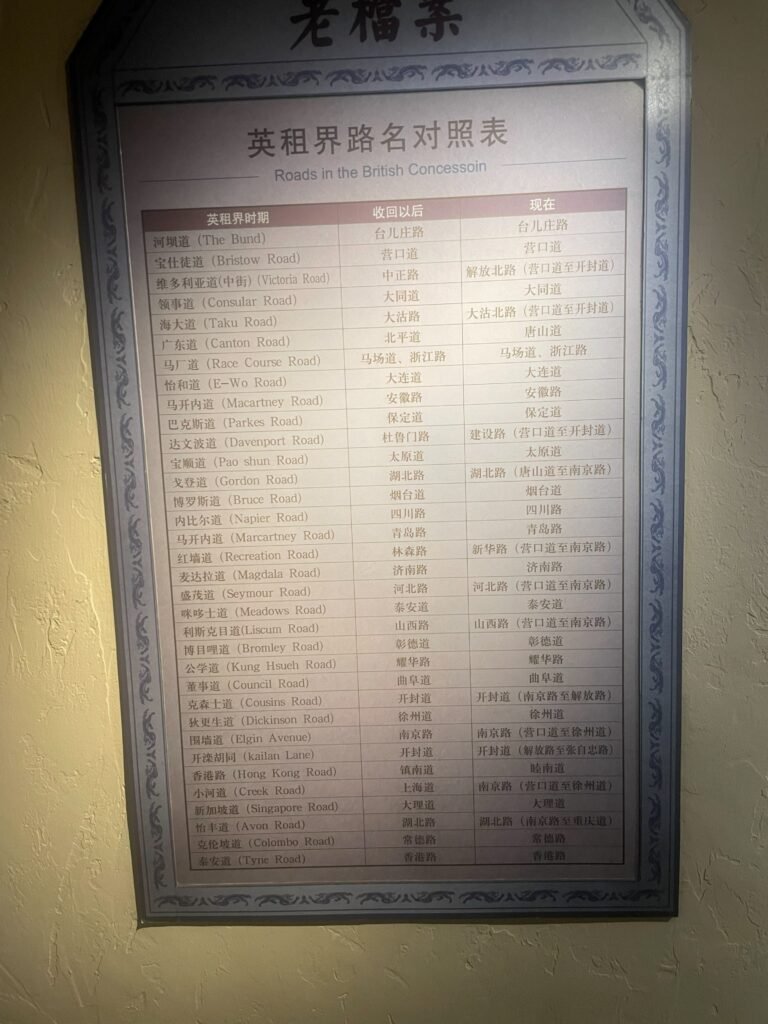
The museum was well worth visiting. Through the history of one hotel, the old international city became easier to picture: the arrivals, the business, the diplomatic encounters and the extraordinary collection of people who had passed through it. The building had witnessed several different versions of China.
An old photograph I saw there showed the German Club in its original state. It looked magnificent. Its present appearance left me wondering how much of the original I was seeing and how much had been altered through refurbishment and refitting. The photograph made me want to see the building it recorded.
Nearby I found All Saints’, the old Anglican church. Its present building was completed in 1936, following a fire the previous year.
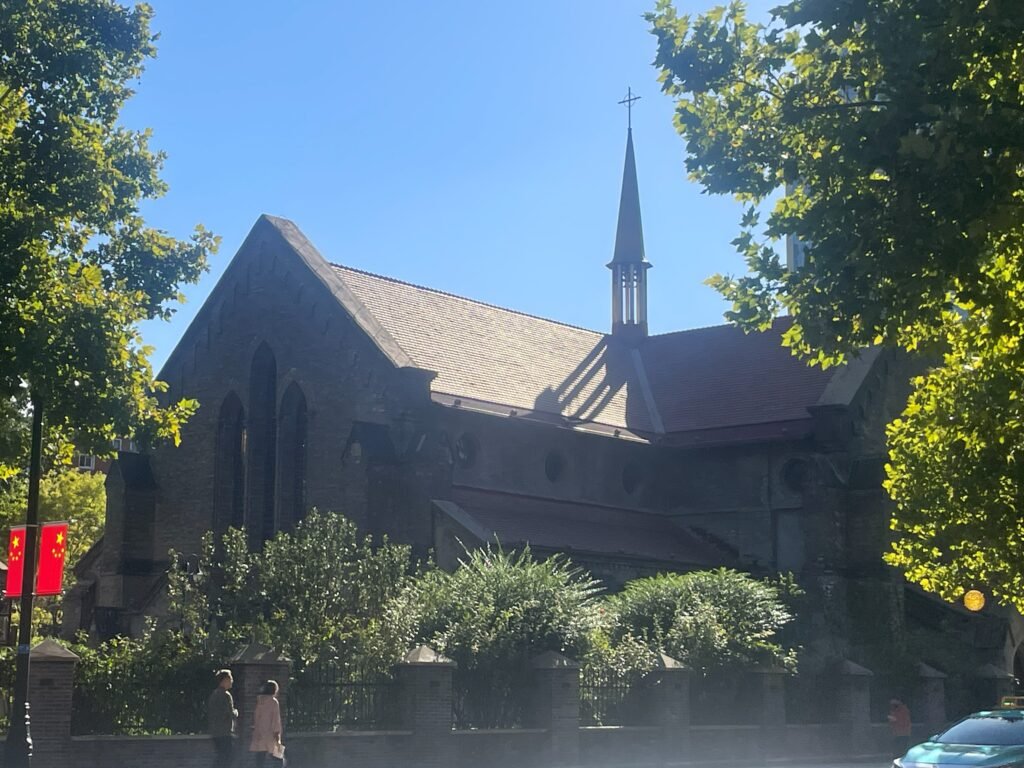
That date stayed with me.
Japan had already taken Manchuria. Within little more than a year, Tianjin itself was being bombed. Yet here were people still commissioning work and rebuilding a church for the years ahead.
A church is a substantial investment in continuity. Its congregation expects to return next Sunday, next Christmas and for many years afterwards. In 1936, they were still making that investment while the world around the concession was becoming steadily more dangerous.
The permanence of buildings can encourage a dangerous assumption about the permanence of the arrangements beneath them.
Reading the signs is only half the task. The other half is acting while departure remains voluntary and the ordinary machinery still works. Waiting for certainty can consume the interval in which a decision is still affordable.
Better five years early than a day too late.
Leaving early has an obvious cost: the years that might still have been enjoyed. Leaving too late can cost the ability to leave at all. Those are very different mistakes.
I took a walk along the Haihe, but by then I was no longer in much of a sightseeing mood. There were more buildings to find and more streets to photograph. My attention had moved towards the future.
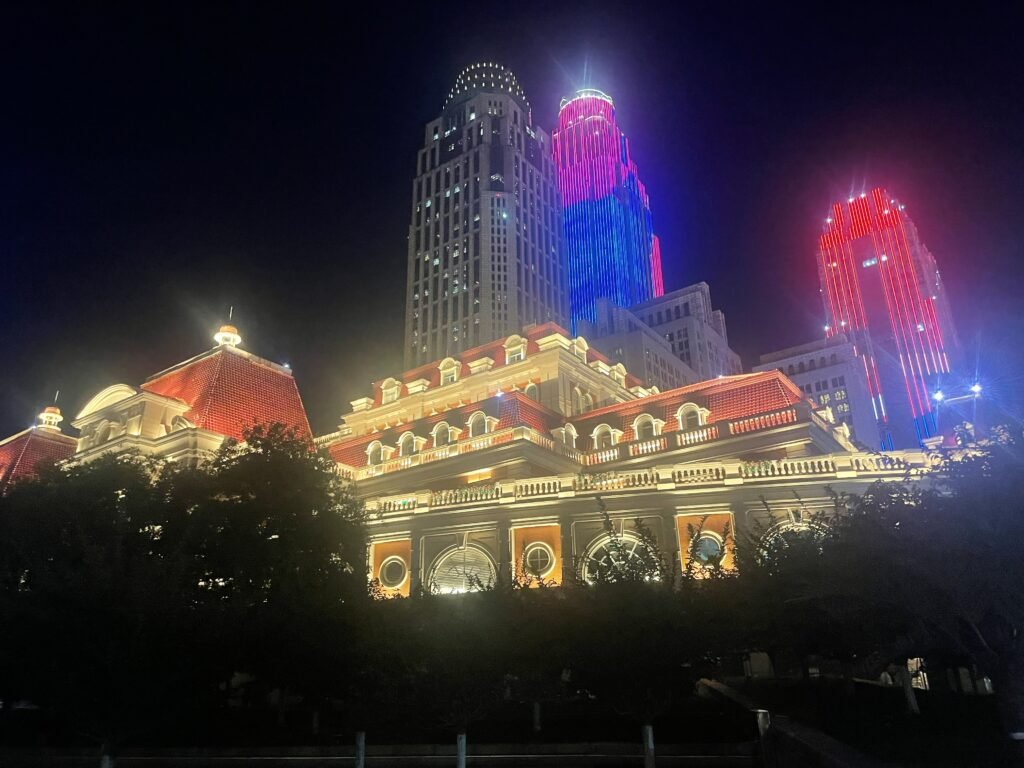
After several weeks travelling through China, I wanted some time to consider what came next. Where I wanted to spend my time. Which plans still interested me. What deserved further investment, and what had already received enough.
The river provided somewhere to walk while those thoughts arranged themselves. I had no particular need to fill the remaining hours with another attraction.
I checked out early for the final railway journey of the trip.
Tianjinxi was enormous. After the surviving fragments of the treaty port, the scale of the modern station brought me firmly back to the present. Ahead lay roughly 1,200 kilometres south to Shanghai.
I had spent weeks examining what remained of other people’s plans.
There would be time on the train to consider my own.