I’ve come to realise that much of the history we are taught is little more than a convenient story. Yet the real clues sit quietly around us, waiting to be noticed. Often all it takes is looking up, or down, to see that the world is not quite what we are repeatedly told it is.
Baltinglass is a good place to begin.
You will not find it in many guidebooks. It is not promoted as a destination. Yet a chance video on YouTube suggested the valley may hold one of the largest Bronze Age landscapes in Europe, certainly one of the most significant in Ireland.
While tourists head for Newgrange, the officially presented megalithic site, I chose the opposite direction and drove south into the Wicklow Mountains.
The mountains feel older than the road that crosses them. Clear water cuts through the valleys. Strange stones appear where you would not expect them. Hills rise in shapes that seem deliberate rather than accidental. It is the kind of landscape that makes you slow down and pay attention.
My first stop in Baltinglass was the abbey.
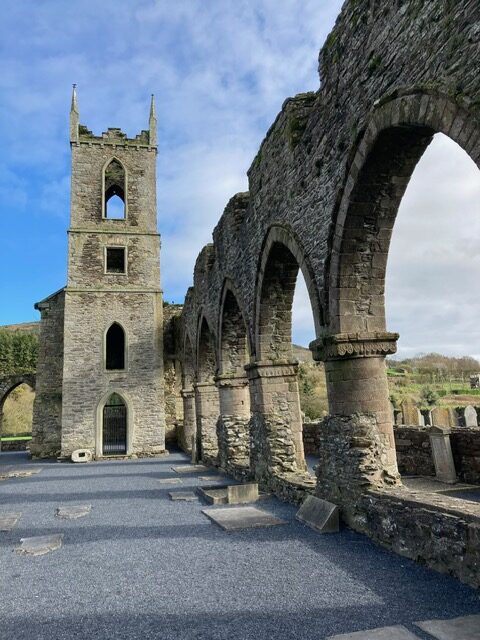
It stands ruined now, but inside the walls sits another building — a Protestant church constructed within the remains of the medieval structure, and now itself also abandoned. Layers of occupation. Different groups arriving centuries apart and choosing the same place to build.
That alone tells you something about the location.
Walking through the grounds I came upon a tomb structure topped with a pyramid. The tomb itself is now empty. There was no chequerboard pattern here, but the symbolism still brought to mind the same geometric language that appears elsewhere — pyramids, grids, and repeating forms that surface again and again across different cultures.
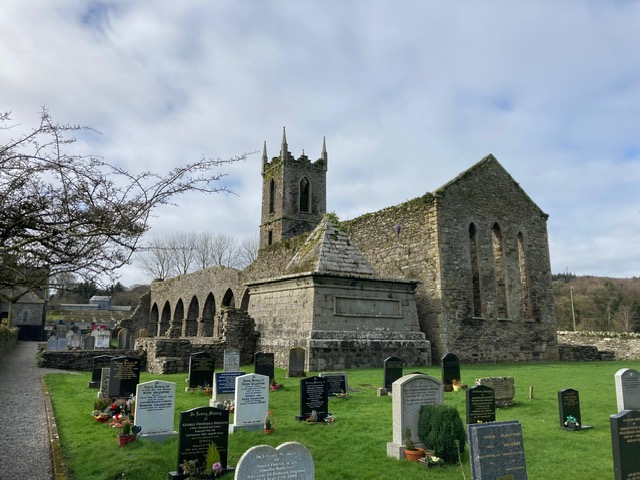
It makes you wonder what ideas sit behind those symbols, and how old they really are.
Looking out from the abbey, the surrounding hills have strange shapes.
They reminded me of Penshaw Hill near Sunderland and the old story of the Lambton Worm winding itself around the hill before it was slain. Today that hill is crowned with a Greek temple. Another structure placed on top of something older, as if each generation feels compelled to mark the same point in the landscape.
The pyramid above the abbey tomb seemed to belong to the same instinct.
I walked toward the largest of the hilltop forts overlooking the town. There are several scattered around the valley.
The slope of one hill has become a vast cemetery. At its centre stands a tower that feels older than the graves surrounding it. Beside it sits Ireland’s national brain injury hospital, another modern institution that has somehow found its place on this same ground.
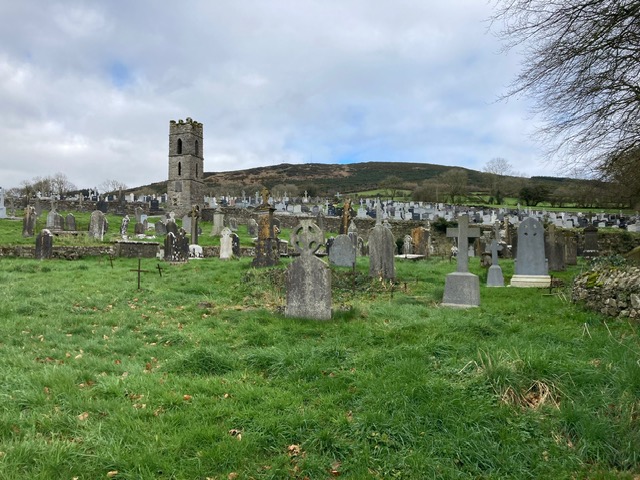
Places with long histories seem to keep attracting new occupants.
Later I walked down into the town itself.
I stopped at the butcher and bought some local lamb. It felt right to eat something raised in the same valley I had been walking through. If places carry energy, perhaps the animals raised there do too.
Nearby I came across something I had not expected at all — a United Nations memorial.
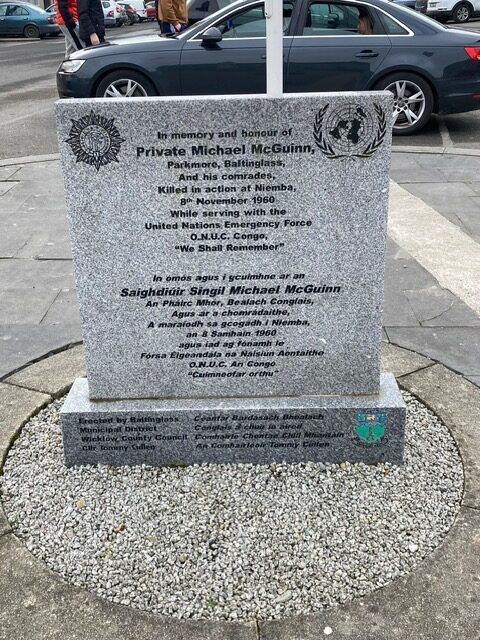
It commemorates Irish soldiers killed in the Congo during the UN operations of the early 1960s. I knew little about the incident before seeing the memorial, but one discovery always leads to another. Research tends to follow later.
What caught my attention most was the map carved into the monument — the familiar UN world projection surrounded by a laurel wreath. A symbol most people see without ever looking closely.
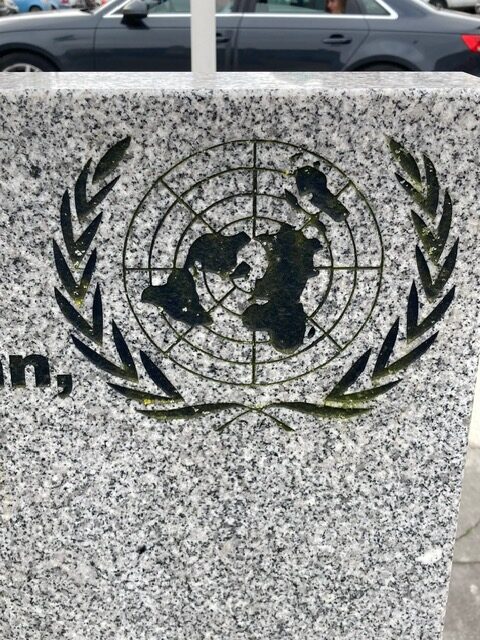
It took me many years myself before I began noticing how many narratives are quietly constructed for us.
Eventually I returned to the car.
There was one last thing I wanted to see — the old railway station.
To my surprise the building still exists. It now sits inside an agricultural retail yard belonging to Quinns. I was about to leave after taking a quick look when someone knocked on the car window and asked if I needed help with anything.
When I explained I had only come to see the station, I was suddenly being given a private tour.
Inside the old office the station still has its safe, the kind of heavy metal vault you would expect in a historic house, Montana had one too. The place felt frozen in time. It was a quiet day, so perhaps that made the difference, but the generosity was appreciated, as was the company calendar I was given.
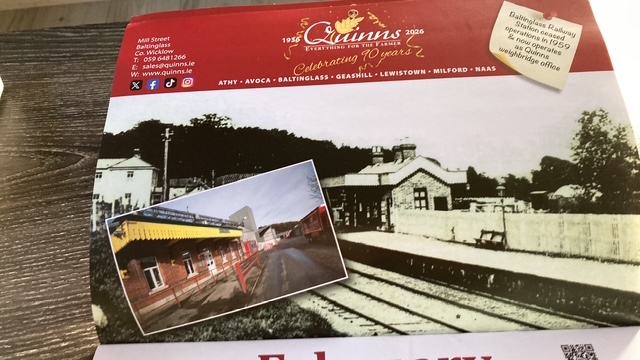
Encounters like that happen now and then to me.
Once in Georgetown a local gave me a full tour of a colonial cemetery. Another time in Newcastle someone walked me through the history of the village church and the old castle nearby. Some people still care about preserving these stories.
And that matters.
Now it really was time to head home.
There was just one final stop.
A stone circle standing quietly in a field outside the town.
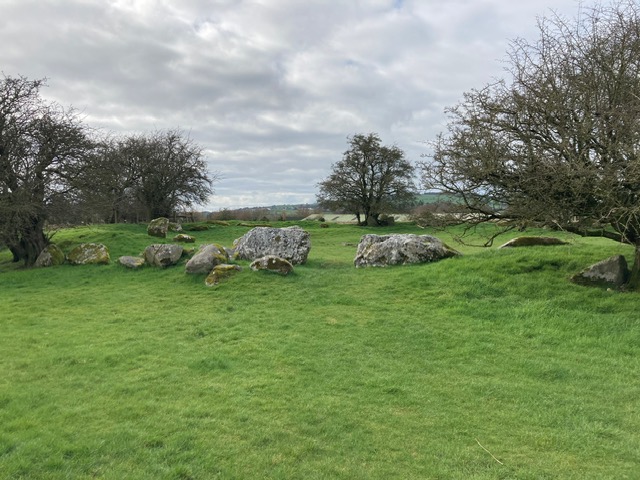
Officially the circle is dated to around 2,500 years ago. Perhaps that was the last time it was used. Personally I suspect the site is far older.
When I stepped inside the circle my legs shivered slightly. Cold wind perhaps. Or something else.
What I did notice were threads and ribbons tied to nearby branches. Someone had been here before me, leaving small offerings or tokens. Even now people feel that places like this hold something.
Stones carry a presence modern culture tends to ignore.
Our ancestors may have understood that better than we do.
When I arrived home YouTube suggested another video for me.
The subject was Larry Murphy — Ireland’s notorious serial killer, often called the Beast of Baltinglass.
The valley clearly holds its share of darker stories too.
Places with deep histories often do.