A record of storms survived and horizons still calling

Category: Finance (Page 1 of 2)

Investing – My views, how the world is looking…could be anything at all to do with money.

Inspecting the Colonies: Shanghai Revisited

After nearly four weeks travelling across China, I returned to Shanghai for one final night. It seemed appropriate that an expedition which had begun in Shanghai, inspecting the remnants of the British colonial world, should also end there.

And having spent the intervening weeks examining the German, Russian, Japanese and other European settlements across China, I decided to finish in some style.

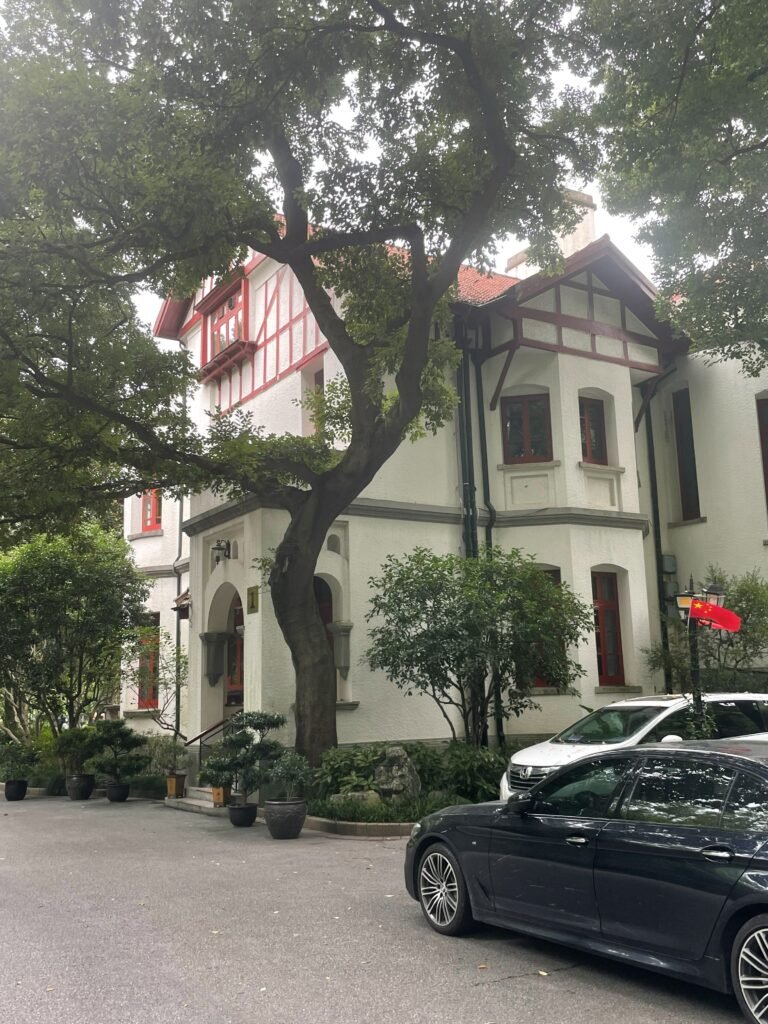
I booked myself into the magnificent Moller Villa.

A Night at Moller Villa

Built in the 1930s by the wealthy Swedish businessman Eric Moller, the villa is an extraordinary piece of Shanghai’s colonial past. With its turrets, steep roofs, elaborate woodwork and lavish interiors, it looks more like a European fairy-tale castle than a house in the middle of China.

And unlike so many of the buildings I had encountered elsewhere, this one had survived remarkably intact.
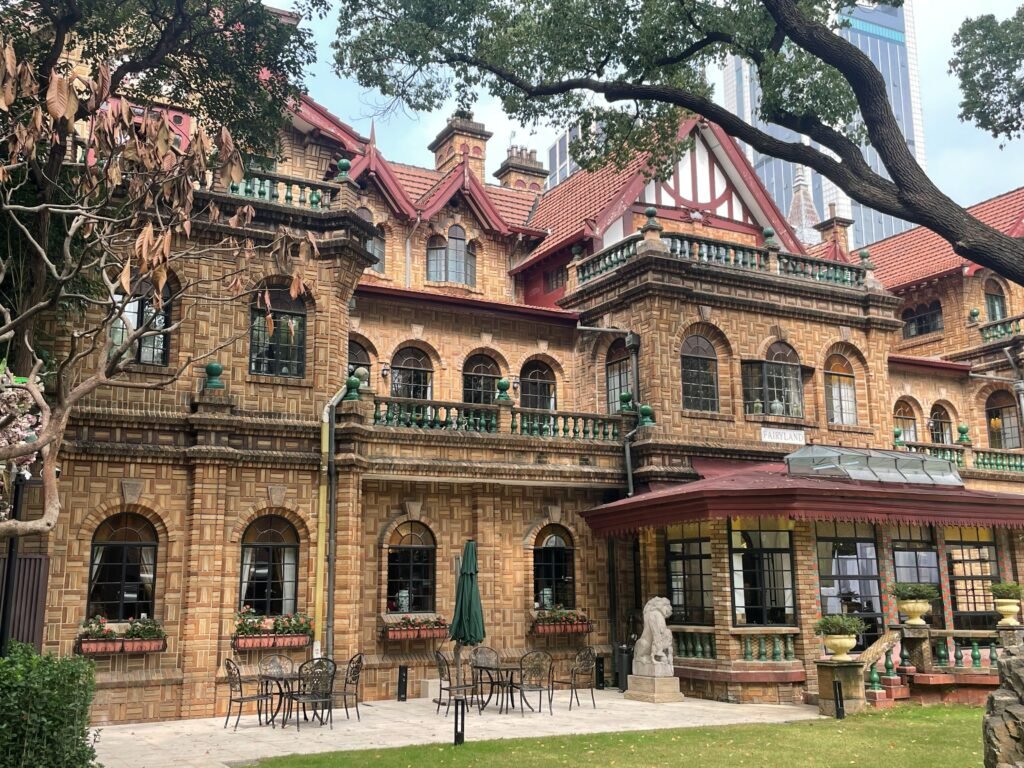
It reminds me greatly of Villa Villekulla from Pippi Langstrømpe. A house I’d also seen in real life, on a visit to Sweden some years ago.

Inside, the opulence continued. Beautiful timber panelling, grand staircases, period furnishings and the sort of craftsmanship that modern hotel developers would struggle to reproduce at any price.
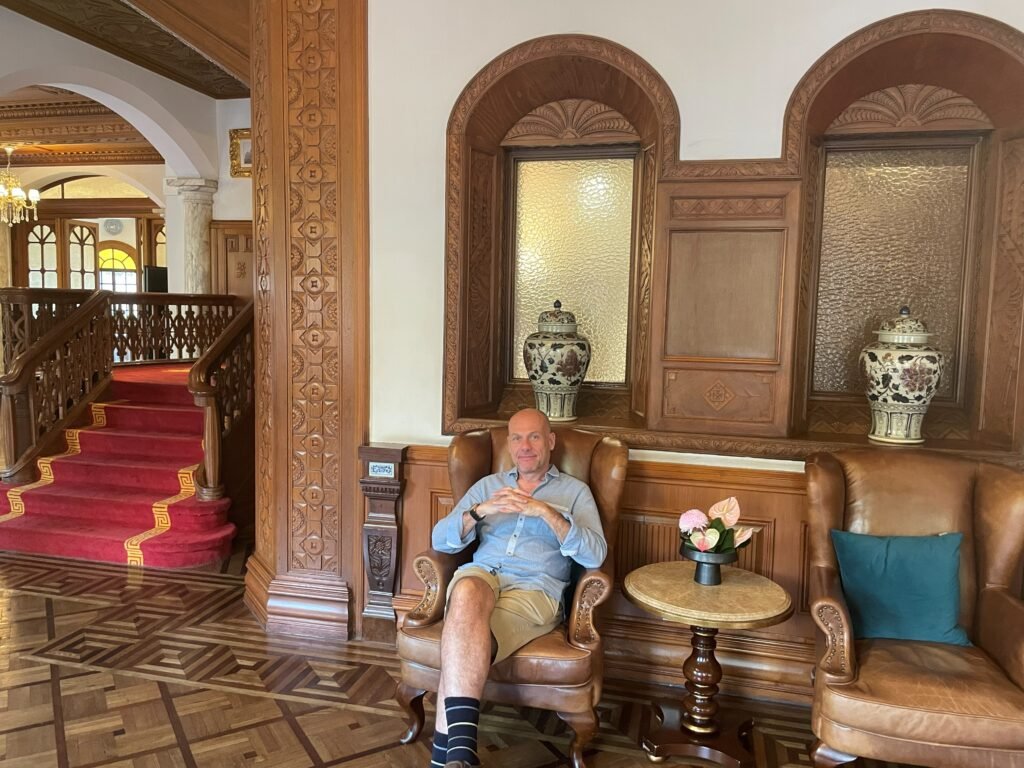
Among the photographs was one suggesting that Moller was rather well connected, including to British royalty.

Moller reportedly left Shanghai in 1941, demonstrating remarkably good timing considering what happened that December. Japan’s attack on Pearl Harbor and the subsequent occupation of Shanghai’s International Settlement brought the old European world crashing down almost overnight.

Perhaps having friends in high places helped.

Whatever the circumstances of his departure, his extraordinary house remained.

And now, more than eighty years later, I was sleeping in it.

Further coincidence comes when you learn that the last of his children is buried in Ireland and only died last year. There’s another story behind that too, which may get investigated some day.

Dinner Above the Bund

Having stepped up the accommodation, I decided to step up dinner as well.

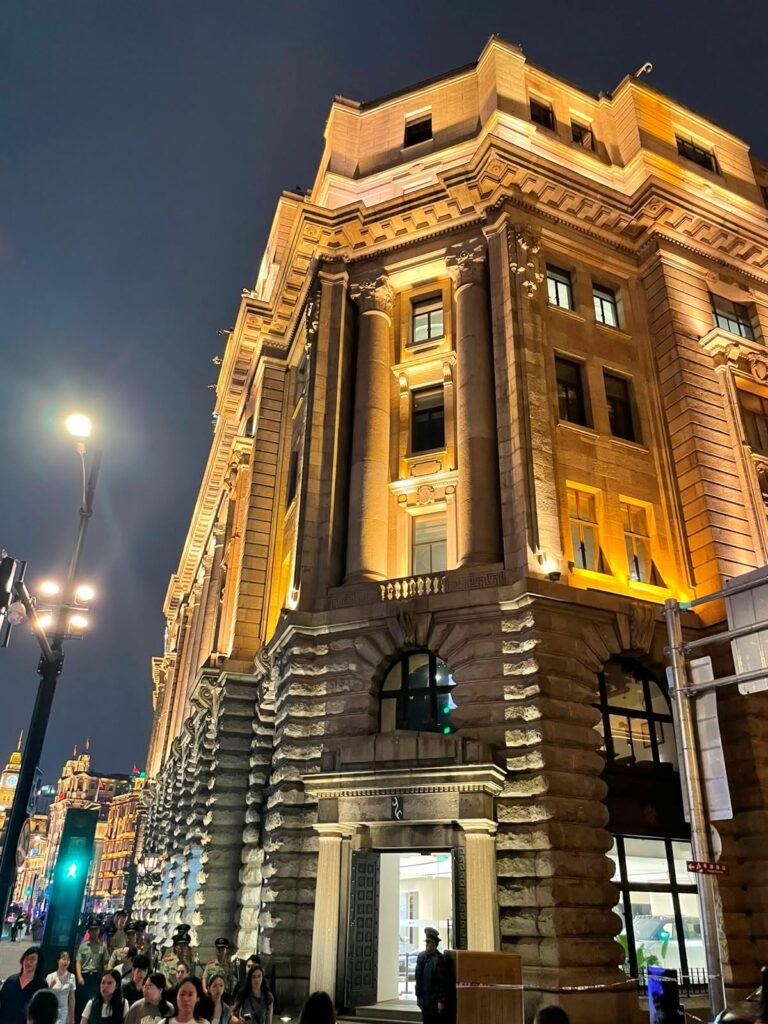
Shanghai’s Bund contains some of the finest commercial architecture of the colonial era. Its great banks, trading houses and hotels were built by men who expected their institutions to remain there for centuries.

I found myself dining on the rooftop of one of these magnificent Art Deco buildings, looking out across the city.

Norwegian salmon. German Riesling. French Bordeaux.

It occurred to me that the old colonial trade connections were still flourishing rather nicely.

The flags have changed, the empires have disappeared, and the political arrangements that created Shanghai’s extraordinary commercial district have long since been swept away.

Yet here I was, sitting atop a former colonial building, enjoying European food and wine in one of the world’s great trading cities.

Commerce, it seems, has a rather longer memory than politics.

One Last Shanghai Morning

The following morning began with an enormous breakfast buffet at Moller Villa.

I must have spent an hour and a half over breakfast, quite possibly the longest hotel breakfast of my life. There was no particular reason to hurry. My flight was not until the evening, and after thousands of kilometres of railway travel, ferries, hotels and colonial ruins, I was beginning to run out of energy.

There were also things waiting for me back in Ireland.

A return to ordinary life. Some unfinished business. My own kitchen.

And, frankly, the prospect of a huge steak, homemade chips and a decent bottle of red wine after weeks of MSG-laden Chinese food was becoming increasingly attractive.

I took the day slowly.

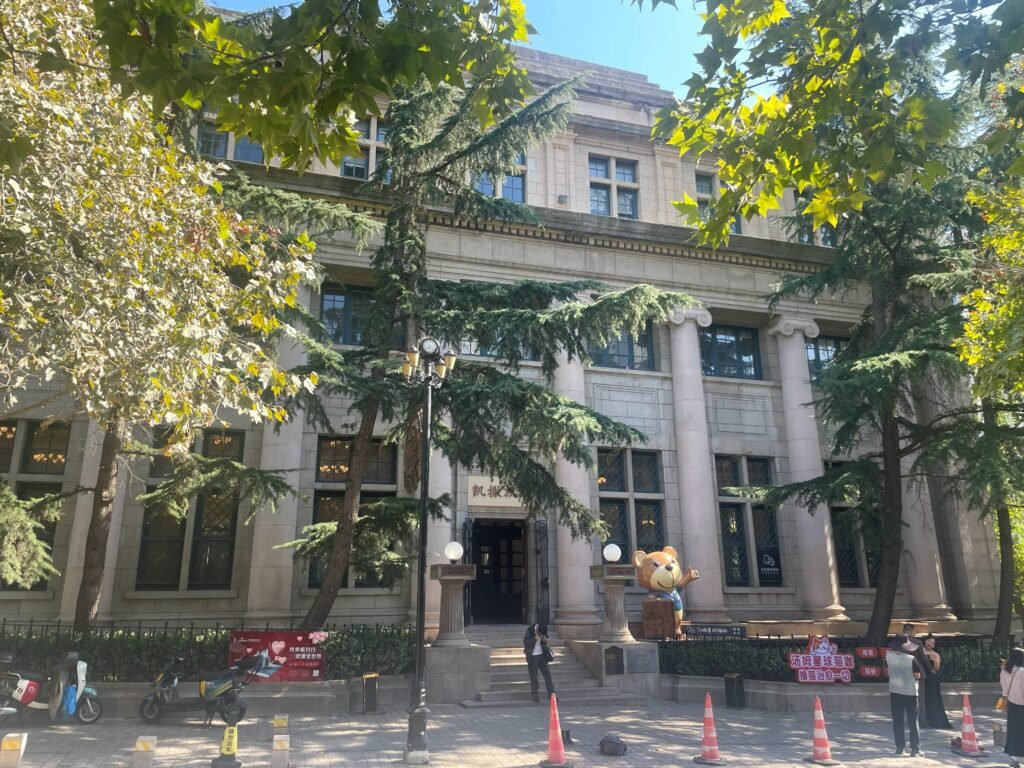
Before leaving, I made one final visit to the magnificent former Shanghai Race Club, another surviving monument to the extraordinary wealth and confidence of the city’s European residents during the 1930s.
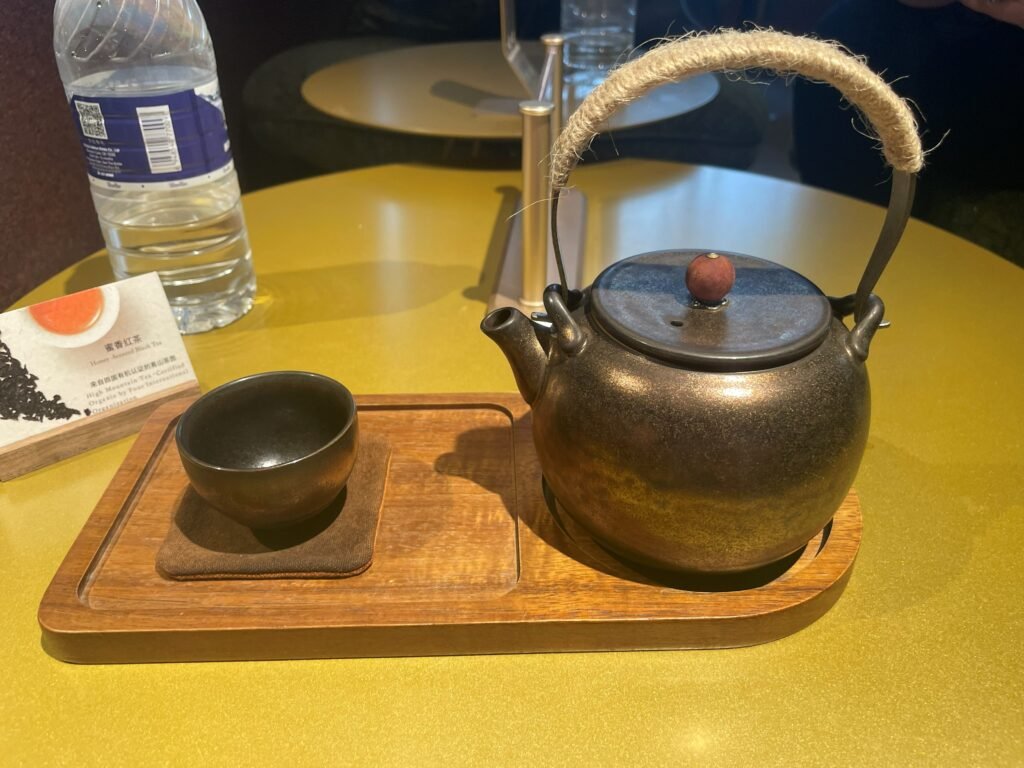
China tea in the Shanghai Race club. A fitting end.

It seemed a suitable place to conclude the expedition.

Inspecting the Colonies: The Verdict

After travelling through Shanghai, Qingdao, Yantai, Dalian, Port Arthur, Harbin and Tianjin, I had formed some fairly definite conclusions.

Shanghai is the great survivor. The British-led commercial world that created so much of the city’s colonial architecture has disappeared politically, but its physical and commercial legacy remains remarkably alive. The Bund is still prosperous, its magnificent banks and trading houses have found new purposes, and the former International Settlement remains one of the most impressive urban environments in China.

The old colony is not merely preserved. It is financially successful.

Qingdao is buzzing. The Germans built an extraordinary city, and much of their architectural legacy survives. The brewery still produces beer, the streets remain recognisably European, and the place has a vitality that many of the other former colonial settlements lack.

The German colony has survived remarkably well, although it is now almost entirely free of Germans.

The Russian colonies are a different story. Harbin in particular has rediscovered its Russian heritage, with restored buildings, churches, restaurants and Russian visitors. Yet the enormous Russian population that once made the city famous has vanished. What survives is increasingly a recreation of a world that no longer exists.

The Russians are returning as tourists, not settlers. Their old colony has become a temporary destination rather than a permanent community.

Tianjin was the greatest disappointment. Its former concessions survive largely as scattered architectural remnants, often buried beneath modern development or transformed into artificial tourist attractions.

The Italian concession has been given a particularly ridiculous coating of decorative kitsch, with beautiful old villas surrounded by inflatables, fountains and assorted Italian-themed nonsense. At least Dalian’s artificial Venice never pretended to be the real thing.

And the fake Irish pub I encountered there seemed an appropriate symbol of what had become of Tianjin’s old European settlements.

The colony was extinct. What remained was largely scenery.

Dalian and Port Arthur offered their own fascinating contrasts. Magnificent Japanese buildings, Russian remnants, extraordinary military history and, in places, some thoroughly depressing attempts to turn serious architectural heritage into theme parks.

The Japanese Art Deco banks and civic buildings were particularly impressive. These were not temporary structures. They were built with permanence in mind, by people who plainly expected to remain.

Port Arthur, meanwhile, revealed an altogether darker history of imperial competition, war and military ambition.

Yantai had been another unexpected pleasure. Its old consular buildings, Mediterranean-looking coastline and remarkable wine industry made it one of the genuine surprises of the journey.

There were wonderful discoveries throughout the expedition. There were also disappointments.

But that was precisely why I had come.

I wanted to see what actually remained, not what the tourist brochures claimed was there.

Goodbye China

By the time I reached Shanghai’s airport, I had travelled more than 5,000 kilometres by Chinese railway in approximately three weeks.

That is roughly twice the length of the entire railway network of the island of Ireland, north and south combined.

An extraordinary distance, covered largely in comfort, through a country whose railway engineering and organisation repeatedly impressed me.

I had seen cities I had wanted to visit for decades. I had walked through the remnants of vanished empires, inspected magnificent buildings, visited old battlefields, travelled through Manchuria, crossed the Bohai Sea by ferry and followed the railway lines that had helped create these colonial settlements in the first place.

Some places exceeded expectations. Others were disappointing. A few were almost unrecognisable from their historical descriptions.

But I had finally seen them for myself.

And it seemed fitting to finish where I had started, in Shanghai.

Four weeks earlier, I had set out to inspect the remains of the British, German, Russian, Japanese and other foreign settlements across China. More than 5,000 kilometres later, I was back where the journey began.

Shanghai had survived better than any of them.

The empires had gone. Much of their architecture remained. And in Shanghai, at least, the commercial world they had helped create was still very much alive.

Goodbye China.
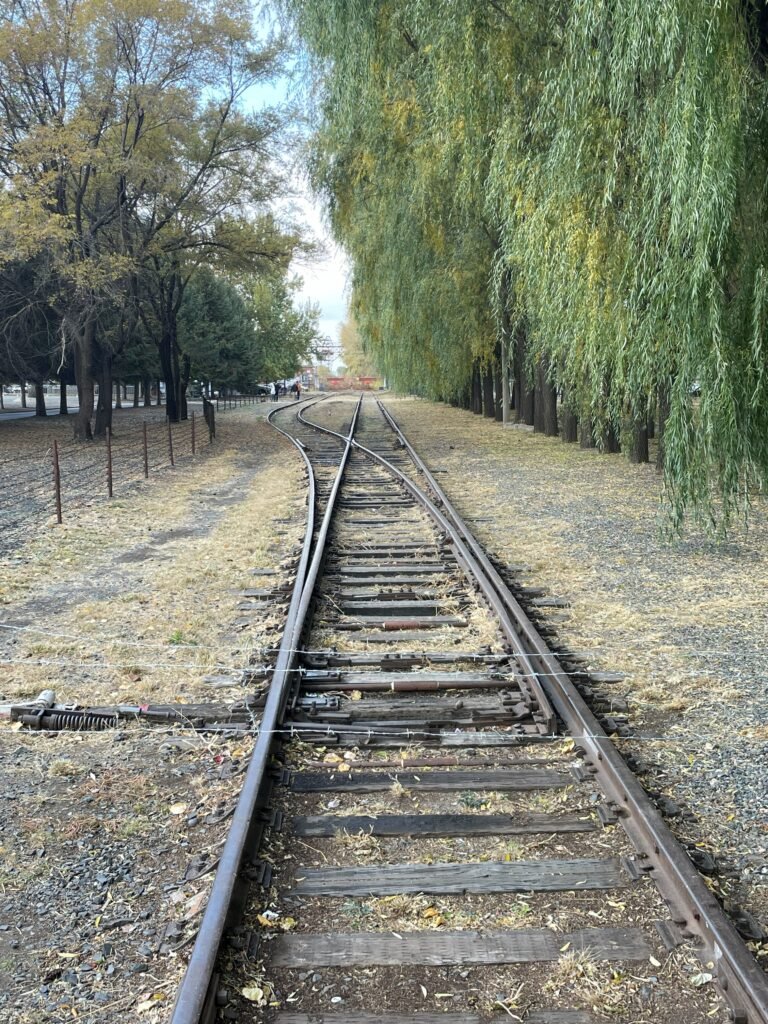
Inspecting the Colonies: Harbin

I had wanted to see Harbin for a very long time. Ever since reading its history, the idea of a Russian colony in China had lodged itself in my imagination. Eventually, I was going to have to inspect it.

At its peak in the 1920s, Harbin had at least 120,000 Russians, probably more. Schools, churches, businesses, families and a cultural life of their own. An entire Russian city had grown up in Manchuria.

The railway explained it. From 1898, the Chinese Eastern Railway brought Russian imperial ambition across northern China, connecting the Siberian system towards Vladivostok, with a southern branch towards Port Arthur. Harbin became the junction and administrative centre.

A railway requires workshops, offices and people willing to live beside it. Those people then require rather more than a platform.

They built a city.

Railway employees, merchants and families from across the Russian Empire established themselves alongside Chinese workers. Revolution and civil war supplied another wave of inhabitants, with considerably more urgent reasons for being outside Russia. Harbin offered a familiar language, familiar institutions and somewhere to begin again.

I had worked my way north through Shanghai, Qingdao, Yantai, Dalian and Port Arthur. The great Russian railway colony was next.

My ankle, which had been restricting imperial inspections since Dalian, would have preferred somewhere smaller.

I strolled out of Harbin station after an early-morning arrival on the overnight train and went straight to the hotel. It was pleasant and comfortable. Its Russian credentials were less convincing, but I could live with that for the sake of a decent stay.

Today seemed a good day for Unit 731. For those not in the know, the secret Japanese experimentation centre of the 1930-1940s, for biological warfare, frostbite effects and other associated experiments on human beings that would be unlikely to be agreed to outside of coercion on threat of death. I would go there first, return to the hotel, then take an afternoon stroll and begin finding the city.

I turned up with my passport and was surprised to be admitted free of charge.

I had expected a grim place. I had not expected to become quite so conscious of the people arranging my response to it.

The museum felt like a theme park. The film, the tightly defined route and the emotionally charged plaques explaining each set scene left very little for the visitor to do independently.

Had I been about twelve, I would have come out demanding a machine gun to kill Japanese people and avenge the spilled blood of my ancestors.

I felt thoroughly instructed.

“If something is free, you are the product.” The application was becoming clearer. Admission cost nothing. The desired return appeared to be a visitor carrying away the prescribed history and the appropriate hostility.

Then came the railway-line installation.

I dislike emotional railway theatre in Poland too. A line of track is a powerful image, and this one seemed to be working considerably harder than a line of track ought to. The visitor was being invited to complete the scene, supply the associations and arrive at the required feeling.

After the film, route and plaques, the railway struck me as the final check that I had received the message.

It felt fake. Whatever the history of the original railway, the presentation had the quality of a theme-park set. I wanted more of the surviving place. The production was getting in the way.

There was another difficulty. Much of the place had gone.

Clues at the site suggested that a good deal of the destruction might belong to the 1950s onwards. The Japanese had blown up their camp in 1945, but demolition had continued after they left. Historical research records further dismantling of the ruins during the Great Leap Forward and the Cultural Revolution.

That made the surviving emptiness rather more complicated than an illustration of Japanese destruction. Chinese rule had contributed its own losses.

Preservation had arrived after several other priorities.

The Russians were another awkward part of the story. From the presentation I encountered, I could have come away thinking the victims were ninety-nine per cent Chinese, with an occasional Korean or Russian around the edges.

The Japanese writer and investigator Seiichi Morimura estimated that up to 30 per cent of the prisoners experimented on at Pingfang were Russian. Close to a third. People from Harbin’s Russian community, as well as Soviet captives.

Accounts describe victims being rounded up from Harbin’s streets. Testimony identifies Russian women and children among those used for experiments. Soviet prisoners were also transferred to the unit.

The people whose buildings I had come to find had been taken into this place too. Their part in it deserved rather more than a walk-on appearance.

In the version presented to me, the Chinese state emerged spotless. I left wondering about the history which had failed to make the production. Where I could agree to some extent, was the anger towards how the perpetrators walked free and the whole thing was hushed up. Fine to say that now, but back then the experiment results and knowledge were considered way too valuable. Generally, there was huge denial for many years that this place even existed. The museum, mysteriously enough for the naive, doesn’t question this enough. I would suggest the complicity in keeping this quiet and using the knowledge gained was very valuable to many people, regardless of nationality.

Back at the hotel, I rested before going out for my first afternoon stroll.

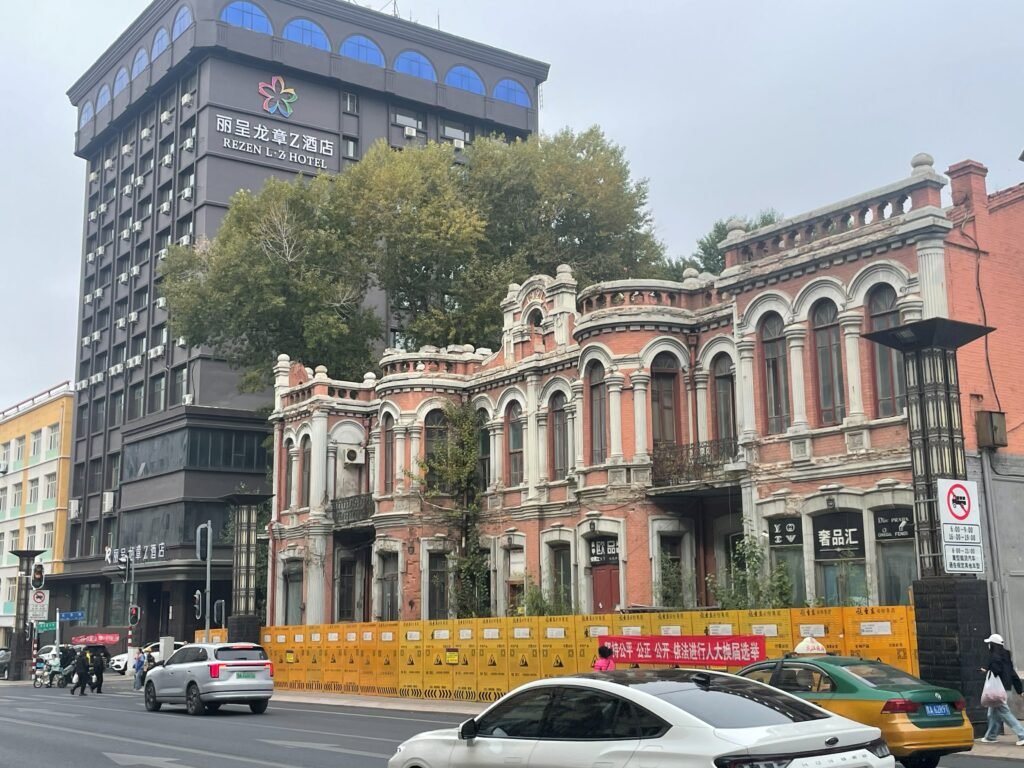
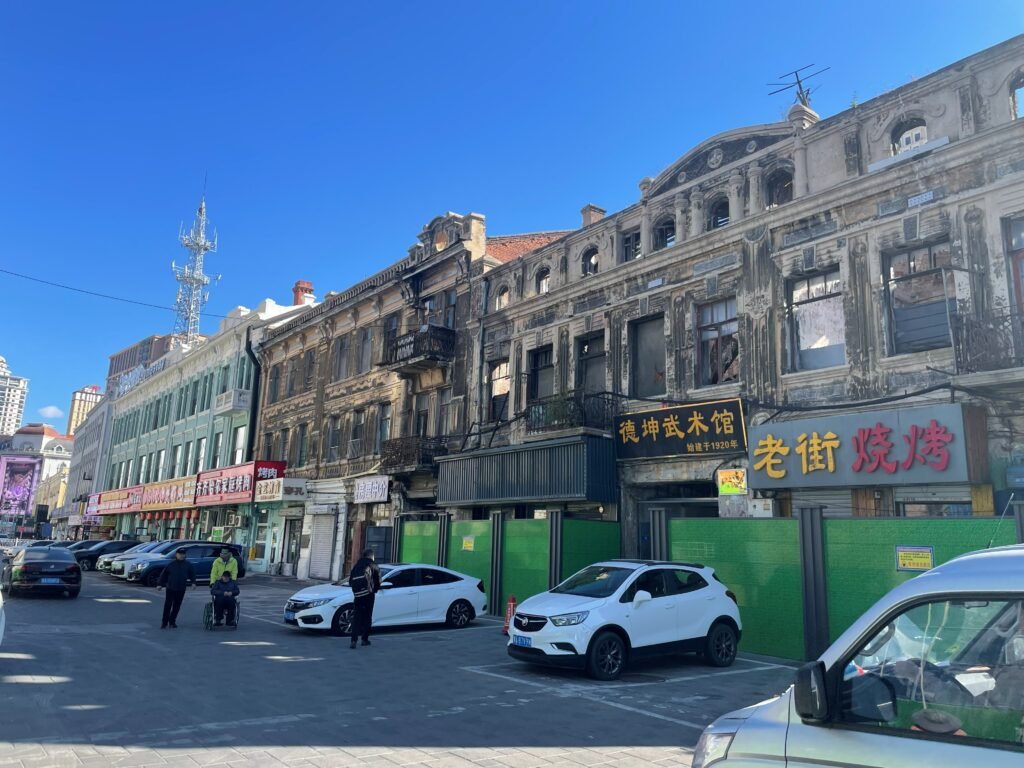
It was cold. I was tired. Harbin initially did little to reward the effort. Russian remnants stood alone, detached from the streets and neighbours which might once have explained them. Too much had been obliterated.

Russian Decay in Harbin

Even the station proved to be a modern building wearing an older one’s clothes. Opened in 2018, it was an enlarged recreation of the demolished Russian-built station.

I had arrived in the Russian colony through a reconstruction of its railway station. Finding the originals was going to take some walking.

Further exploration improved matters. Old Russia was still there, but it had to be sought out. The remains extended well beyond the obvious tourist streets. Farther out, away from the cathedral and the presentation arranged around it, I kept finding relics of the city I had read about.

That mattered. A population of 120,000 had occupied rather more ground than a convenient photographic backdrop.

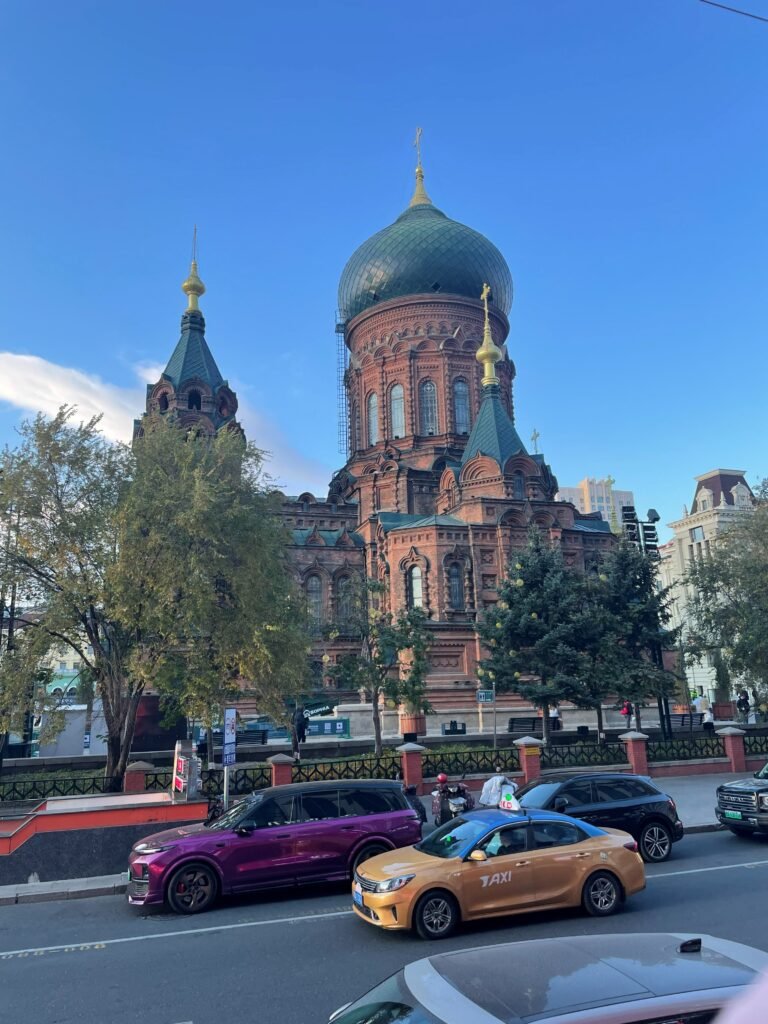
St Sophia Cathedral

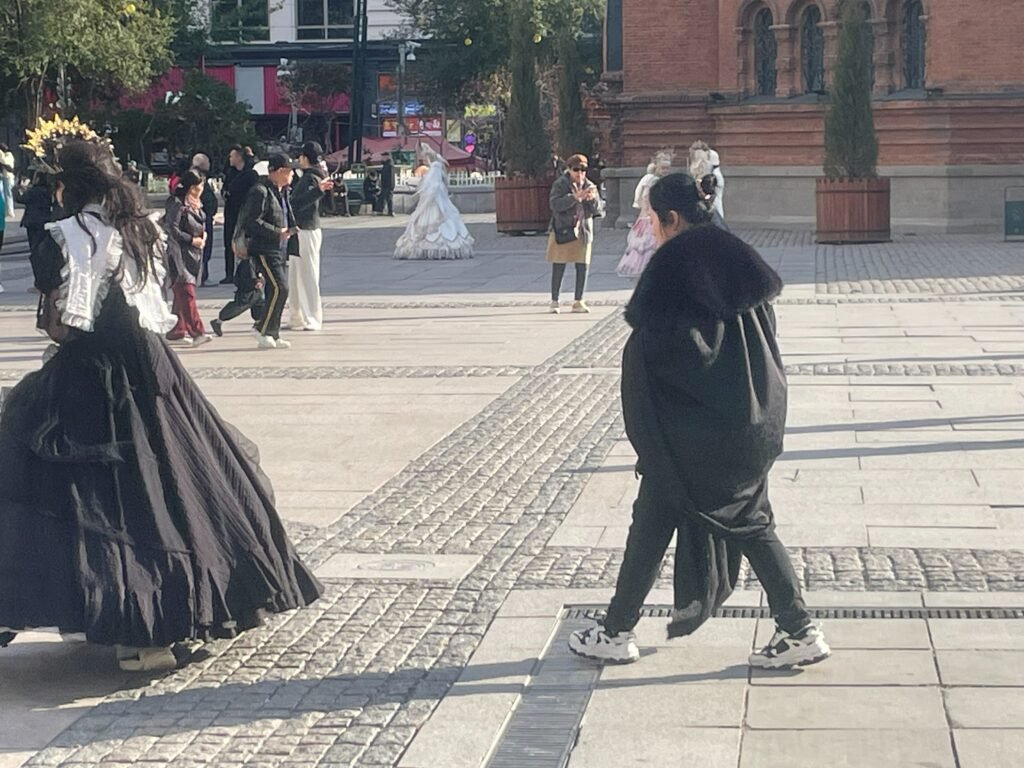
The cathedral had acquired women posing in Baroque costumes. History’s dressing-up department was doing its best. Apparently, the fall of an empire need not interfere with a good photograph.

Baroque Photoshoots on St Sophia Square

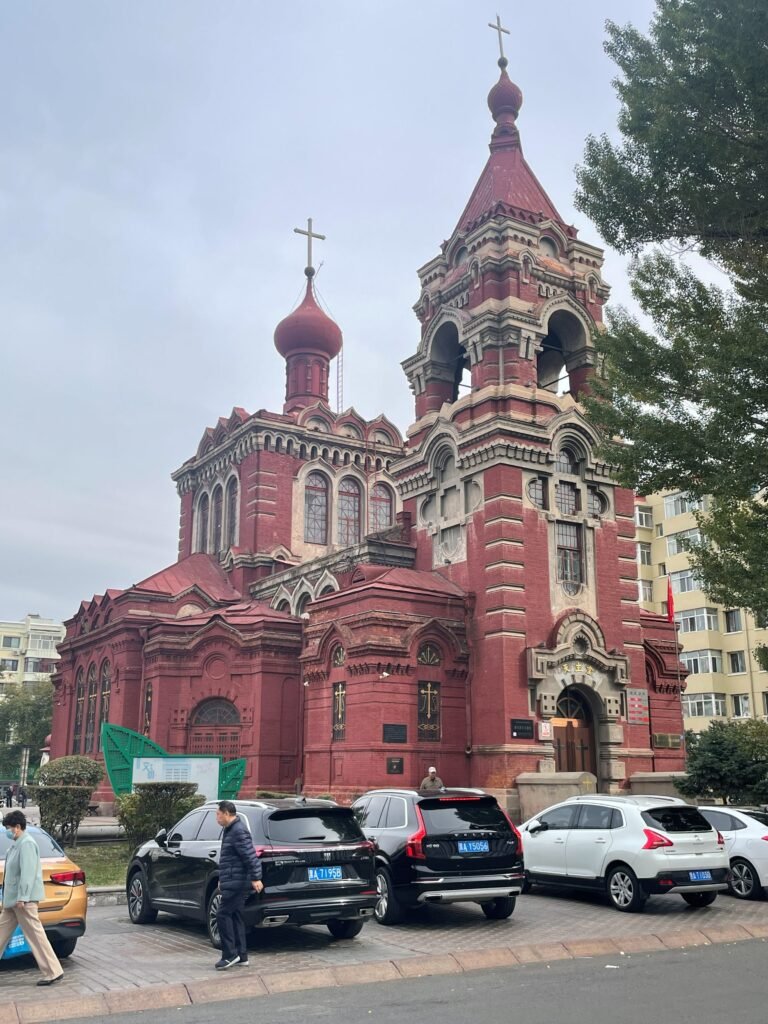
Out in Majiagou, in Nangang, St Alexis—Alekseyev—was a genuine Russian church. Its parishioners had paid for the brick building, which was consecrated in 1935.

The date doesn’t necessarily fit established narratives and raises questions about how quickly populations and their long term investments can get smashed by subsequent events.

Harbin was already under Japanese rule. Here was a Russian congregation finishing a Russian Orthodox church inside Japanese-controlled Manchukuo. Architecture, nationality and political control refused to arrange themselves into one simple story.

The parishioners had been carrying on with their lives. Governments might change; there was still a church to finish.

The railway workers had encountered a less accommodating version of that arrangement. The 1924 Sino-Soviet agreement specified equal representation between Chinese and Soviet nationals in railway employment. Russians who remained stateless found their livelihoods under pressure. Some registered as Soviet citizens to preserve their jobs. Others had to find work elsewhere.

An early exercise in “diversity”. The wrong sort of Russian could discover how little his “white privilege” was worth.

In 1935, the Soviets sold their railway interest to Japanese-controlled Manchukuo. More upheaval. More departures. The buildings could remain while the arrangements supporting the people inside them were dismantled.

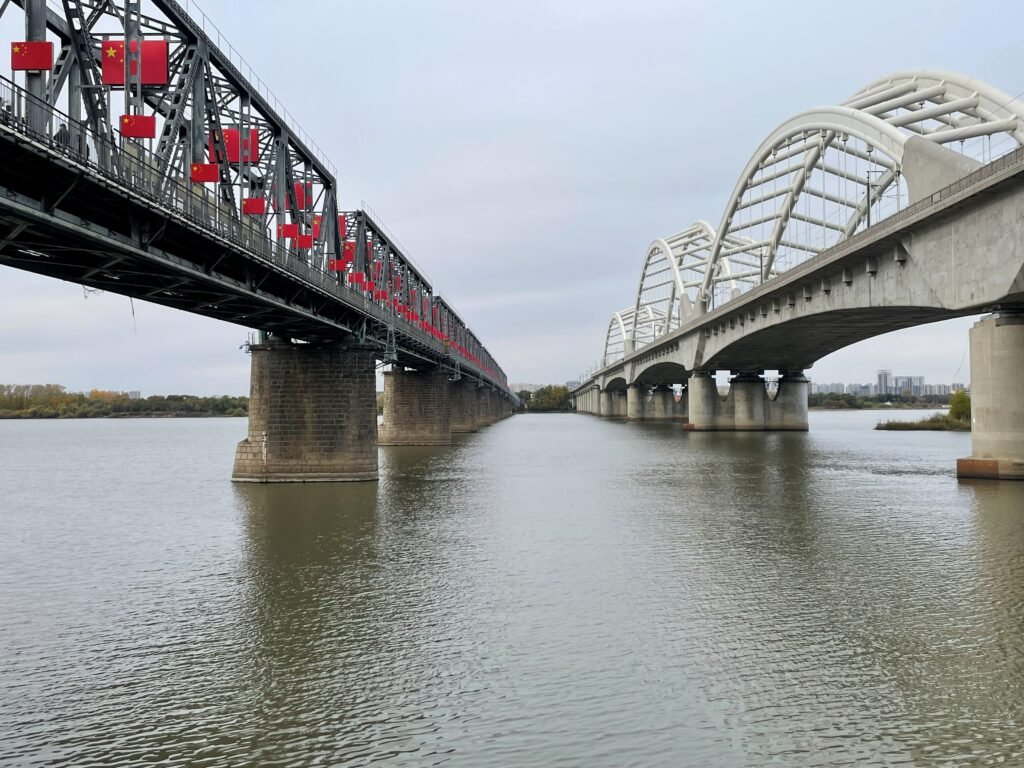
The railway bridge was a much happier discovery.

Old and New across the Songhua

Beautiful engineering. I walked its full length.

Completed in 1901, the old bridge across the Songhua gave the whole enterprise its proper scale. These men had intended to move trains across a great river and connect an empire through northern China. Standing on what they had built made the ambition considerably easier to appreciate.
The bridge earned the walk. My ankle was entitled to its own opinion.

Harbin reminded me of Ipoh.

I had encountered a similar sadness there: buildings carrying traces of people whose lives were no longer readily visible. Here, the gaps were particularly difficult to ignore. Houses survived, but too much of the world around them had disappeared.

There was pain in the place. I also sensed relief. People had reached Harbin after leaving something worse. They had found work, made homes and begun relationships. There must have been happy children in those houses, and days when the great political catastrophe was somebody else’s business.

The residents had not spent every morning waiting to become history.

There had been good days too.

More had been lost long after Japan’s defeat. Russian-era buildings were damaged or demolished, including St Nicholas Cathedral during the Cultural Revolution. Later, the surviving foreignness became useful again, this time as heritage and an attraction.

More Decay with in-built historic Energy

The sequence was familiar by now. Remove much of the old city, then discover a market for what it used to look like.

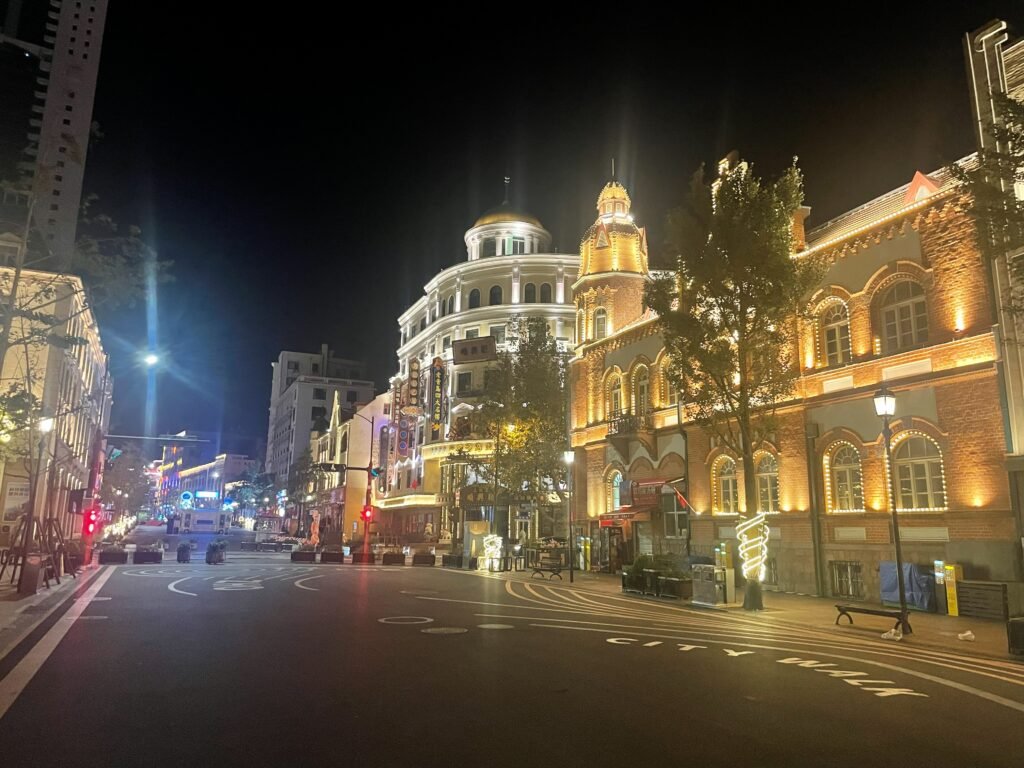
Still, enough remained to justify looking. Cobbled streets. The Chinese Art Deco area. Buildings which rewarded the walk out to find them. Smoked sausage on sticks and Harbin beer supplied a more agreeable form of historical continuity.

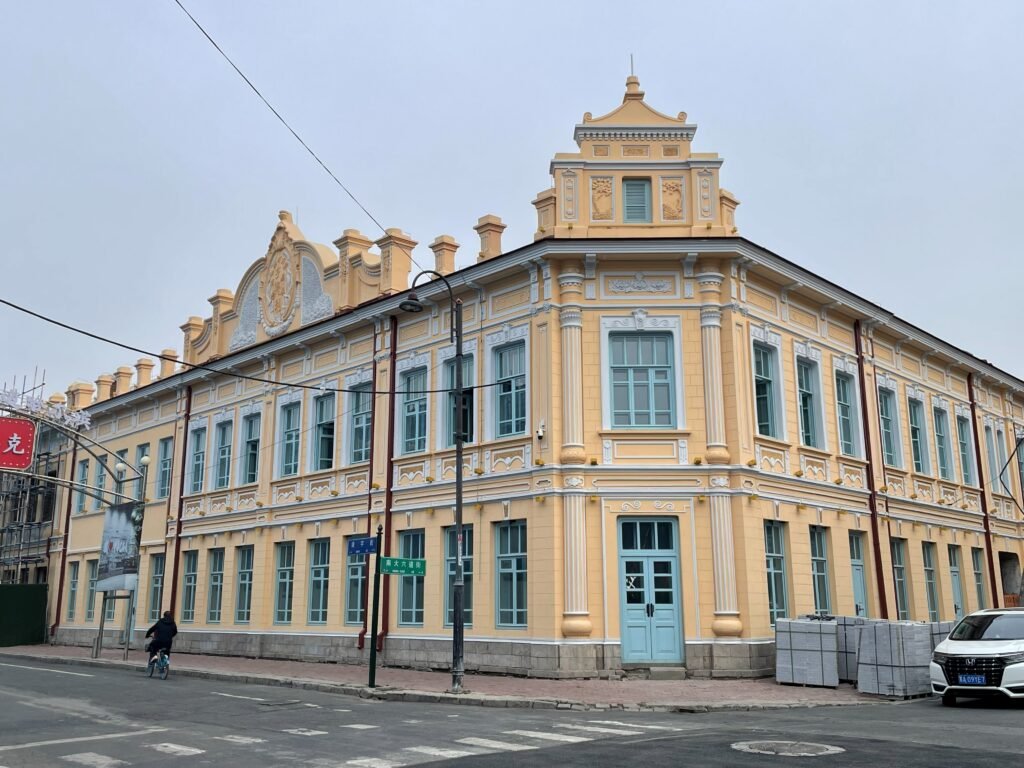
Beautifully Restored Chinese Art Deco

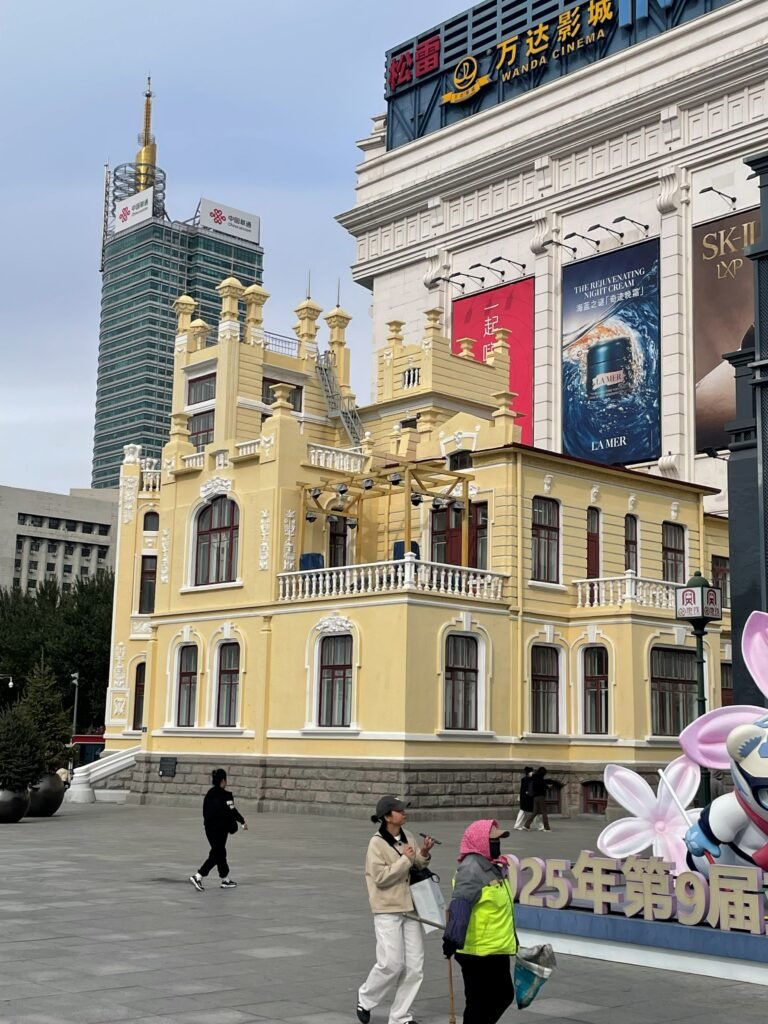
I had finally found something of the Russian heart of the city.

A rare Russian restoration in the heart of the city. Dwarfed by a shopping centre.

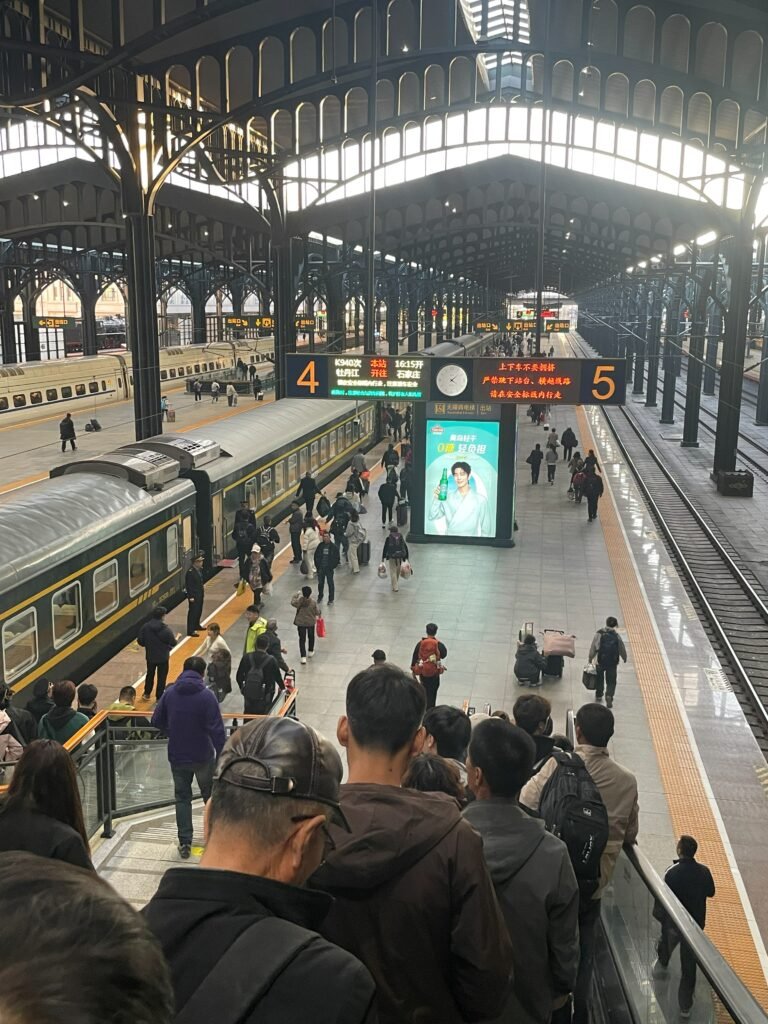
On 16 October, I left on the 16:15 sleeper to Tianjin. Sixteen hours south. By five it was already getting dark, and the landscape was changing beyond the train.

Harbin went into the notebook. Tianjin was next.

There were still colonies to inspect before Ireland.

One Billion Euros a Day

I watched the European Union discuss its trade deficit with China. Then I went to Yantai Port and saw the answer.
This morning, before leaving my hotel in Yantai, I watched Euronews discussing the latest round of trade talks between China and the European Union.

The central figure was almost too large to absorb.

In 2025, the European Union imported €559.4 billion of goods from China and exported €199.6 billion in return. The deficit was €359.8 billion.

Almost one billion euros a day.

Okay, before I go further, it disgusts me to conflate the word Europe, a geographic entity, a continent and European Union, an ailing, sickly political entity. From now, the rest of this story will clearly refer to the EU, excluding other European countries like the UK, that have essential destroyed their manufacturing and productivity in a similar way.

Where I would praise my historic homeland is that there’s still some kind of structural belief dating back to the Victorian era, in free trade. I see the EU putting up desperate barriers everywhere, to the extent that even receiving a parcel in Ireland from outside the EU now attracts at least 2 fees, possibly more, depending on how many items you dare to order. The audacity of anyone who doesn’t just buy it from Amazon. I digress. Back to what was on the TV.

The discussion was about what China might concede, what the EU might restrict and how the relationship could be “rebalanced”. There was talk of subsidies, market access and unfair competition. All of these may form part of the calculation.

But nobody appeared willing to ask the more dangerous question.

What has the EU done to its own ability to produce?

The Cost of Making Things

the EU has spent years making reliable energy expensive.

Germany closed its last nuclear power stations. Coal was burdened before dependable replacements were ready. Cheap Russian gas disappeared. Taxes, carbon costs, regulation and political indecision accumulated on top of one another. The result is not theoretical. The International Energy Agency estimates that electricity for energy-intensive industry in the European Union cost more than 50 per cent more than in China in 2025.

Then the EU expresses surprise when energy-intensive production moves elsewhere.

China is not sentimental about the energy required to run a civilisation. It burns coal, builds nuclear power stations, dams rivers, covers enormous areas with solar panels and erects wind turbines at scale. The energy source may change. The governing principle does not.

The power must exist.

The EU increasingly treats energy as a moral performance. China treats it as an industrial input.

The same difference appears in labour.

The EU has made work expensive and non-participation viable. It pays people to be useless, sometimes for generations.

At the same time, it imports large numbers of people from dubious countries without regard to intelligence, usefulness or cultural fit. Many become useless drains on the society that admitted them, consuming more in welfare, housing, healthcare, policing and public services than they produce in tax or useful work. That is not labour supply. It is parasitic immigration.

The EU taxes the productive economy twice: first to support non-contribution, and again to absorb the damage produced by bad selection.

Several Chinese people I spoke to were genuinely baffled by this.

“Why are you doing this?” they asked. “We would never accept it.”

They were not presenting an elaborate political theory. They simply could not understand why a civilisation would penalise the industries and people that sustain it while subsidising those who do not.

It is a fair question.

At Yantai Port

Then I switched off the television and went to the port.

The answer was waiting there in steel.

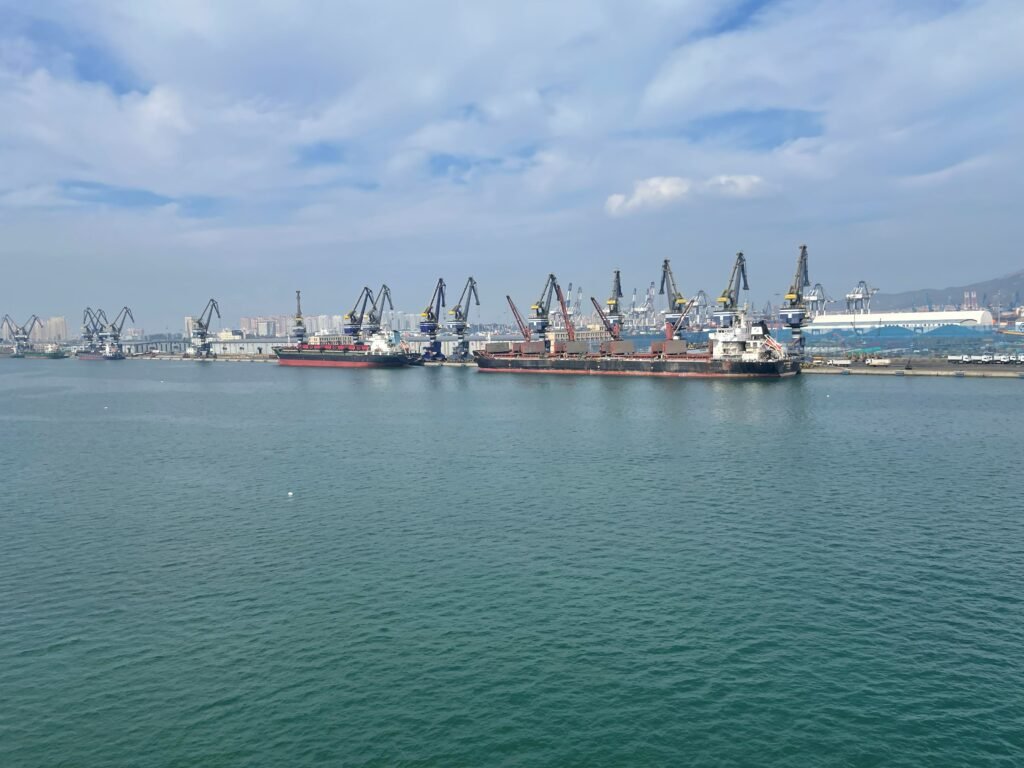
Yantai Port was full of ships: cargo vessels, ferries and working craft of every size. Cranes moved above them. Goods were being loaded, passengers processed and routes maintained across the Bohai Sea and beyond.

This was commerce. Not commerce as a paragraph in an EU communiqué. Not commerce as a political slogan. Goods, machinery, labour and capital were physically moving.

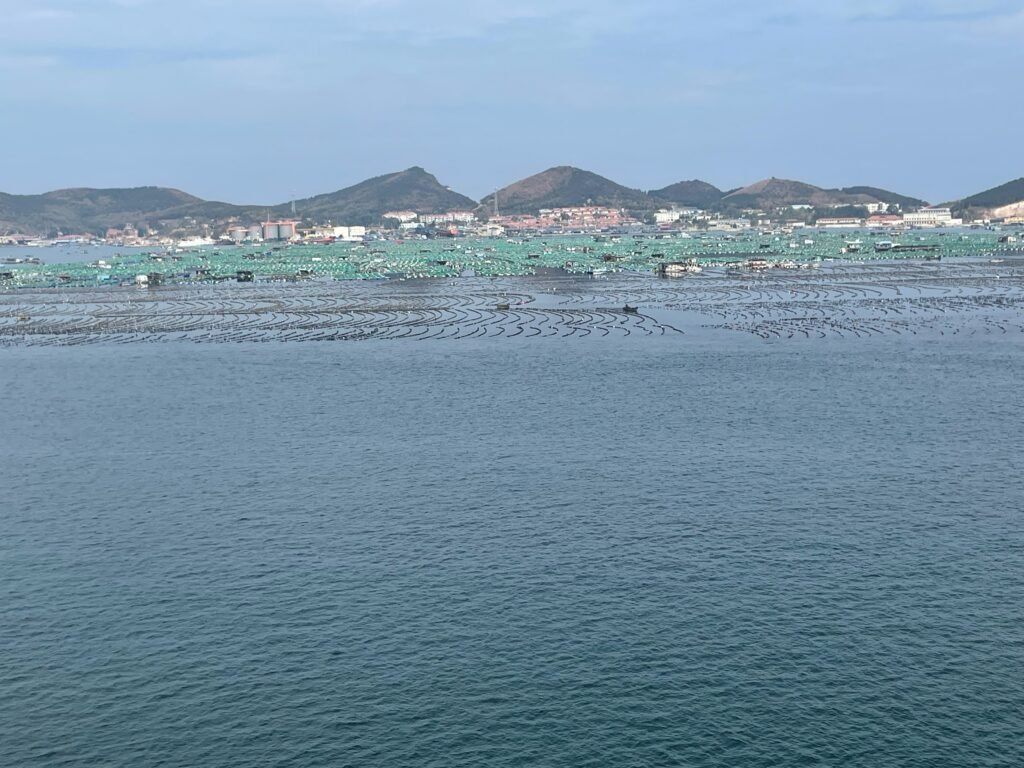
Yet the great ships were only half the scene. Along the water were smaller oyster and shellfish beds, tended by ordinary people operating at an entirely different scale.

The port contained both ends of a functioning economy: immense industrial capacity and small productive enterprise sharing the same stretch of water.

The sea was not scenery. It was working.

A Cabin to Dalian

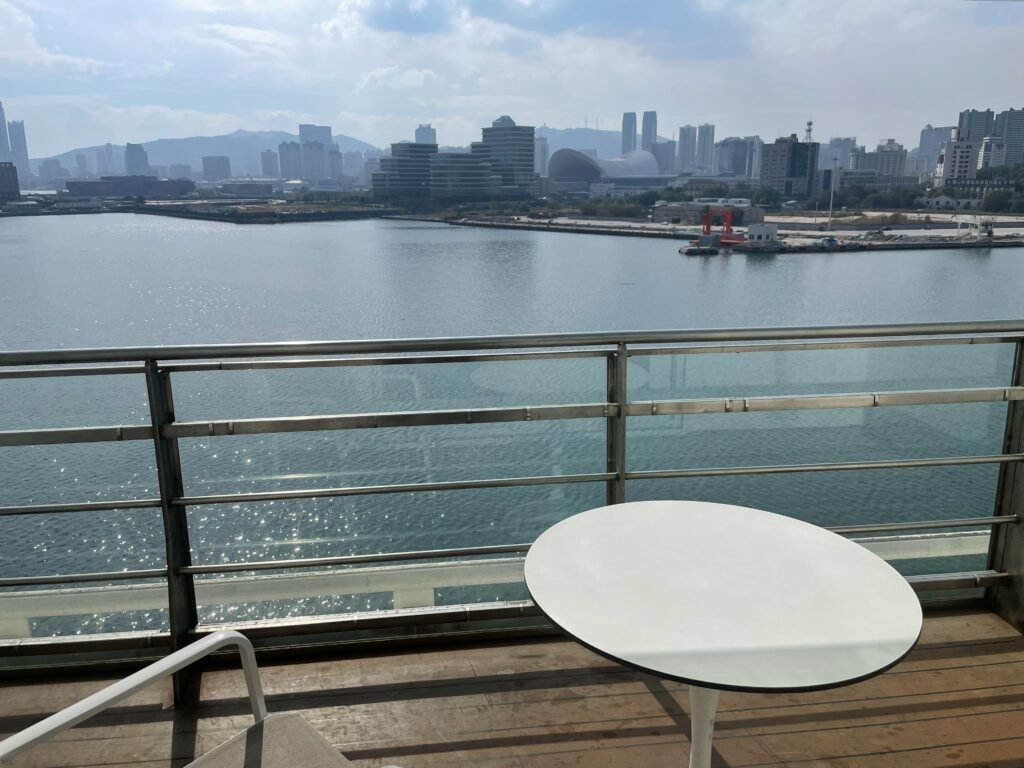
My own place in this machinery was a first-class private cabin on the ferry to Dalian.

It was clean, comfortable and mine for the six-hour crossing. I could close the door, lie down and sleep while the ship carried me across the water. The equivalent in the EU would either not exist or would be priced at a level I would refuse to pay.

China is not frictionless. The procedures can be opaque. The ticketing can be peculiar. Translation can become an expedition of its own. The efficiency is not always polished.

But it works.

When a practical problem appears, somebody usually tries to solve it. The passenger is moved, the cargo is loaded and the ship leaves. The Chinese system can be clumsy at the edges and formidable at the centre.

The EU has become increasingly skilled at the opposite: polished presentation surrounding declining capacity.

The Wrong Negotiation

China certainly supports its industries. It protects parts of its market, directs credit, builds infrastructure and uses the power of the state to advance national production. The EU may reasonably respond to those things.

But they are not the whole explanation.

A subsidy cannot load a ship. A tariff cannot manufacture competence. Political protection cannot substitute indefinitely for abundant energy, trained labour, functioning ports, industrial scale and a culture which still expects systems to produce a result.

The EU wants China to buy more of their goods while steadily making their goods harder and more expensive to produce. It wants Chinese prices without Chinese scale, Chinese infrastructure or Chinese seriousness. It wants the output while rejecting many of the inputs.

So the officials fly to Beijing and ask China to rebalance the result.

The imbalance was also made in the EU.

Tariffs may slow the ships. Regulations may obstruct their cargo. Trade negotiations may purchase time. None of them will make energy cheaper, rebuild a closed factory or turn subsidised non-participation into productive work.

By evening, this ferry will reach Dalian. Six hours across the water, with a private cabin in which I can sleep. Beyond the port waits the Russian and Japanese history of the city. Behind me, Yantai will continue loading ships and tending shellfish beds.

Brussels will continue talking about China.
The real question is not why China sells so much to the EU. It is why the EU chose to make itself so expensive, so administratively heavy and so tolerant of non-contribution that buying from China became the rational decision.

The deficit is not merely something China did to the EU.

It is the invoice the EU writes to itself one billion Euros at a time.

What China Remembered About Drink

I came to China expecting bullet trains, smart factories and the remains of old empires. I did not expect to find Europe’s drinks cabinet waiting for me.

Everyone else had left the cellar when the woman came over with a single glass of red wine.

“Please taste our best red wine,” she said. “This is the one that won the awards.”

The Chinese visitors had gone. I was the only person left. She had not poured it for the group. She poured it for me.

It was excellent.

Perhaps she had watched me tasting the earlier wines and decided I knew what I was doing. I had taken a wine course once. One of my best investments in choosing wines appropriate to the food. Or perhaps Changyu’s marketing department had simply identified an open flank.

That should have been the end of the tasting. It was not.

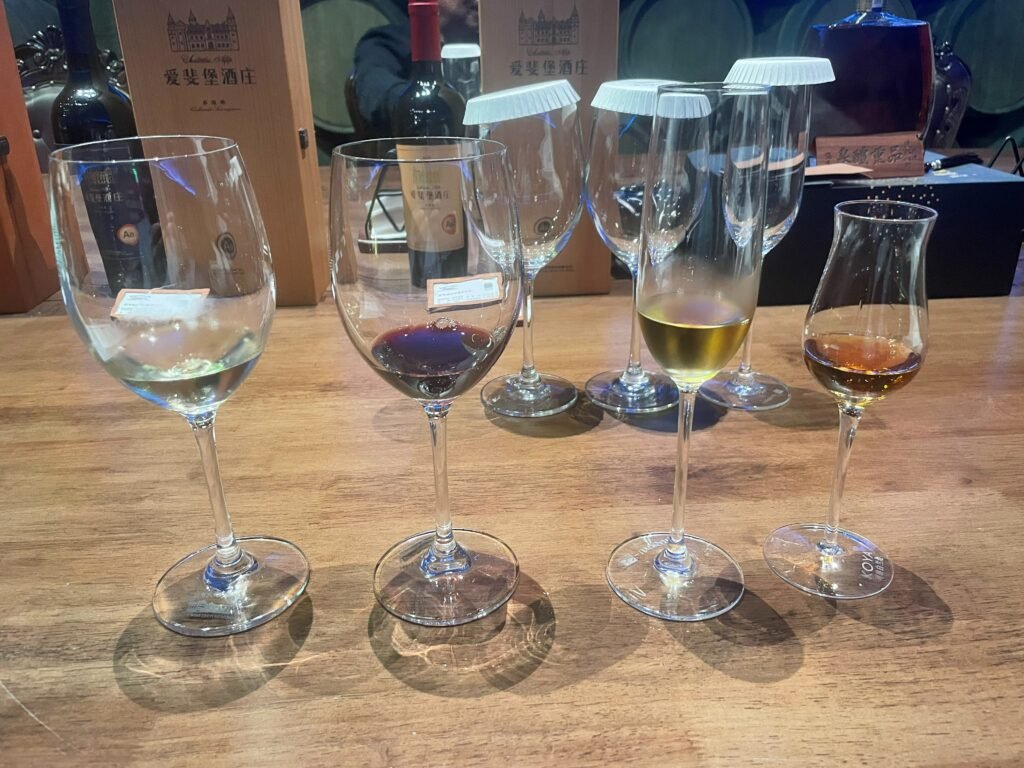
Later, I discovered that my entrance ticket included another tasting in the 1892 House. I had not expected a second tasting at all. More glasses appeared, properly arranged, with small snacks between the wines to clear the palate. The whole thing was controlled, informed and generous.

I had never been treated to a wine experience like it in Europe.

This was becoming a pattern. Alcohol was one of the discoveries of China that I had never expected to make.

At the Source

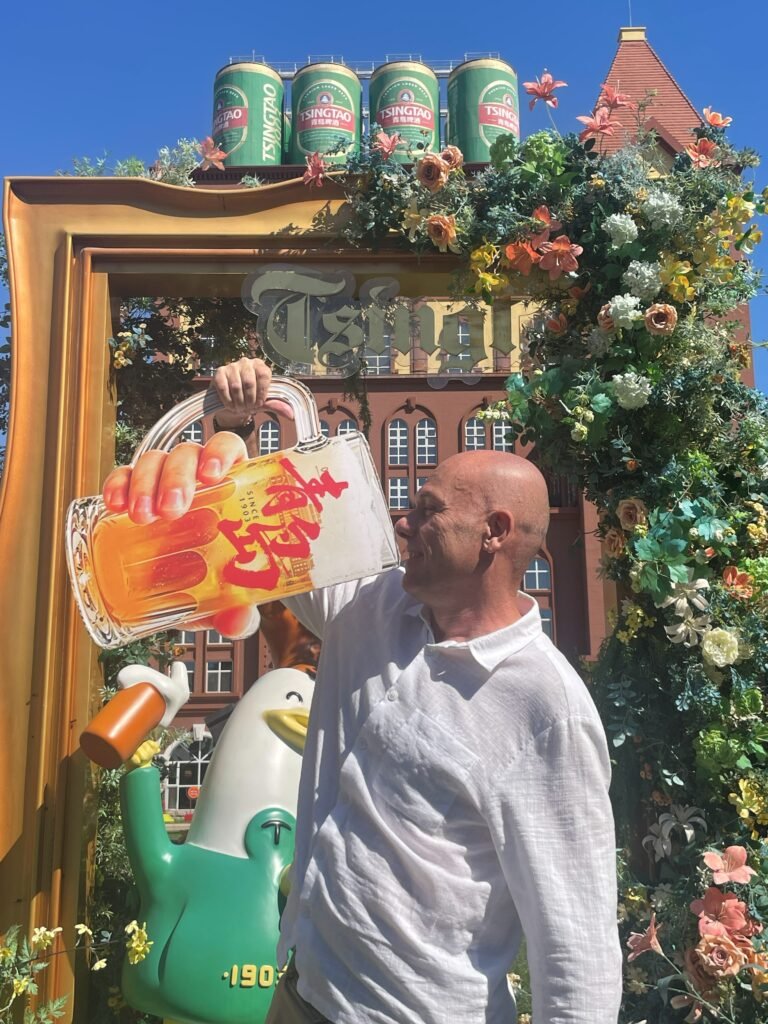
Modern Qingdao was a German creation. The Germans planned and built the port, streets, railway, sewers and public buildings of the new city. Among what they built was the brewery founded in 1903, which remains there today.

I knew about that German brewing inheritance before arriving. It was part of the reason for going.

What I had not expected was how good the beer would taste.

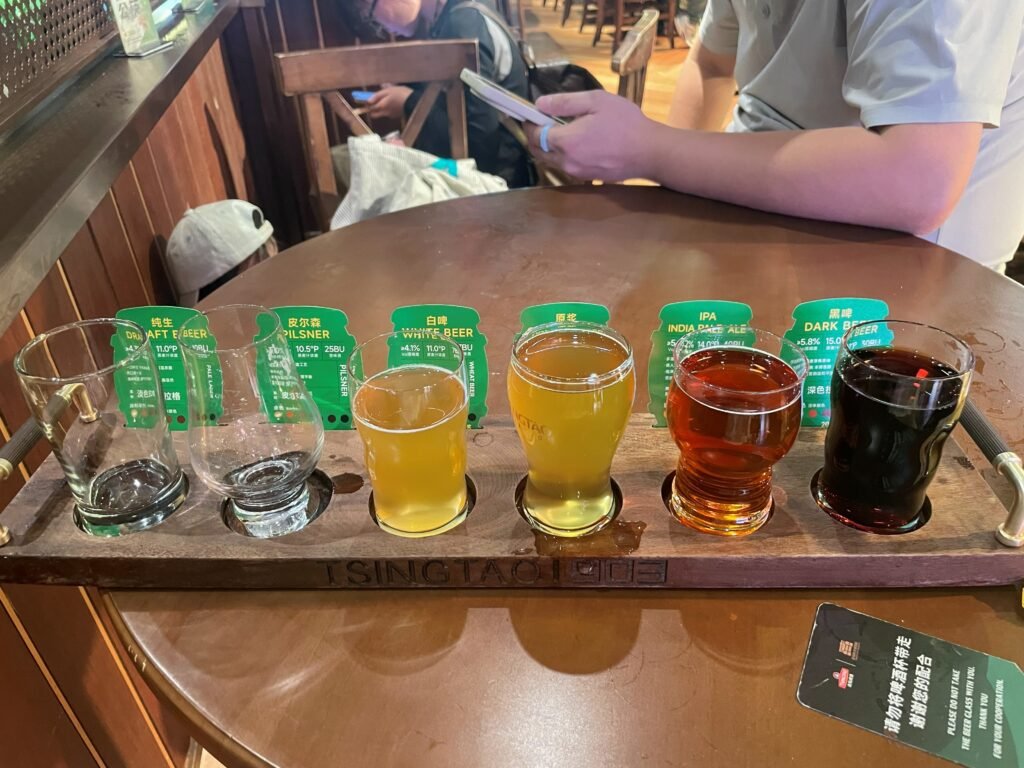
Tsingtao sold in Britain is still brewed in Qingdao rather than produced under licence. But a beer shipped halfway around the world cannot arrive with the same freshness as one drunk at its source. Time, storage, temperature and transport all intervene. There is also more than one Tsingtao. At the original 1903 brewery I could taste different versions beside each other rather than treating the name as though it described one uniform industrial liquid.

The beer was clean, fresh and alive. It tasted better there because it belonged there.

Rule 1 of Travel photos failed, take the photo before beginning enjoying yourself

That distinction matters. Modern alcohol companies teach consumers to recognise a label. Older drinking cultures recognised a product, a place and a method. The name was evidence of origin rather than a substitute for it.

Qingdao had preserved both.

A Polish Brewer in Russian Harbin

Then came Harbin.

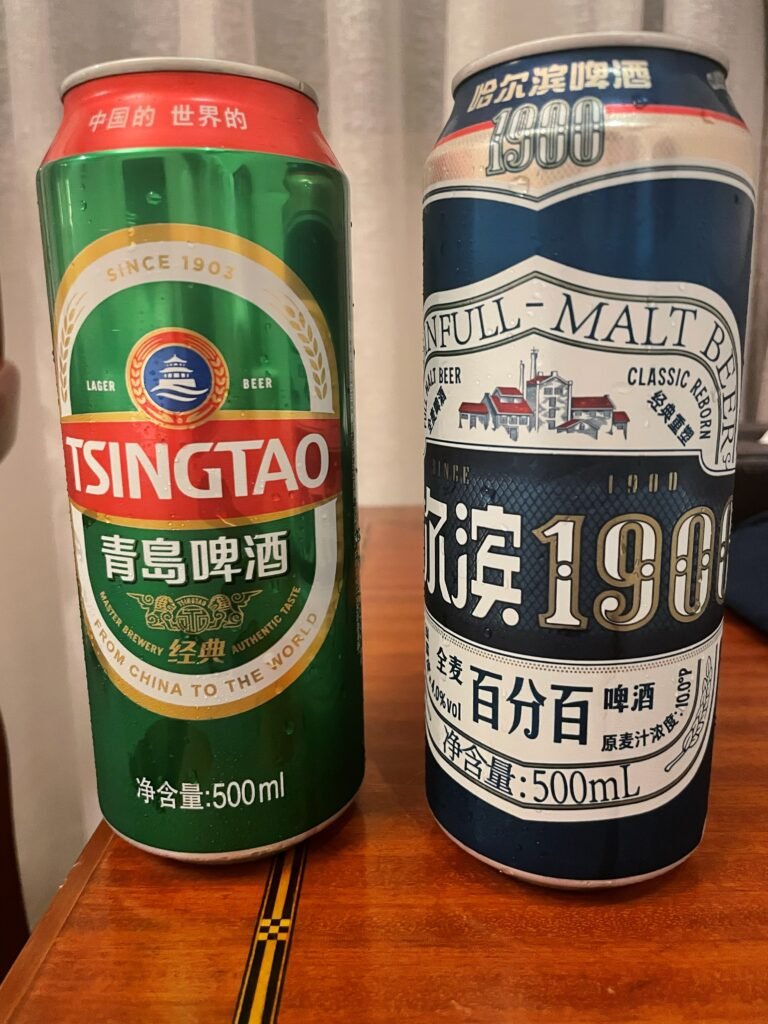
The Harbin brewery predates Tsingtao. It was founded in 1900 by Jan Wróblewski, a Polish entrepreneur from the Russian Empire, while Harbin was being built as a Russian imperial railway city on the Chinese Eastern Railway, connected to the Trans-Siberian Railway.

Harbin 1900 describes itself on the label as a 100 per cent pure malt lager. That is an excellent claim. Malt is the traditional foundation of beer, before modern mass producers discovered the cheaper ingredients with which part of it could be replaced.

More than a century later, the beer still carries the history of the city that produced it.

The history was becoming unusually neat. German and British capital had established the brewery in the German-built city of Qingdao. A Pole from the Russian Empire had established the brewery in Russian imperial Harbin. China had taken the knowledge, absorbed the machinery and kept the beer.

The foreign presence receded. The breweries remained.

Wine Country

Yantai was the greater surprise.

I had not known that I was travelling into the centre of Chinese wine production. Qingdao is not far away, yet Yantai’s position on the northern side of the Shandong Peninsula gives it a different coastal climate and a serious wine industry.

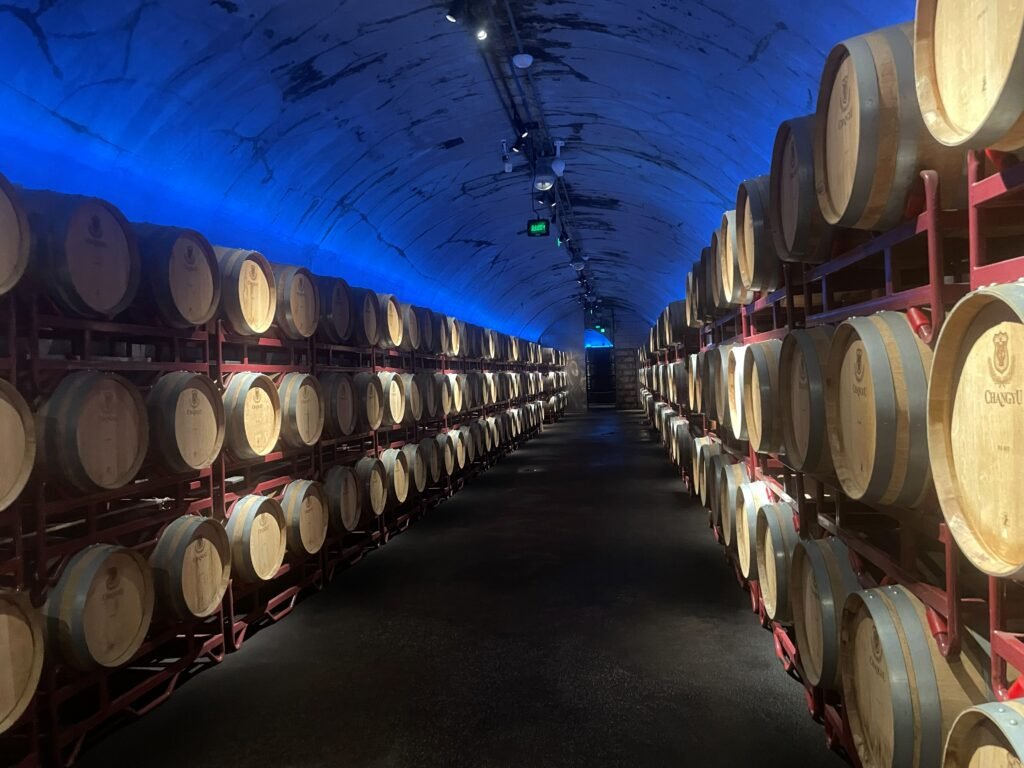
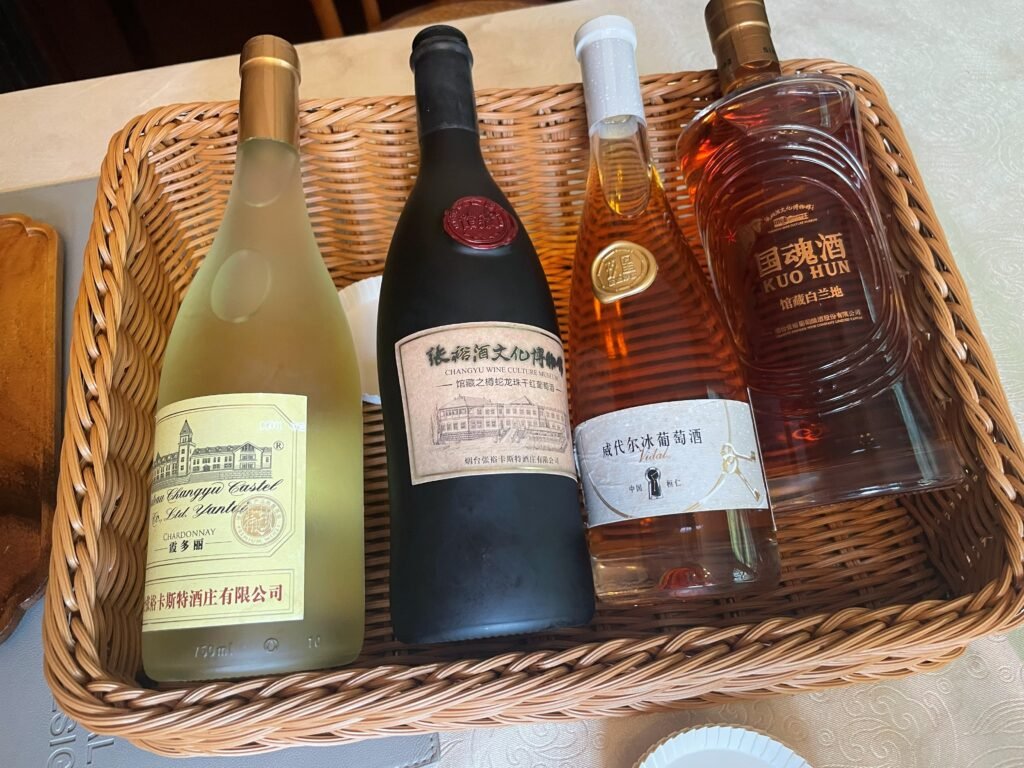
Changyu was founded there in 1892 by Zhang Bishi, who brought in European vines and an Austro-Hungarian winemaker. It went on to produce China’s first industrially made wine and later its first brandy. That is enough history to understand the point: this was not an invented crest pasted onto a bottle last Tuesday.

The cellar was old, cool and convincing. The barrels and brickwork were real. So were the modern displays and the technology built around them. China had not turned the place into a mausoleum. It had kept the history working.

This was where the woman had singled me out after the scheduled tasting and brought over the award-winning red. It was not another sample left on the table. It was not part of the tasting flight. It was a separate glass of their best wine, poured for me after everyone else had gone.

The history mattered. The glass mattered more.

Then came the second tasting in the 1892 House—also included in my ticket, and entirely unexpected. More wines. Small snacks between them. Proper presentation. Changyu understood that heritage is not merely something to print on a label. It must be made tangible.

Old Methods and New Machines

I had seen the same principle in Chinese factories.

China does not regard inheritance and technology as opposites. It will retain an old cellar, install an interactive museum above it, build a smart factory outside the city and sell the resulting product through a phone. The old method is preserved where it still produces value. New technology is added where it improves scale, control or presentation.

Europe increasingly does something different. It retains the name, sells the history and alters the product.

China inherited European methods and turned them into living industries. Europe increasingly retains the trademarks while reducing what stands behind them.

What Drink Is For

China also remembers that alcohol has a function beyond intoxication.

It is a social solvent. It greases the machinery of business. It turns meals into negotiations and acquaintances into temporary friends. It softens courtship, supplies ritual and allows things to be said indirectly that might otherwise remain unsaid.

Europe once understood this without needing it explained. The pub, the wine table, the brewery and the village bar were pieces of social infrastructure. Alcohol belonged to place, season, work, courtship, argument and reconciliation.

Now it is increasingly treated as a taxable unit delivered by a multinational brand.

When the Name Replaces the Beer

Stella Artois and Newcastle Brown Ale are useful examples.

Both genuinely date from the 1920s, and the original Stella brewery at Leuven has a much older history. But the existence of a historical name does not make the modern product historically continuous. The British Stella version was reduced from 5 per cent alcohol to 4.8 per cent in 2012 and then to 4.6 per cent in 2020. Ireland received the same reduced-strength product. The branding, chalice and ancient dates remained in place while the liquid changed beneath them.

Newcastle Brown Ale suffered similarly. Originally brewed in a brewery next to St James’ Park, I could smell the brewery as a child when my Dad drove us through Newcastle centre to our Grandmothers house. It firstly moved out of the city centre to be brewed across the Tyne in Gateshead. Arguably, perhaps, it retained much of the heritage and ingredient sources, but is now brewed at Tadcaster, and if I read the ingredients, I find myself wondering how much of that was in the original recipe.

The names carried the history. The beer no longer had to.

Moretti possesses a real Italian lineage, but much of the beer sold under that name in Britain is now brewed in Britain. Place has been detached from provenance. Madrí dispenses with even that inconvenience. It was created in 2020, brewed in Yorkshire and dressed immediately in the costume of Madrid.

Europe has become very good at manufacturing foreignness.

Meanwhile, real British beers have disappeared. I remember Flowers. I remember Courage Directors, a rich, full-bodied bitter that tasted like beer rather than a chilled advertising campaign. The Flowers brewery itself closed in 1968. The name wandered through later contract-brewing arrangements after the place and company behind it had gone. Directors is now listed as no longer brewed.

These were not obscure liquids preserved only in enthusiasts’ notebooks. They were recognisable British beers. Once lost, they cannot be recreated merely by transferring the trademark to another factory.

The destruction continues. Britain ended 2025 with 137 fewer breweries than it had begun the year. Historic cask ales have been deleted, breweries closed and product ranges reduced as ownership has concentrated.

The knowledge still exists. The structure no longer rewards it.

The State at the Cellar Door

Tax has accelerated the decline.

Ireland imposes €3.19 of excise on an ordinary 750ml bottle of still wine and then charges 23 per cent VAT on the wine, the commercial margin and its own excise. The €3.19 duty therefore costs the buyer €3.92 at the till. On a €15 bottle, €5.99—almost 40 per cent of the entire price—is direct tax. Ireland also imposes minimum unit pricing, preventing a 12.5 per cent bottle from being sold below roughly €7.40 regardless of what the wine is worth.

Denmark uses the same method. The wine duty on a normal bottle is 8.45 kroner. Once 25 per cent VAT has been applied to that tax, it costs the buyer 10.56 kroner. On a bottle selling for 100 kroner, 28.45 kroner is excise and VAT.

Britain now charges about £2.87 of duty on a 75cl bottle at 12.5 per cent, followed by 20 per cent VAT. The consumer therefore pays £3.44 merely for the excise and the VAT imposed upon it, before considering the VAT on the wine and commercial margin. On a £15 bottle, approximately £5.37—nearly 36 per cent—is direct tax.

The state taxes the wine and then taxes its own tax.

Germany proves that this is a choice. It levies no excise duty on still wine. A €15 bottle carries 19 per cent VAT, amounting to €2.39 within the shelf price. The equivalent Irish bottle contains €5.99 in excise and VAT: two and a half times as much direct consumption tax.

Europe then wonders why drinkers retreat towards industrial products supported by enormous economies of scale.

Manufactured Sweetness

The wine market offers its own version of the same decline.

Vineyards are being grubbed up in Europe as consumption falls. At the same time, supermarket shelves fill with mass-produced imports whose principal achievement is consistency. Much of the Australian wine sold in Europe is absolute rubbish. Some of it is disgustingly sweet, with a suspiciously manufactured sweetness closer to an alcoholic soft drink than a proper wine. I do not trust it, and I will not buy it.

The contrast with Yantai was difficult to miss. In Europe I increasingly inspect bottles for signs that the contents have been manipulated into anonymous sweetness. In China I found a producer placing several wines in front of me, explaining the differences and providing food between them so that each could be tasted properly.

China was treating wine as a product worth understanding. Europe’s mass market increasingly treats it as a branded alcoholic delivery system.

What China Remembered

None of this was what I expected to find.

I came to China looking for scale, speed and new technology. I found those things. I travelled on the trains, walked through the cities and watched factories trying to remove human inefficiency from production.

But alongside the future I found old European knowledge still at work.

German brewing in the city the Germans built at Qingdao. A Polish brewer from the Russian Empire in Harbin. European vines and an Austro-Hungarian winemaker in Yantai. Malt, cellars, oak barrels, brandy and wine. Techniques imported during the age of concessions and railway empires, absorbed by China and carried forward after the foreigners had gone.

Europe exported the methods. China kept making the products.

Europe kept the labels, reduced the strength, moved the breweries, taxed the bottles and sold the remaining history through advertising.

China learned to turn heritage into an experience. Europe learned to turn it into a trademark.

I came to China expecting to see the future. I did not expect it to remind me what drink had once been: craft, place, hospitality and social movement.

China had not merely remembered how to make it.

It had remembered what it was for.

Inspecting the Colonies: Qingdao

A German Colony, a Japanese Interlude, and a Rather Good Brewery

There are places I have wanted to visit for years, and Qingdao was one of them. The very improbability of a German colony on the Chinese coast had always fascinated me. More remarkable still was the suggestion that much of it remained intact.

The Germans called it Kiautschou, and they did not have long to enjoy it. Having acquired the territory in 1898, they began constructing their little piece of Germany on the Yellow Sea. By 1914, Germany had found itself on the wrong side of the First World War, and Japan arrived to relieve the Kaiser of his Chinese possessions.

Sixteen years. Not much time to build a colony, let alone leave a lasting impression.

Yet walking around Qingdao, I found myself astonished by what the Germans had achieved.

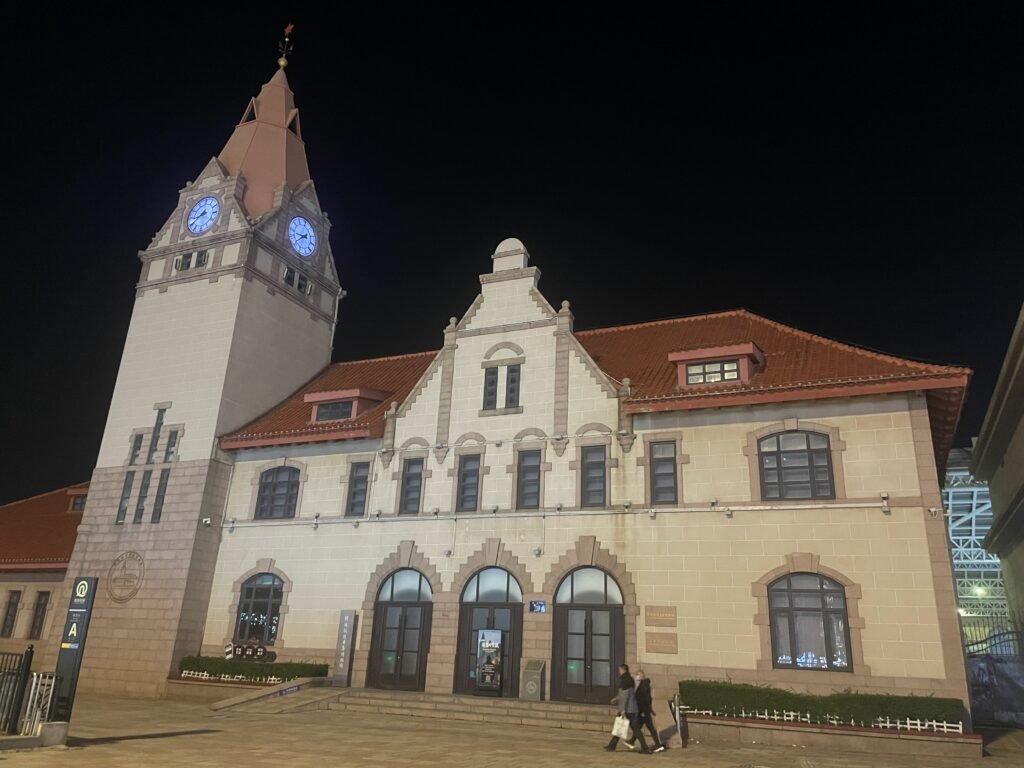
The railway station is magnificent. The former governor’s residence is a fabulous Art Nouveau mansion, complete with elaborate interiors, beautiful fireplaces and all the architectural confidence of an empire that evidently expected to remain for centuries.

Qingdao German station

Elsewhere, German buildings are scattered throughout the old town, connected by broad streets and substantial infrastructure. There is the famous pier, the beginnings of a modern port, and, naturally, a brewery.

The Germans had arrived with plans for something rather grand.

And judging by what remains, they were making excellent progress when history interrupted them.

Indeed, their influence proved so enduring that, more than a century after their departure, the Chinese are still borrowing from their architectural vocabulary. Modern shopping centres reproduce German façades, while the newer railway developments echo the old European buildings.

There are even bratwursts being sold on the streets.

And everywhere, absolutely everywhere, there is Tsingtao beer.

Perhaps there is something in the old suggestion that beer contributes to happiness, because the people of Qingdao seem rather more inclined to smile than their counterparts in Shanghai.

The brewery itself was one of the principal reasons for my visit.

Established in 1903, it remains the great surviving commercial achievement of the German occupation. The original brewing equipment and buildings provide a fascinating glimpse into the industrial technology that Germany brought to China.
But there was another interesting discovery.

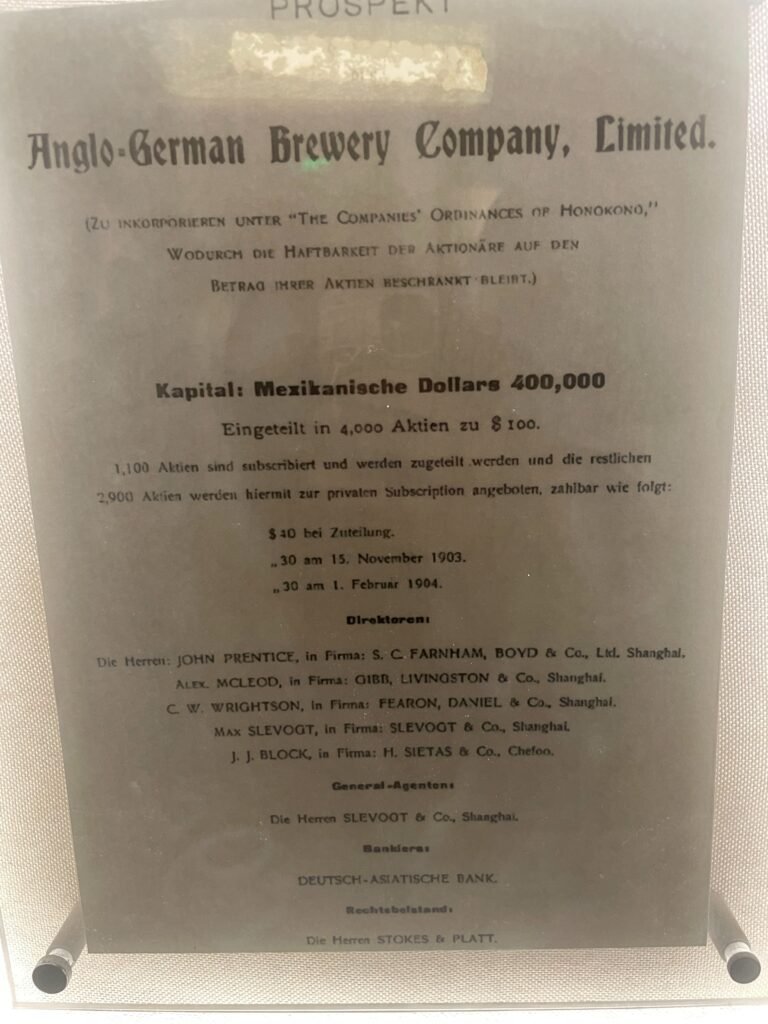
Although founded by German and British commercial interests, the brewery’s early leadership included a remarkable number of British businessmen associated with Shanghai.

Strong German-Anglo relations and a business deal conducted in sound money, backed by real silver coinage

Here was colonial capitalism operating across imperial boundaries. German territory, German brewing expertise, British capital and commercial connections, Chinese labour and an enormous potential market.

Whatever their governments might have been doing, the businessmen were evidently capable of reaching an accommodation.

And they produced a remarkably successful beer.

The Japanese Arrive

The Japanese inherited something rather promising when they captured Qingdao in 1914.

They also recognised its potential.

Walking through the old commercial district, I discovered an extraordinary collection of buildings dating from the Japanese occupation and the years immediately following it.

The architecture is fascinating. German influences mingle with Japanese interpretations of European Art Nouveau, gradually giving way to the harder lines and geometric confidence of Art Deco.

Some of the streets are almost absurdly beautiful.

Here are banks, commercial offices and imposing institutional buildings, constructed by people who clearly believed that Qingdao was going to become an important centre of international trade.

And then there is the former Japanese commodities exchange.

What an extraordinary building.

Completed around 1920, it resembles a great concrete temple to commerce. Monumental, imposing and entirely unexpected, it dominates its surroundings with the confidence of an institution that anticipated considerable wealth passing through its doors.

I had not expected to find anything quite like it.

The Japanese were not merely occupying a former German colony. They were investing in its commercial future, building the infrastructure through which they intended to profit from northern China.
Inside, some of the decorative paintings offer an intriguing glimpse into the thinking of the period.

Among them are scenes depicting the Puritans arriving in America and trading with the indigenous inhabitants.

An interesting choice of subject for a Japanese commercial building in China.
One wonders whether the intended parallel was entirely accidental.
The Japanese had arrived in a foreign territory, bringing capital, technology and commercial institutions. The Chinese possessed the land, the labour and the resources.

Perhaps the paintings were simply celebrating international commerce.

Or perhaps they reveal something about how Japan imagined its own relationship with China.

Either way, they are a remarkable survival.

The Peace That Nobody Liked

The Japanese occupation was not destined to last.

At Versailles in 1919, Germany’s former rights in Shandong were awarded to Japan rather than returned to China.

The Chinese were furious. The decision helped ignite the May Fourth Movement and became one of the great grievances of modern Chinese nationalism.

By 1922, following the Washington Conference, Japan had agreed to return Qingdao to Chinese administration.

Imagine the frustration.

The Japanese had captured a valuable German possession, invested heavily in its commercial infrastructure, constructed magnificent banks and an enormous commodities exchange, and then found themselves obliged to surrender political control.

All those splendid buildings, intended to anchor a profitable Japanese future, now stood in a Chinese city.

A rather expensive lesson in the uncertainties of empire.

The Germans, meanwhile, had their own reasons to be dissatisfied with the peace.

Their overseas possessions were gone. Alsace-Lorraine had returned to France. Territories had been transferred to Poland, and Northern Schleswig had returned to Denmark.

I found myself imagining a rather curious scene inside the former German governor’s mansion.

A few German gentlemen seated beside those magnificent Art Nouveau fireplaces, perhaps joined by their Japanese counterparts, discussing the injustices of the post-war settlement.

The Germans complaining about the territories they had lost.

The Japanese complaining about the territory they had been compelled to surrender.

Both convinced that the victorious powers had treated them rather badly.

Perhaps, over a glass of something suitably strong, they might have wondered whether these injustices could someday be corrected.

Perhaps even together.

History, of course, would eventually produce a German-Japanese alliance, although not quite in the circumstances of my imaginary gathering.

Still, standing inside that beautifully preserved mansion, it was difficult not to entertain the thought.

A Colony That Refuses to Disappear

What makes Qingdao so remarkable is not simply the survival of individual buildings.

It is the survival of an entire architectural landscape.

The Germans were here for barely sixteen years. The Japanese governed the territory for only another eight before its return to China.

Yet both left an extraordinary physical inheritance.

Railway stations, banks, commercial exchanges, administrative buildings, churches, hotels, breweries and private residences.

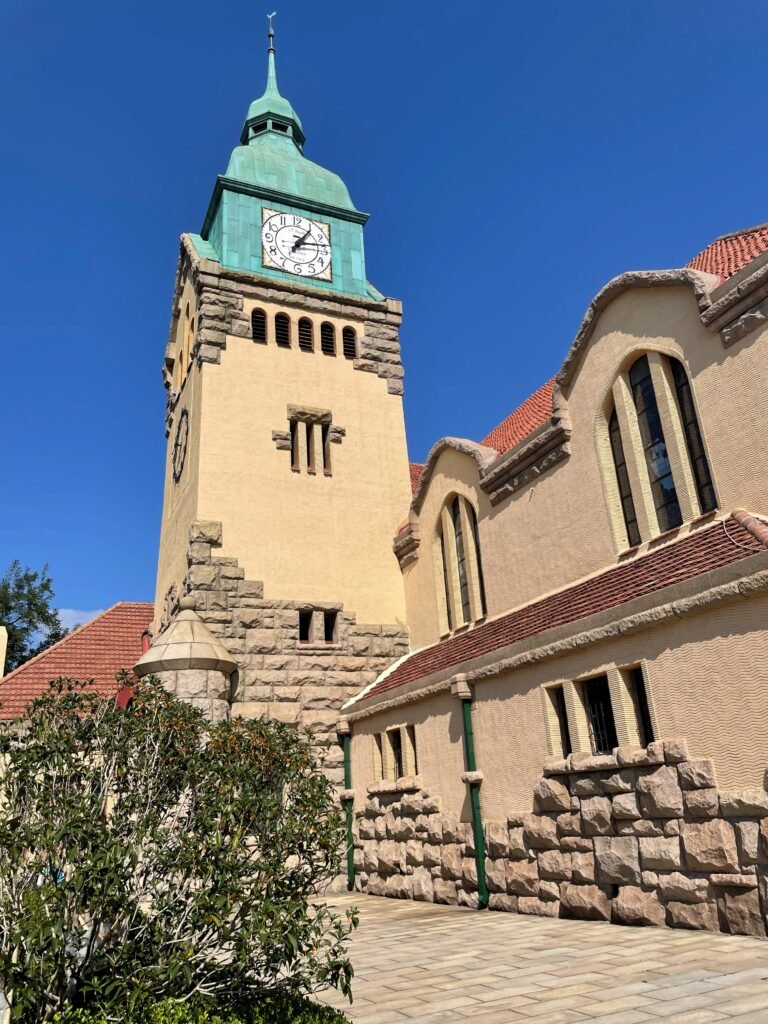
Protestant Church. Wins for me over the larger catholic cathedral

And much of it remains astonishingly intact.

I spent hours wandering the streets, continually discovering another remarkable façade, another unexpected building, another reminder of the extraordinary ambitions of the men who once governed this distant corner of China.

The architecture tells a story that political maps cannot.

Empires arrive, draw boundaries, invest fortunes, erect monuments to their own permanence and then depart.

The buildings remain.

Sometimes they even become the architectural inspiration for the people who inherit them.

Qingdao is particularly good at this.

And a word about the entrance fees. Several of the finest buildings charge admission, but I found the interiors so extraordinary that the experience exceeded my expectations tenfold.

The governor’s jugendstil residence alone is worth the journey.

Beautiful rooms, original architectural details, magnificent fireplaces and a level of preservation that allows the visitor to step directly into the world of Imperial Germany.

It is one thing to read about Kiautschou.

Quite another to stand inside it.

I had wanted to visit Qingdao for years, and it exceeded everything I had imagined.

A fabulous city, full of architectural surprises, improbable history and exceptionally good beer.

But there are other former imperial possessions to inspect, and the Chinese high-speed railway awaits.

So it is time to leave the Germans and Japanese behind.

I have an appointment at the British Embassy.

Unfortunately, I fear I may be about 100 years too late.

Nevertheless, I shall give it a try.

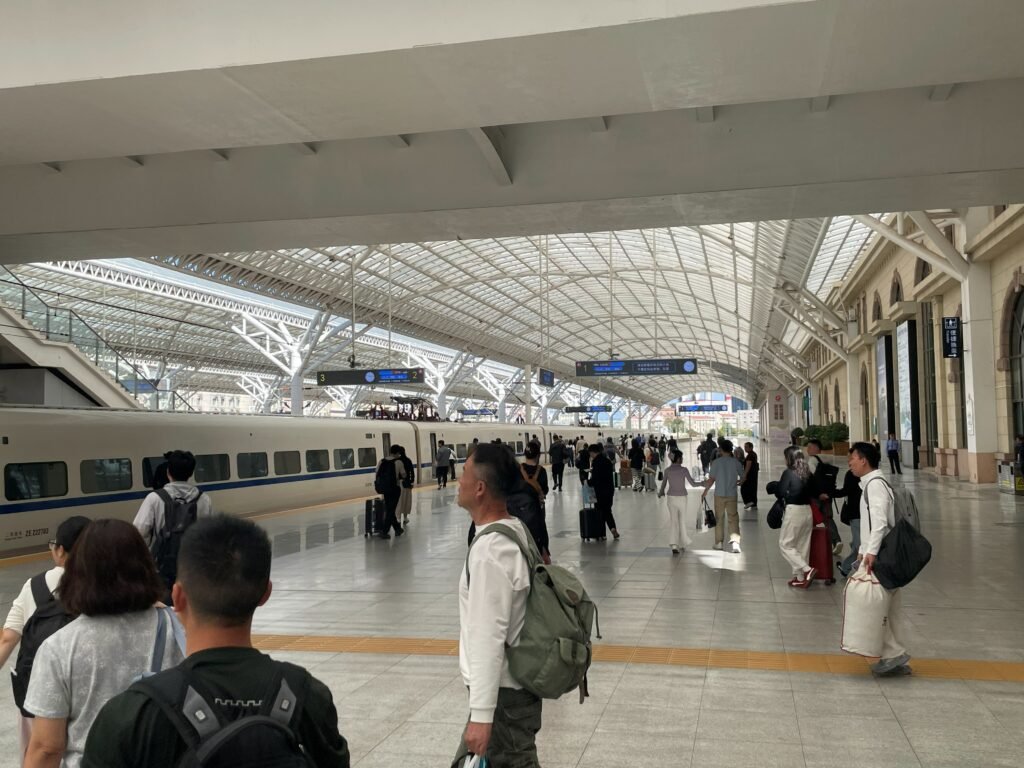
Qingdao new station and my train

Gresham’s Law of Courting

I. Shanghai

Shanghai is a city of commerce without apology.

Money is made, exchanged, counted and reinvested. The towers, banks, shopping streets and endless movement of goods carry the same message: this is a city that understands trade.

It has also quietly emerged as the world’s biggest physical gold exchange.

Walking through Shanghai, a principle from monetary history kept returning to me.

Gresham’s Law.

Bad money drives out good.

Under a gold standard, take two instruments, each denominated at one pound: a paper banknote and a gold sovereign. The sovereign contains the gold. The banknote promises its equivalent. The denomination is the same. The backing is not.

When both must be accepted at the same nominal value, the doubtful banknote is spent and the sovereign retained. The paper circulates. The gold goes into reserve. Its owner understands the difference between a pound printed on a promise and a pound settled in gold.

Shanghai gives that distinction physical form. Paper claims move across screens while gold is weighed, tested, bought and stored. One can be created by extending a balance sheet. The other must be acquired.

I was born in 1971, the year the United States closed the gold window. The dollar’s remaining convertibility into gold was suspended. The suspension was called temporary. It became the new order.

I later entered the relationship market believing men and women still exchanged hard currencies. Restraint and exclusivity would meet loyalty and commitment. I would build my reserves. The woman would preserve hers. Both would bring something scarce to the settlement.

I had little capital and little success. I worked, built a career, accumulated money, bought a house and established a company. Female interest increased. The timing was the evidence.

My personality had not suddenly appeared. What had changed was the backing.

I had become hard currency.

Meanwhile, women had been issuing another currency. Sexual access circulated without the commitment I was still accumulating the means to provide. Other men received it on terms never offered to me.

I remained on the old standard while the new currency circulated elsewhere.

One market. Two instruments. Different exchange rates.

II. Hard Currency

The inherited bargain rested on reciprocal scarcity.

But the starting balance sheets were different.

The man began with an empty vault. The woman began with the gold already in hers.

His task was accumulation. Hers was preservation.

The female currency was femininity, purity, sexual restraint and selectivity, with exclusivity promised at settlement. The male currency was accumulated competence, capital and stability, with courtship, loyalty, provision and permanence promised at settlement. He built the reserves he would offer. She preserved the reserves with which she entered the market. The bargain joined acquired reserves to preserved reserves.

A man spends years building his side of the settlement.

Competence requires practice. Capital requires earnings, restraint and accumulation. Stability requires decisions repeated long after their novelty has disappeared. A reputation for reliability requires a record. The house, the savings and the capacity to provide represent life already expended.

Commitment then adds a claim on life still to come.

A man who commits allocates future time, income, attention and optionality. He accepts obligations that may outlast the attraction which brought him into the arrangement. His offer is backed by both accumulated reserves and future production.

That currency is expensive to manufacture.

Demand does not cheapen that currency or create a claim upon it.

The female reserve was the scarcity and selectivity attached to sexual access. It was not manufactured through years of earnings. It was present at the beginning, and its preservation determined what remained available for the eventual settlement.

Cheap issuance did not add gold to that vault. It spent the scarcity which had given the original promise its value. More paper could circulate while less backing remained behind the denomination.

The old bargain made sense while both vaults could support the exchange. Being chosen for an exclusive settlement meant something when access had not already circulated on easier terms.

The sexual revolution broke that reciprocity.

It did not abolish the old denomination. It introduced a cheaper instrument beside it, then continued demanding settlement at the old price.

III. The Second Currency

The new currency allowed sexual issuance to multiply without a corresponding increase in reserves.

Traditional courtship had pillars: family, church, community, reputation and ceremony. Those institutions imposed friction, kept records and made issuance visible. Modern dating demolished the temple and handed every woman a private printing press. Circulation became opaque. Reserves could not be audited. The ledger became self-reported. Yet every note still arrived marked scarce, exclusive and premium-grade. Every dating profile might as well have stood between two Corinthian columns with an issuing clerk behind the desk.

Hookups, casual sex and situationships allowed sexual access to circulate without courtship, exclusivity or a credible future. Contraception and abortion weakened the connection between sex and childbirth. Feminism recast restraint as repression and judgement as illegitimate, reducing the reputational cost of issuance.

Digital platforms widened the market. Anonymous foreign holidays removed the local ledger: no shared social circle, no lasting reputation and a departure date built into the transaction. A woman could issue freely abroad, return to the man whose commitment remained in place and seal the foreign episode inside a separate compartment. He continued pricing the relationship without knowing a second ledger even existed.

What had required a substantial commitment could be issued for immediate desire.

But increased supply did not mean equal access.

Women directed the new currency toward the men they desired most. Highly desired men obtained it without supplying the old backing. They did not need to offer a house, provision, patient courtship or marriage to receive what other men were still accumulating commitment to obtain.

Men outside that flow continued accumulating. They worked, established themselves and prepared for a relationship market whose advertised terms still required serious commitment.

They encountered scarcity while supply expanded elsewhere.

This was the central asymmetry. The same market could be liquid for one class of men and expensive for another. The men receiving cheap issuance had little reason to buy the old bundle. The men expected to buy the old bundle had received little of the cheap issuance.

They were not the beneficiaries of the inflation.

They became its later counterparties.

The two instruments circulated inside the same market, while feminist doctrine insisted that the exchange rate had never changed.

IV. The Hidden Ledger

Choosing a bank requires more than admiring its frontage.

The building may look solid. Its name may inspire confidence. The banknote may carry a handsome promise to pay one pound. None of that establishes how much gold remains in the vault or how many paper claims have been issued against it.

The question is not whether the note looks respectable. It is whether the bank can support the settlement it promises.

The same examination belongs in the relationship market. A man who has spent years filling his own vault needs to know whether the institution offering him a note has preserved its reserves, or merely continued printing against an old reputation for solidity.

Every bank has an issuance history.

A printed denomination does not establish backing. Nor does the declaration of present exclusivity erase the terms on which access was previously offered.

The ledger records selectivity, volume, recipients and price. Who received access? What did they contribute? How readily was it offered? What is now being demanded from the man approached for permanence?

Extensive prior sexual availability reduces a woman’s long-term relationship value in the male market. The proposition is worth less because the scarcity and selectivity men value have already been reduced. Calling the history irrelevant does not restore them.

Volume matters. Terms matter. Exchange rates matter.

A man who received access through desire alone and a man later asked for resources, legal commitment and years of loyalty were offered different prices. The later offer cannot be valued by its label alone.

Present exclusivity is part of the offer. Its history is part of the valuation.

Concealment adds duplicity, but concealment does not create the dilution. The issuance has already occurred. Hiding the ledger merely prevents the next counterparty from pricing it accurately.

Nor does a higher asking price establish a higher value. A demand for permanence reveals what the issuer wants. It does not demonstrate what the buyer will receive.

The banknote says one pound.

The vault determines what that promise is worth.

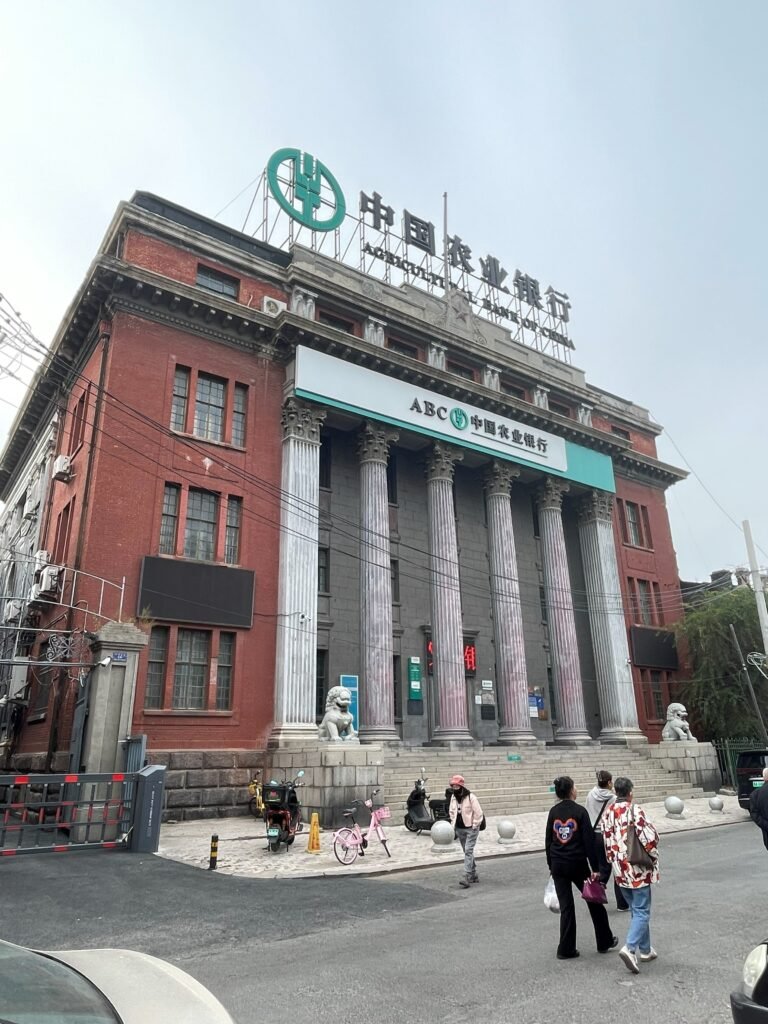
Harbin branch of Bank of Communications. Built in 1928 with a magnificent frontage that would impress any would-be depositor. By 1942 it closed.

V. Slagflation

The expansion of sexual currency created a powerful arbitrage.

Women issued cheaply to men selected for immediate desire, then sought permanent settlement from other men in the old denomination: courtship, resources, protection, loyalty and marriage.

One market supplied excitement. The other supplied backing. The advantage lay in taking the benefits of both while denying that the first transaction changed the value of the second.

This is slagflation.

Slagflation is the inflation of female sexual issuance combined with continued demand for premium male settlement.

The consequence was delayed, not abolished. Issuance and settlement had simply been separated by a decade or more.

The new currency expanded while the advertised cost of male commitment remained high. Sexual access became easier to issue. The years required to build a solvent, competent and reliable man did not become easier to compress.

Women observed what other women obtained and adjusted their behaviour. What began as an individual advantage became a market norm. Feminist doctrine then supplied its moral justification: female issuance was private and irrelevant, while male resources, intentions and future commitment remained open to inspection, negotiation and judgement.

The asymmetry entered the accounting itself. One ledger was examinable. The other was supposed to be accepted unopened.

The trade cleared while men still honoured the inherited bargain.

Men continued accumulating against the inherited bargain and failed to audit the market. They assumed that the currency offered to them had been preserved under a discipline resembling their own. Their assets were real. Their understanding of the exchange rate was obsolete.

They had mistaken scarcity to themselves for scarcity in the market. The earlier price had been low. The later price was high. A generation of men had kept accumulating against terms that no longer existed.

Women had circulated paper and requested settlement in gold.

The arbitrage depended on the later man accepting the denomination without examining the issuance. Once he compared the two, the difference could no longer be hidden inside the language of commitment.

VI. The Repricing

No arbitrage survives discovery forever.

Men began comparing exchange rates. They distinguished being desired from being selected to provide. They noticed when substantial obligations were being demanded for an offer previously made without them.

Why release years of accumulated capital and a claim on future life at the historic price when the reciprocal scarcity had already been diluted?

Repricing followed.

Some men offered less courtship, less provision and less commitment. Others extended the audit, watching behaviour before releasing reserves. Some accepted casual terms while refusing permanent liabilities. Others stopped trading.

The responses differed. The effect was the same: hard currency became harder to obtain.

Feminist orthodoxy continued treating the one-pound banknote and the one-pound sovereign as though matching denominations guaranteed equal backing. Men who recognised the difference began retaining their gold rather than exchanging it for paper of uncertain redemption value.

Their competence had not disappeared. Their capital had not vanished. Their capacity for loyalty had not ceased to exist. Those reserves were withheld from transactions that failed to justify their release.

Once men withheld their half, the old reciprocal bargain could no longer circulate on demand.

Women who still wanted the old settlement called this male commitment phobia.

The market has no commitment phobia. It has a bid.

This was a valuation crisis.

The asking price remained high because women still wanted the old benefits. The bid fell because the buyer no longer accepted the old valuation. Calling him reluctant, immature or afraid of commitment did not close the spread.

Nor could additional accumulation solve it. A larger reserve does not improve the terms of a bad exchange. It merely gives the holder more to surrender.

The good money withdrew because its owners could finally see what they were being asked to buy.

VII. Into Reserve

Shanghai understands the distinction.

Paper moves quickly. Credit expands. Numbers multiply across screens. Physical gold must be weighed, tested, acquired and settled.

Its absence from ordinary circulation does not mean it has lost its value. It means its holders understand its value and refuse the offered exchange rate.

The same logic applies to accumulated male capital.

A man who has built resources, competence, stability and the capacity to commit holds assets with uses beyond the relationship market. They can finance movement, experience, independence and a life already worth living. Their value does not depend on surrendering them to someone else’s preferred settlement.

Commitment is available when the return justifies the allocation. Its mere availability creates no claim upon it.

I read the ledger. I examine the issuing bank, its reserves and its history. I distinguish a well-backed promise from a demand that my own gold should make good someone else’s paper.

When the exchange rate is false, I retain my gold.

Bad money has driven out good.

Hard currency will return when the settlement is again backed on both sides.

Inspecting the Colonies: Shanghai

Last year, in Malaysia, a Chinese fortune teller informed me with the calm certainty of a man announcing tomorrow’s weather that a visit to China formed an essential part of my future.

Prophecy is generally improved by practical assistance. In 2026, a direct flight began operating from Dublin to Shanghai. Soon afterwards, I discovered that British visitors no longer required a visa for a stay of up to thirty days. Fate, aviation and Chinese immigration policy had reached an unusual degree of agreement.

It would have been almost superstitious not to go.

And so I flew to Shanghai to inspect the colony.

There was, officially, no British colony of Shanghai. This is one of those statements which is accurate without being especially informative. The British merely secured a concession, dominated a great part of the trade, erected banks and clubs of imperial confidence, raced horses and conducted themselves for the better part of a century as though the distinction were a technical one.

The terminology was delicate. The masonry was not.

Along the Bund stand the great commercial temples of the old order. None is grander than the former headquarters of the Hong Kong and Shanghai Banking Corporation: a building constructed with the confidence of men who expected their accounts to outlive governments. Around it, the riverfront still carries the weight of the trade which made Shanghai one of the great cities of the world.

Then there was the Shanghai Race Club. What could be more British than arriving in a foreign city and deciding that what it chiefly required was horse racing?

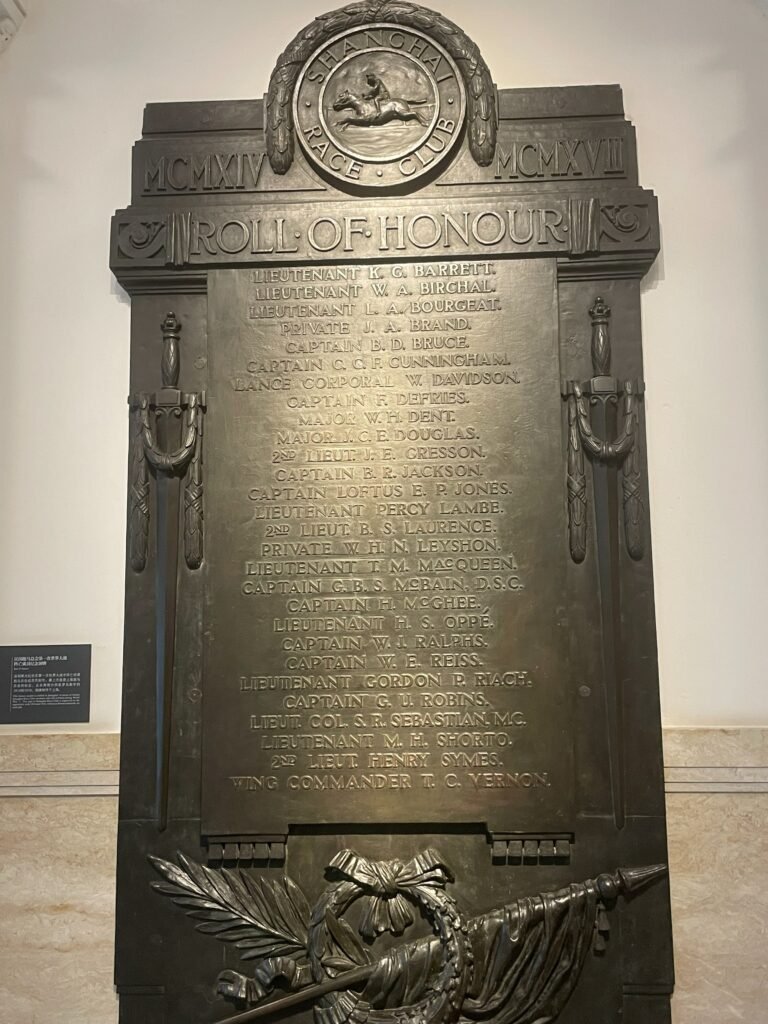
The racecourse has gone. Its great oval became People’s Square and People’s Park, while the surviving clubhouse now contains the Shanghai History Museum. The horses will trot no more. Yet inside the old building there remains a First World War memorial to twenty-eight members of the Race Club who left Shanghai to fight and did not return.

Revolution had cleared the course, changed the name and filled the grounds with the people. It had not quite managed to remove the dead.

The high number of officers suggests the class

The French maintained their own concession and left behind something rather different. It is still one of the loveliest parts of Shanghai in which to walk: long avenues, old houses, guarded gardens and buildings which retain the privacy of another age. The French architecture does not announce itself with the weight of the Bund. It hides behind walls and trees and waits to be discovered.

But the European remains are not confined to the recognised historic quarters. A random walk may suddenly produce an English Victorian building, an Art Deco villa or a piece of 1930s mock Tudor which would not look entirely out of place in a suburban street in England. Shanghai contains architectural encounters which seem implausible until one is standing in front of them.

British Victorian, Shanghai

These houses carry their lost stories silently. It is easy to imagine a European family living comfortably in an Art Deco house in the early 1930s, believing that the arrangements of life were permanent. Then came the Japanese attacks, the great battle of 1937, the isolation of the foreign settlements and finally their occupation in 1941. Many foreigners fled. Others were later interned. A house which had represented confidence and continuity became a witness to how quickly both could disappear.

The buildings survived their owners. Buildings often do.

Shanghai, however, is no museum. It is alive, immense and commercially ravenous. It may yet become the financial capital of the world. It already possesses the world’s largest purely physical spot gold exchange, a distinction which naturally interested me rather more than another avenue of designer shops.

The colonial merchants would have understood the modern city perfectly. The flags have changed, the language of government has changed and the scale has become almost unimaginable. The appetite for trade remains.

Shanghai has also produced what might be called Shallowhai.

This is the Shanghai of conspicuous wealth, where possession seems incomplete until it has been placed before an audience. Perhaps this is inevitable in a country where large private fortunes are still comparatively young, and in a city built upon finance and trade. Whatever the explanation, Shanghai is filled with malls, luxury brands and immense modern temples to Huawei, Apple and Samsung. I had never seen mobile telephone shops on such a scale. They possessed the lighting, proportions and solemnity once reserved for banks and churches.

One afternoon, a man drove past me in a pink open-top Bentley with music announcing his arrival several streets in advance. He may have intended to project success. Unfortunately, he reminded me chiefly of Mr Chow in The Hangover.

The mobile telephone governs the streets. People navigate with it, pay with it, order with it, photograph themselves with it and occasionally appear to experience the physical world only after it has been converted into an image on the screen. Even by European standards, the level of absorption is extraordinary.

Some of the younger women dress as anime characters or in elaborate mutations of Victorian costume. The empire has vanished, but Victorian dress has returned in China as a fashion accessory, photographed on a Chinese telephone and uploaded through a Chinese network. History does not always come back in the form expected.

Then there is Scamhai.

On my first day, nobody hassled me. I concluded that Shanghai was a remarkably safe and orderly city. Shanghai allowed me twenty-four hours to enjoy this conclusion.

The following day, I walked towards the Bund through rain of monsoon proportions, carrying a large umbrella borrowed from the hotel. The streets were unusually quiet. There were few pedestrians and consequently very few available targets.

I was approached constantly.

During that walk I was offered an extensive catalogue of goods, services and activities, the details of which need not detain us. Several approaches ended when I told the person to leave before discovering what was being proposed. Persistence appears to increase in inverse proportion to the number of alternative victims in sight. On a crowded day, I might have passed unnoticed. In an empty street beneath a hotel umbrella, I had evidently become the market.

There was also a restaurant where I strongly suspected that a menu carrying higher European prices had appeared for my benefit. I could not prove it. I could observe that the prices bore little relation to what food had cost elsewhere. I left them to their enterprise having paid a toll and abandoned further restaurant experimentation in this city.

Scamhai is not a separate city. It inhabits the same commercial instinct as the banks and boutiques, operating at the scale of the lone foreigner. Wherever money, strangers and appetite gather in sufficient concentration, somebody establishes a secondary market in the inattentive.

The visit lasted longer than intended. It was a national holiday week, trains were difficult to obtain and Shanghai became, for several additional days, less a destination than a position from which I was temporarily unable to advance.

There are cities which improve with enforced intimacy. Shanghai is better taken at speed. Its scale is exhilarating, its surviving history remarkable and its human theatre inexhaustible, but after a time the malls repeat themselves, the telephone screens glow with the same blue light and even imperial architecture ceases to surprise.

Eventually a seat became available. At Hongqiao Station, the long white bullet train waited to carry me 1,329 kilometres north to Qingdao.

The queue for coaches 9-16 of my train. Similar queue the other side for coach 1-8, me

The horses would trot no more. Shanghai now had faster animals.

Until The Tide Turns

I went back to the favoured beach yesterday.

The shingle has already begun to return.

What was open weeks ago is now half-sealed. Large stretches are silent again. Only selected corridors of exposed sand remain workable — thin veins between stone.

You can feel the closing.

I moved further up the coast than usual. A stretch I hadn’t worked properly before. The signals were immediate. Dense. Layered. The kind of day that makes you realise how rare the conditions have been.

Storms strip. Tides expose. Then the sea takes it back.

What is available now may not be available again for years. And if it opens again, will I even still be here to walk it?

That isn’t sentiment. It’s timing.

So I am recording this day properly.

The depth of finds. The spread. The density. My assessment of the ground while it is still readable.

I have yet to see a metal detecting video with this level of single-day intensity.

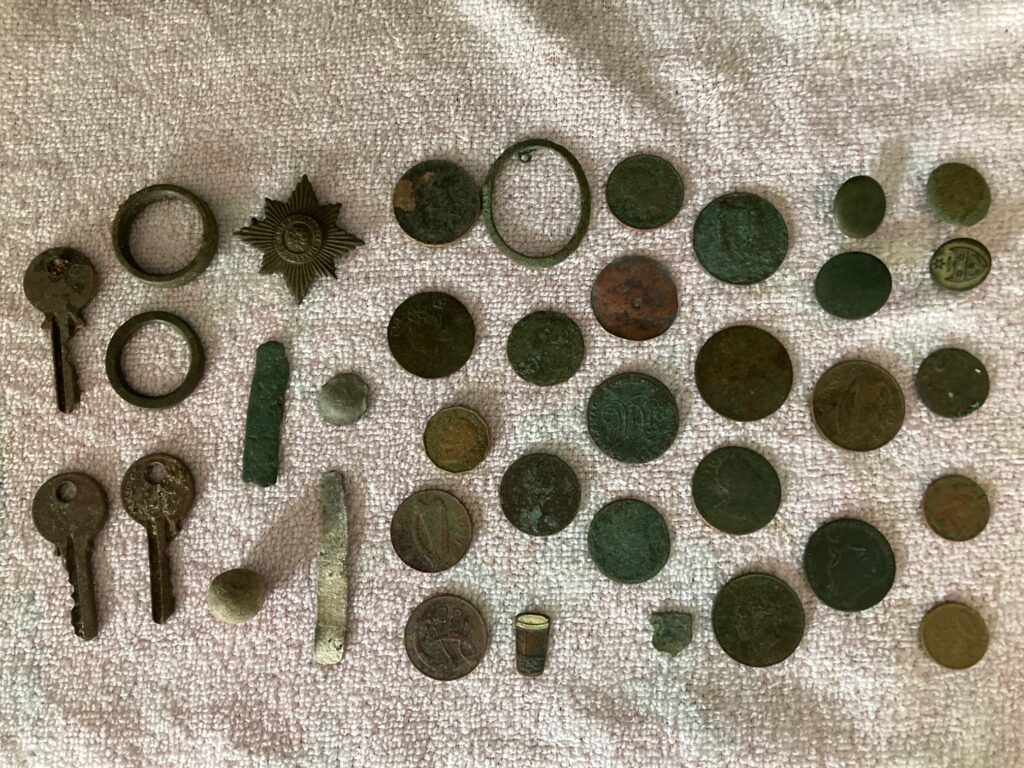
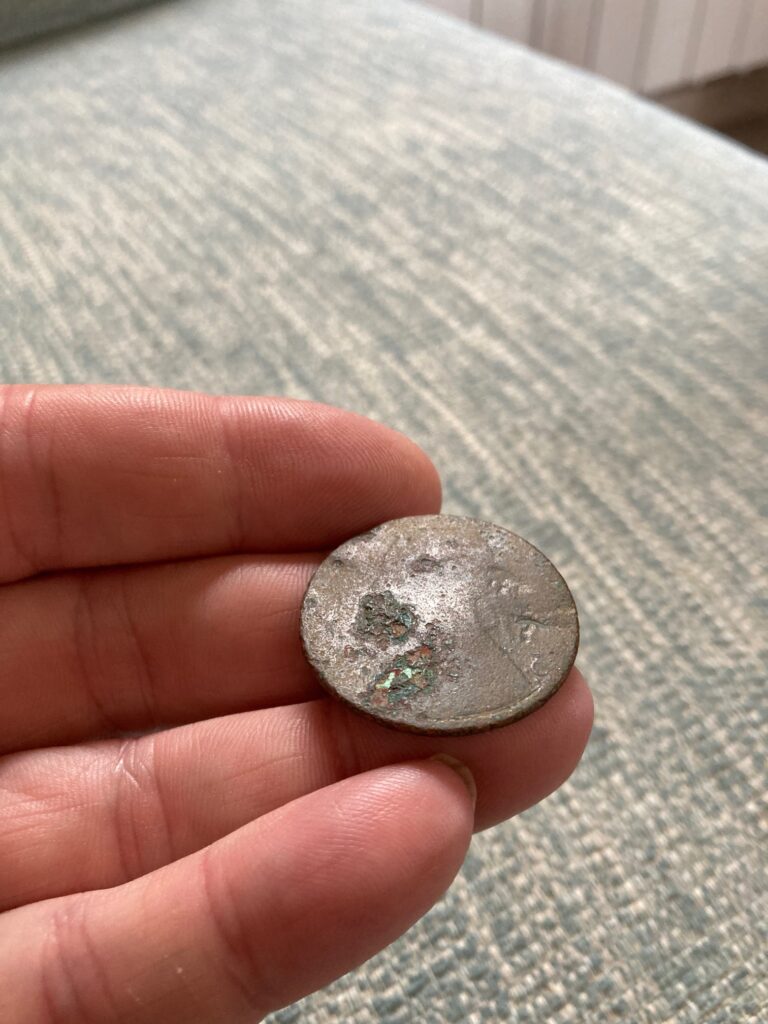
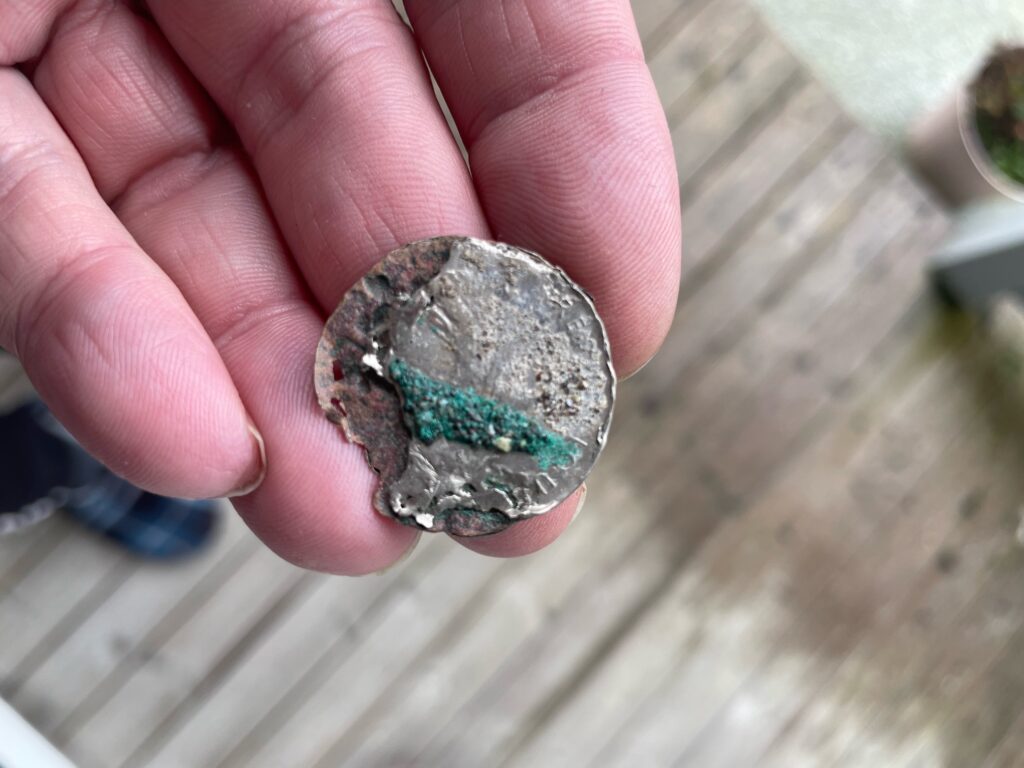
The photograph above is everything recovered in one session.

I will go through them in turn.

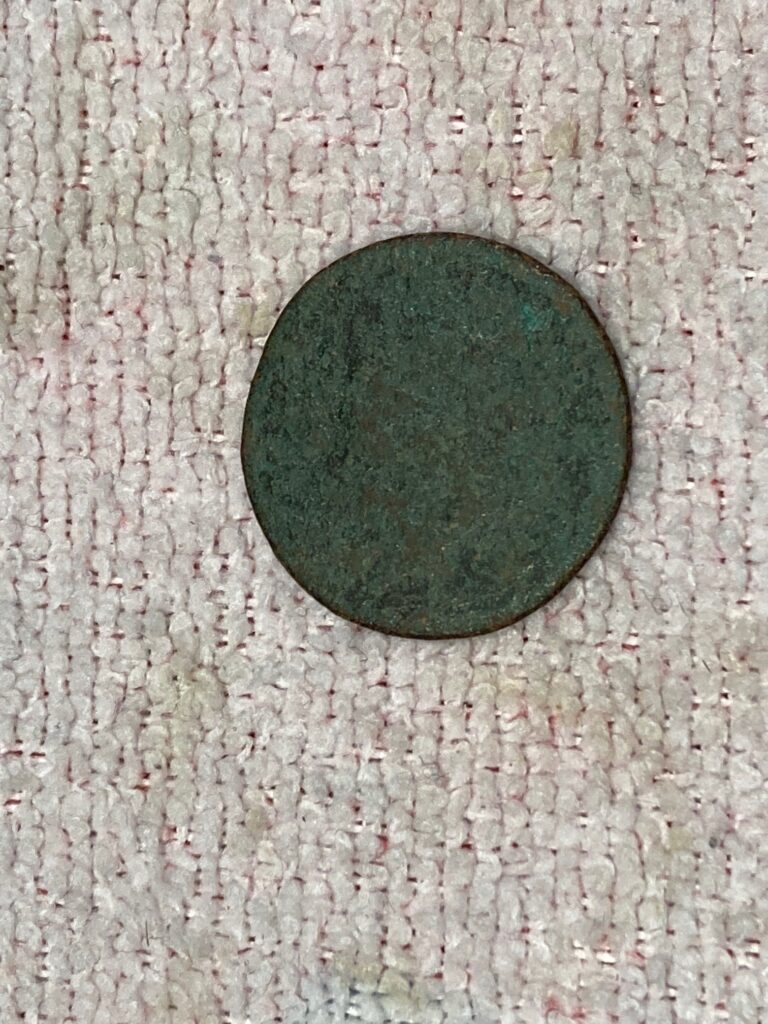
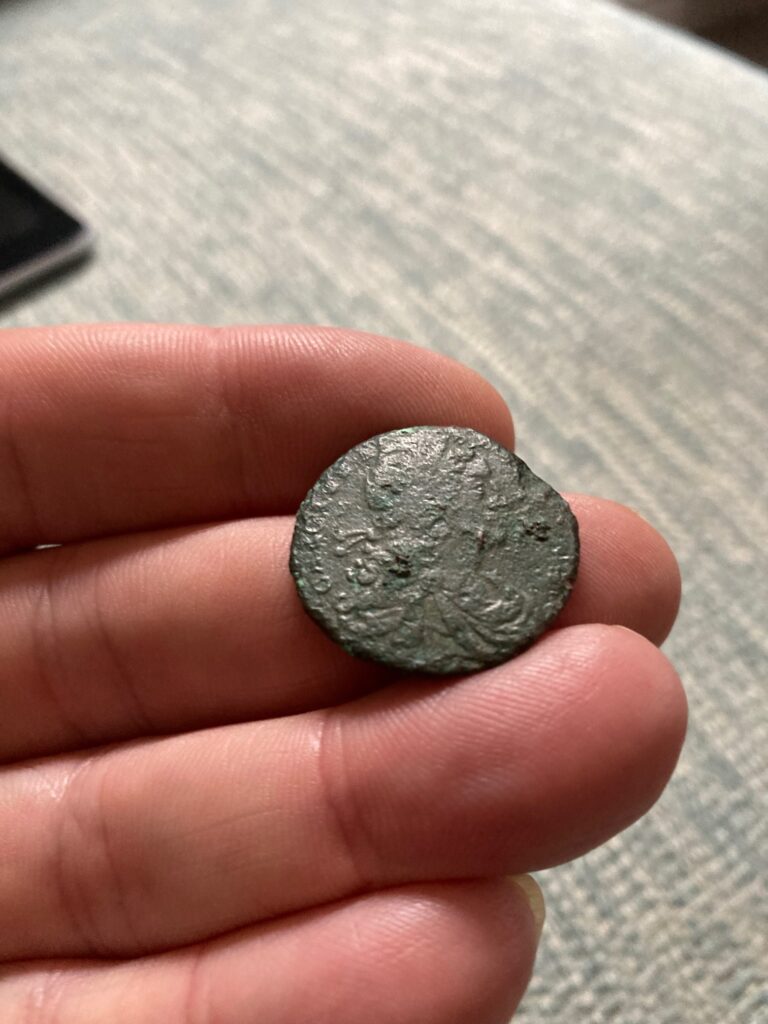
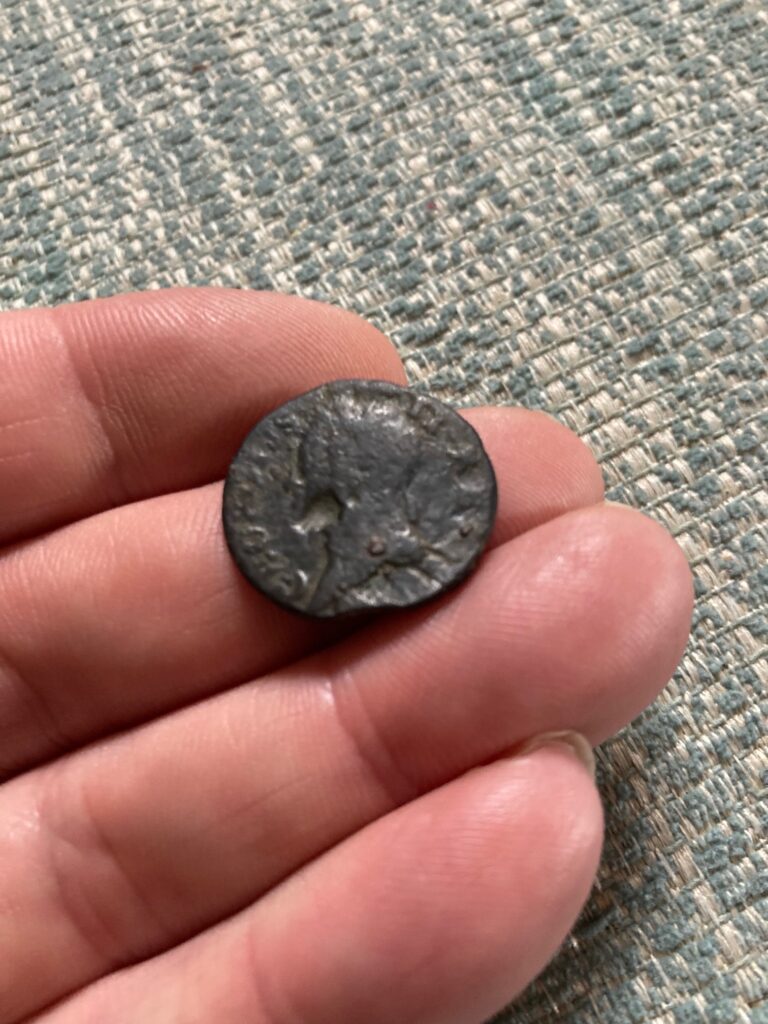
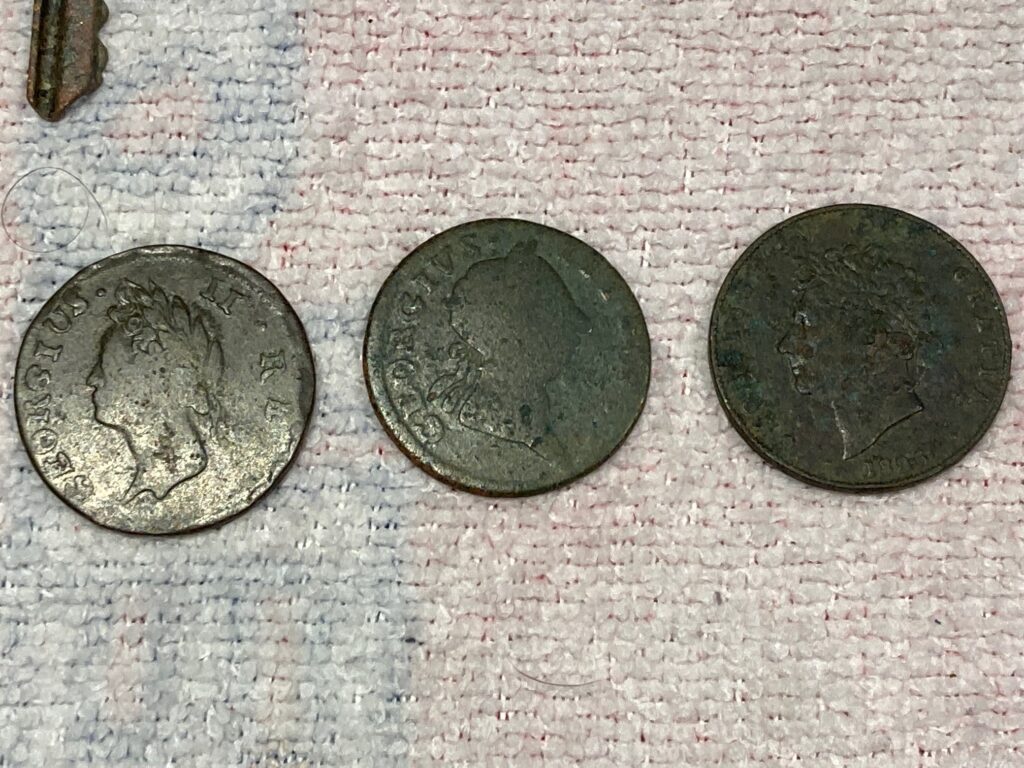
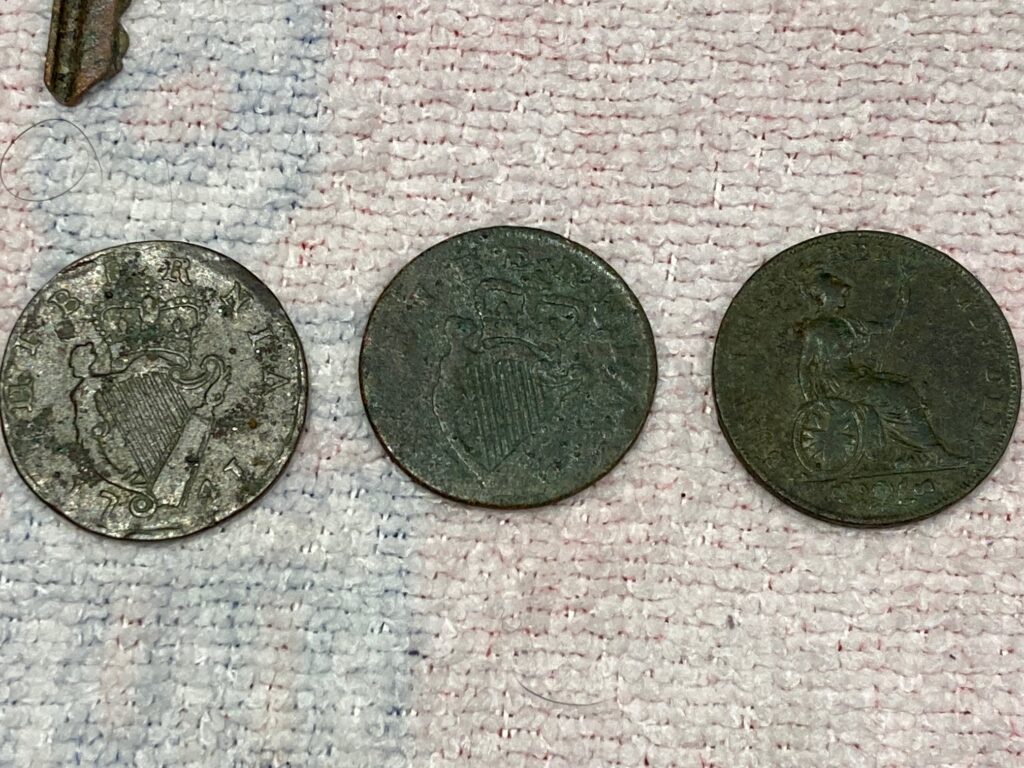
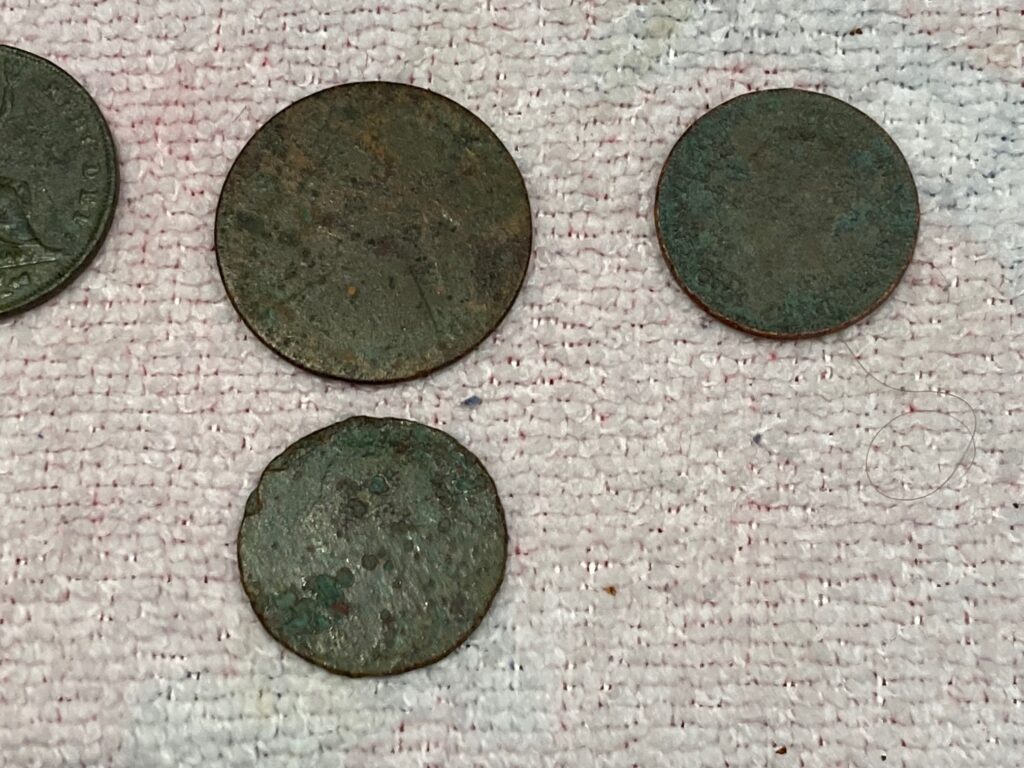
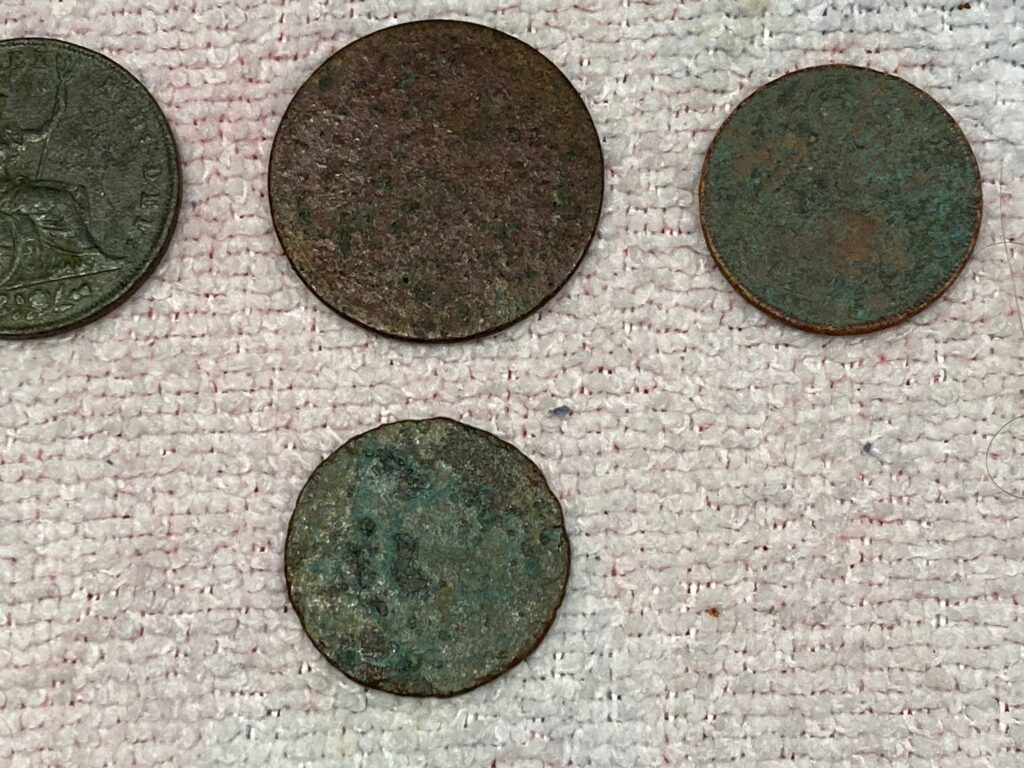
The Georgian Layer — George II, III, IV

Before coming here I had barely handled a Georgian coin.

Now the album thickens.

Yesterday I lifted three in one tide — George II, George III, George IV. Three reigns from one strip of sand.

The George II is 1747. Hibernia, the harp. Mid-18th century confidence. Protestant ascendancy intact. Parishes full. Structures certain of themselves.

George III follows — longer reign, longer shadow. Revolution in America. Union with Ireland. Empire consolidating even as strain increases.

Then George IV. Factory-milled. Cleaner edges. Sharper strike. Hardly worn. Dropped close to new. It did not travel far before the sand took it.

That detail stays with me.

Some coins pass through decades of hands. Others fall almost immediately. History is not evenly circulated.

George II appears more often here than III or IV. That suggests density — of trade, of settlement, of mid-18th century movement along this coast. The beach offers hints, not conclusions.

Three kings.
Nearly a century.
All reduced to copper discs surrendered to tide.

The sand does not rank reigns.

It records loss.


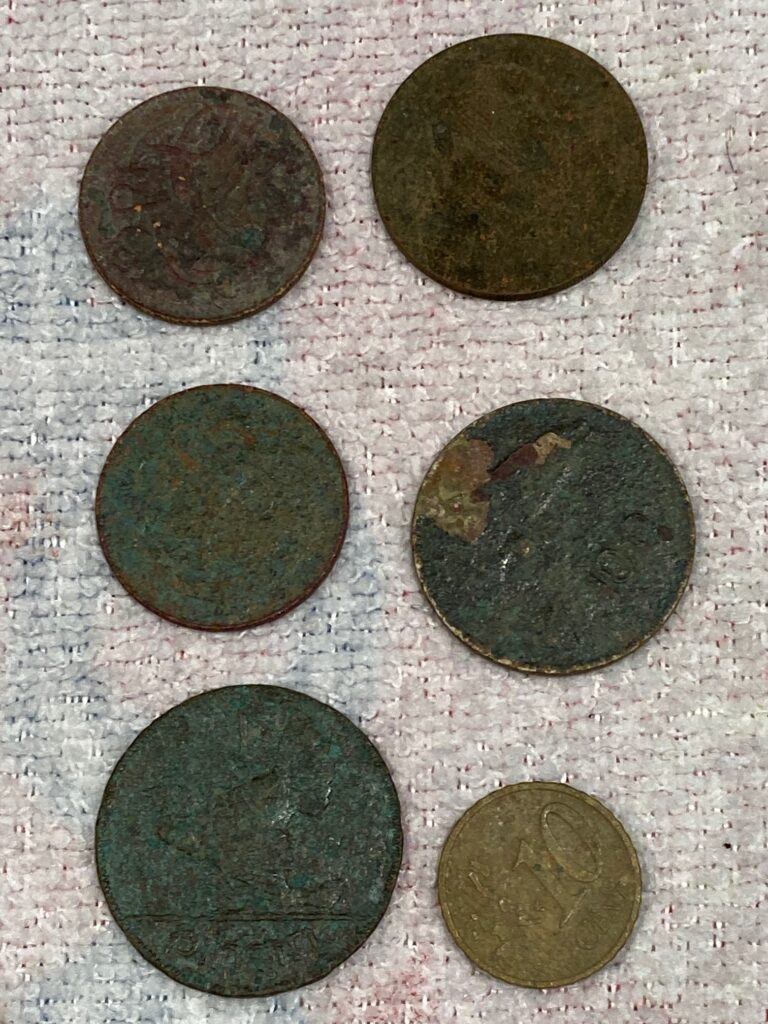
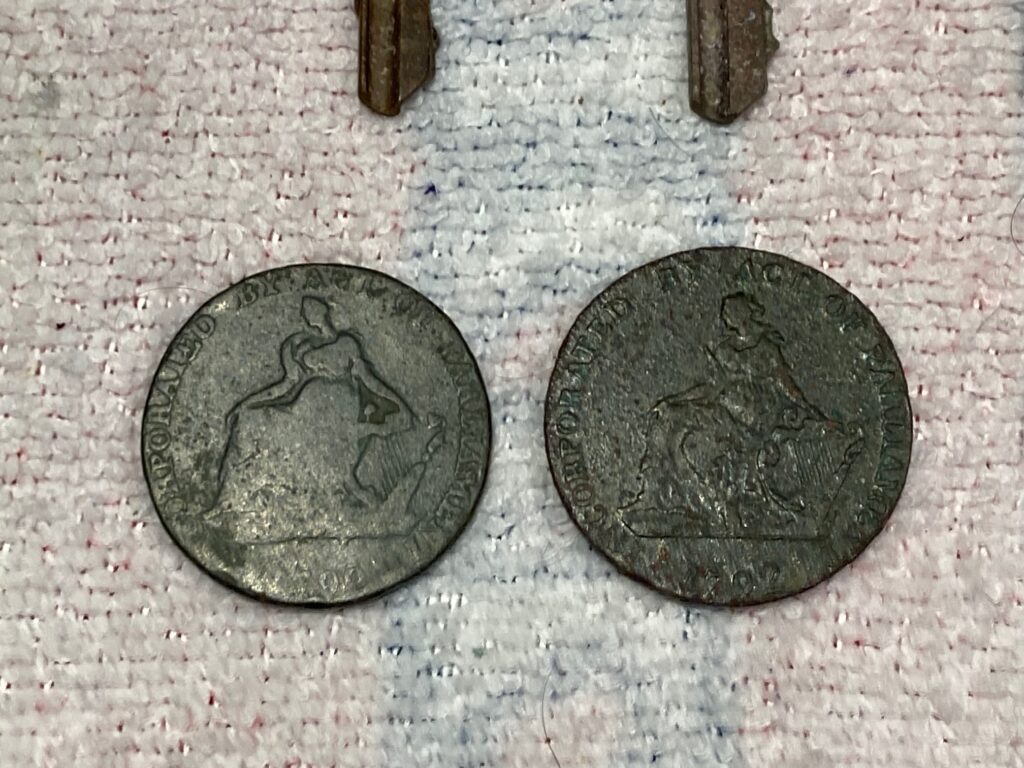
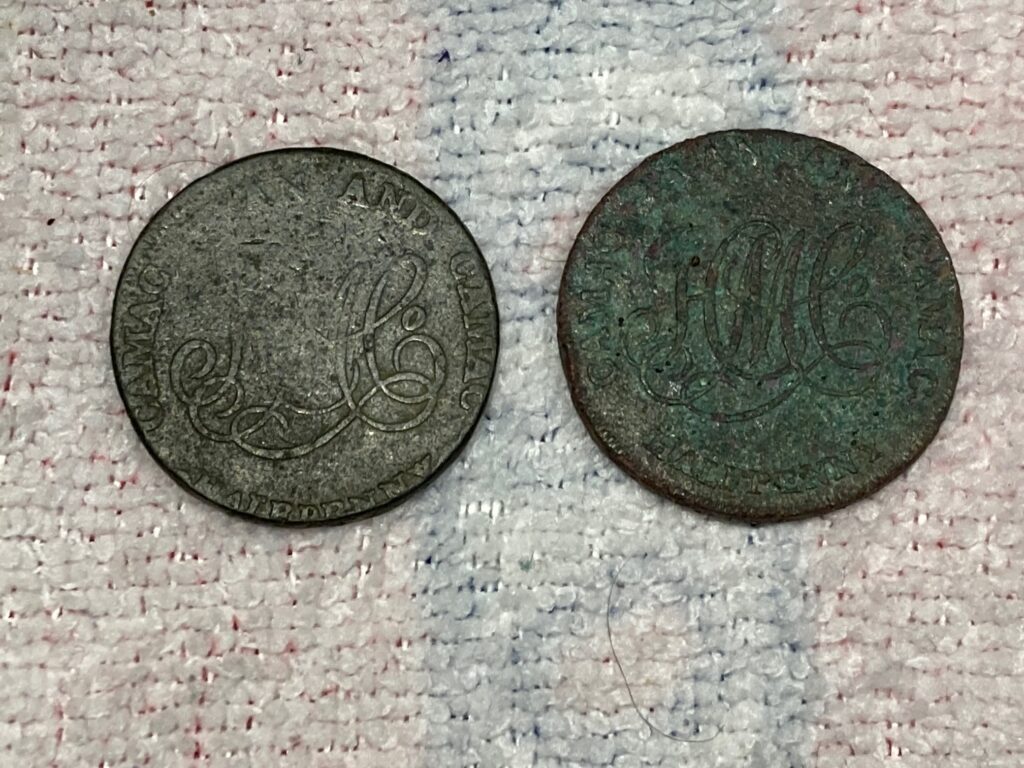
Private Money — Camac, 1792

Two more from the same stretch.

Both dated 1792.
Both Camac.

Not royal issues. Merchant tokens. Private money struck in Dublin when official copper ran thin.

When the state cannot supply enough small change, commerce improvises.

These pieces often carry more copper than the crown’s own issue. Heavier. Honest metal, struck to keep exchange alive.

Shortage precedes adaptation.

Barter yields to token.
Token fills the gap the state cannot.

The year matters. 1792 sits just before fracture — before 1798, before rebellion. Monetary improvisation often arrives before political rupture.

These tokens are small, but they speak clearly.

Confidence thins.
Supply falters.
Private actors step forward.

The beach makes no distinction between crown and merchant.

It receives both.

And returns them centuries later without preference.


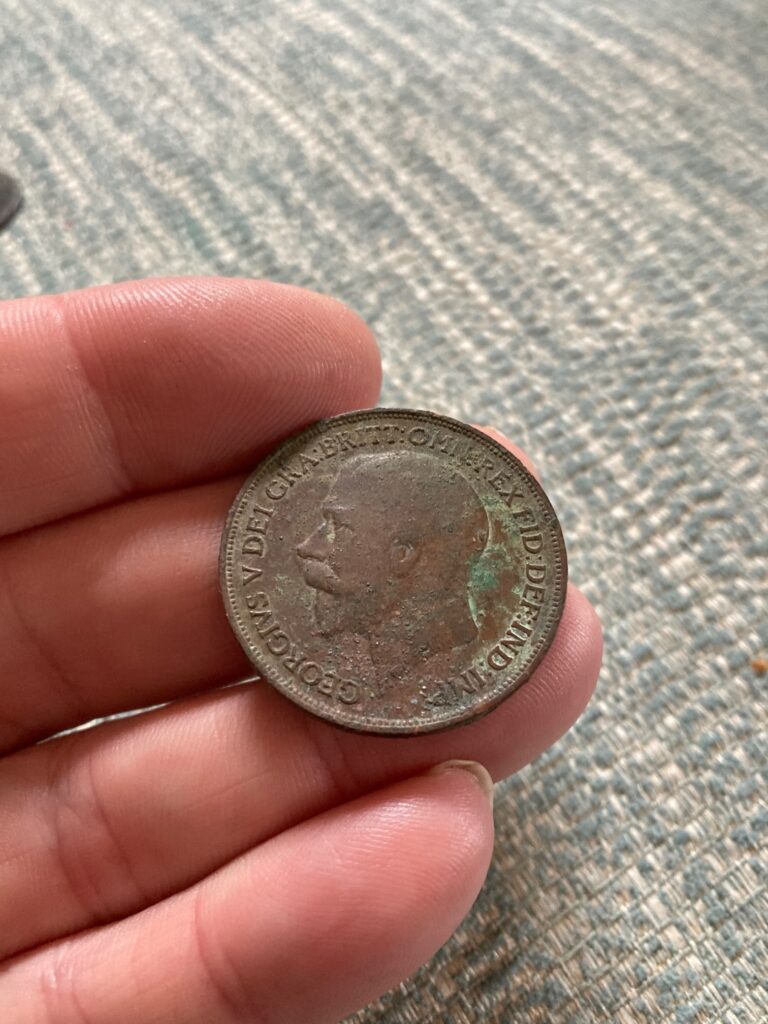
Empire Copper — Victoria and George V

These are not the thick Georgian discs of mid-eighteenth century Ireland.

They are imperial copper.

Victoria.
George V.

By now Ireland is no longer semi-separate in coinage. There is no distinct Hibernia seated in quiet autonomy. The designs align fully with London. The empire standardises.

One currency.
One monarch.
One system.

On the surface, it suggests strength.

And yet these coins feel different in the hand.

They are thinner. The relief softer. The surfaces seem less resilient than the Georgian pieces — despite being a century younger. They have not endured the salt in the same way.

Mass production replaces solidity.

The Victoria is administration. Industry. Railways. Bureaucracy. Expansion at scale.

The George V carries another weight entirely.

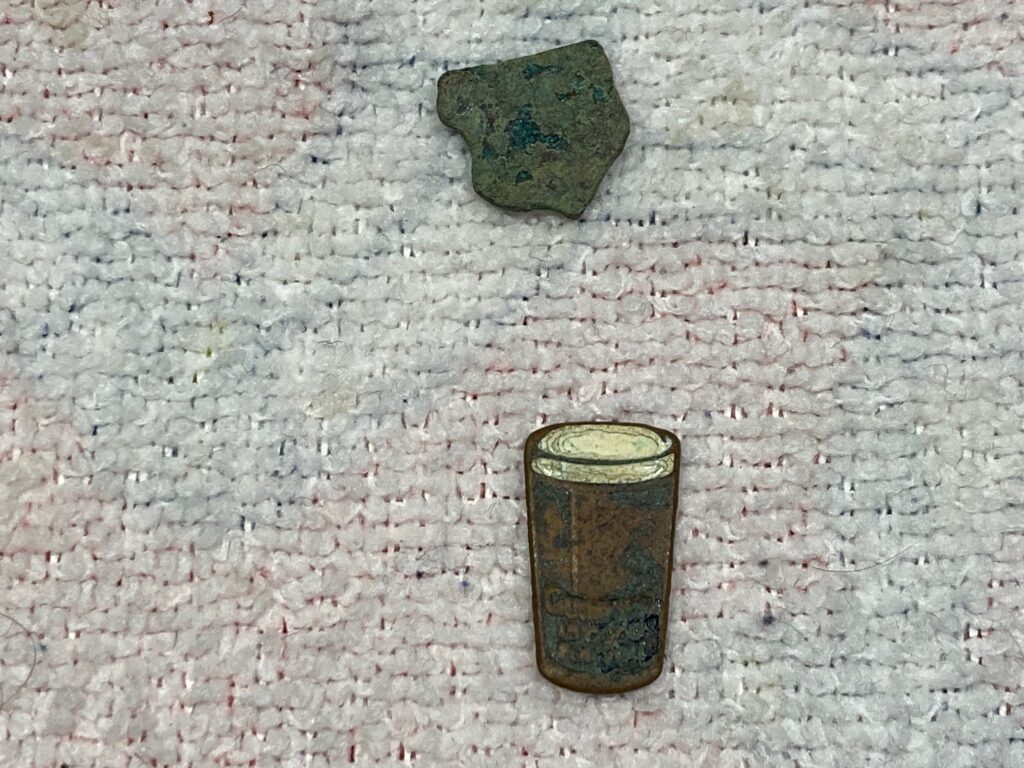
I found it among brass.

Fragments of shell casing. Twisted scrap. Repeated false signals. I had to dig through war to reach coin.

This stretch of coast feels militarised. A training ground once. Drills before embarkation.

George V was struck in a time of mobilisation, not confidence.

Did it fall from the pocket of a young man practising here before being shipped to France?

Perhaps.

The detector cannot answer that.

But the layering is undeniable:

Copper.
Brass.
Empire.
War.

The Georgian coins feel rooted in land and trade.

The Victorian and George V pieces feel industrial — faster, thinner, more uniform.

Peak empire often looks secure.

Its metal sometimes looks strained.


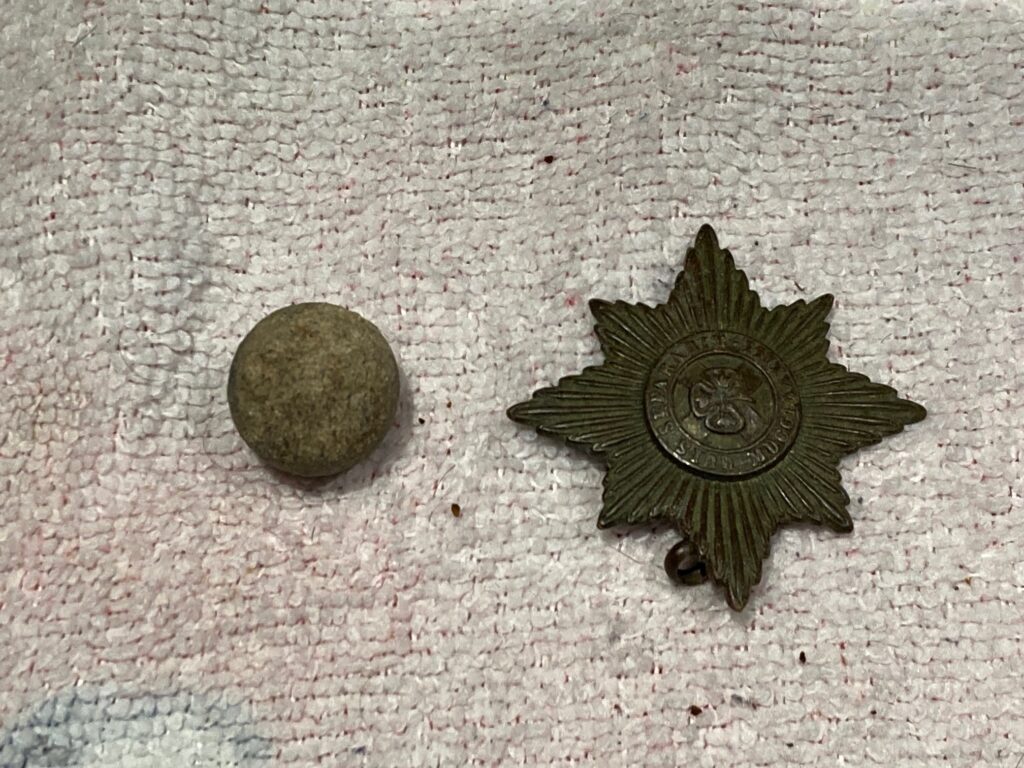
Lead and Brass

After copper comes lead.

A musket ball.
Unused.

It was cast to fly and never did.

No flattening. No impact scar. Just intention, suspended.

Eighteenth century? Early nineteenth? The coast has seen volunteers, militia, watchful men facing outward across the Irish Sea. Days of Napoleon. Days of fear.

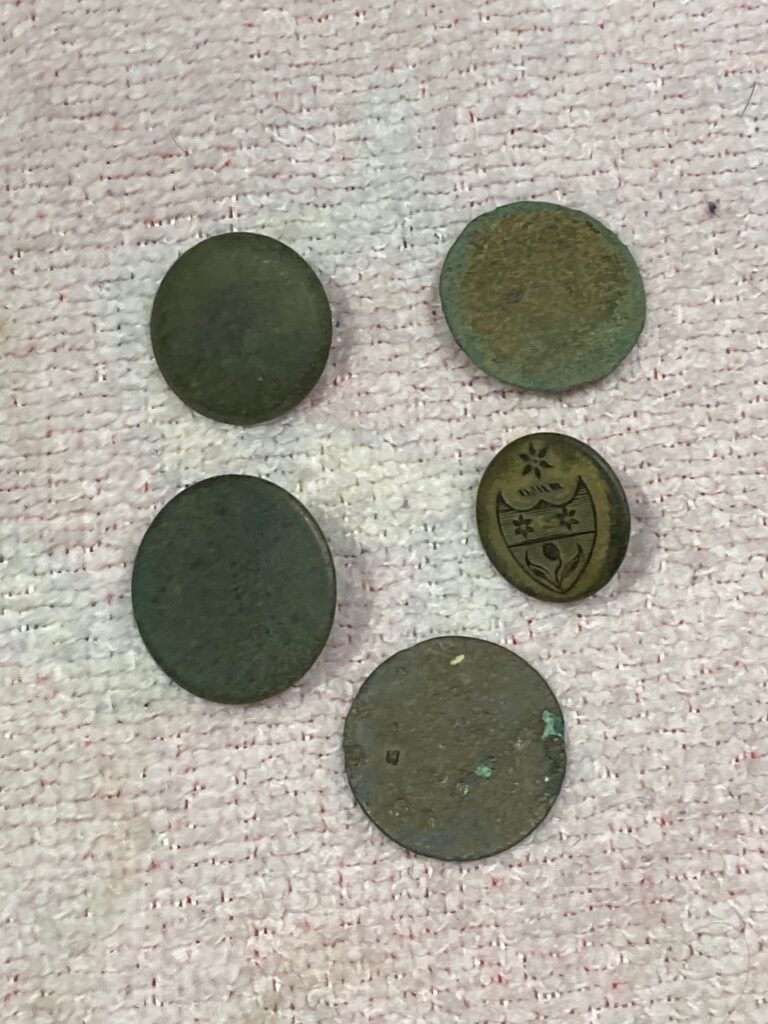
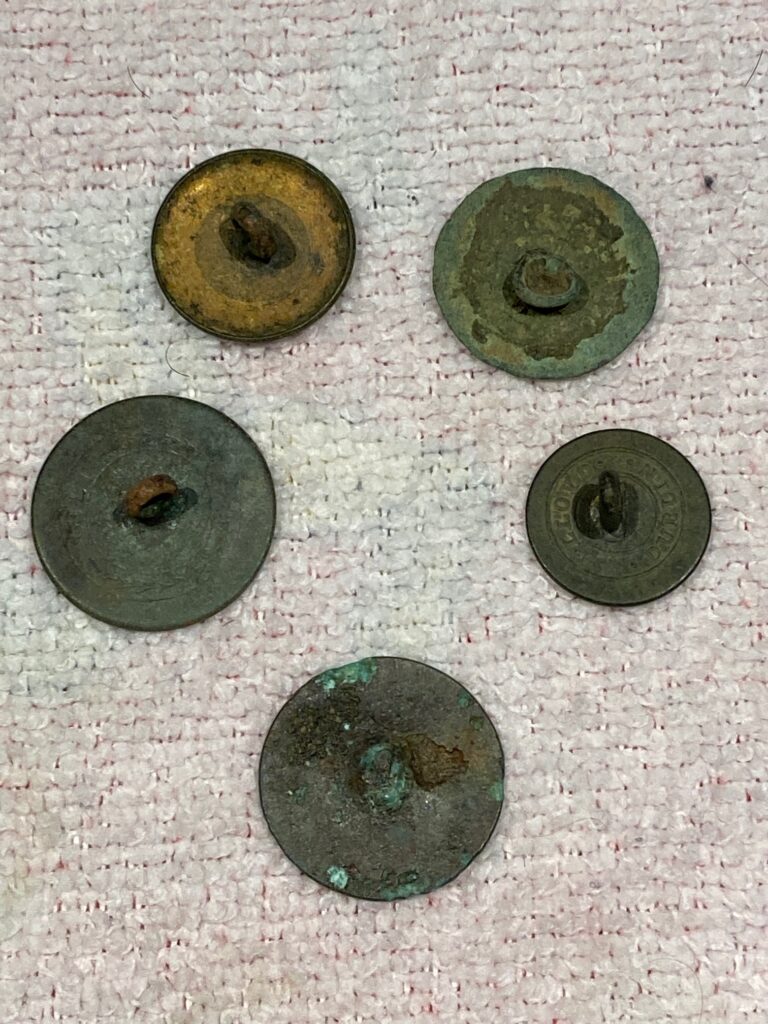
Not far from where I found the Napoleonic button.

Preparedness without discharge.

Then brass.

A star.

Pre-1922 Irish Dragoons.

Cavalry. Imperial Ireland in saddle and sabre.

Now the layers tighten.

Musket lead.
Georgian copper.
Victorian administration.
George V war coin.
Shell fragments in the sand.

Was it one man who lost the halfpenny and the badge? One pocket shedding pay and insignia in the same wind?

Or are we forcing coherence on a beach that collapses centuries into one afternoon?

There is no answer.

Only proximity.

Napoleonic unease.
Victorian certainty.
Edwardian mobilisation.
1914–18.
1916–22.

A lifetime could have spanned all of it.

The badge says service.
The musket ball says readiness.
The coin says wage.

I hope he survived what he trained for.

And what followed.

The tide does not record who returned.

It keeps the metal.

And waits.


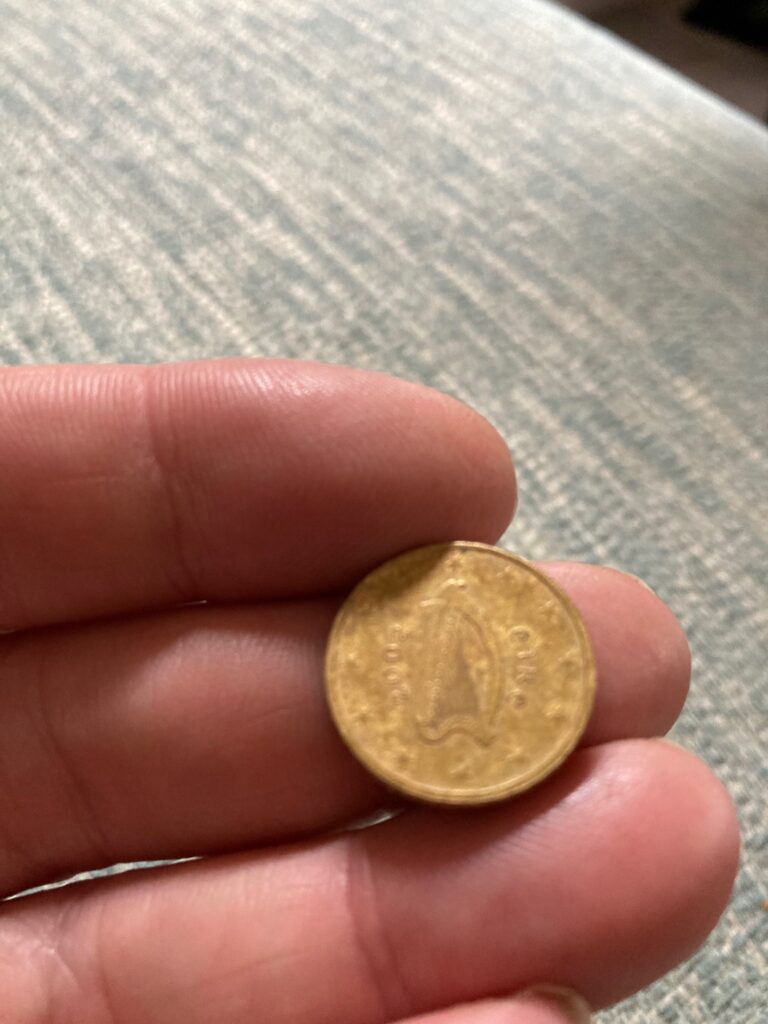
Modern Ireland — Freedom, Imitation, Union

Then the newer layer.

Independence.

Or stages of it.

A Free State penny.

Same size as the imperial penny.
Same copper weight.
Same diameter in the hand.

The monarch removed.
The harp retained.
Form preserved.

Revolution often keeps the mould.

It looks different.
It feels familiar.

Was that continuity pragmatic — or psychological?

Would Michael Collins have approved of how the arc continued?

Then come the decimals.

Two 2p.
Two 10p.

Decimalisation in preparation. Not merely convenience — alignment. A stepping stone toward something larger.

The geometry changes.
The system shifts.

National copper becomes transitional metal.

Then the euro.

A 10 cent piece.

Not sovereign currency.
Not imperial either.

A different structure entirely.

Monetary union.
Centralised issuance.
Contribution upward.

Some call it integration.
Some call it tribute.

The beach does not argue ideology.

It simply layers evidence:

Imperial penny.
Free State imitation.
Decimal prelude.
Euro coin.

Three stages of independence.
Then absorption into something wider.

Empires change form.

Copper remains.

The harp survives on some pieces.
Disappears on others.

The tide is indifferent.


Buttons — The Smallest Losses

Coins speak of systems.

Buttons speak of people.

I have a jar full of them now.

Not modern plastic. Not disposable moulded convenience. These are metal. Cast. Pressed. Sometimes lathe-turned. Some clearly handmade. Imperfect. Individual.

Many likely date to the 1700s. Some perhaps earlier. The shanks are hand-soldered. The backs show tool marks. The fronts still carry faint crests, simple patterns, the geometry of another century’s clothing.

They are beautiful.

We underestimate how much craft once went into small things.

A button was not trivial. It secured coat against wind. Cloak against rain. Shirt against exposure. On this coast, that mattered.

I imagine a travelling man walking the strand in the 18th century. Long coat. Salt air. Wind pulling at cloth. A button gives way. Falls into shingle. Gone.

No easy replacement. No shop on every corner. No cheap packet of ten.

Loss meant inconvenience. Repair required skill.

Each button here represents a small moment of irritation. A pause. A hand patting at a coat and finding absence.

Some are plain. Some carry regimental markings. Some are decorative, worn on civilian jackets. One bears the mark of a manufacturer long vanished.

They outlasted the garments they once held together.

The fabric rotted.
The wearer died.
The empire shifted.
The tide moved.

The button remained.

There is something deeply human about them.

Coins are circulation.
Badges are allegiance.
Musket balls are intent.

Buttons are daily life.

A jar full of minor inconveniences from three centuries.

The beach gives them back one by one.

And I keep them.


The Copper Disc and the Cameo Frame

Not everything lost here was currency or service.

Some pieces were intimate.

A simple copper disc. No inscription. No monarch. Just a worked circle with a central pierce.

Was it a makeshift token? A washer repurposed? Or part of something decorative — perhaps once polished, perhaps once mounted?

Copper oxidises beautifully. Even now, it carries colour.

And then the frame.

Oval. Delicate. A small suspension loop still intact.

Almost certainly Georgian.

A cameo once sat within it. A miniature portrait. A profile. A lock of hair. A loved face carried close to the chest.

The glass is gone.
The image gone.
The sentiment gone.

Only the surround remains.

It is the opposite of coinage.

A coin is designed for circulation.
A cameo is designed for closeness.

Someone wore this.

Someone fastened it in the morning.

Someone lost it — perhaps without knowing until much later.

There is something unsettling about finding only the frame.

The empire fades.
The copper endures.
The portrait disappears.

What we carry closest is often the first thing surrendered to time.

The beach does not prioritise power.

It preserves fragments.

A disc with no name.
A frame with no face.

And yet they feel heavier than some of the coins.


The Penknife and the Fragments

Not all finds are symbolic.

Some are simply tools.

A penknife.

Modern by comparison. Steel still recognisable beneath the sand. Hinges stiff with salt. Once carried in a pocket, opened for rope, twine, food, small repairs.

A working object.

It does not belong to empire or rebellion. It belongs to habit. To hands. To ordinary days on the coast.

Someone used it.
Someone dropped it.
Someone replaced it.

Even here, the layers compress. Georgian copper lies metres from stainless steel.

Time folds.

Then the scraps.

A flattened strip of copper alloy.
Another narrow blade-like piece.
A small round disc, lead or pewter perhaps.

One fragment could be the broken tip of a lead spoon. If so, it once stirred porridge or broth in a cottage not far from here. Lead spoons were common. Cheap. Soft. Repairable until they were not.

The coastline keeps the leftovers.

The broken end.
The snapped piece.
The part no longer useful.

Coins are deliberate loss.

Fragments are accident.

Yet they tell as much.

A civilisation is not only its crowns and crests.

It is also its cutlery.

Its pocket tools.

Its worn-out metal repurposed until it fails.

The penknife reminds me of something simple:

Every era believes it is modern.

Every era leaves rust.


The Keys

I find so many keys.

Almost as many as coins some days.

Three here alone. All different teeth. All once precise.

Each one cut to open a specific door.

A cottage.
A barracks room.
A shed near the dunes.
A rented house by the sea.

A key is intimate authority.

It is trust made metal.

Someone carried these daily. Slipped them into a pocket. Felt their weight without thinking. The small reassurance of access. Of entry. Of belonging somewhere that closed against the wind.

And then — loss.

A fall from a pocket.
A hole torn in lining.
A moment of distraction in sand.

The door remained.

The key did not.

There is something stark about that.

Coins can be replaced.
Buttons can be resewn.
Badges reissued.

A lost key means exclusion.

Somewhere along this coast a man returned to a locked door and felt the cold certainty of inconvenience — or worse.

These are not ceremonial keys.

They are ordinary.

Mass-cut. Functional. Twentieth century perhaps. No romance.

And yet they speak loudly.

Keys are about control. About ownership. About territory defined by a lock and a threshold.

Empires issue currency.

Homes issue keys.

I find them in clusters.

Sometimes I wonder how many of those doors still stand.

The sand has no use for access.

It receives the instrument of entry
and leaves the door behind.


The Unknown Coin

And then this.

A coin with no face.

No monarch.
No harp.
No date.

Time has erased it.

The outline remains. The weight remains. The diameter tells me it once mattered enough to be struck deliberately.

But its allegiance is gone.

It might be Georgian.
It might be Victorian.
It might be local token or foreign drift.

It resists classification.

And there is something fitting about that.

I have spent the day assigning eras.

George II.
George III.
Victoria.
George V.
Free State.
Euro.

Each coin neatly slotted into a chapter of history.

This one refuses.

It has been in the sea long enough to forget.

The face worn smooth. The message dissolved. The authority flattened into anonymity.

Perhaps that is the final stage of all currency.

First it commands.

Then it circulates.

Then it corrodes.

Then it becomes simply metal.

The unknown coin is honest.

It does not carry narrative.
It does not wave a flag.
It does not argue sovereignty.

It is just copper that survived.

There is something almost liberating in that.

Empires insist on inscription.

The tide insists on erosion.

In the end, everything becomes an unknown coin.

And perhaps that is the most truthful state of all.


The Guinness Badge

And finally, this.

A small enamel badge. Guinness pint still visible beneath corrosion. The glass upright, white head intact in miniature.

Likely 1930s to 1950s.

Not ancient. Not imperial. Not revolutionary.

Just Irish.

By then the empire was gone. The Free State had become the Republic. Flags had changed. Allegiances redefined.

But Guinness endured.

It is almost comic in its steadiness.

Kings fade.
Currencies shift.
Empires dissolve.
Rebellions harden into administrations.

The pint remains.

This badge was once pinned to a lapel. Worn with quiet pride perhaps. Or simple affiliation. A night out. A railway platform. A coastal stroll after work.

It speaks not of conquest, nor mobilisation, nor monetary union.

It speaks of habit. Of culture. Of something rooted enough to survive regime change.

There is something grounding about ending the day with it.

After Georgian copper.
After private tokens.
After Dragoon brass.
After Free State imitation and euro alignment.

A pint.

Not ideology.

Not sovereignty theory.

Just continuity of a different kind.

Commercial. Cultural. Familiar.

The tide does not care.

But I do.

Because this badge feels like the most honest artefact of the lot.

Not power.
Not command.
Not authority.

Just belonging.

And perhaps that is what survives longest of all.

Five Centuries in the Palm

The beach does not give.
It keeps.

Until it doesn’t.

Yesterday, under a grey sky, it let five coins surface from the shingle. Five small discs. Five centuries. I walked the line of tide, sand and stone alone, detector humming low. Each signal was brief. Each recovery deliberate.

When I laid them out in my palm, they formed a quiet chronology.


Charles II of England — Seventeenth Century

Copper. Thick. Dark with age.

A halfpenny from the late 1600s. The outline of the king still there if you angle it to the light.

This coin moved in a century of upheaval and rebuilding. Markets in mud. Ale traded for labour. Ships coming and going from harbours that were older than the crowns stamped into metal.

It passed from hand to hand without commentary.

A farmer settling a small debt.
A dockworker paid at week’s end.
A woman measuring grain behind a wooden counter.

No one carrying it needed a theory of empire. They needed acceptance. A coin either worked or it didn’t.

It worked.

Until it fell. Or was dropped. Or slipped from a pocket on a windy day much like this one.


George II of Great Britain — Eighteenth Century Silver

Silver changes the mood.

A Hibernia sixpence. Smaller. Sharper. Still carrying a trace of brightness beneath the tarnish.

Silver carries intent. It stores effort in a way copper does not. It might have crossed a market table in Dublin. Paid for cloth, for passage, for tools. It might have been saved for a week before being spent.

The word Hibernia sits there — neither defiant nor submissive. Just naming.

Metal does not argue politics. It records authority at the time of minting and then submits to circulation.

This one travelled. It did not live an idle life.


Queen Victoria — Nineteenth Century Penny

This penny is worn almost flat.

The face has softened into memory. The edges are tired.

It worked for decades.

It passed through repetition. Bread. Coal. Ferry fares. Wages broken into smaller parts. It might have travelled to Liverpool and back. It might have crossed the Atlantic in a coat pocket and returned years later in another.

The wear is the story.

You do not get that smoothness from one dramatic moment. You get it from thousands of ordinary exchanges.

History is often written in headlines.

It is lived in pennies.


George V — Early Twentieth Century

This coin sits at a hinge in time.

Empires shifting. Lines redrawn. Arguments hardening.

Yet the metal is calm.

It would have bought newspapers carrying declarations and denials. It would have paid for a drink in rooms where loyalties were debated. It may have sat in the pocket of someone who believed the future would look different from the past.

Political reality changes in bursts.

Coins change more slowly.

The head remains until a new one is struck.


Euro — Twenty-First Century

A ten-cent piece.

Light. Exact. Identical to millions of others.

The harp stands alone now. No monarch. No crown.

For a time Ireland held its own currency again. Small. Distinct. Entirely national.

Then came another choice.

Not conquest.
Not invasion.
Alignment.

Monetary authority sits elsewhere now — in institutions beyond the shoreline. Policies shaped in distant rooms. Interest rates determined far from this stretch of shingle.

It is not empire in red coats and ships.

It is coordination. Framework. Structure.

Shared stability when things hold. Shared exposure when they don’t.

Allegedly. The Irish are the largest per capita contributors to the new empire.

The coin feels neutral in the hand. Efficient. Designed for movement across borders that once required flags and cannons.

But the structure is still there.

Every coin carries the signature of whoever sets the rules of money.


The Hands

That is what endures.

Five centuries of touch.

Farmers with soil under their nails.
Sailors smelling of tar and salt.
Women counting change at wooden counters.
Men arguing policy without ever seeing the rooms where it was made.
Children sent on errands, gripping a single coin like responsibility.

Copper.
Silver.
Bronze.
Alloy.

Crown.
Harp.
Stars in a circle.

Authority rearranges itself.

The metal changes its design.

The human exchange remains constant.

Standing there with the Irish Sea behind me, coins lined against the wind in my palm, I felt no outrage and no nostalgia.

Only continuity.

Power shifts form.
People adapt.
The beach waits.

And sometimes, after centuries, it returns what was dropped.

Bad Money Travels Well

I awoke early, determined to enjoy a full rain-free day for once, and took the first train available. It was late — no surprise, given the flooding — and I was the only passenger boarding at that particular station. That suited me. Trains are better when they’re half-empty, running slightly off schedule, moving through a landscape that has already started its day without you.

The journey fitted my travel instinct perfectly. Closed stations slipped past, now converted into houses where platforms still exist but purpose has drained away. I recognised stretches of line where I’d walked before, and others where I suspected the ground nearby would hold small, forgotten things — places worth returning to, should I ever get time to reconnoitre this route properly. Travel like this isn’t about arrival. It’s about observation and accumulation.

Next, there was a walk by the sea. Wind off the water, the familiar rhythm of scanning, listening, pacing. Metal detecting is never just about finding things. It’s a discipline of attention. Most days you come back with nothing more than distance covered and salt on your jacket. Occasionally, the ground answers.

This time it did — quietly.

What turned up was the remains of a forged silver coin. Late eighteenth century. French in origin, from a period when bad money was common enough that imitation became an industry. At a glance, it would once have passed. That was the point. A thin skin of silver over a copper core, made deliberately, not accidentally. This wasn’t decay masquerading as fraud; it was fraud, designed to circulate.

The timing matters. The later 1700s were a poor period for trust in money. War finance, repeated debasements, uneven minting, and collapsing confidence created the perfect conditions for forgery. Coins like this didn’t need to endure. They needed to move — quickly — from hand to hand, before anyone stopped to weigh them or listen too closely.

Time and saltwater eventually did what markets often don’t. The thin coating failed. The copper showed. The deception stopped working.

These pieces rarely survive. When discovered, they were pulled from circulation, melted down, or discarded — and the forgers themselves often paid far more dearly. The penalties ranged from execution to transportation to remote colonies. Official forgers, it turns out, have never been fond of unofficial competition.

The sea is one of the few places that keeps such things without judgement. Even in this condition, the forgery may have value. Counterfeit always does, once it has crossed fully into history.

That’s fine with me. It goes straight into my collection.

I like how the day brought several long-running interests together without effort: travel, movement, a walk by the water, history underfoot, and the mechanics of money stripped back to their simplest form. Silver, but only just. Trust doing the work authority failed to do.

The day ended in a Georgian pub, which felt entirely appropriate. Same century. Same worn surfaces. Different transaction.

Instead of a copper halfpenny, the ale cost seven euros.

« Older posts

© 2026 The Dunwiddie Post

Theme by Anders Norén — Up ↑