Sunday was a beautiful day on the local coast. The sun was shining, and I went for a walk along the beach.
It was also a reconnaissance mission.
I noticed that new patches of sand had been exposed, and that was enough to get me thinking. It had been a while since I had been out with the metal detector. Perhaps it was time to try again.
The following lunchtime, I returned.
Three hours later, I had found exactly 100 coins.
One hundred. In three hours.
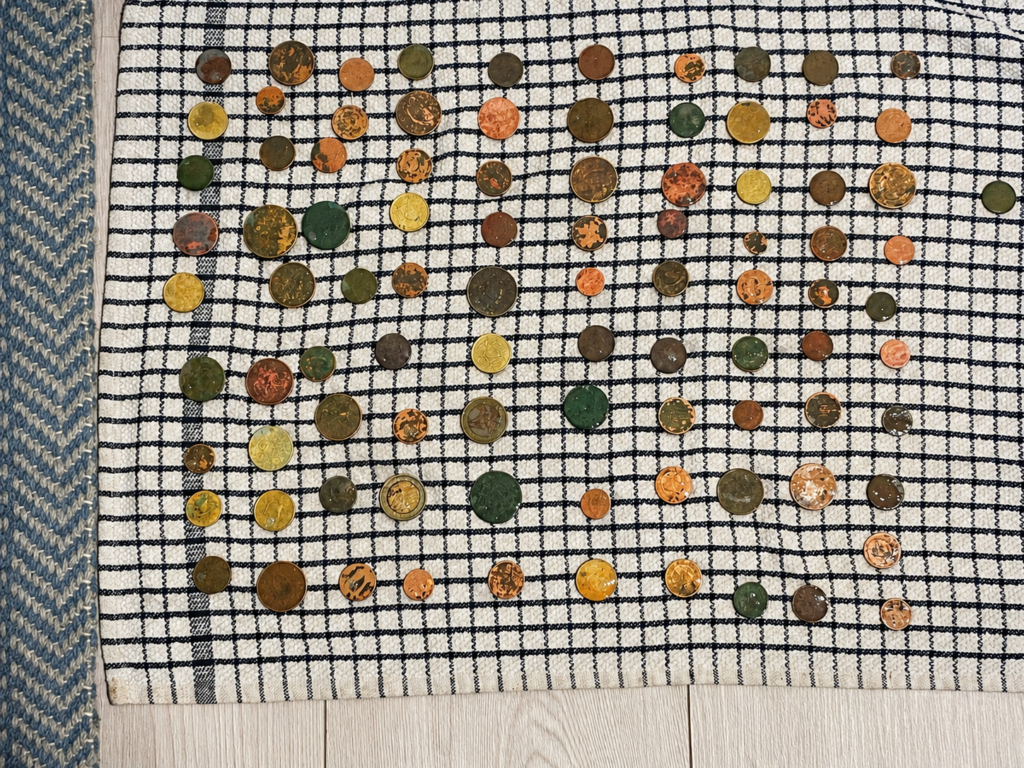
That is the largest number I have ever found in a single day’s detecting, and I had covered only about 80 metres of beach.
Most were Irish decimal coins, many from the 1970s. There were also around a dozen euros, several English decimal pennies, and an extremely corroded British two-pence piece.
I found myself wondering about that two-pence piece. Could it have made its way across the seabed from Wales? And if it did, how long would a journey like that take?
The age of the Irish decimals gave me another thought. Many of these coins, which had spent years on a beach and emerged looking like historical finds, were actually younger than me.
Fortunately, the beach also produced some older company.
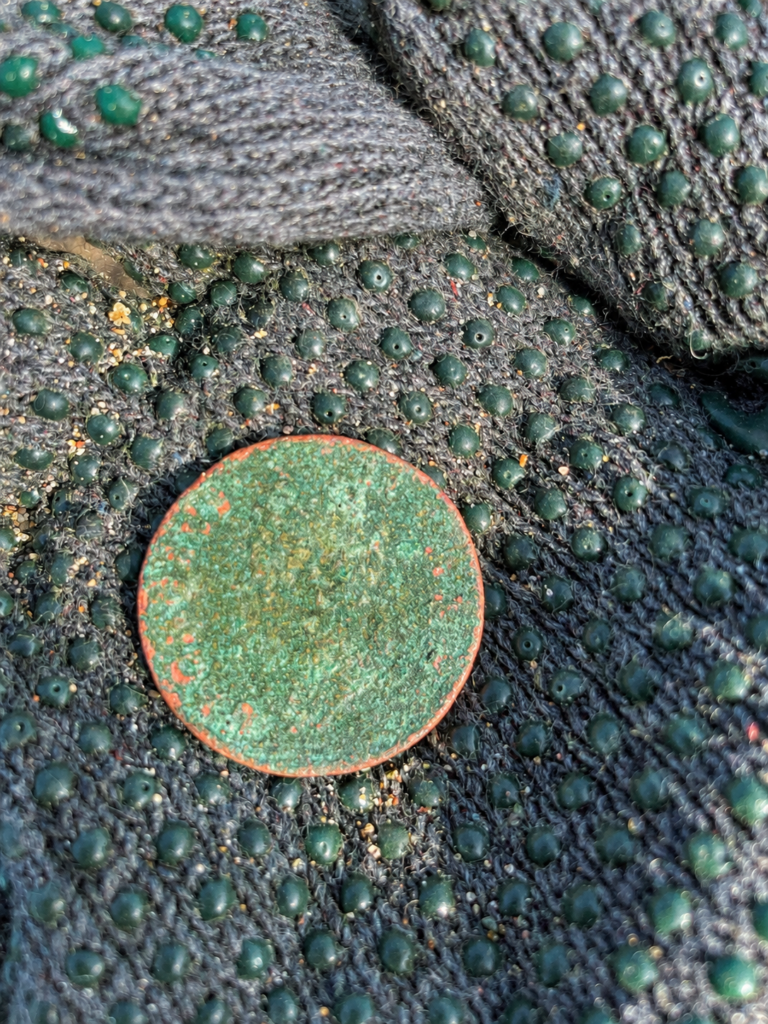
There were several Georgian coins, a Victorian farthing, a George V, and what I think may be an Edward VII. Other coins looked old but were too worn to identify. Between the monarchs, the Irish pound and the euro, there was quite a gathering.
The coins were accompanied by buttons, buckles and pieces of metal that looked as though they might once have belonged to ships.
Could one of them be from the Lusitania?
I remain open to the possibility.
The rain arrived the following day, but I returned after that for another two and a half hours. This time I found “only” 36 coins.
Under normal circumstances, 36 would be an excellent haul. Monday had rather altered my expectations.
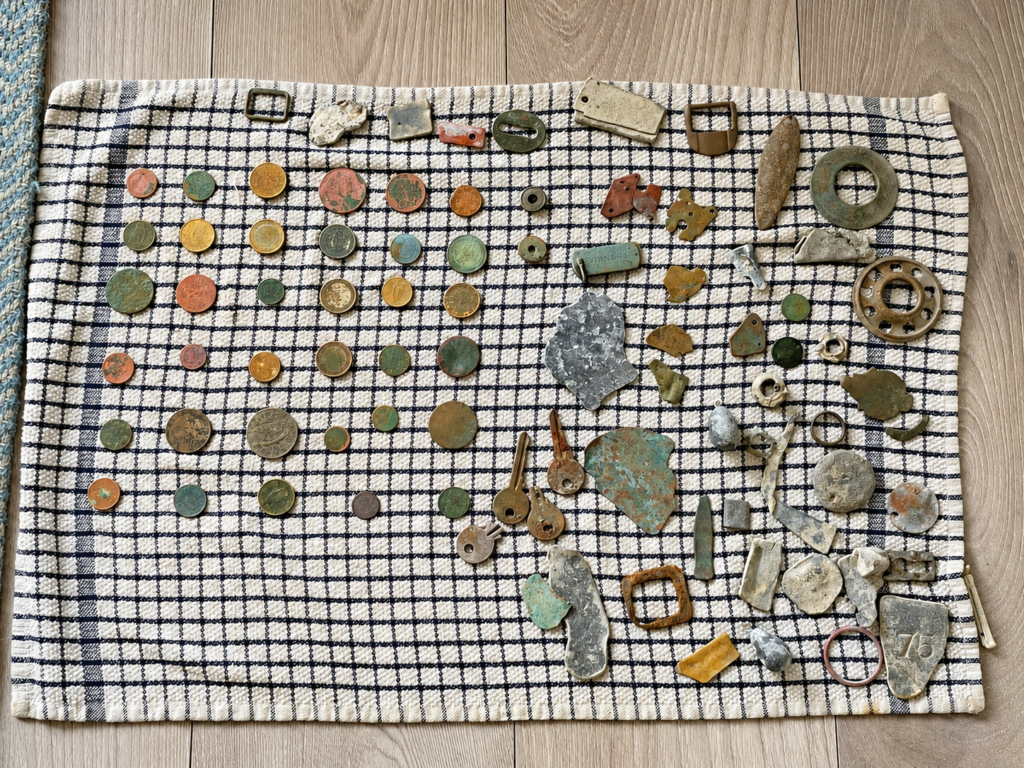
A large number of the second haul were spendable euros, which brings me to one of the particular pleasures of metal detecting.
There is immense satisfaction in taking a large jar of recovered coins to Tesco, feeding them into the self-service till and using them to pay for groceries. After however long they have spent on the beach, the coins are back in circulation and I have something for dinner.
Somewhere along the line, somebody may have the pleasure of sorting through them and wondering why a few are so unusually worn. The machine seems happy enough to accept them.
There were also four house keys among the finds, two of them broken. Somewhere, four doors have become slightly more difficult to open.
Across the two sessions, that made 136 coins in five and a half hours. There is still a great deal more beach left to explore, so I expect to be out again a few times before the month is over and the weather turns worse.
A good storm might expose some fresh ground in the meantime. From a metal detectorist’s point of view, that would be no bad thing.
Metal detecting season has begun again.