I went back to the favoured beach yesterday.
The shingle has already begun to return.
What was open weeks ago is now half-sealed. Large stretches are silent again. Only selected corridors of exposed sand remain workable — thin veins between stone.
You can feel the closing.
I moved further up the coast than usual. A stretch I hadn’t worked properly before. The signals were immediate. Dense. Layered. The kind of day that makes you realise how rare the conditions have been.
Storms strip. Tides expose. Then the sea takes it back.
What is available now may not be available again for years. And if it opens again, will I even still be here to walk it?
That isn’t sentiment. It’s timing.
So I am recording this day properly.
The depth of finds. The spread. The density. My assessment of the ground while it is still readable.
I have yet to see a metal detecting video with this level of single-day intensity.
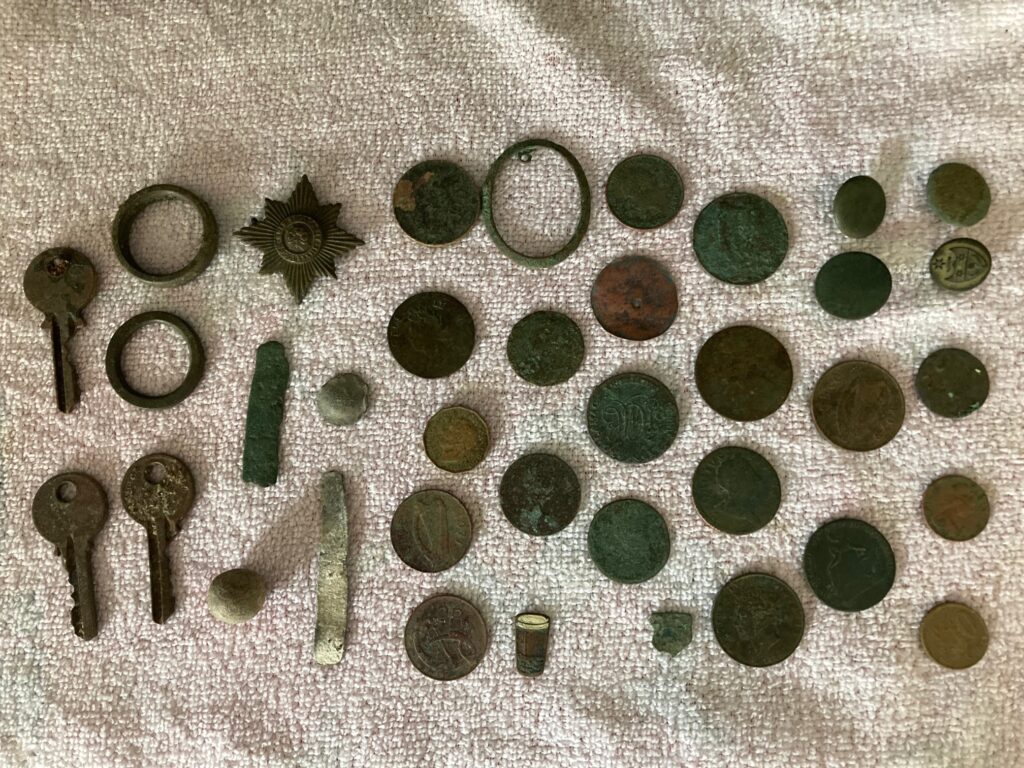
The photograph above is everything recovered in one session.
I will go through them in turn.
The Georgian Layer — George II, III, IV
Before coming here I had barely handled a Georgian coin.
Now the album thickens.
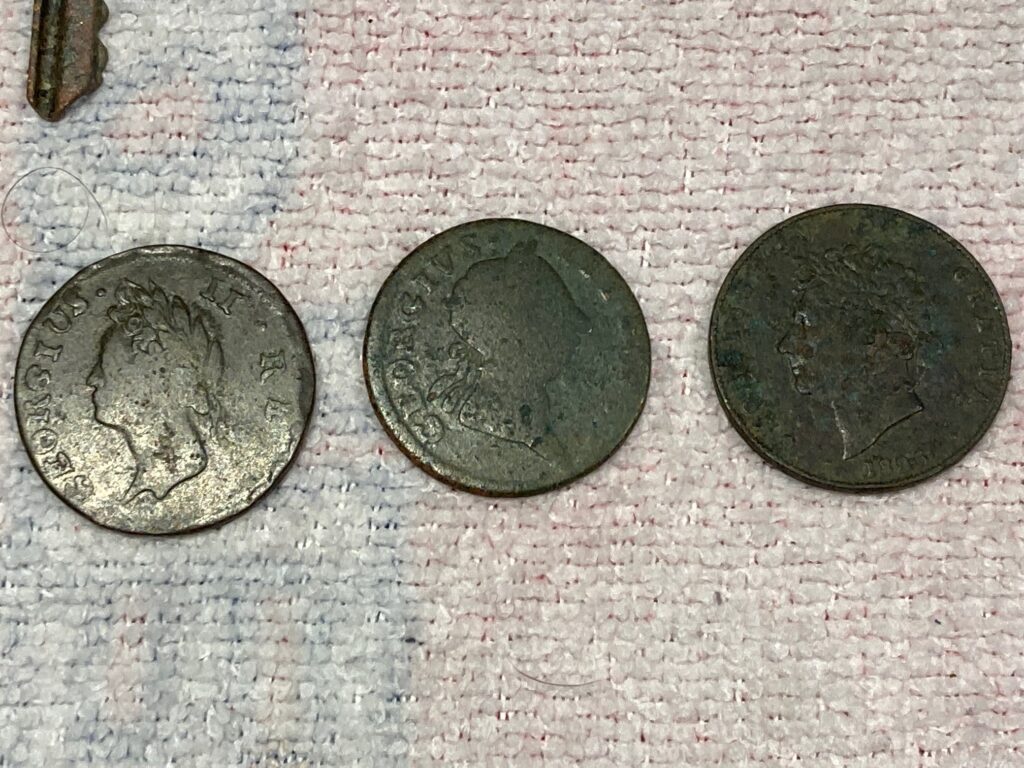
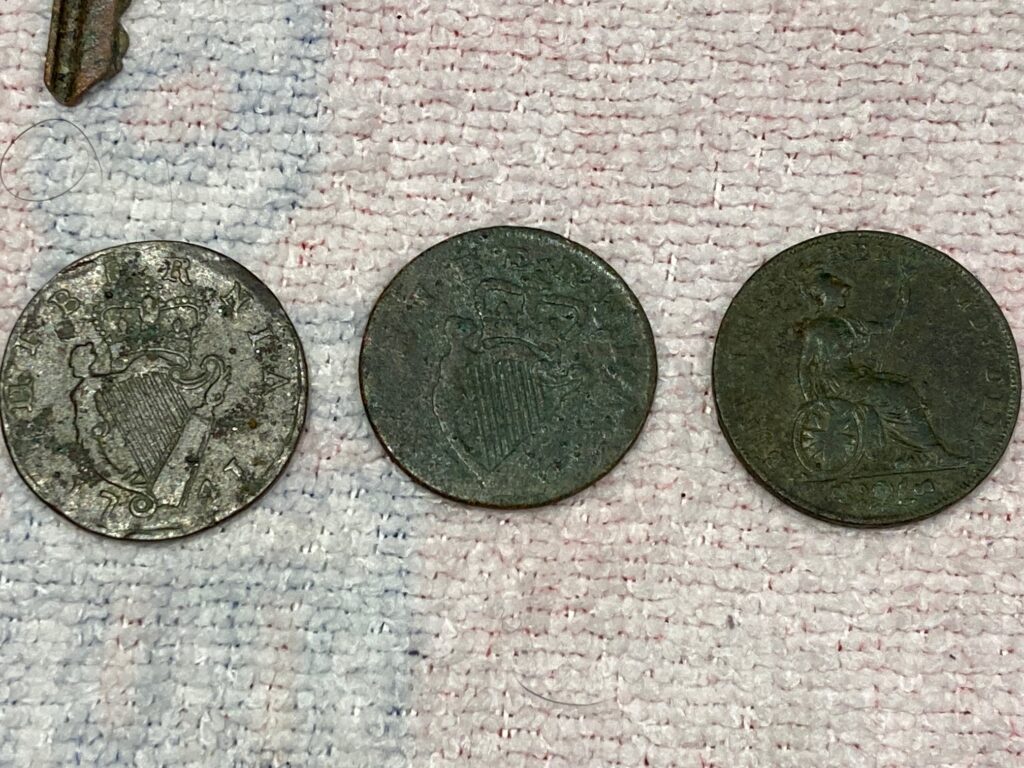
Yesterday I lifted three in one tide — George II, George III, George IV. Three reigns from one strip of sand.
The George II is 1747. Hibernia, the harp. Mid-18th century confidence. Protestant ascendancy intact. Parishes full. Structures certain of themselves.
George III follows — longer reign, longer shadow. Revolution in America. Union with Ireland. Empire consolidating even as strain increases.
Then George IV. Factory-milled. Cleaner edges. Sharper strike. Hardly worn. Dropped close to new. It did not travel far before the sand took it.
That detail stays with me.
Some coins pass through decades of hands. Others fall almost immediately. History is not evenly circulated.
George II appears more often here than III or IV. That suggests density — of trade, of settlement, of mid-18th century movement along this coast. The beach offers hints, not conclusions.
Three kings.
Nearly a century.
All reduced to copper discs surrendered to tide.
The sand does not rank reigns.
It records loss.
Private Money — Camac, 1792
Two more from the same stretch.
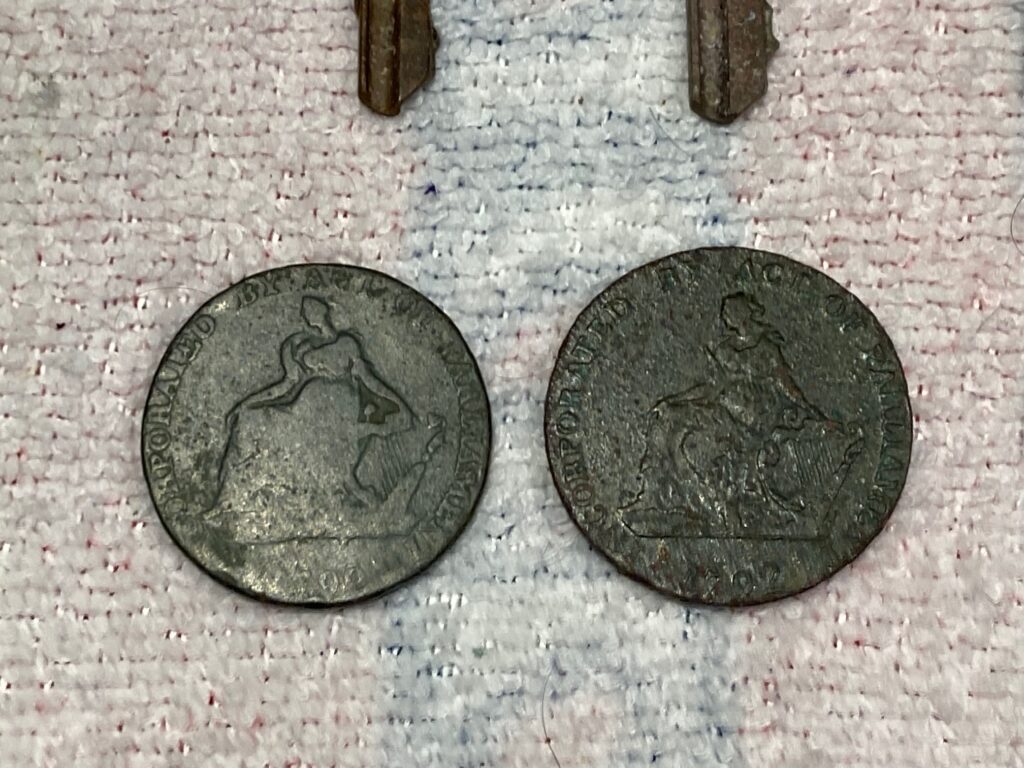
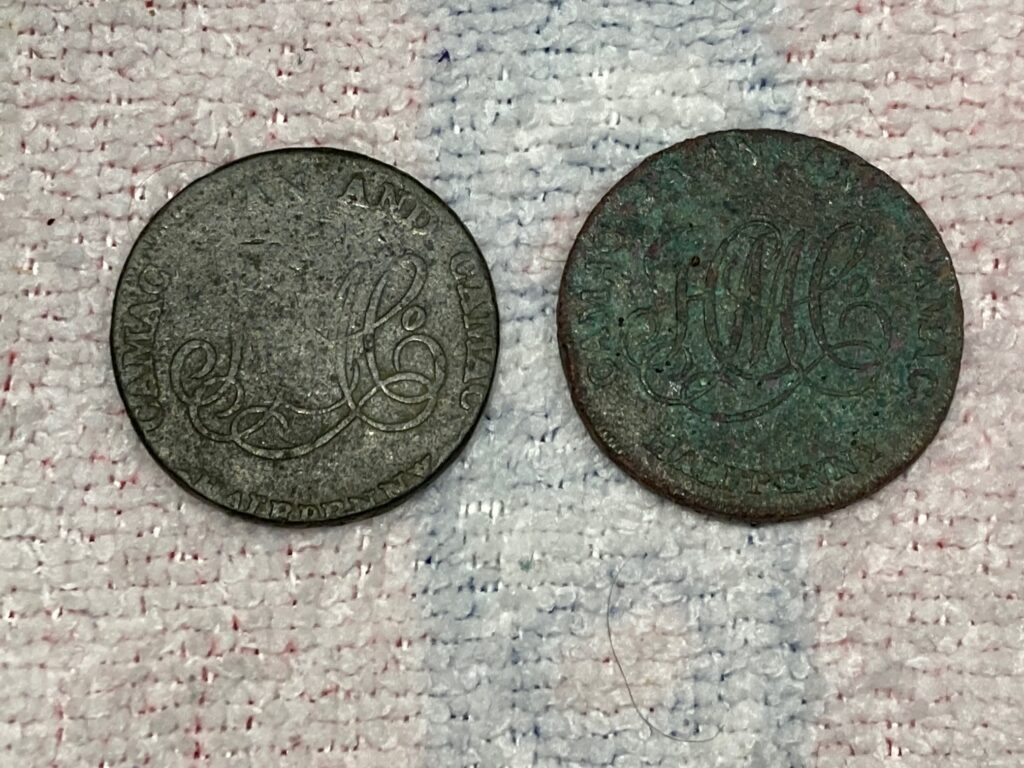
Both dated 1792.
Both Camac.
Not royal issues. Merchant tokens. Private money struck in Dublin when official copper ran thin.
When the state cannot supply enough small change, commerce improvises.
These pieces often carry more copper than the crown’s own issue. Heavier. Honest metal, struck to keep exchange alive.
Shortage precedes adaptation.
Barter yields to token.
Token fills the gap the state cannot.
The year matters. 1792 sits just before fracture — before 1798, before rebellion. Monetary improvisation often arrives before political rupture.
These tokens are small, but they speak clearly.
Confidence thins.
Supply falters.
Private actors step forward.
The beach makes no distinction between crown and merchant.
It receives both.
And returns them centuries later without preference.
Empire Copper — Victoria and George V
These are not the thick Georgian discs of mid-eighteenth century Ireland.
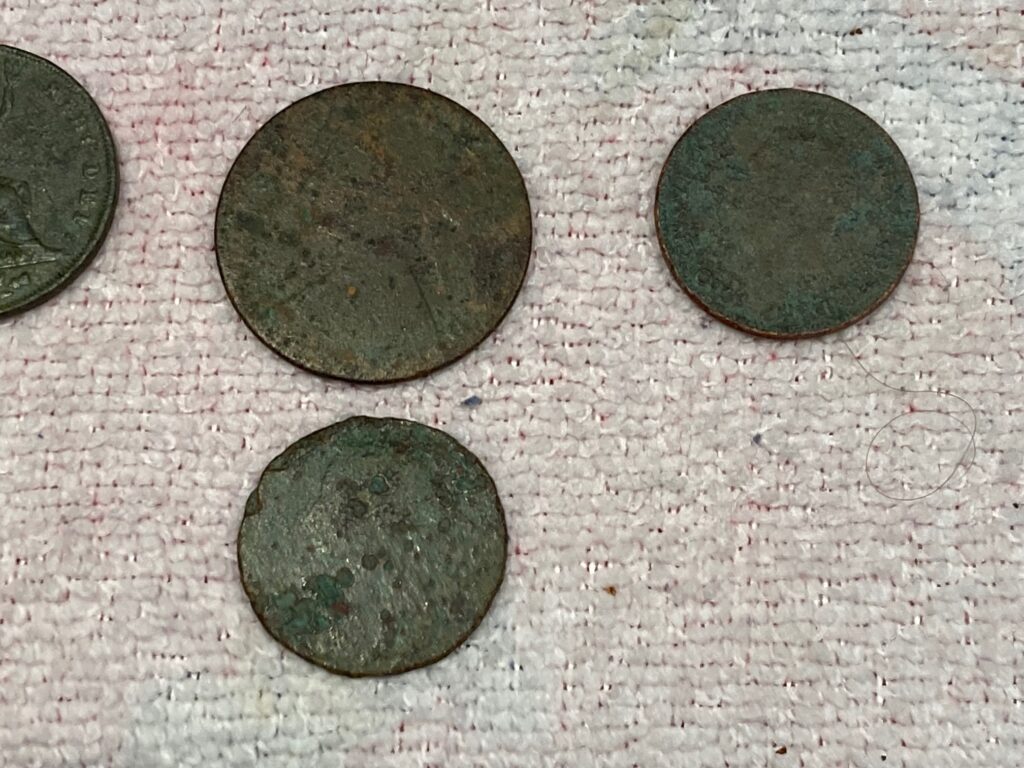
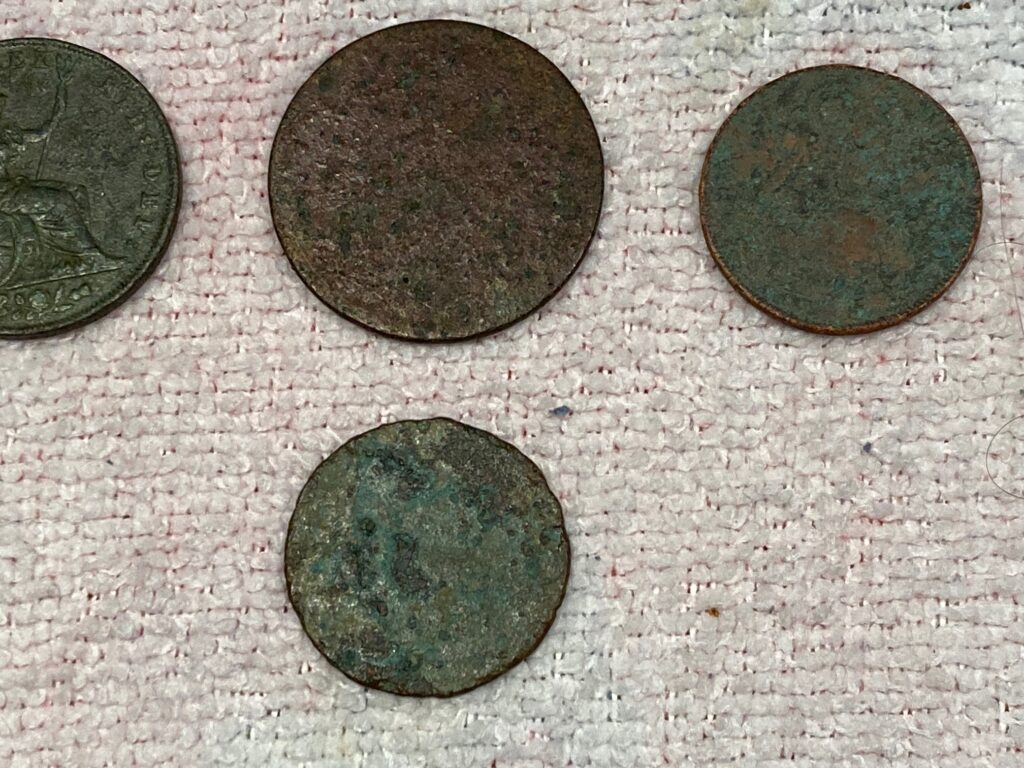
They are imperial copper.
Victoria.
George V.
By now Ireland is no longer semi-separate in coinage. There is no distinct Hibernia seated in quiet autonomy. The designs align fully with London. The empire standardises.
One currency.
One monarch.
One system.
On the surface, it suggests strength.
And yet these coins feel different in the hand.
They are thinner. The relief softer. The surfaces seem less resilient than the Georgian pieces — despite being a century younger. They have not endured the salt in the same way.
Mass production replaces solidity.
The Victoria is administration. Industry. Railways. Bureaucracy. Expansion at scale.
The George V carries another weight entirely.
I found it among brass.
Fragments of shell casing. Twisted scrap. Repeated false signals. I had to dig through war to reach coin.
This stretch of coast feels militarised. A training ground once. Drills before embarkation.
George V was struck in a time of mobilisation, not confidence.
Did it fall from the pocket of a young man practising here before being shipped to France?
Perhaps.
The detector cannot answer that.
But the layering is undeniable:
Copper.
Brass.
Empire.
War.
The Georgian coins feel rooted in land and trade.
The Victorian and George V pieces feel industrial — faster, thinner, more uniform.
Peak empire often looks secure.
Its metal sometimes looks strained.
Lead and Brass
After copper comes lead.
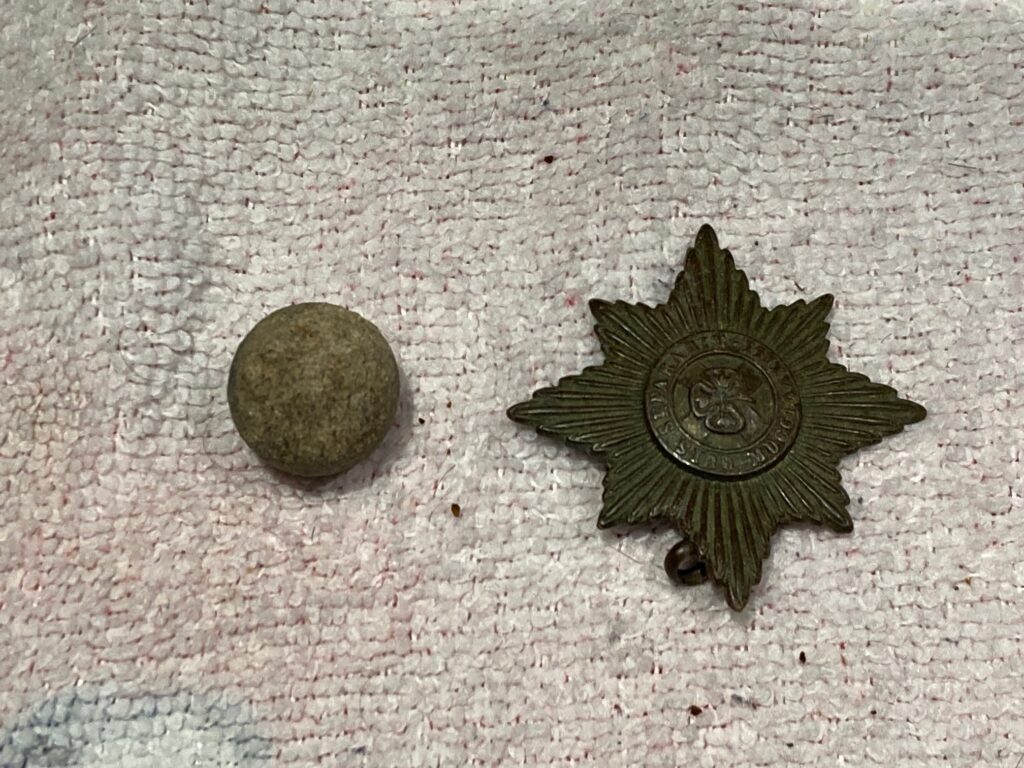
A musket ball.
Unused.
It was cast to fly and never did.
No flattening. No impact scar. Just intention, suspended.
Eighteenth century? Early nineteenth? The coast has seen volunteers, militia, watchful men facing outward across the Irish Sea. Days of Napoleon. Days of fear.
Not far from where I found the Napoleonic button.
Preparedness without discharge.
Then brass.
A star.
Pre-1922 Irish Dragoons.
Cavalry. Imperial Ireland in saddle and sabre.
Now the layers tighten.
Musket lead.
Georgian copper.
Victorian administration.
George V war coin.
Shell fragments in the sand.
Was it one man who lost the halfpenny and the badge? One pocket shedding pay and insignia in the same wind?
Or are we forcing coherence on a beach that collapses centuries into one afternoon?
There is no answer.
Only proximity.
Napoleonic unease.
Victorian certainty.
Edwardian mobilisation.
1914–18.
1916–22.
A lifetime could have spanned all of it.
The badge says service.
The musket ball says readiness.
The coin says wage.
I hope he survived what he trained for.
And what followed.
The tide does not record who returned.
It keeps the metal.
And waits.
Modern Ireland — Freedom, Imitation, Union
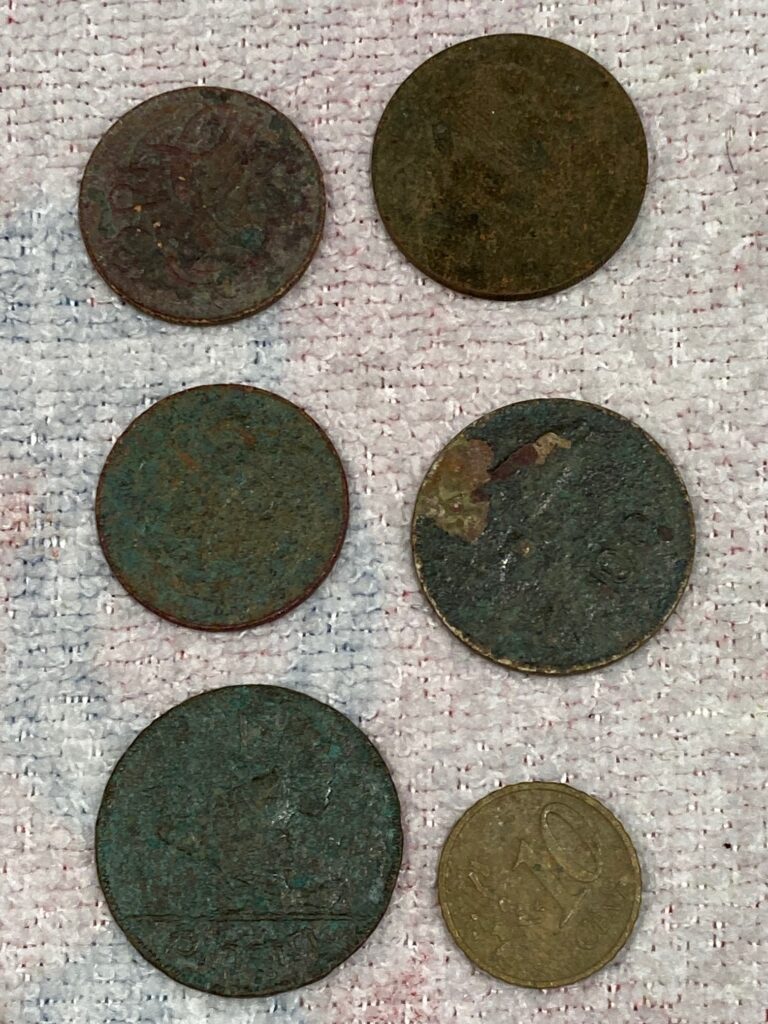
Then the newer layer.
Independence.
Or stages of it.
A Free State penny.
Same size as the imperial penny.
Same copper weight.
Same diameter in the hand.
The monarch removed.
The harp retained.
Form preserved.
Revolution often keeps the mould.
It looks different.
It feels familiar.
Was that continuity pragmatic — or psychological?
Would Michael Collins have approved of how the arc continued?
Then come the decimals.
Two 2p.
Two 10p.
Decimalisation in preparation. Not merely convenience — alignment. A stepping stone toward something larger.
The geometry changes.
The system shifts.
National copper becomes transitional metal.
Then the euro.
A 10 cent piece.
Not sovereign currency.
Not imperial either.
A different structure entirely.
Monetary union.
Centralised issuance.
Contribution upward.
Some call it integration.
Some call it tribute.
The beach does not argue ideology.
It simply layers evidence:
Imperial penny.
Free State imitation.
Decimal prelude.
Euro coin.
Three stages of independence.
Then absorption into something wider.
Empires change form.
Copper remains.
The harp survives on some pieces.
Disappears on others.
The tide is indifferent.
Buttons — The Smallest Losses
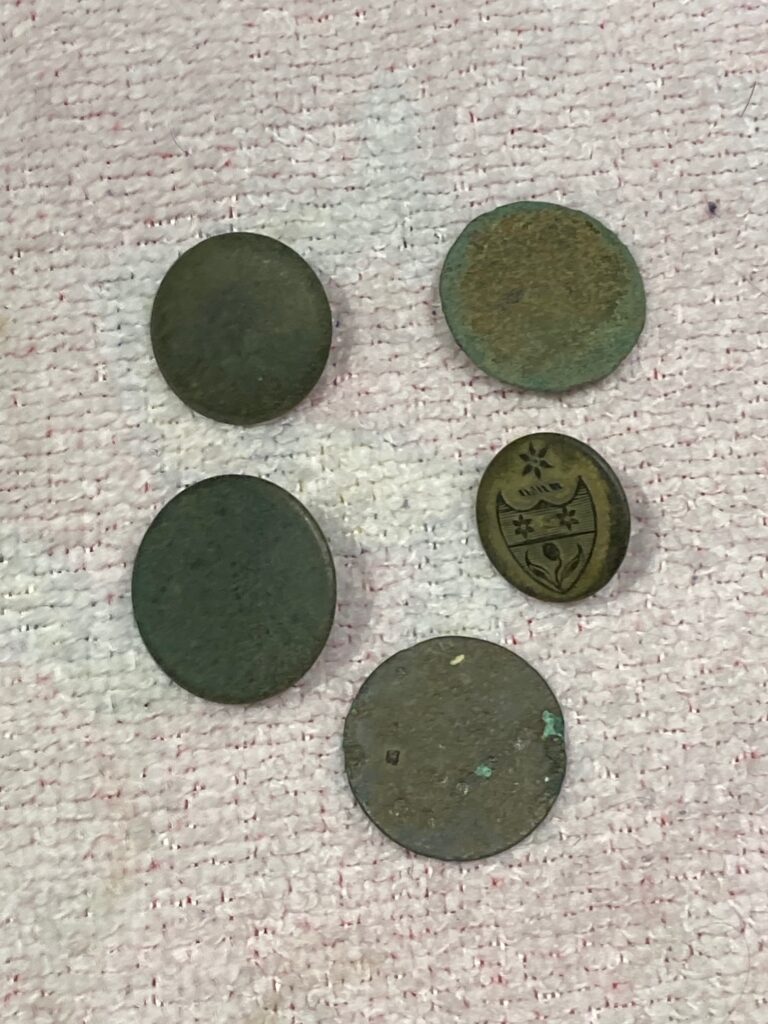
Coins speak of systems.
Buttons speak of people.
I have a jar full of them now.
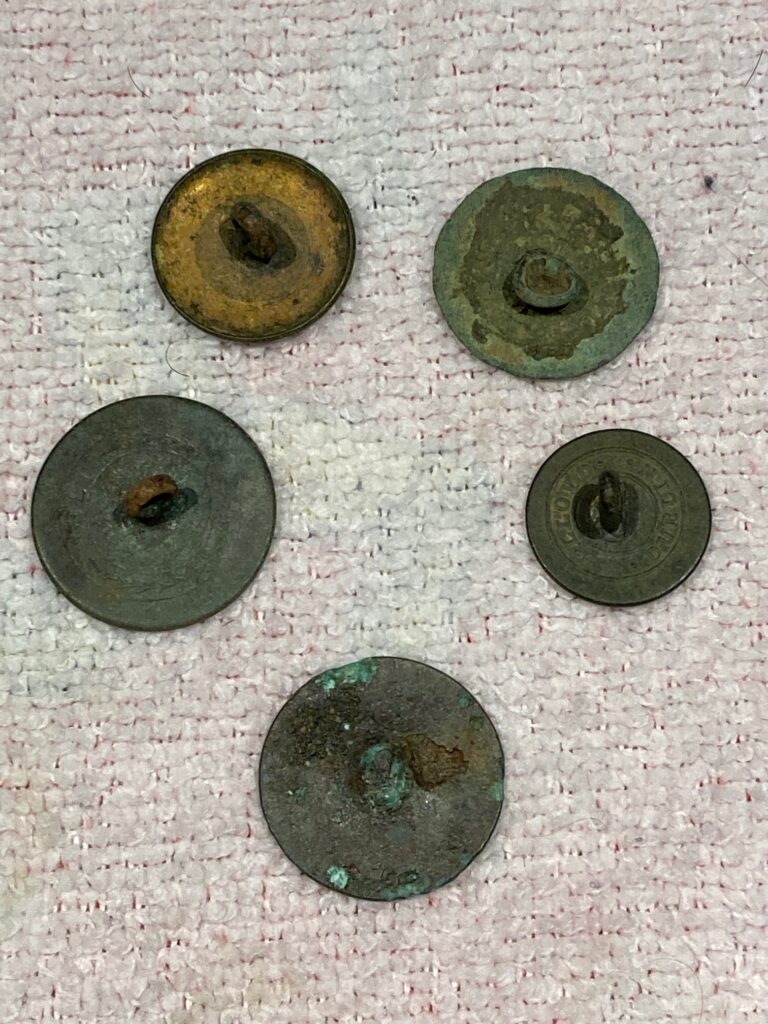
Not modern plastic. Not disposable moulded convenience. These are metal. Cast. Pressed. Sometimes lathe-turned. Some clearly handmade. Imperfect. Individual.
Many likely date to the 1700s. Some perhaps earlier. The shanks are hand-soldered. The backs show tool marks. The fronts still carry faint crests, simple patterns, the geometry of another century’s clothing.
They are beautiful.
We underestimate how much craft once went into small things.
A button was not trivial. It secured coat against wind. Cloak against rain. Shirt against exposure. On this coast, that mattered.
I imagine a travelling man walking the strand in the 18th century. Long coat. Salt air. Wind pulling at cloth. A button gives way. Falls into shingle. Gone.
No easy replacement. No shop on every corner. No cheap packet of ten.
Loss meant inconvenience. Repair required skill.
Each button here represents a small moment of irritation. A pause. A hand patting at a coat and finding absence.
Some are plain. Some carry regimental markings. Some are decorative, worn on civilian jackets. One bears the mark of a manufacturer long vanished.
They outlasted the garments they once held together.
The fabric rotted.
The wearer died.
The empire shifted.
The tide moved.
The button remained.
There is something deeply human about them.
Coins are circulation.
Badges are allegiance.
Musket balls are intent.
Buttons are daily life.
A jar full of minor inconveniences from three centuries.
The beach gives them back one by one.
And I keep them.
The Copper Disc and the Cameo Frame
Not everything lost here was currency or service.
Some pieces were intimate.
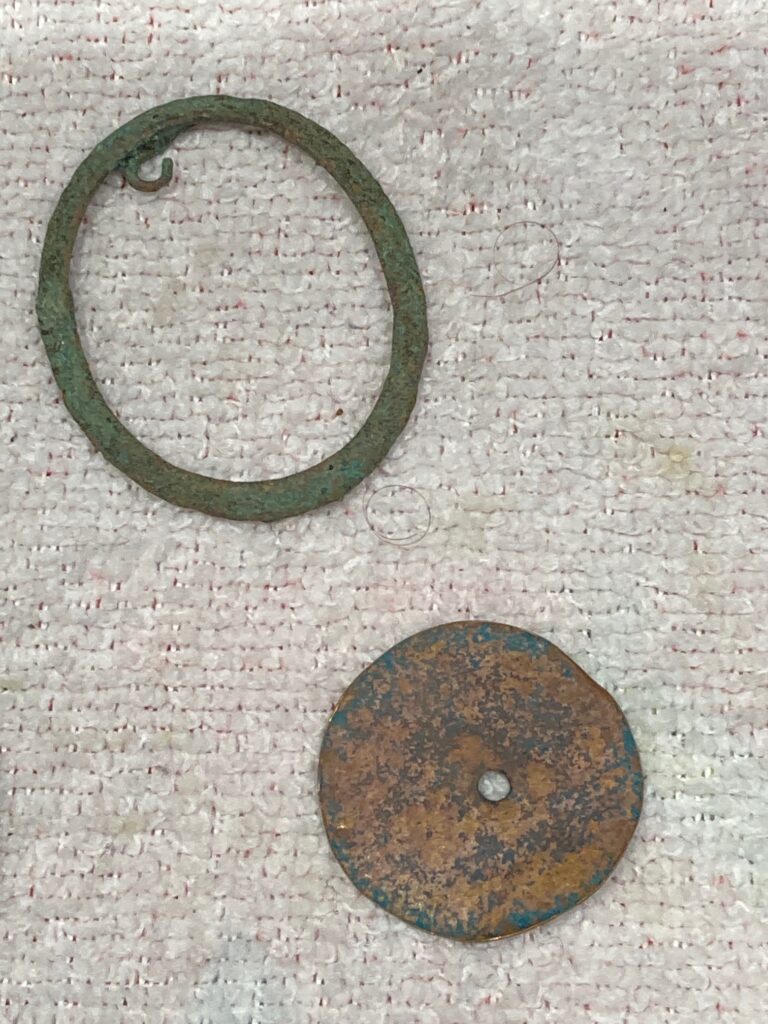
A simple copper disc. No inscription. No monarch. Just a worked circle with a central pierce.
Was it a makeshift token? A washer repurposed? Or part of something decorative — perhaps once polished, perhaps once mounted?
Copper oxidises beautifully. Even now, it carries colour.
And then the frame.
Oval. Delicate. A small suspension loop still intact.
Almost certainly Georgian.
A cameo once sat within it. A miniature portrait. A profile. A lock of hair. A loved face carried close to the chest.
The glass is gone.
The image gone.
The sentiment gone.
Only the surround remains.
It is the opposite of coinage.
A coin is designed for circulation.
A cameo is designed for closeness.
Someone wore this.
Someone fastened it in the morning.
Someone lost it — perhaps without knowing until much later.
There is something unsettling about finding only the frame.
The empire fades.
The copper endures.
The portrait disappears.
What we carry closest is often the first thing surrendered to time.
The beach does not prioritise power.
It preserves fragments.
A disc with no name.
A frame with no face.
And yet they feel heavier than some of the coins.
The Penknife and the Fragments
Not all finds are symbolic.
Some are simply tools.
A penknife.
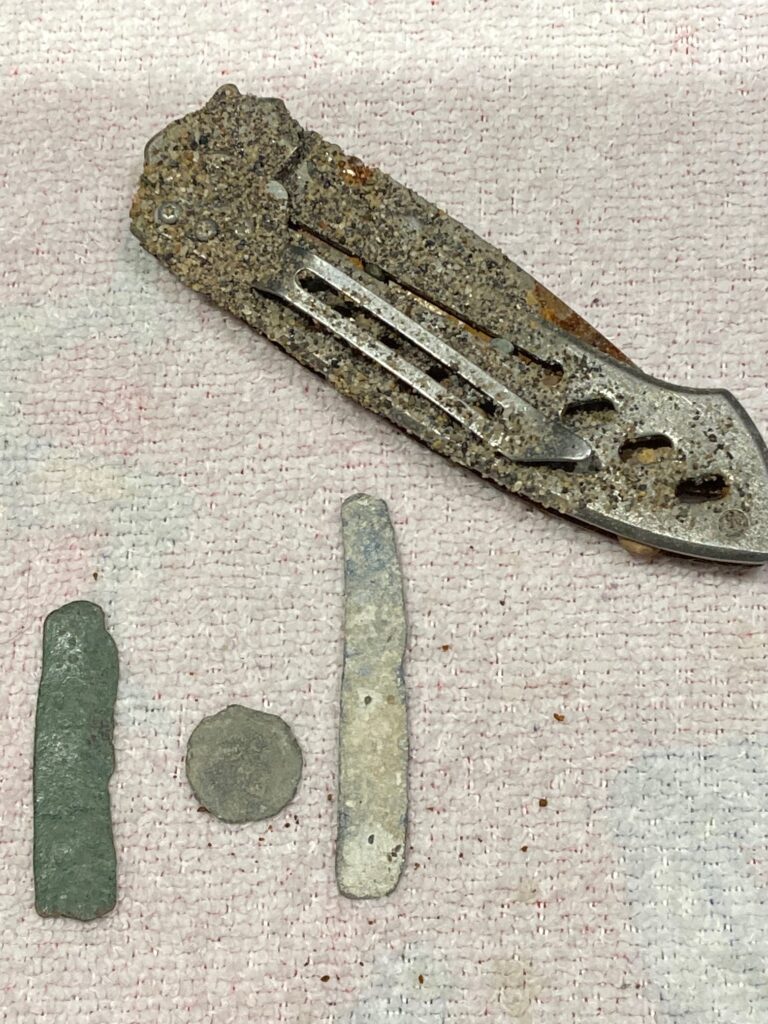
Modern by comparison. Steel still recognisable beneath the sand. Hinges stiff with salt. Once carried in a pocket, opened for rope, twine, food, small repairs.
A working object.
It does not belong to empire or rebellion. It belongs to habit. To hands. To ordinary days on the coast.
Someone used it.
Someone dropped it.
Someone replaced it.
Even here, the layers compress. Georgian copper lies metres from stainless steel.
Time folds.
Then the scraps.
A flattened strip of copper alloy.
Another narrow blade-like piece.
A small round disc, lead or pewter perhaps.
One fragment could be the broken tip of a lead spoon. If so, it once stirred porridge or broth in a cottage not far from here. Lead spoons were common. Cheap. Soft. Repairable until they were not.
The coastline keeps the leftovers.
The broken end.
The snapped piece.
The part no longer useful.
Coins are deliberate loss.
Fragments are accident.
Yet they tell as much.
A civilisation is not only its crowns and crests.
It is also its cutlery.
Its pocket tools.
Its worn-out metal repurposed until it fails.
The penknife reminds me of something simple:
Every era believes it is modern.
Every era leaves rust.
The Keys
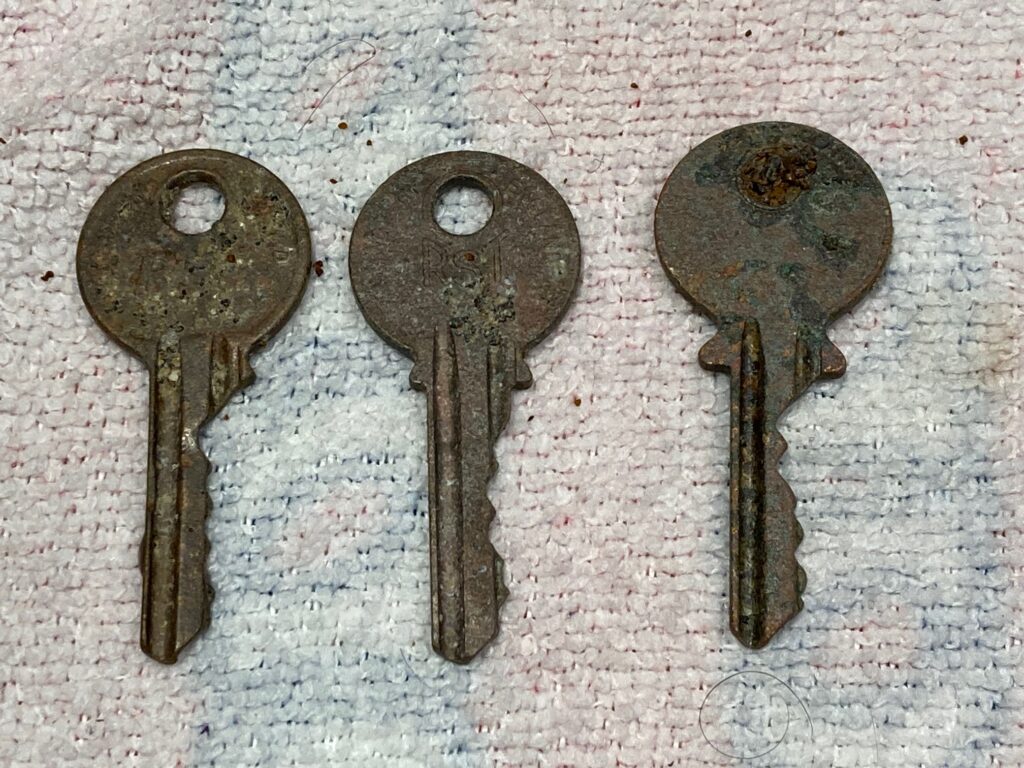
I find so many keys.
Almost as many as coins some days.
Three here alone. All different teeth. All once precise.
Each one cut to open a specific door.
A cottage.
A barracks room.
A shed near the dunes.
A rented house by the sea.
A key is intimate authority.
It is trust made metal.
Someone carried these daily. Slipped them into a pocket. Felt their weight without thinking. The small reassurance of access. Of entry. Of belonging somewhere that closed against the wind.
And then — loss.
A fall from a pocket.
A hole torn in lining.
A moment of distraction in sand.
The door remained.
The key did not.
There is something stark about that.
Coins can be replaced.
Buttons can be resewn.
Badges reissued.
A lost key means exclusion.
Somewhere along this coast a man returned to a locked door and felt the cold certainty of inconvenience — or worse.
These are not ceremonial keys.
They are ordinary.
Mass-cut. Functional. Twentieth century perhaps. No romance.
And yet they speak loudly.
Keys are about control. About ownership. About territory defined by a lock and a threshold.
Empires issue currency.
Homes issue keys.
I find them in clusters.
Sometimes I wonder how many of those doors still stand.
The sand has no use for access.
It receives the instrument of entry
and leaves the door behind.
The Unknown Coin
And then this.
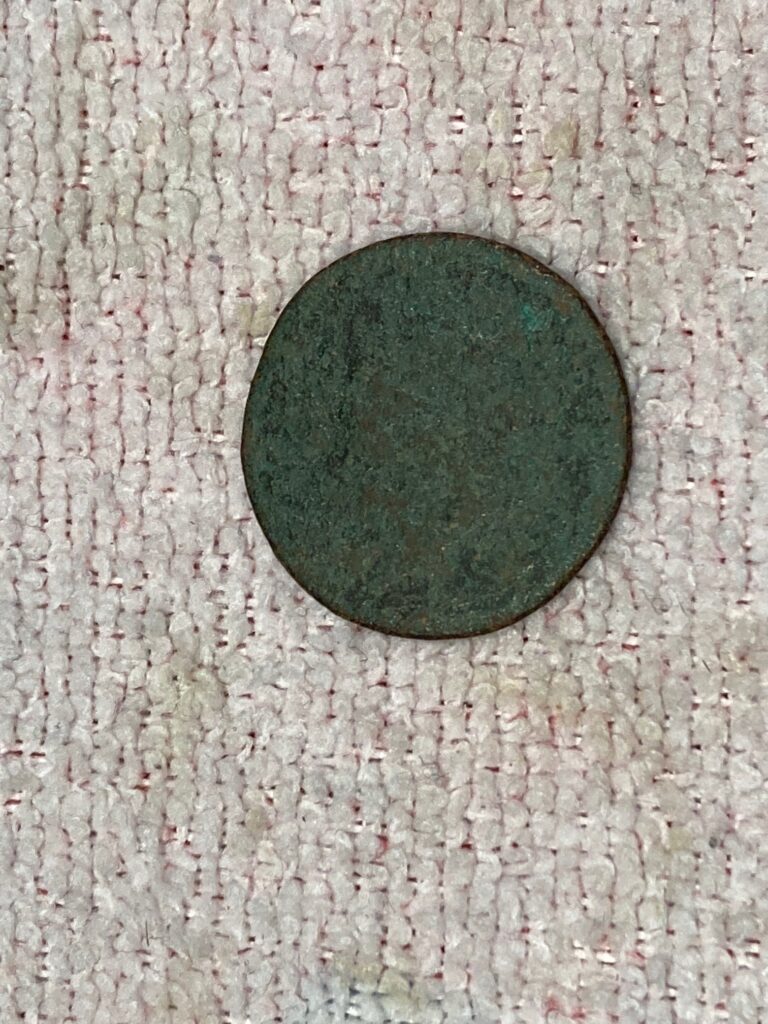
A coin with no face.
No monarch.
No harp.
No date.
Time has erased it.
The outline remains. The weight remains. The diameter tells me it once mattered enough to be struck deliberately.
But its allegiance is gone.
It might be Georgian.
It might be Victorian.
It might be local token or foreign drift.
It resists classification.
And there is something fitting about that.
I have spent the day assigning eras.
George II.
George III.
Victoria.
George V.
Free State.
Euro.
Each coin neatly slotted into a chapter of history.
This one refuses.
It has been in the sea long enough to forget.
The face worn smooth. The message dissolved. The authority flattened into anonymity.
Perhaps that is the final stage of all currency.
First it commands.
Then it circulates.
Then it corrodes.
Then it becomes simply metal.
The unknown coin is honest.
It does not carry narrative.
It does not wave a flag.
It does not argue sovereignty.
It is just copper that survived.
There is something almost liberating in that.
Empires insist on inscription.
The tide insists on erosion.
In the end, everything becomes an unknown coin.
And perhaps that is the most truthful state of all.
The Guinness Badge
And finally, this.
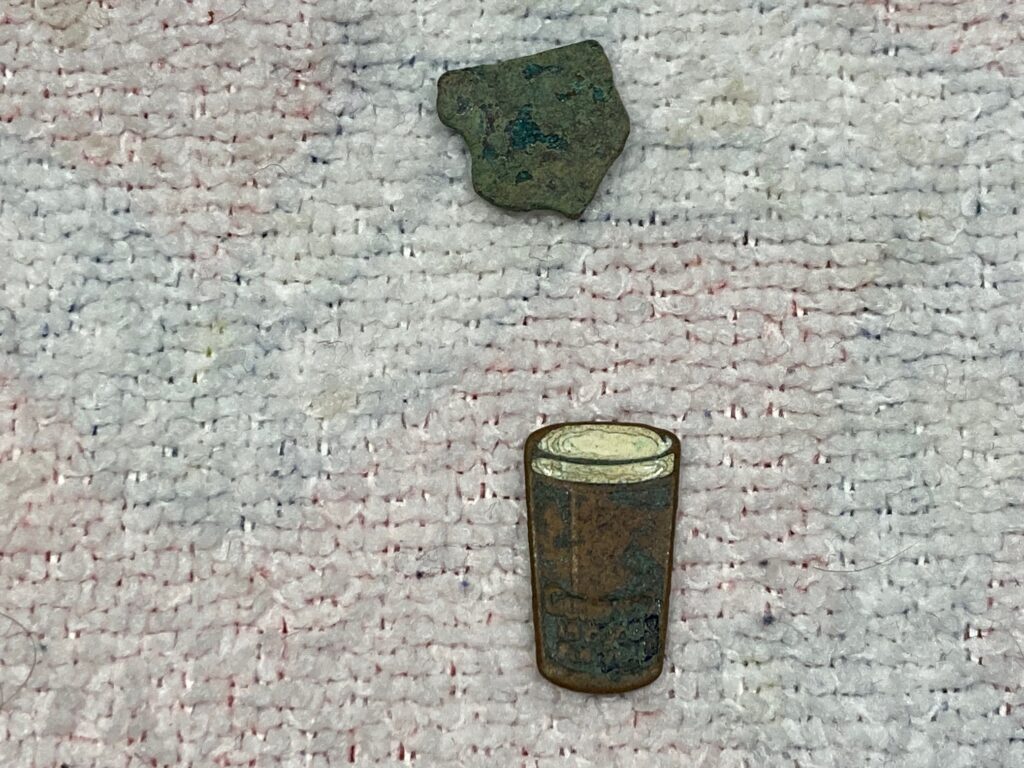
A small enamel badge. Guinness pint still visible beneath corrosion. The glass upright, white head intact in miniature.
Likely 1930s to 1950s.
Not ancient. Not imperial. Not revolutionary.
Just Irish.
By then the empire was gone. The Free State had become the Republic. Flags had changed. Allegiances redefined.
But Guinness endured.
It is almost comic in its steadiness.
Kings fade.
Currencies shift.
Empires dissolve.
Rebellions harden into administrations.
The pint remains.
This badge was once pinned to a lapel. Worn with quiet pride perhaps. Or simple affiliation. A night out. A railway platform. A coastal stroll after work.
It speaks not of conquest, nor mobilisation, nor monetary union.
It speaks of habit. Of culture. Of something rooted enough to survive regime change.
There is something grounding about ending the day with it.
After Georgian copper.
After private tokens.
After Dragoon brass.
After Free State imitation and euro alignment.
A pint.
Not ideology.
Not sovereignty theory.
Just continuity of a different kind.
Commercial. Cultural. Familiar.
The tide does not care.
But I do.
Because this badge feels like the most honest artefact of the lot.
Not power.
Not command.
Not authority.
Just belonging.
And perhaps that is what survives longest of all.