A record of storms survived and horizons still calling

Category: Psychology (Page 2 of 2)

The State You’re In

I’ve been thinking about the word state.

Not the flag.
Not the buildings.
Not the men behind desks.

The word itself.

A state is a condition.
A way things are, for a time.

It is not a person.
It does not remember you.
It does not care.

It simply applies.


How It First Appears

Some people meet the state as a helper.

It arrives early.
It pays for things.
It smooths the road.
It makes life feel lighter.

For them, the state feels generous. Almost friendly. Like a great hand that keeps refilling the cup.

Others meet it differently.

As forms.
As rules.
As delays.
As a distant voice saying no.

Both experiences are real.

Both are temporary.


The Error

The mistake is believing the state has a nature.

That it is kind.
That it is cruel.

It is neither.

The state is not a being.
It is a condition applied to circumstances.

When the circumstances change, the condition changes.

That is all.


When Your Life Changes State

There comes a time when your own life shifts.

You earn more.
You move.
You age.
Your family changes shape.

Nothing dramatic needs to happen.

And yet the tone changes.

What once flowed toward you slows.
What once helped now measures.
What once supported now calculates.

People say the state has turned against them.

It hasn’t.

They are simply no longer in the same state.


The Gates

The state works like a series of gates.

If this, then that.
If not, then something else.

Denmark makes this easy to see.

There are supports that apply at certain phases of life — for children, for education, for housing — and there is taxation that applies at others. Under the right inputs, the flows can be substantial. Life can feel buoyant. Even generous.

Then one input changes.

Income.
Residence.
Age.
Status.

The gate flips.

The same machinery produces a different outcome.

No anger.
No memory.
No apology.

Just logic.


From Supported to Supplying

This is the moment many find hardest.

When they are no longer carried, but counted.

Benefits stop.
Obligations begin.
The tone sharpens.

People look for a reason.

There is none.

The state did not decide anything.

It recalculated.


Why This Hurts

We are taught stories instead of mechanics.

That the state cares.
That it protects.
That it provides.

Sometimes it does.

But only while the conditions hold.

The state does not see people.
It sees categories.

Fall inside them and life feels warm.
Fall outside and it feels cold.

Both are impersonal.


Seeing It Clearly

Once you understand this, much anger falls away.

You stop arguing with the weather.
You stop pleading with the tide.

You position yourself instead.

You learn when to sail.
When to anchor.
When to move on.


An Odyssean Ending

I do not see the state as an enemy.
I do not see it as a saviour.

I see it as a sea.

Sometimes calm.
Sometimes rough.
Always indifferent.

A man who mistakes the sea for a home will drown.
A man who learns its moods may cross it many times.

Odysseus did not curse the water.
He read it.

He lost ships.
He lost years.
He lost companions.

But he kept his hand on the helm.

Home, when it came, was not given.
It was reached.

And the mistake was never the journey.

The mistake was believing the waters would always be kind.
The Neutral Zone

I’ve realised I’m in what can only be described as a neutral zone.

The old life is no longer close enough to touch. The house is gone. Accounts have been closed — not just the obvious, literal ones, but the quieter mental ledgers too. Obligations that once occupied bandwidth have loosened their grip. Narratives that once defined me now feel distant, almost abstract.

And yet, the new world hasn’t fully arrived.

The life I mapped out in early 2025 is taking shape, but it’s doing so in its own time. Some elements are already in motion. Others are still gathering quietly behind the scenes. Nothing feels stuck — but nothing can be forced either.

This in-between has a texture of its own.

What’s surprised me most is how much easier it was to say goodbye to certain things than I expected. Not because they lacked meaning, but because their season had clearly ended. Once that becomes obvious, clinging feels unnecessary. There’s relief in recognising completion when it arrives.

The neutral zone is not emptiness.
It’s space.

Space without urgency.
Space without explanation.
Space without the need to perform continuity for anyone else.

I can see now how much of life is spent rushing from one identity to the next, terrified of the pause in between. But the pause is where recalibration happens. It’s where noise falls away and signal returns.

Things are happening. Just not always on a visible timetable.

And I’m increasingly aware that some outcomes only materialise when attention is elsewhere. A watched pot never boils — not because nothing is happening, but because constant monitoring interferes with the process.

So I’m getting on with life.

Walking.
Reading.
Thinking.
Writing.
Paying attention to what’s in front of me rather than what’s forming in the distance.

The neutral zone doesn’t need to be filled. It needs to be inhabited.

If this period has taught me anything, it’s that transition doesn’t require drama. It requires patience and trust — not in outcomes, but in direction.

The old life is gone.
The new one is coming.

And for now, that’s enough.

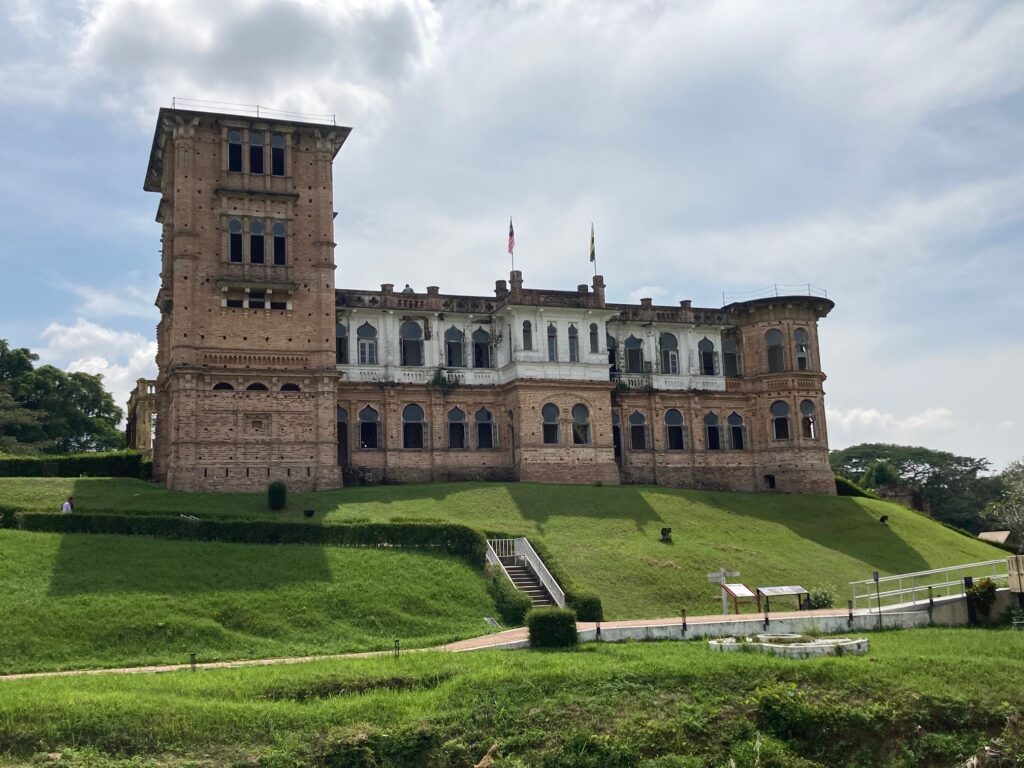
Kellie’s Castle and the Men Who Stay Too Long

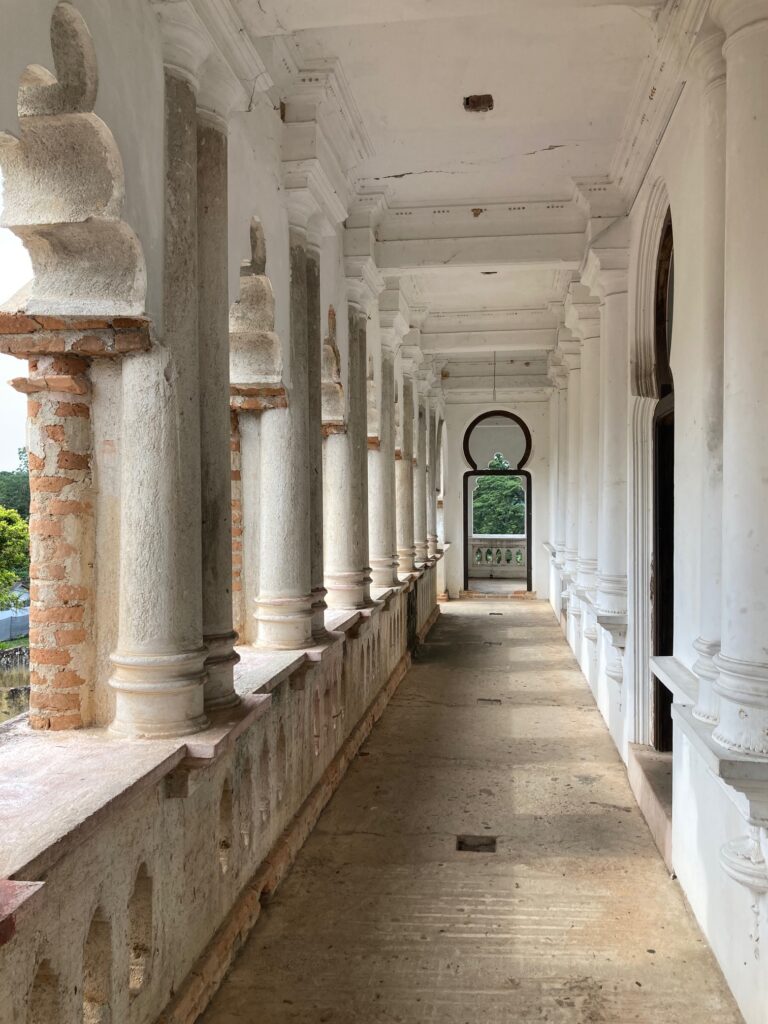
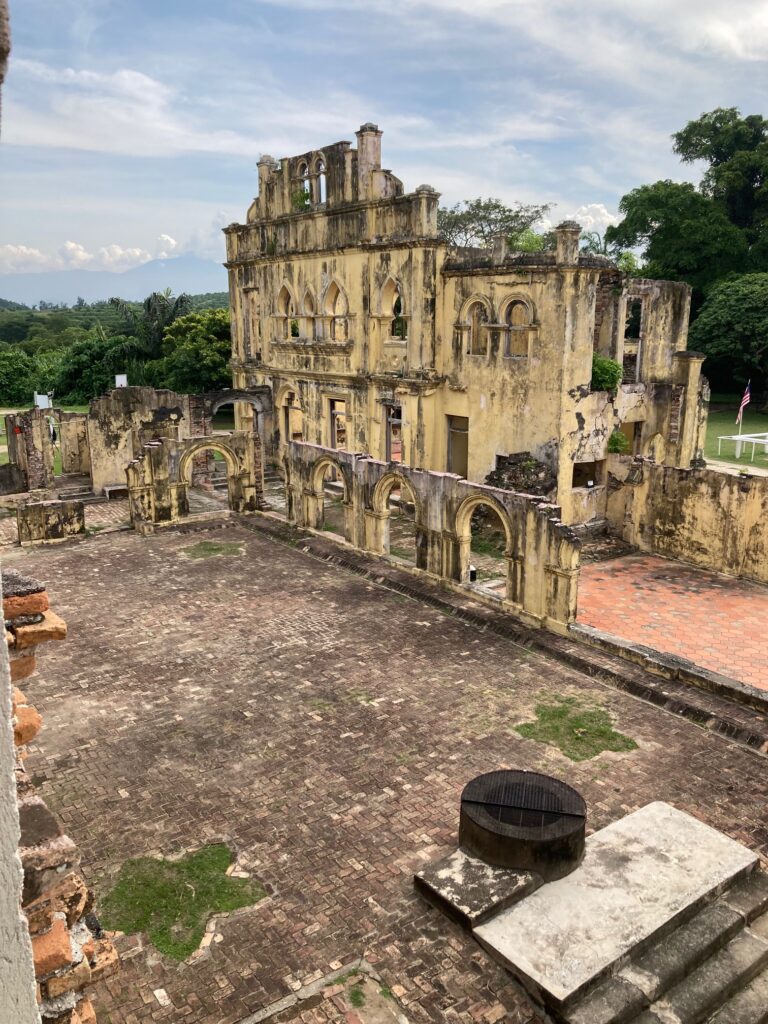
I had waited to see this place for thirty-five years. Michael Palin’s railway journeys put me onto it long ago, but nothing prepared me for the feeling of standing in the shell of another man’s unfinished ambitions.

Kellie built this hill like a man laying out his immortality brick by brick. He wanted a palace, a monument, a statement carved into the heat and stone of Malaya. And yet, here it stands — empty, echoing, beautiful, and broken. A place half-born and never lived in.

You walk these corridors and you wonder:

Was there ever a better monument to how fleeting success and happiness really are?

How quickly a legacy can rot or die?

How quietly a story can end without anyone truly noticing?

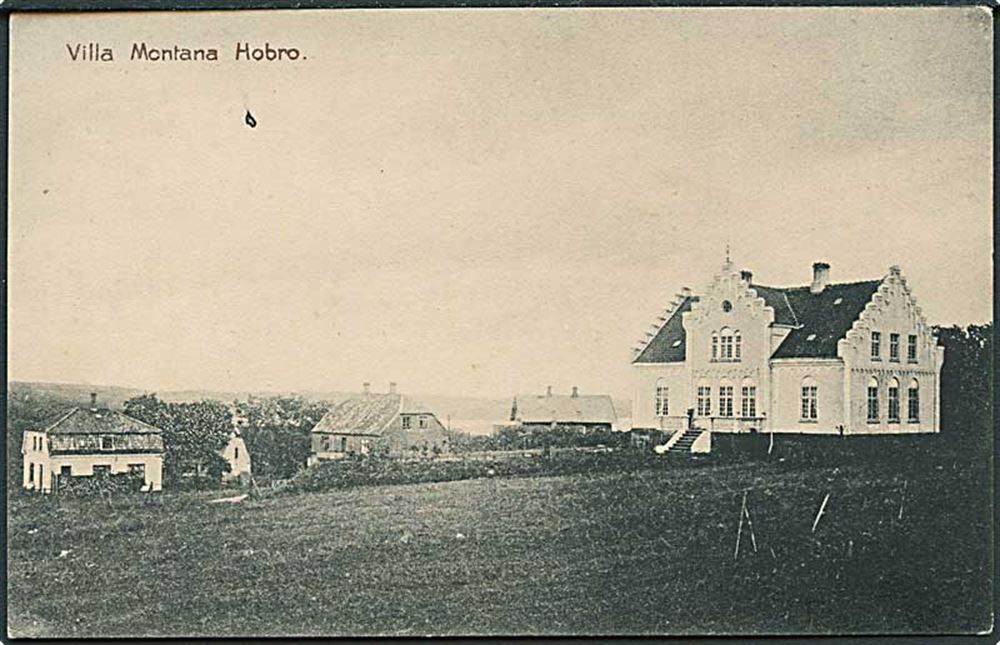
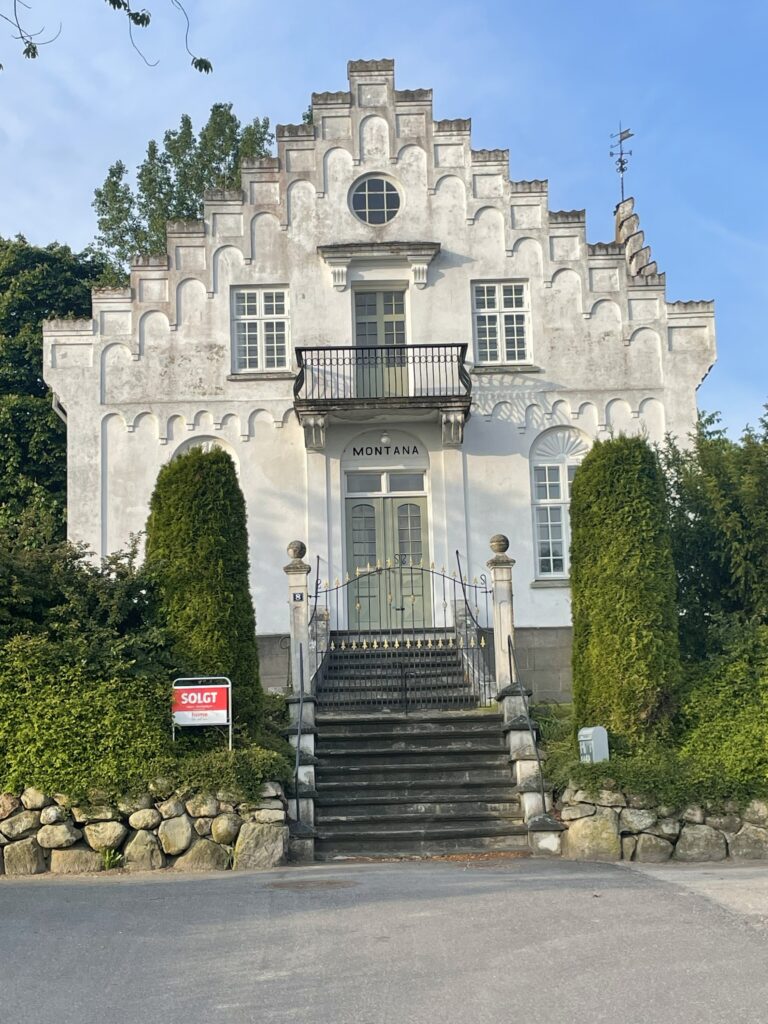
Today, standing in the abandoned rooms, I thought of Montana — my own project, my own obligation, the weight I carried for years. I held onto that house until it was time to let it go, and when the moment came, I walked away. I exited my castle long before it had the chance to imprison me.

Kellie never had that luxury. He died in Portugal at fifty-six, still fighting bureaucrats and labour shortages, still believing he had more time. They say his ghost walks the upper corridor here. Not in anger — in yearning. A man trapped in the dream he never escaped.

There’s a curse whispered locally:

Any man who binds his identity to his creation will lose both.

Kellie’s story follows that script with frightening precision — a child lost, a labour force wiped out by influenza, a dream stalled by red tape, and finally, a sudden death. The castle became a tomb for his intentions.

I realised as I walked through the wine cellar — the one he planned to air-condition, the first in Malaya — that I am only two years younger than he was when he died. That hit harder than I expected. It forced a question I’ve avoided for most of my life:

What dream of mine is unfinished, and will I have the courage to leave it behind when the time comes?

The truth is this: legacy is fragile, memory is temporary, and the world is ruthless with sentiment. Even Ipoh reminded me of that this week — the colonial cemeteries bulldozed, the graves poured over with fresh concrete. Whole lives, whole sorrows, erased in an afternoon.

Maybe that’s why this castle struck me.

Maybe this is the lesson:

Do not stay too long.

Do not cling to the past.

Do not become a ghost in a house you once loved.

Kellie tried to build permanence.

I am learning to build only momentum.

And perhaps that is the real inheritance of these ruins — the quiet instruction to walk forward, lightly, before the walls close in.

Goodbye, Montana

There are houses you live in, and there are houses that live in you.
Montana was the second kind.

I didn’t choose it casually.
I felt it the very first time I saw it — the weight of its old bones, the quiet pride in its Edwardian-era lines, the way it waited without demanding anything. It was a house built for seasons and storms, the kind that stands while everything around it changes. A man can come to love a place like that.

And I did.

I loved the wide rooms and the light that moved across the house as the day progressed.
I loved the heavy doors that closed with certainty, the high ceilings that held silence like a cathedral.
I loved the garden in early summer, quiet, private and still, the leaves emerging on the huge old copper beech.
I loved how the house watched over everyone inside it, even when no one noticed.

But Montana was also the place where the old life gathered around me.
A museum of years I outgrew.
A stage where I carried weight meant for three men, not one.
A place that held memories I had long outlasted.

For all its beauty, it became a harbour I could no longer stay anchored in.

Every house has its truth.
Montana’s truth was simple:
I was no longer the man to fit what I had built inside its walls.

There comes a point in a man’s life when he realises he cannot rebuild himself in the same place he was broken. Montana was filled with ghosts that never left — not tragic ghosts, just the kind created by routine, obligation, and the quiet dying of years you can’t get back.

I learned many things inside that house.
How to endure.
How to protect.
How to keep going when the foundation cracks.
How to hold a life together when everything else fell apart.

But I also learned the hardest lesson:
A man cannot stay where he is slowly disappearing.

So I left.
Not because I stopped loving it,
but because I finally understood that Montana belonged to a chapter of my life that had to end before I could begin the next one.

The day I walked through its rooms for the last time, the house felt lighter — as if it, too, knew the story was finished. The echoes were softer. The air felt still. There was no anger, no grief, just a quiet acknowledgment between a man and the place that sheltered him:

“It’s time.”

Montana will go on without me.
Houses do.
They take new families, new laughs, new storms, new light.
They outlive all of us.

But a part of me will always stand in the hallway, hand on the mahogany banister, knowing I was shaped there — hardened, humbled, and finally pushed out into the world to reclaim the man I should have been all along.

Some places you leave to save your future.
Montana was one of them.

This is my goodbye —
not in sorrow,
but in gratitude for a house that carried me long after it should have.

And now the road ahead is open,
the horizon wider,
the past sealed gently behind a closing door.

The last day

Newer posts »

© 2026 The Dunwiddie Post

Theme by Anders Norén — Up ↑