I went back to Tunisia to test a memory.
I had worked in Tunis in 2010, and the city had stayed with me. Not just as a place, but as an energy: French and Italian bones, Arab life, Mediterranean confidence, cafés, traffic, white façades, old streets, movement, beauty, possibility.
Some cities vanish when you leave them.
Tunis had remained.
So I returned to ask a simple question.
Was it still there?
The answer was yes.
Not exactly as I remembered it. No city waits sixteen years to confirm a private myth. But the charge was still there. Tunis still had that layered, urban, slightly theatrical quality I had carried with me since 2010. It still felt alive in more than one direction at once.
That is Tunisia’s strength.
It is not one thing.
It is Punic, Roman, Arab, Ottoman, French, Italian, African, Mediterranean and modern Tunisian, all folded into the same landscape. Not cleanly. Not politely. But visibly. You can walk a few streets and feel one civilisation’s confidence turn into another civilisation’s afterlife.
That was what I came for.
I wanted Roman stones, sea air, cafés, railway stations, louages, whitewashed towns, old streets, medinas, fragments of empire, and the ordinary theatre of North African life.
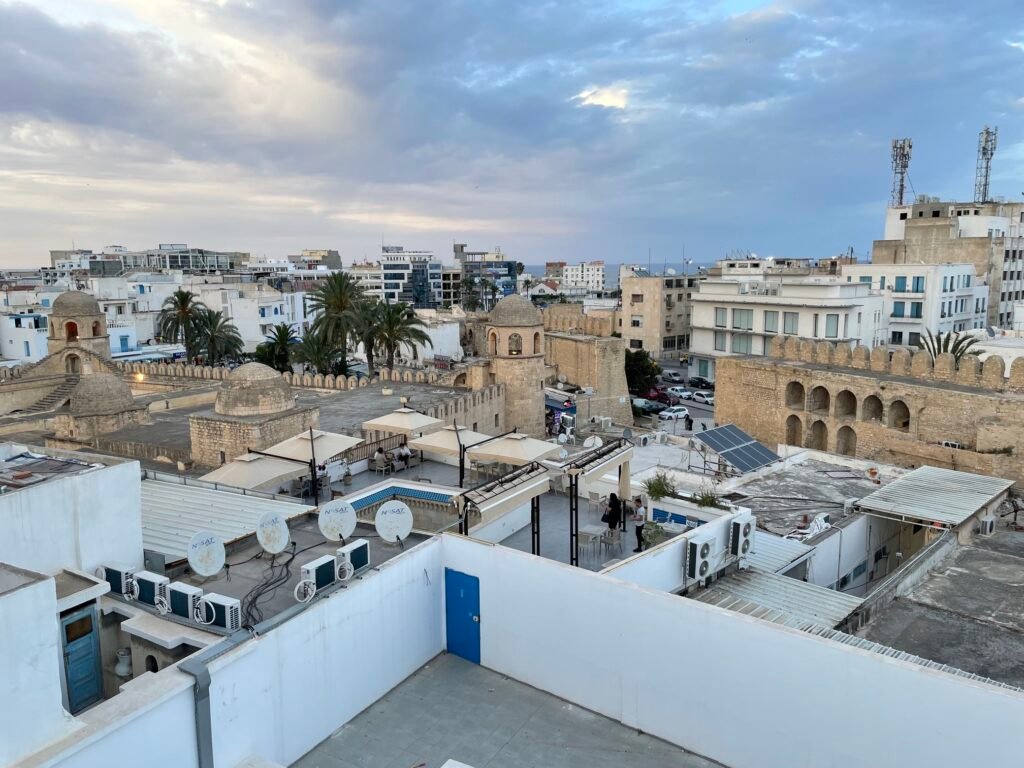
I found all of it.
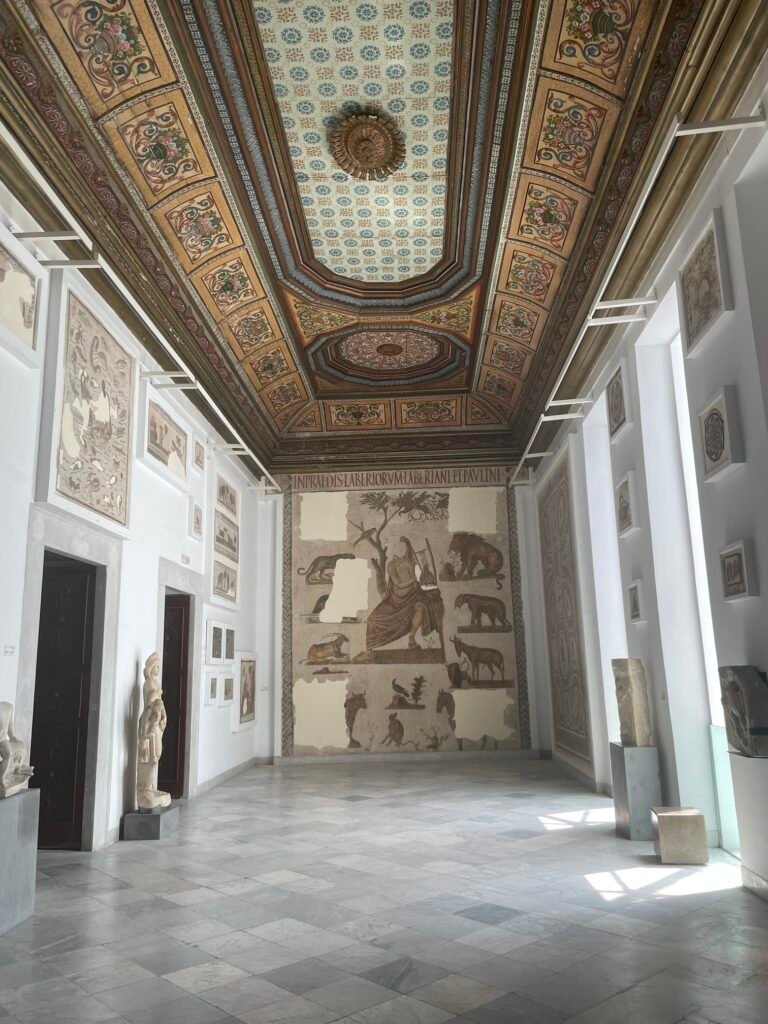
The old French and Italian city of Tunis was, unsurprisingly, one of the strongest parts of the trip. I loved it back in 2010. After all, it is recent history, only being vacated in 1956 by fleeing French, Italian, Greek and Jewish families with their stories of loss blown away by the winds of time. It is not polished heritage. It is better than that. It is a surviving layer. Art Nouveau, Art Deco, occasional 1950s modernist. Balconies, churches, façades, cafés, apartment blocks, commercial buildings, shaded streets, traces of a European Mediterranean world that once assumed it had a future there.
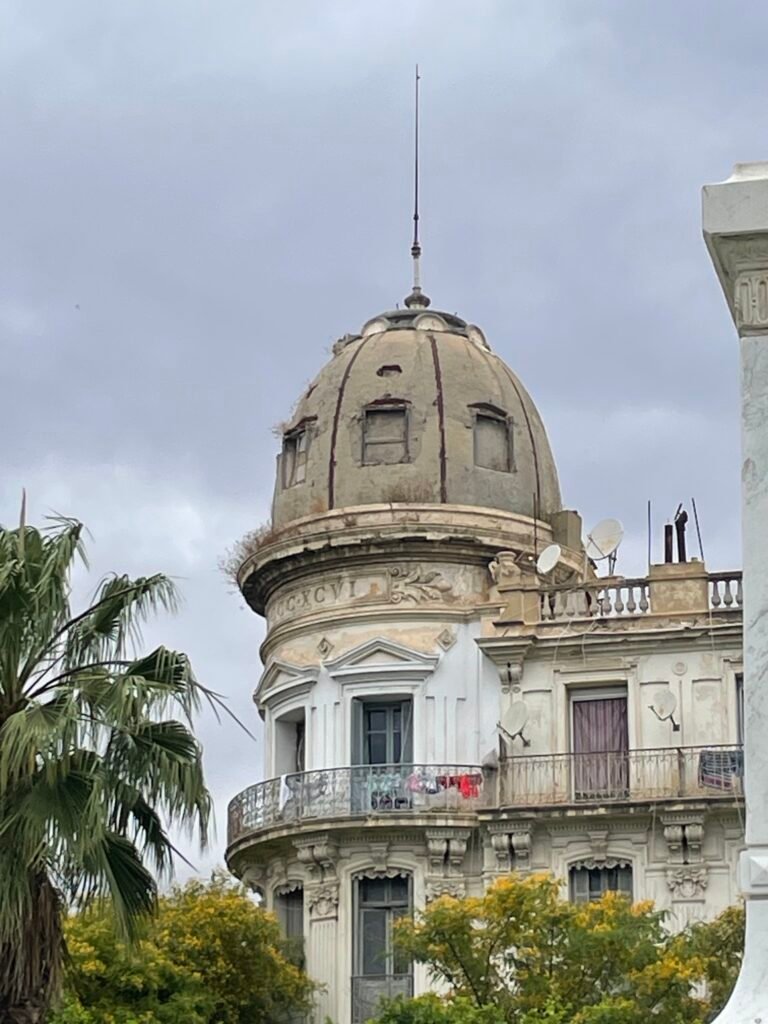
People had lived in those buildings as themselves.
They worked, prayed, argued, made money, lost money, loved, aged, raised children, and imagined that their world would continue.
Then history moved.
The buildings remained.
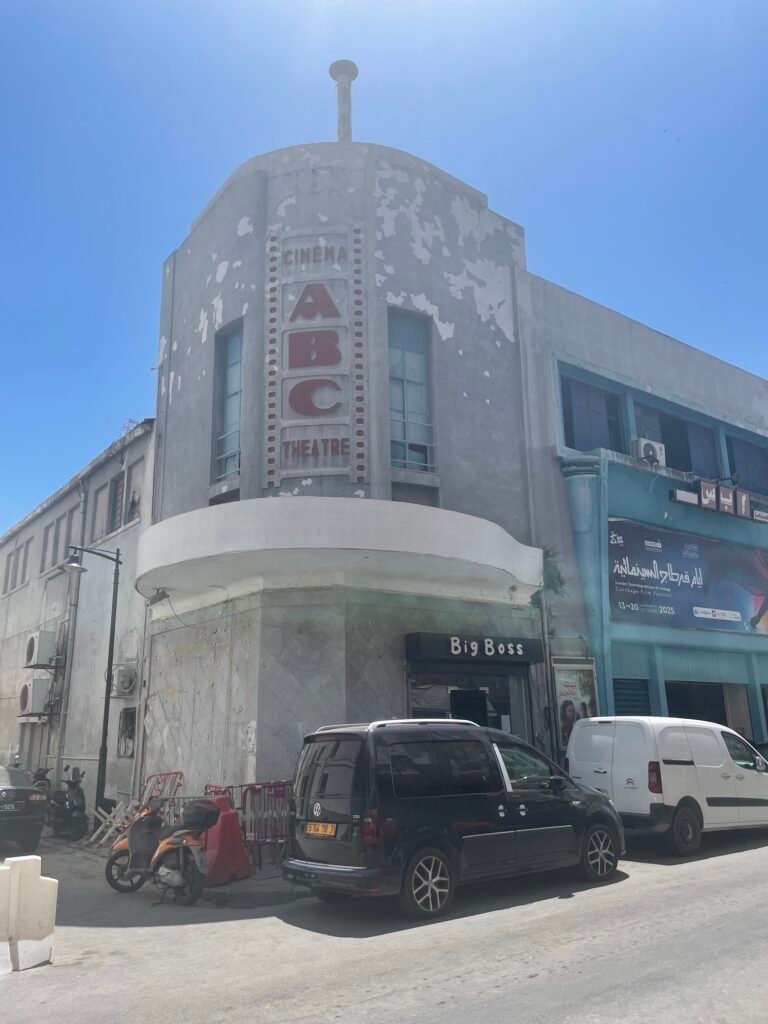
That is the power of Tunis. It does not give you history as a museum sequence. It gives you layers under your feet.
The cathedrals made the same point in stone.
Nobody builds a cathedral for a temporary mood. A cathedral is confidence made physical. Religious confidence, civic confidence, imperial confidence, cultural confidence. It says: we are here, and our world has weight.
And yet there they stand now in a changed Tunisia, no longer central, no longer commanding the same world that built them.
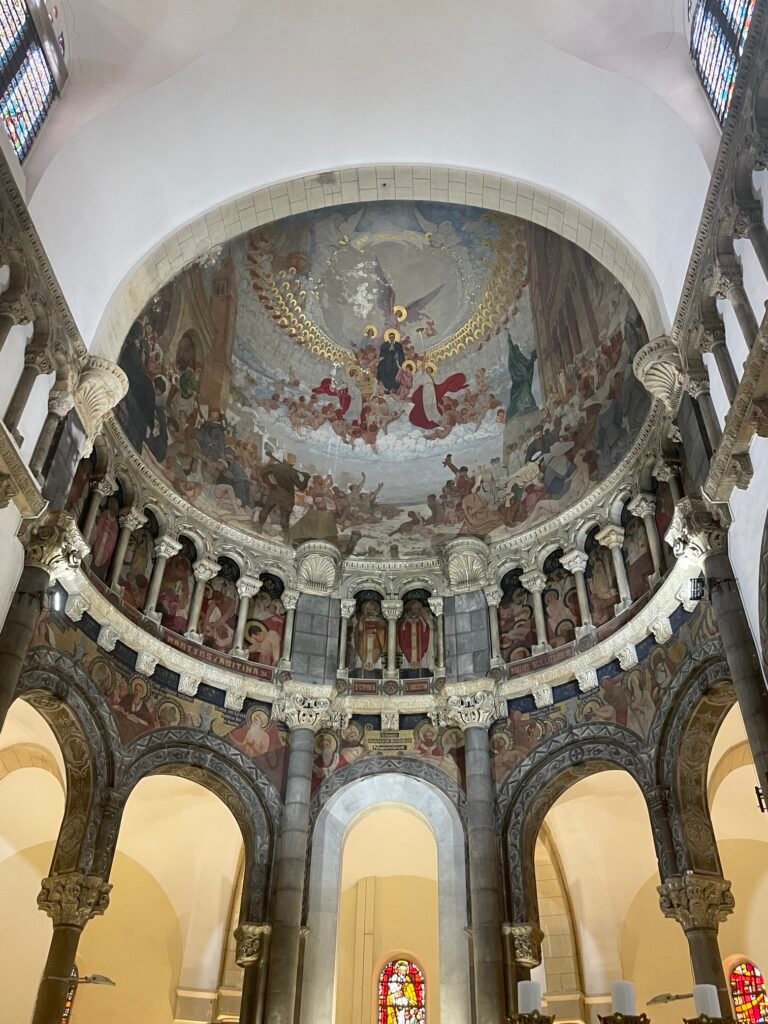
Evidence.
Not decoration.
The strongest refuge was the Protestant church and cemetery garden.
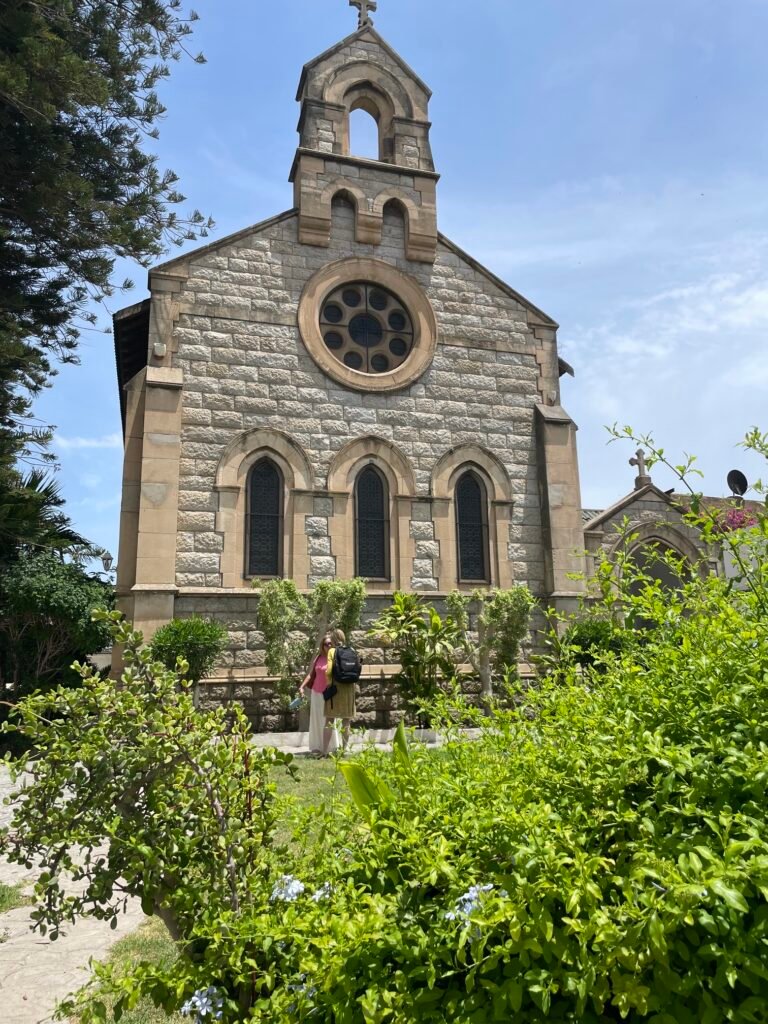
Outside: traffic, heat, call-outs, movement, negotiation, the small frictions of the street.
Inside: shade, stone, graves, names, flowers, silence.
There were British graves, as expected. But there were also Danish and Swedish names, and those struck deeper because of my years in Denmark. A Scandinavian name in a cemetery garden in Tunis is a small thing, but small things often carry the most human weight.
People had come south. They had traded, served, married, fallen ill, died, and been buried far from the cold north.
That garden was not an attraction.
It was a pause in history where nobody wanted anything from me.
And that mattered.
Because Tunisia also taught me the hidden tourist tax.
Not money.
Attention.
The low-level street approaches were not dramatic. This was not danger. It was not a siege. It was usually small: “Where are you from?” “My friend.” “Taxi?” “Restaurant?” “Guide?” “Come, come.”
The first time, you answer.
The second time, you recognise the shape.
After that, you know the script before it has properly begun.
The cost is not the dinars.
The cost is the interruption.
You are walking. Looking. Thinking. Building a map of the place. Comparing Tunis now with Tunis in 2010. Noticing a façade, a street angle, a church door, a café, a railway board, a piece of colonial geometry under modern traffic.
Then someone inserts himself into your attention.
Now you must classify him.
Friendly? Commercial? Taxi? Guide? Scam? Harmless? Persistent? Do I answer? Ignore? Refuse? Walk faster?
It takes two seconds.
But the thread breaks.
That is the tax.
A tax on solitude.
A tax on observation.
A tax on the direct experience of a place.
So the rule is simple.
No drama. No lecture. No anger.
“No, merci.”
“La, merci.”
Keep walking.
Attention preserved.
Trip restored.
Because the best of Tunisia deserved attention.
El Jem deserved it.
At the top of that amphitheatre, looking down into the arena and out across the ordinary town around it, Tunisia became enormous. Not peripheral. Not minor. Not some footnote to Rome. This land was rich: grain, olive oil, cities, ports, villas, baths, theatres, roads, amphitheatres.
The Roman map of North Africa is crowded with lost significance.
El Jem makes modern arrogance look temporary.
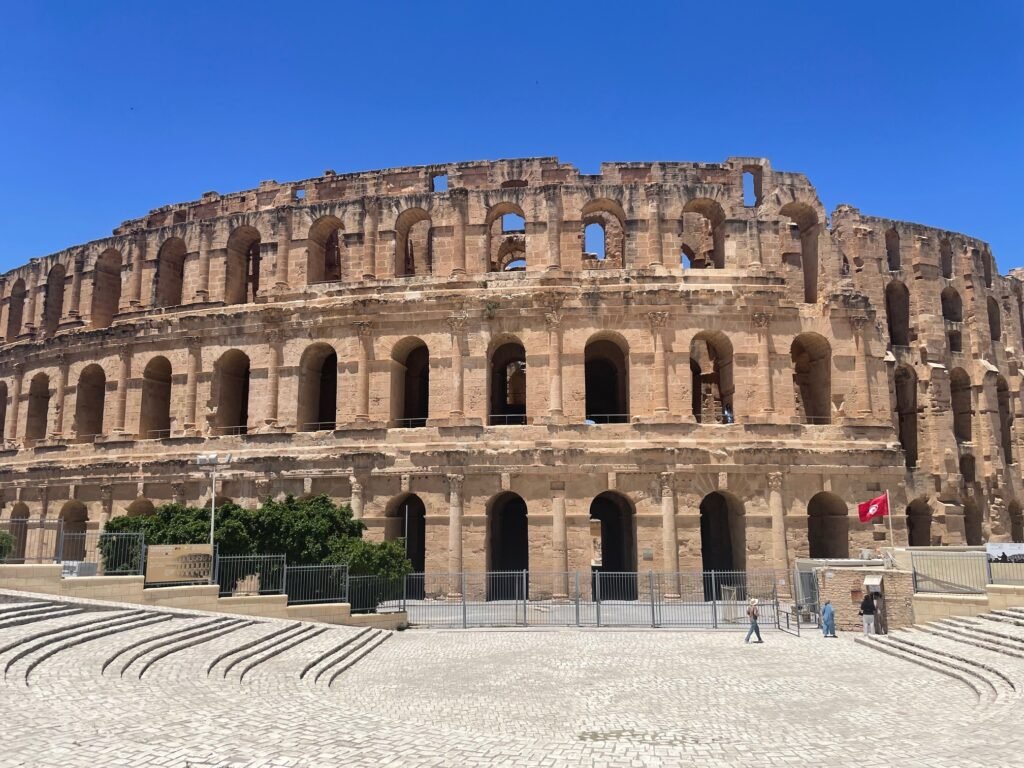
The stones do not perform. They do not sell. They do not ask where you are from. They simply stand there, long after the world that built them has disappeared.
That is real travel.
The sudden perception of depth.
Mahdia deserved attention too.
Sea, walls, old stones, light, space. It did not need to shout. Some places work because they allow the mind to settle. Mahdia had that. It gave the trip a coastal shape that was better than the original plan.
My route changed because Tunisia corrected it.
The first idea had been more ambitious: Tunis, Monastir, Sfax, Gabès, maybe further south.
But travel is not a spreadsheet.
A route can be logical and still wrong.
The better trip became Tunis, Sousse, Mahdia, El Jem, Sidi Bou Said.
Less heroic.
More coherent.
More historical.
More coastal.
Closer to what I actually value.
That is a useful rule.
Do not defend the itinerary against the country.
Let the place speak.
Tunisia spoke in fragments.
A railway board photographed because the internet could not be trusted.
A taxi price descending in stages.
A restaurant bill corrected when challenged.
A host message turning a zero-review hotel from possible phantom into real arrangement.
Old European streets in Tunis carrying the outline of a vanished world.
Cathedrals proving that confident communities become historical layers.
A Protestant cemetery garden where Danish and Swedish names lay quietly beneath North African light.
El Jem rising out of ordinary life like a warning from antiquity.
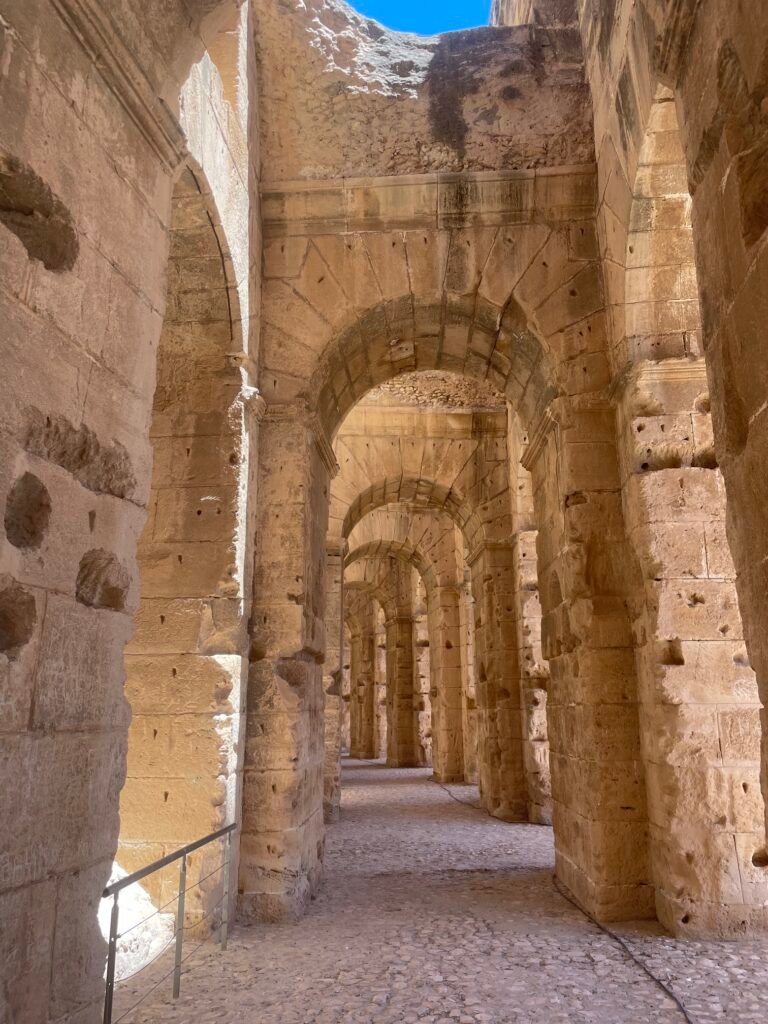
Mahdia giving the trip sea air and stillness.
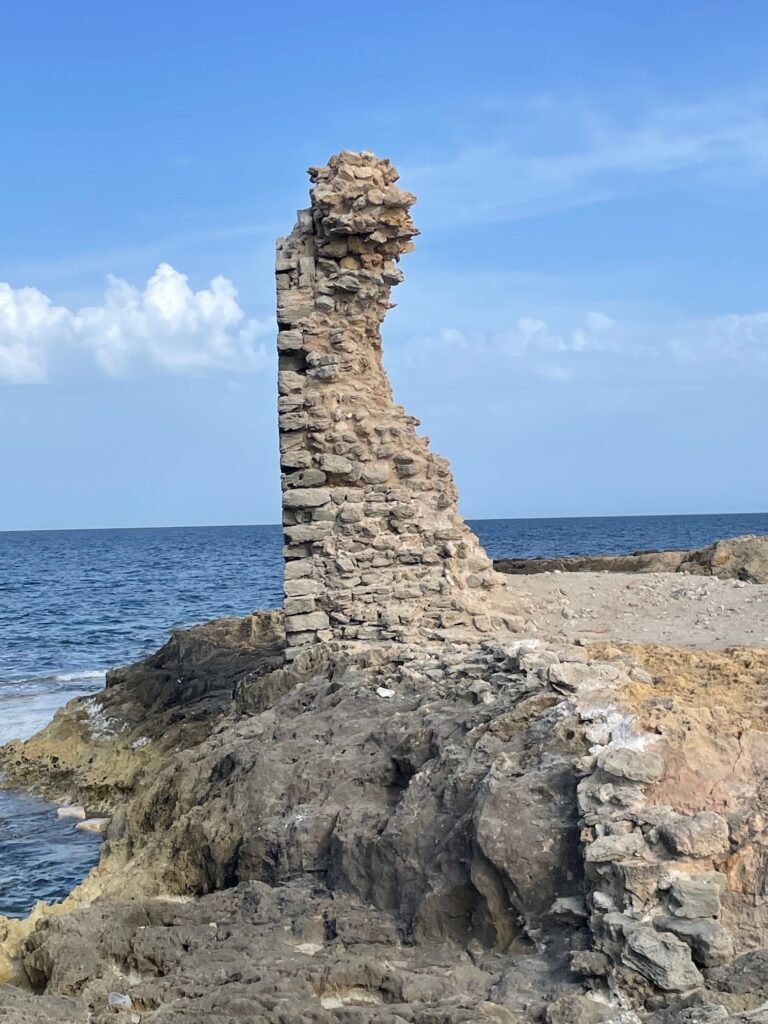
Sidi Bou Said doing what it always does: white, blue, bright, theatrical, beautiful, over-known and still somehow effective.
This is why Tunisia stayed interesting.
Not because every moment was easy.
Because the country has depth.
It rewards attention.
And that became the lesson.
The real currency of travel is not money. Money matters, but it is not the core. The real currency is attention.
Spend it badly and even a cheap country becomes expensive.
Spend it well and a simple day becomes memorable.
A quiet coffee can outlive a famous sight.
A churchyard can restore more than a bar.
A walk by the sea can beat a guided tour.
A ruin at the right hour can outweigh five guidebook obligations.
The travel industry sells flights, beds, meals, transfers and experiences.
But the traveller is really buying conditions for attention.
A good hotel gives rest.
A good café gives a place to observe.
A good walk lets the mind stretch.
A good ruin gives attention somewhere worthy to land.
A good conversation expands the day instead of hijacking it.
A good destination gives your attention back in better condition than it found it.
Tunisia did that.
The street interruptions were noise. Irritating, yes. Revealing, yes. But still noise.
The country itself was not the noise.
The country was the old city of Tunis.
The cathedrals.
The cemetery garden.
The Roman stones.
The sea at Mahdia.
The amphitheatre at El Jem.
The medina walls.
The railway stations.
The cafés.
The energy I remembered from 2010, still alive enough to justify the return.
That was the signal.
Everything else was a tax.
Pay as little as possible.
Keep walking.
Look properly.