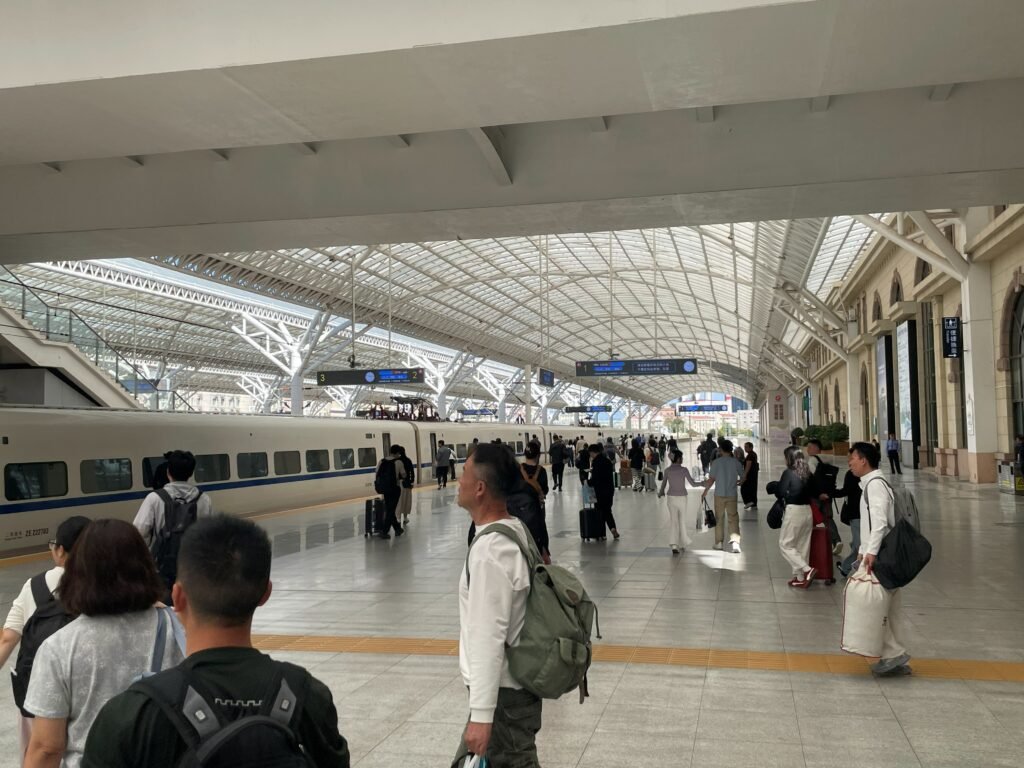
A German Colony, a Japanese Interlude, and a Rather Good Brewery
There are places I have wanted to visit for years, and Qingdao was one of them. The very improbability of a German colony on the Chinese coast had always fascinated me. More remarkable still was the suggestion that much of it remained intact.
The Germans called it Kiautschou, and they did not have long to enjoy it. Having acquired the territory in 1898, they began constructing their little piece of Germany on the Yellow Sea. By 1914, Germany had found itself on the wrong side of the First World War, and Japan arrived to relieve the Kaiser of his Chinese possessions.
Sixteen years. Not much time to build a colony, let alone leave a lasting impression.
Yet walking around Qingdao, I found myself astonished by what the Germans had achieved.
The railway station is magnificent. The former governor’s residence is a fabulous Art Nouveau mansion, complete with elaborate interiors, beautiful fireplaces and all the architectural confidence of an empire that evidently expected to remain for centuries.
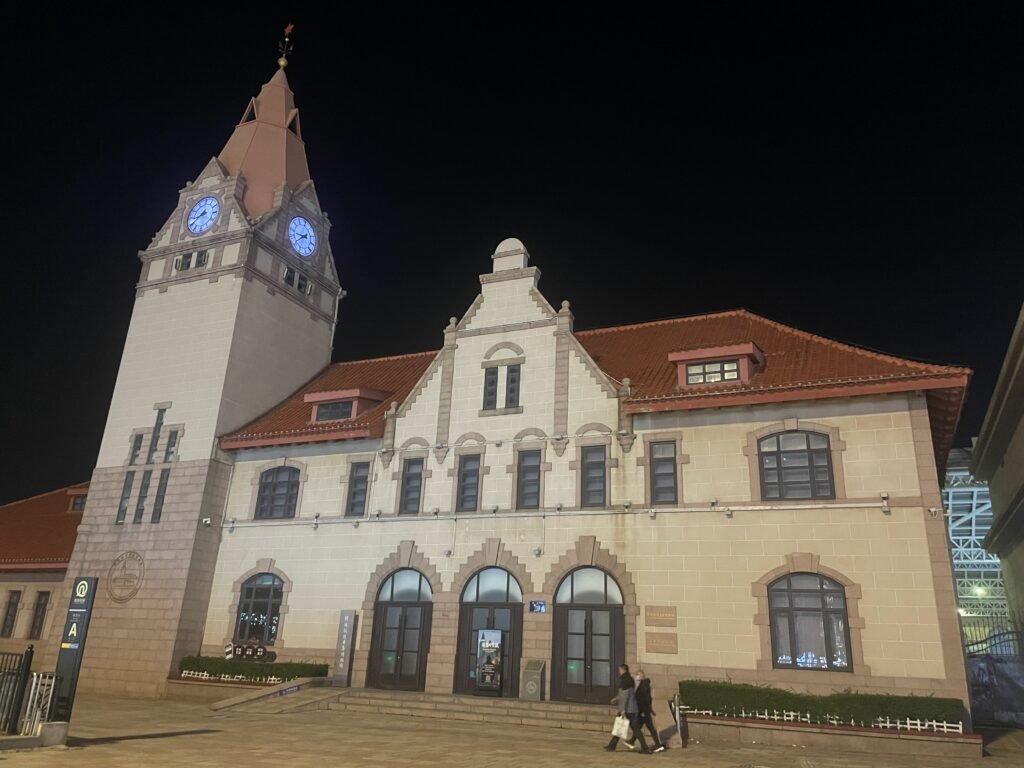
Elsewhere, German buildings are scattered throughout the old town, connected by broad streets and substantial infrastructure. There is the famous pier, the beginnings of a modern port, and, naturally, a brewery.
The Germans had arrived with plans for something rather grand.
And judging by what remains, they were making excellent progress when history interrupted them.
Indeed, their influence proved so enduring that, more than a century after their departure, the Chinese are still borrowing from their architectural vocabulary. Modern shopping centres reproduce German façades, while the newer railway developments echo the old European buildings.
There are even bratwursts being sold on the streets.
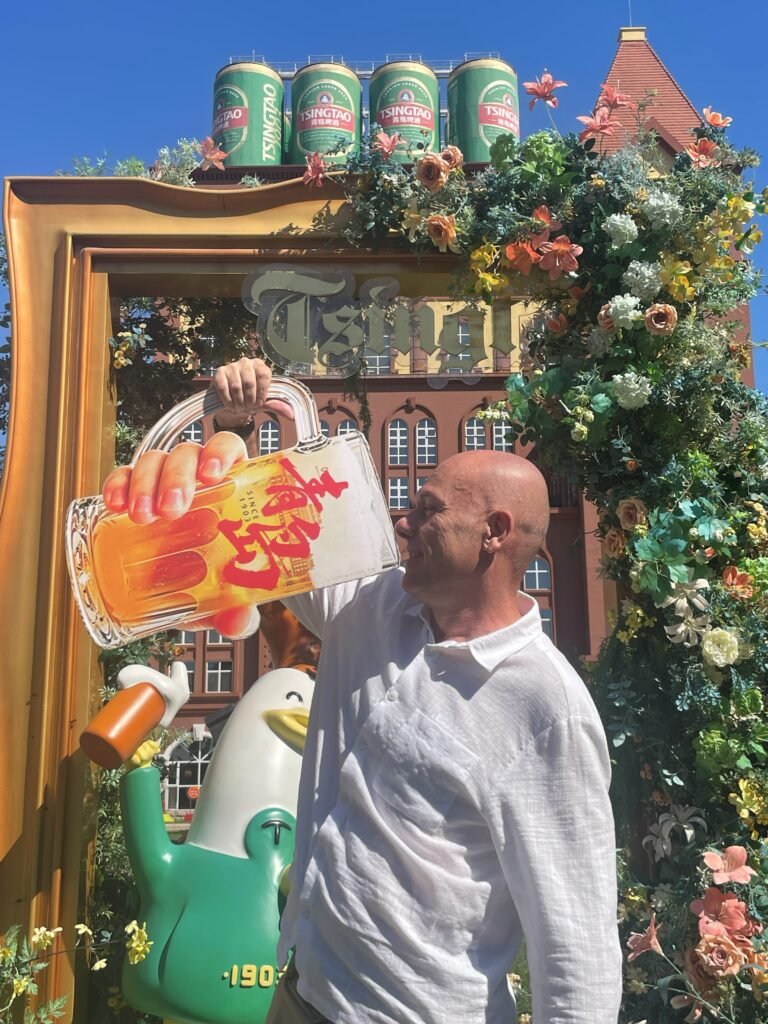
And everywhere, absolutely everywhere, there is Tsingtao beer.
Perhaps there is something in the old suggestion that beer contributes to happiness, because the people of Qingdao seem rather more inclined to smile than their counterparts in Shanghai.
The brewery itself was one of the principal reasons for my visit.
Established in 1903, it remains the great surviving commercial achievement of the German occupation. The original brewing equipment and buildings provide a fascinating glimpse into the industrial technology that Germany brought to China.
But there was another interesting discovery.
Although founded by German and British commercial interests, the brewery’s early leadership included a remarkable number of British businessmen associated with Shanghai.
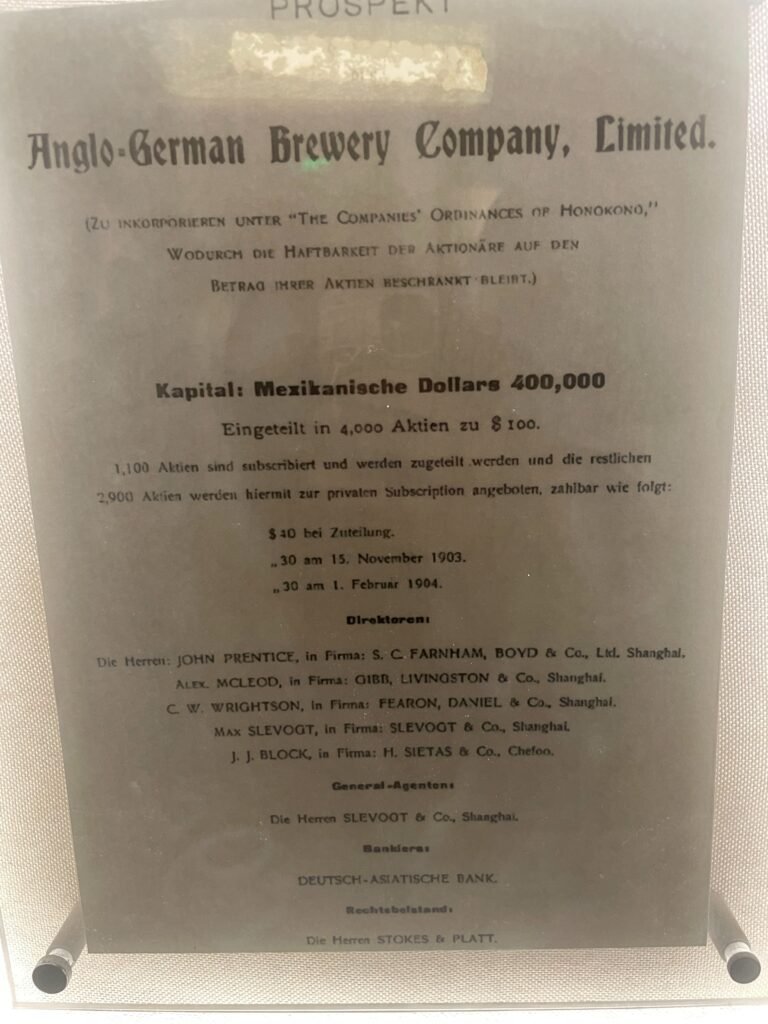
Here was colonial capitalism operating across imperial boundaries. German territory, German brewing expertise, British capital and commercial connections, Chinese labour and an enormous potential market.
Whatever their governments might have been doing, the businessmen were evidently capable of reaching an accommodation.
And they produced a remarkably successful beer.
The Japanese Arrive
The Japanese inherited something rather promising when they captured Qingdao in 1914.
They also recognised its potential.
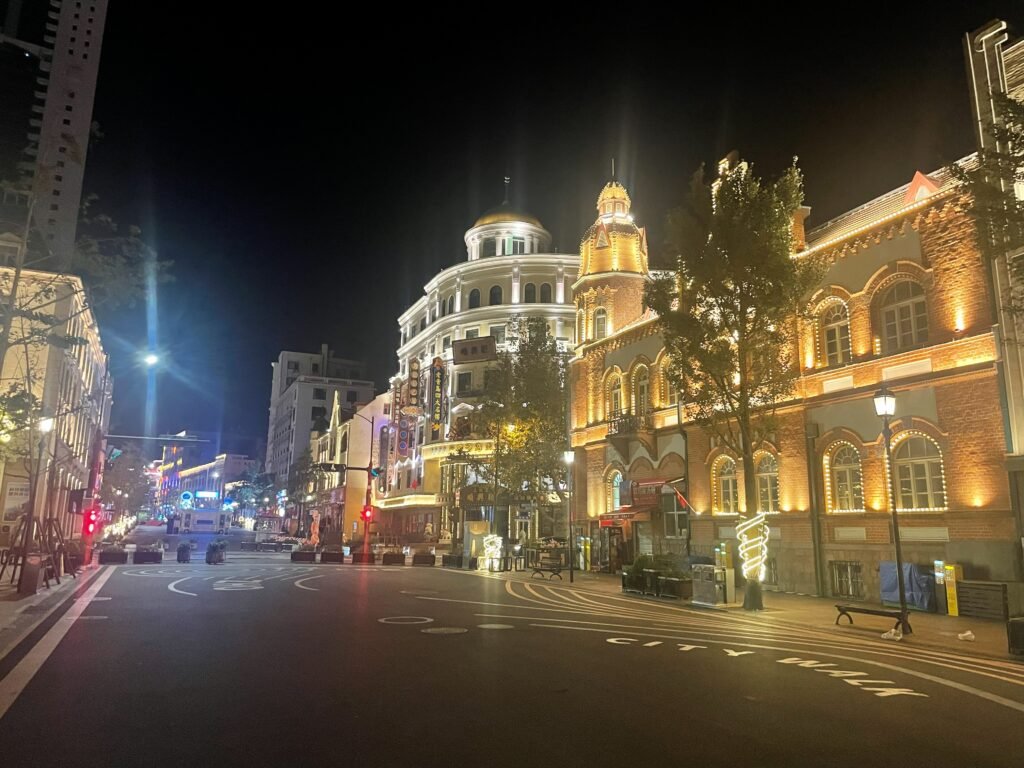
Walking through the old commercial district, I discovered an extraordinary collection of buildings dating from the Japanese occupation and the years immediately following it.
The architecture is fascinating. German influences mingle with Japanese interpretations of European Art Nouveau, gradually giving way to the harder lines and geometric confidence of Art Deco.
Some of the streets are almost absurdly beautiful.
Here are banks, commercial offices and imposing institutional buildings, constructed by people who clearly believed that Qingdao was going to become an important centre of international trade.
And then there is the former Japanese commodities exchange.
What an extraordinary building.
Completed around 1920, it resembles a great concrete temple to commerce. Monumental, imposing and entirely unexpected, it dominates its surroundings with the confidence of an institution that anticipated considerable wealth passing through its doors.
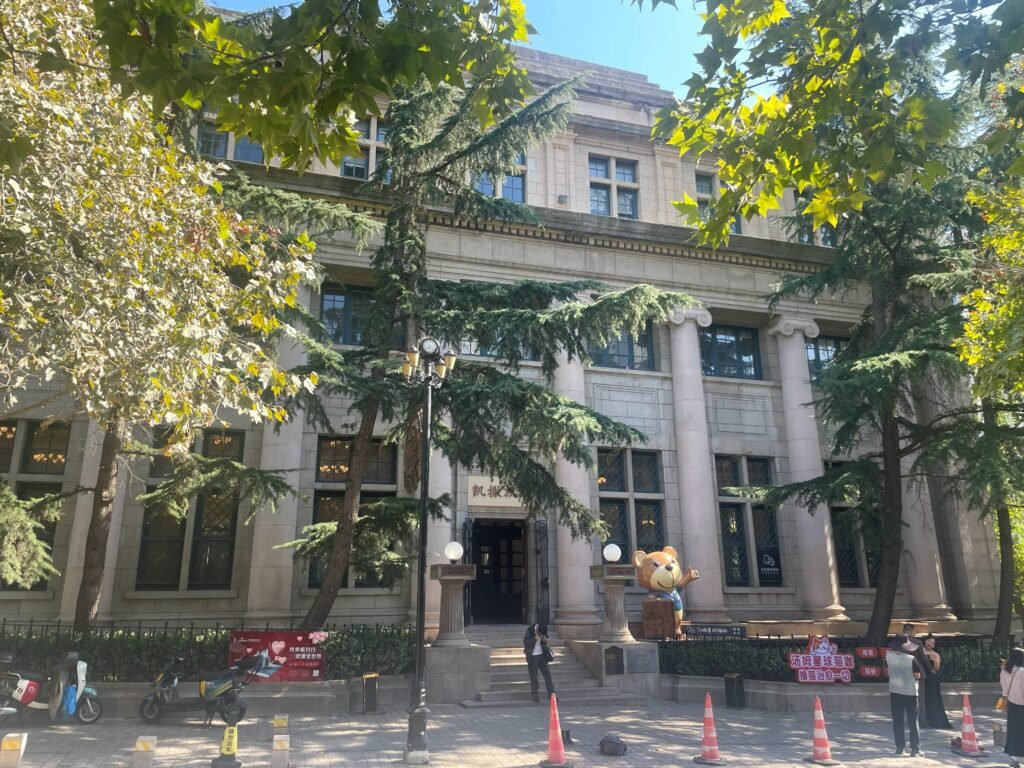
I had not expected to find anything quite like it.
The Japanese were not merely occupying a former German colony. They were investing in its commercial future, building the infrastructure through which they intended to profit from northern China.
Inside, some of the decorative paintings offer an intriguing glimpse into the thinking of the period.
Among them are scenes depicting the Puritans arriving in America and trading with the indigenous inhabitants.
An interesting choice of subject for a Japanese commercial building in China.
One wonders whether the intended parallel was entirely accidental.
The Japanese had arrived in a foreign territory, bringing capital, technology and commercial institutions. The Chinese possessed the land, the labour and the resources.
Perhaps the paintings were simply celebrating international commerce.
Or perhaps they reveal something about how Japan imagined its own relationship with China.
Either way, they are a remarkable survival.
The Peace That Nobody Liked
The Japanese occupation was not destined to last.
At Versailles in 1919, Germany’s former rights in Shandong were awarded to Japan rather than returned to China.
The Chinese were furious. The decision helped ignite the May Fourth Movement and became one of the great grievances of modern Chinese nationalism.
By 1922, following the Washington Conference, Japan had agreed to return Qingdao to Chinese administration.
Imagine the frustration.
The Japanese had captured a valuable German possession, invested heavily in its commercial infrastructure, constructed magnificent banks and an enormous commodities exchange, and then found themselves obliged to surrender political control.
All those splendid buildings, intended to anchor a profitable Japanese future, now stood in a Chinese city.
A rather expensive lesson in the uncertainties of empire.
The Germans, meanwhile, had their own reasons to be dissatisfied with the peace.
Their overseas possessions were gone. Alsace-Lorraine had returned to France. Territories had been transferred to Poland, and Northern Schleswig had returned to Denmark.
I found myself imagining a rather curious scene inside the former German governor’s mansion.
A few German gentlemen seated beside those magnificent Art Nouveau fireplaces, perhaps joined by their Japanese counterparts, discussing the injustices of the post-war settlement.
The Germans complaining about the territories they had lost.
The Japanese complaining about the territory they had been compelled to surrender.
Both convinced that the victorious powers had treated them rather badly.
Perhaps, over a glass of something suitably strong, they might have wondered whether these injustices could someday be corrected.
Perhaps even together.
History, of course, would eventually produce a German-Japanese alliance, although not quite in the circumstances of my imaginary gathering.
Still, standing inside that beautifully preserved mansion, it was difficult not to entertain the thought.
A Colony That Refuses to Disappear
What makes Qingdao so remarkable is not simply the survival of individual buildings.
It is the survival of an entire architectural landscape.
The Germans were here for barely sixteen years. The Japanese governed the territory for only another eight before its return to China.
Yet both left an extraordinary physical inheritance.
Railway stations, banks, commercial exchanges, administrative buildings, churches, hotels, breweries and private residences.
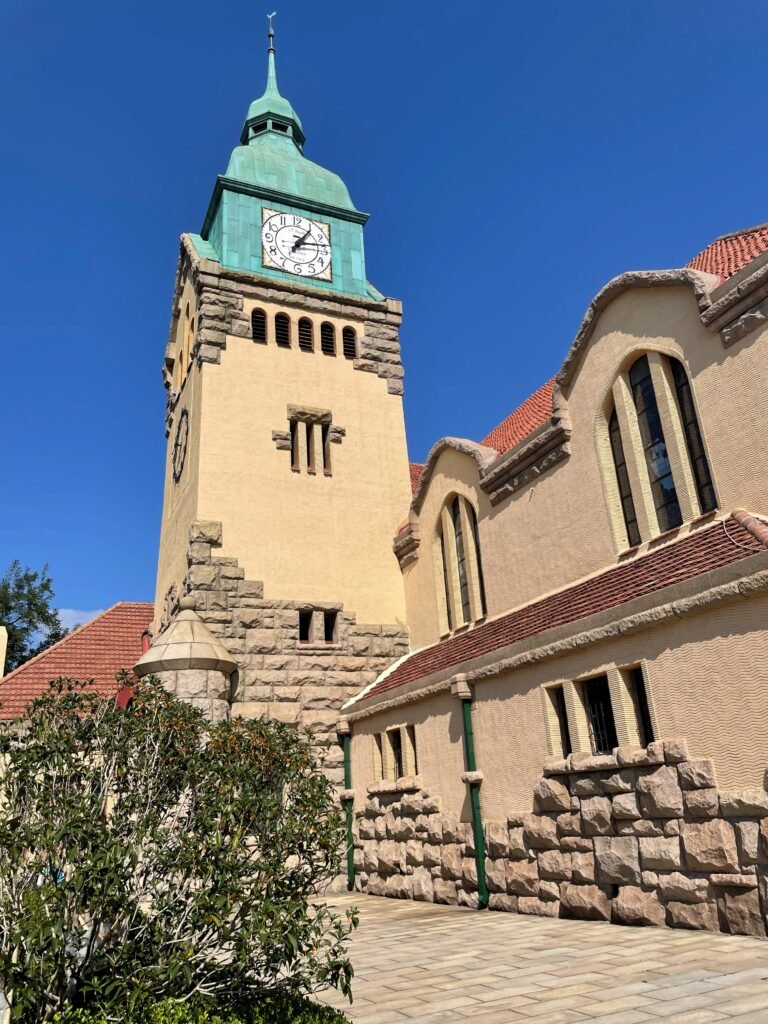
And much of it remains astonishingly intact.
I spent hours wandering the streets, continually discovering another remarkable façade, another unexpected building, another reminder of the extraordinary ambitions of the men who once governed this distant corner of China.
The architecture tells a story that political maps cannot.
Empires arrive, draw boundaries, invest fortunes, erect monuments to their own permanence and then depart.
The buildings remain.
Sometimes they even become the architectural inspiration for the people who inherit them.
Qingdao is particularly good at this.
And a word about the entrance fees. Several of the finest buildings charge admission, but I found the interiors so extraordinary that the experience exceeded my expectations tenfold.
The governor’s jugendstil residence alone is worth the journey.
Beautiful rooms, original architectural details, magnificent fireplaces and a level of preservation that allows the visitor to step directly into the world of Imperial Germany.
It is one thing to read about Kiautschou.
Quite another to stand inside it.
I had wanted to visit Qingdao for years, and it exceeded everything I had imagined.
A fabulous city, full of architectural surprises, improbable history and exceptionally good beer.
But there are other former imperial possessions to inspect, and the Chinese high-speed railway awaits.
So it is time to leave the Germans and Japanese behind.
I have an appointment at the British Embassy.
Unfortunately, I fear I may be about 100 years too late.
Nevertheless, I shall give it a try.