I came to China expecting bullet trains, smart factories and the remains of old empires. I did not expect to find Europe’s drinks cabinet waiting for me.

Everyone else had left the cellar when the woman came over with a single glass of red wine.
“Please taste our best red wine,” she said. “This is the one that won the awards.”
The Chinese visitors had gone. I was the only person left. She had not poured it for the group. She poured it for me.
It was excellent.
Perhaps she had watched me tasting the earlier wines and decided I knew what I was doing. I had taken a wine course once. One of my best investments in choosing wines appropriate to the food. Or perhaps Changyu’s marketing department had simply identified an open flank.
That should have been the end of the tasting. It was not.
Later, I discovered that my entrance ticket included another tasting in the 1892 House. I had not expected a second tasting at all. More glasses appeared, properly arranged, with small snacks between the wines to clear the palate. The whole thing was controlled, informed and generous.
I had never been treated to a wine experience like it in Europe.
This was becoming a pattern. Alcohol was one of the discoveries of China that I had never expected to make.
At the Source
Modern Qingdao was a German creation. The Germans planned and built the port, streets, railway, sewers and public buildings of the new city. Among what they built was the brewery founded in 1903, which remains there today.
I knew about that German brewing inheritance before arriving. It was part of the reason for going.
What I had not expected was how good the beer would taste.
Tsingtao sold in Britain is still brewed in Qingdao rather than produced under licence. But a beer shipped halfway around the world cannot arrive with the same freshness as one drunk at its source. Time, storage, temperature and transport all intervene. There is also more than one Tsingtao. At the original 1903 brewery I could taste different versions beside each other rather than treating the name as though it described one uniform industrial liquid.
The beer was clean, fresh and alive. It tasted better there because it belonged there.
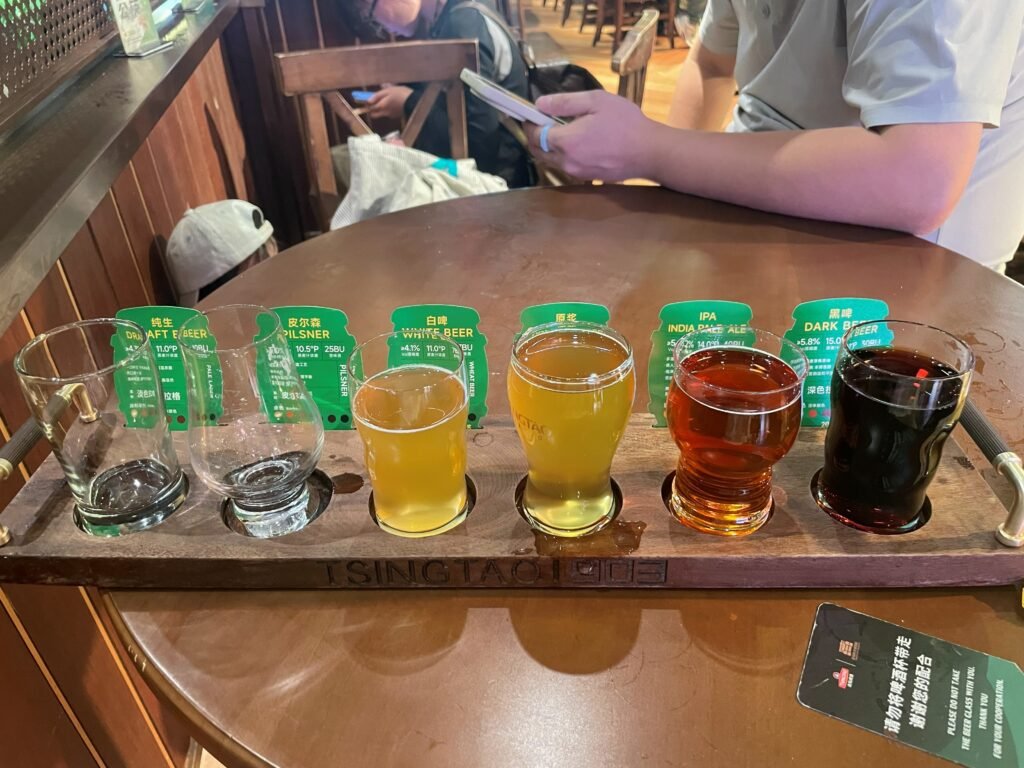
That distinction matters. Modern alcohol companies teach consumers to recognise a label. Older drinking cultures recognised a product, a place and a method. The name was evidence of origin rather than a substitute for it.
Qingdao had preserved both.
A Polish Brewer in Russian Harbin
Then came Harbin.
The Harbin brewery predates Tsingtao. It was founded in 1900 by Jan Wróblewski, a Polish entrepreneur from the Russian Empire, while Harbin was being built as a Russian imperial railway city on the Chinese Eastern Railway, connected to the Trans-Siberian Railway.
Harbin 1900 describes itself on the label as a 100 per cent pure malt lager. That is an excellent claim. Malt is the traditional foundation of beer, before modern mass producers discovered the cheaper ingredients with which part of it could be replaced.
More than a century later, the beer still carries the history of the city that produced it.
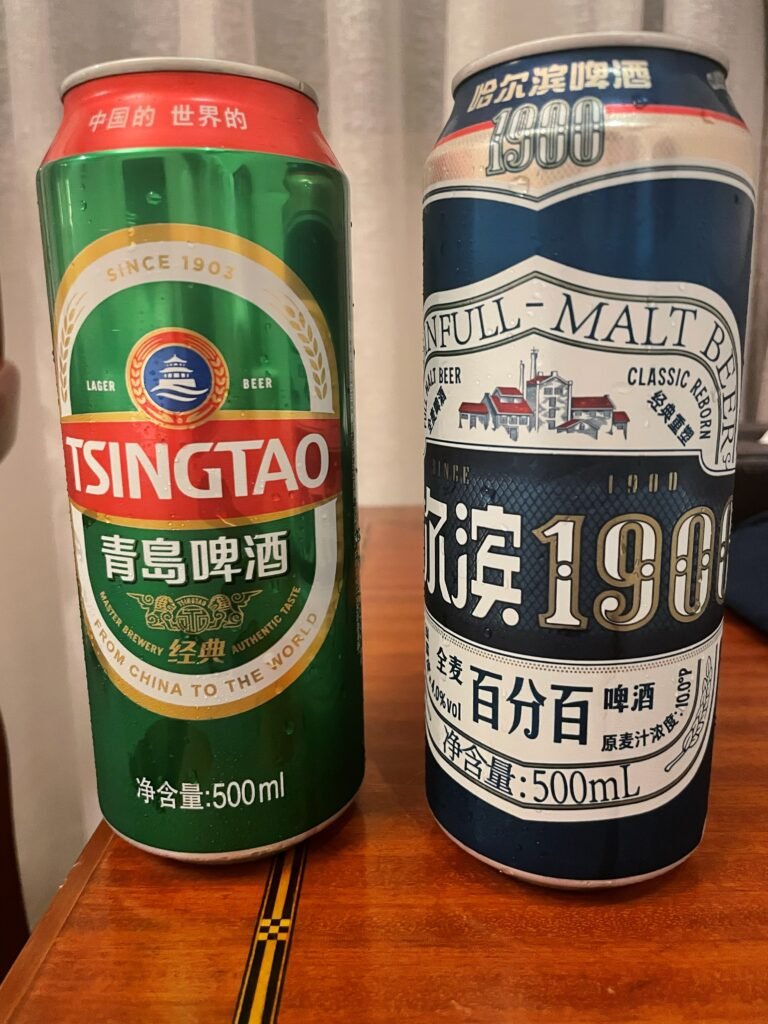
The history was becoming unusually neat. German and British capital had established the brewery in the German-built city of Qingdao. A Pole from the Russian Empire had established the brewery in Russian imperial Harbin. China had taken the knowledge, absorbed the machinery and kept the beer.
The foreign presence receded. The breweries remained.
Wine Country
Yantai was the greater surprise.
I had not known that I was travelling into the centre of Chinese wine production. Qingdao is not far away, yet Yantai’s position on the northern side of the Shandong Peninsula gives it a different coastal climate and a serious wine industry.
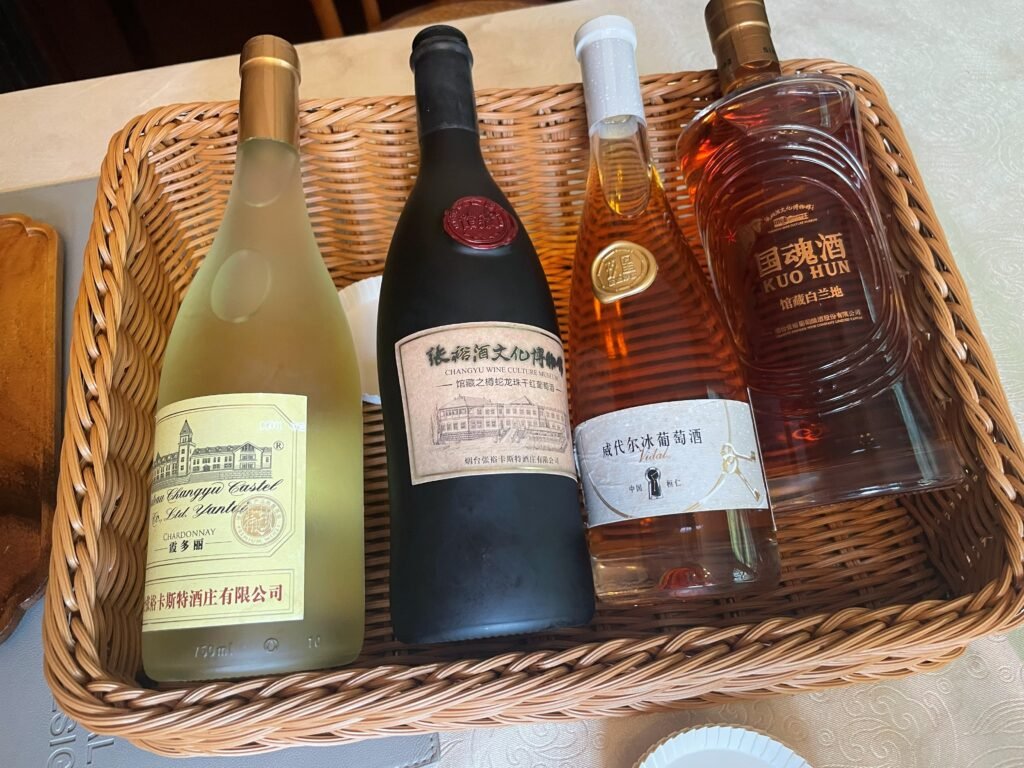
Changyu was founded there in 1892 by Zhang Bishi, who brought in European vines and an Austro-Hungarian winemaker. It went on to produce China’s first industrially made wine and later its first brandy. That is enough history to understand the point: this was not an invented crest pasted onto a bottle last Tuesday.
The cellar was old, cool and convincing. The barrels and brickwork were real. So were the modern displays and the technology built around them. China had not turned the place into a mausoleum. It had kept the history working.
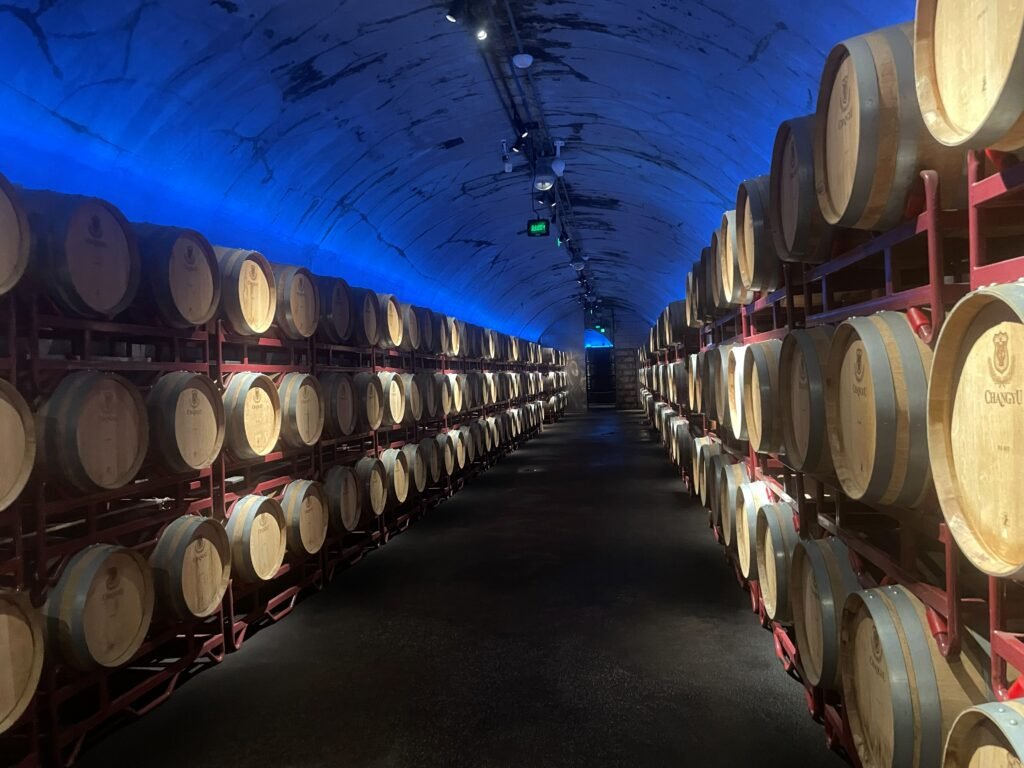
This was where the woman had singled me out after the scheduled tasting and brought over the award-winning red. It was not another sample left on the table. It was not part of the tasting flight. It was a separate glass of their best wine, poured for me after everyone else had gone.
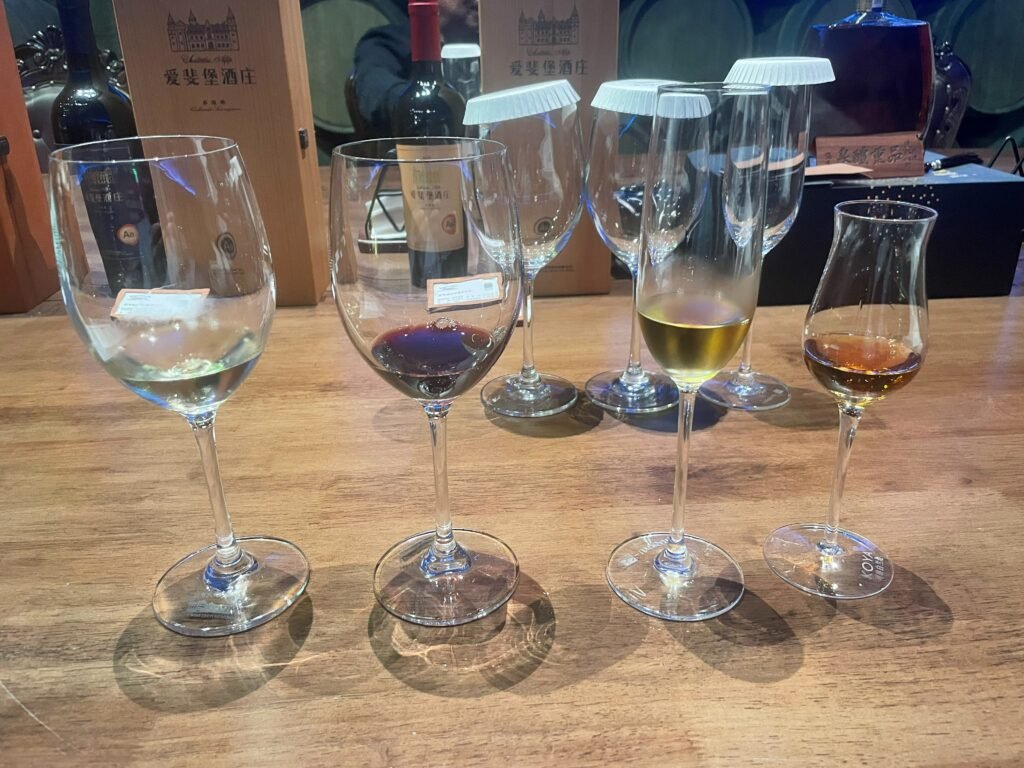
The history mattered. The glass mattered more.
Then came the second tasting in the 1892 House—also included in my ticket, and entirely unexpected. More wines. Small snacks between them. Proper presentation. Changyu understood that heritage is not merely something to print on a label. It must be made tangible.
Old Methods and New Machines
I had seen the same principle in Chinese factories.
China does not regard inheritance and technology as opposites. It will retain an old cellar, install an interactive museum above it, build a smart factory outside the city and sell the resulting product through a phone. The old method is preserved where it still produces value. New technology is added where it improves scale, control or presentation.
Europe increasingly does something different. It retains the name, sells the history and alters the product.
China inherited European methods and turned them into living industries. Europe increasingly retains the trademarks while reducing what stands behind them.
What Drink Is For
China also remembers that alcohol has a function beyond intoxication.
It is a social solvent. It greases the machinery of business. It turns meals into negotiations and acquaintances into temporary friends. It softens courtship, supplies ritual and allows things to be said indirectly that might otherwise remain unsaid.
Europe once understood this without needing it explained. The pub, the wine table, the brewery and the village bar were pieces of social infrastructure. Alcohol belonged to place, season, work, courtship, argument and reconciliation.
Now it is increasingly treated as a taxable unit delivered by a multinational brand.
When the Name Replaces the Beer
Stella Artois and Newcastle Brown Ale are useful examples.
Both genuinely date from the 1920s, and the original Stella brewery at Leuven has a much older history. But the existence of a historical name does not make the modern product historically continuous. The British Stella version was reduced from 5 per cent alcohol to 4.8 per cent in 2012 and then to 4.6 per cent in 2020. Ireland received the same reduced-strength product. The branding, chalice and ancient dates remained in place while the liquid changed beneath them.
Newcastle Brown Ale suffered similarly. Originally brewed in a brewery next to St James’ Park, I could smell the brewery as a child when my Dad drove us through Newcastle centre to our Grandmothers house. It firstly moved out of the city centre to be brewed across the Tyne in Gateshead. Arguably, perhaps, it retained much of the heritage and ingredient sources, but is now brewed at Tadcaster, and if I read the ingredients, I find myself wondering how much of that was in the original recipe.
The names carried the history. The beer no longer had to.
Moretti possesses a real Italian lineage, but much of the beer sold under that name in Britain is now brewed in Britain. Place has been detached from provenance. Madrí dispenses with even that inconvenience. It was created in 2020, brewed in Yorkshire and dressed immediately in the costume of Madrid.
Europe has become very good at manufacturing foreignness.
Meanwhile, real British beers have disappeared. I remember Flowers. I remember Courage Directors, a rich, full-bodied bitter that tasted like beer rather than a chilled advertising campaign. The Flowers brewery itself closed in 1968. The name wandered through later contract-brewing arrangements after the place and company behind it had gone. Directors is now listed as no longer brewed.
These were not obscure liquids preserved only in enthusiasts’ notebooks. They were recognisable British beers. Once lost, they cannot be recreated merely by transferring the trademark to another factory.
The destruction continues. Britain ended 2025 with 137 fewer breweries than it had begun the year. Historic cask ales have been deleted, breweries closed and product ranges reduced as ownership has concentrated.
The knowledge still exists. The structure no longer rewards it.
The State at the Cellar Door
Tax has accelerated the decline.
Ireland imposes €3.19 of excise on an ordinary 750ml bottle of still wine and then charges 23 per cent VAT on the wine, the commercial margin and its own excise. The €3.19 duty therefore costs the buyer €3.92 at the till. On a €15 bottle, €5.99—almost 40 per cent of the entire price—is direct tax. Ireland also imposes minimum unit pricing, preventing a 12.5 per cent bottle from being sold below roughly €7.40 regardless of what the wine is worth.
Denmark uses the same method. The wine duty on a normal bottle is 8.45 kroner. Once 25 per cent VAT has been applied to that tax, it costs the buyer 10.56 kroner. On a bottle selling for 100 kroner, 28.45 kroner is excise and VAT.
Britain now charges about £2.87 of duty on a 75cl bottle at 12.5 per cent, followed by 20 per cent VAT. The consumer therefore pays £3.44 merely for the excise and the VAT imposed upon it, before considering the VAT on the wine and commercial margin. On a £15 bottle, approximately £5.37—nearly 36 per cent—is direct tax.
The state taxes the wine and then taxes its own tax.
Germany proves that this is a choice. It levies no excise duty on still wine. A €15 bottle carries 19 per cent VAT, amounting to €2.39 within the shelf price. The equivalent Irish bottle contains €5.99 in excise and VAT: two and a half times as much direct consumption tax.
Europe then wonders why drinkers retreat towards industrial products supported by enormous economies of scale.
Manufactured Sweetness
The wine market offers its own version of the same decline.
Vineyards are being grubbed up in Europe as consumption falls. At the same time, supermarket shelves fill with mass-produced imports whose principal achievement is consistency. Much of the Australian wine sold in Europe is absolute rubbish. Some of it is disgustingly sweet, with a suspiciously manufactured sweetness closer to an alcoholic soft drink than a proper wine. I do not trust it, and I will not buy it.
The contrast with Yantai was difficult to miss. In Europe I increasingly inspect bottles for signs that the contents have been manipulated into anonymous sweetness. In China I found a producer placing several wines in front of me, explaining the differences and providing food between them so that each could be tasted properly.
China was treating wine as a product worth understanding. Europe’s mass market increasingly treats it as a branded alcoholic delivery system.
What China Remembered
None of this was what I expected to find.
I came to China looking for scale, speed and new technology. I found those things. I travelled on the trains, walked through the cities and watched factories trying to remove human inefficiency from production.
But alongside the future I found old European knowledge still at work.
German brewing in the city the Germans built at Qingdao. A Polish brewer from the Russian Empire in Harbin. European vines and an Austro-Hungarian winemaker in Yantai. Malt, cellars, oak barrels, brandy and wine. Techniques imported during the age of concessions and railway empires, absorbed by China and carried forward after the foreigners had gone.
Europe exported the methods. China kept making the products.
Europe kept the labels, reduced the strength, moved the breweries, taxed the bottles and sold the remaining history through advertising.
China learned to turn heritage into an experience. Europe learned to turn it into a trademark.
I came to China expecting to see the future. I did not expect it to remind me what drink had once been: craft, place, hospitality and social movement.
China had not merely remembered how to make it.
It had remembered what it was for.